
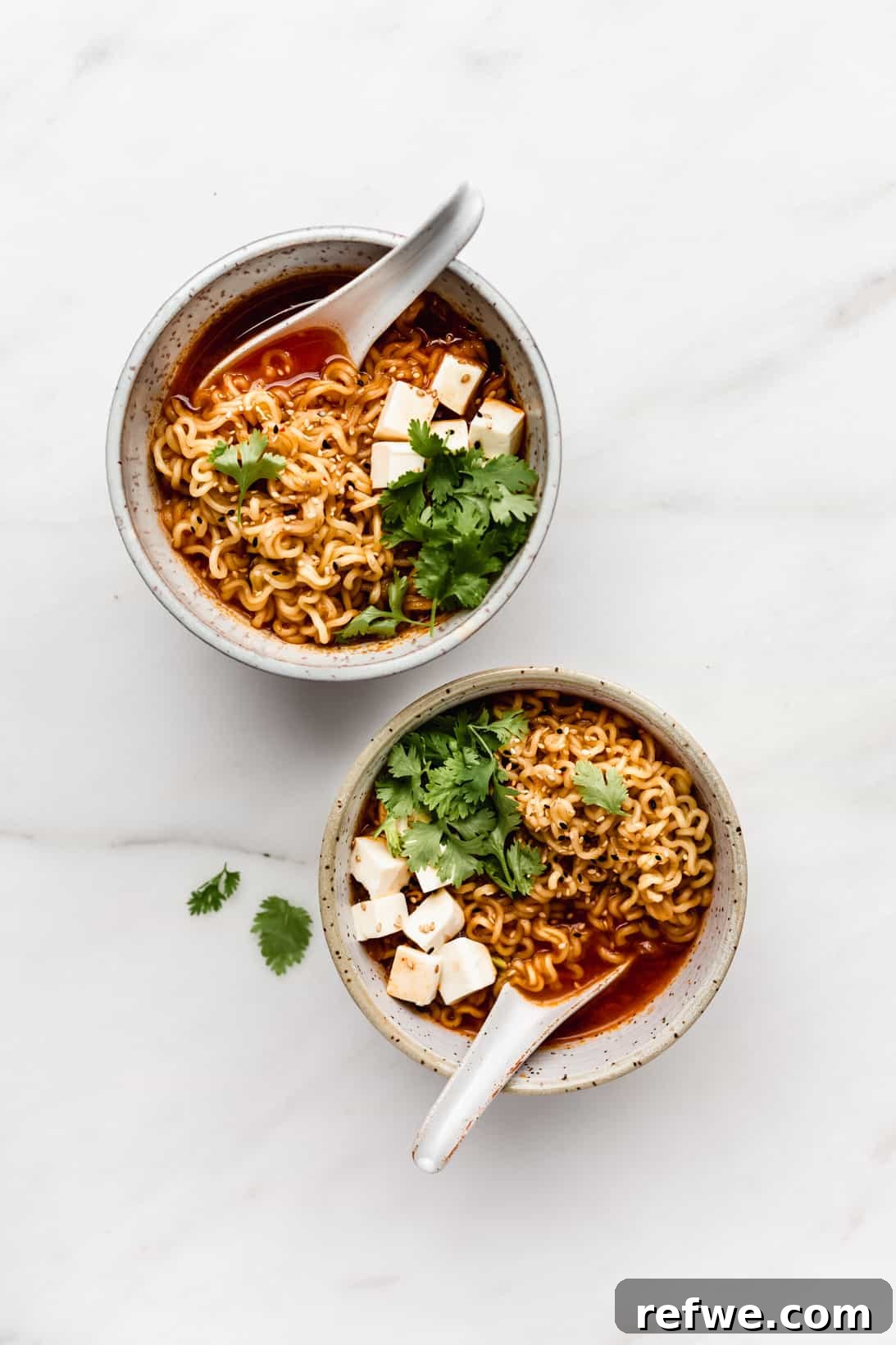
Experience the unparalleled flavor of homemade Kimchi Ramen, a delightfully vibrant and healthy dish that comes together in under 30 minutes! This recipe is a game-changer for anyone craving a quick, comforting, and incredibly satisfying meal. Loaded with the distinctive tang of kimchi, tender tofu, and perfectly chewy ramen noodles, this soup can be enjoyed as a hearty appetizer or a complete main course. Forget bland instant packets or pricey restaurant bowls; our vegetarian and vegan-friendly Kimchi Ramen offers an explosion of authentic Korean-inspired flavors right in your own kitchen.
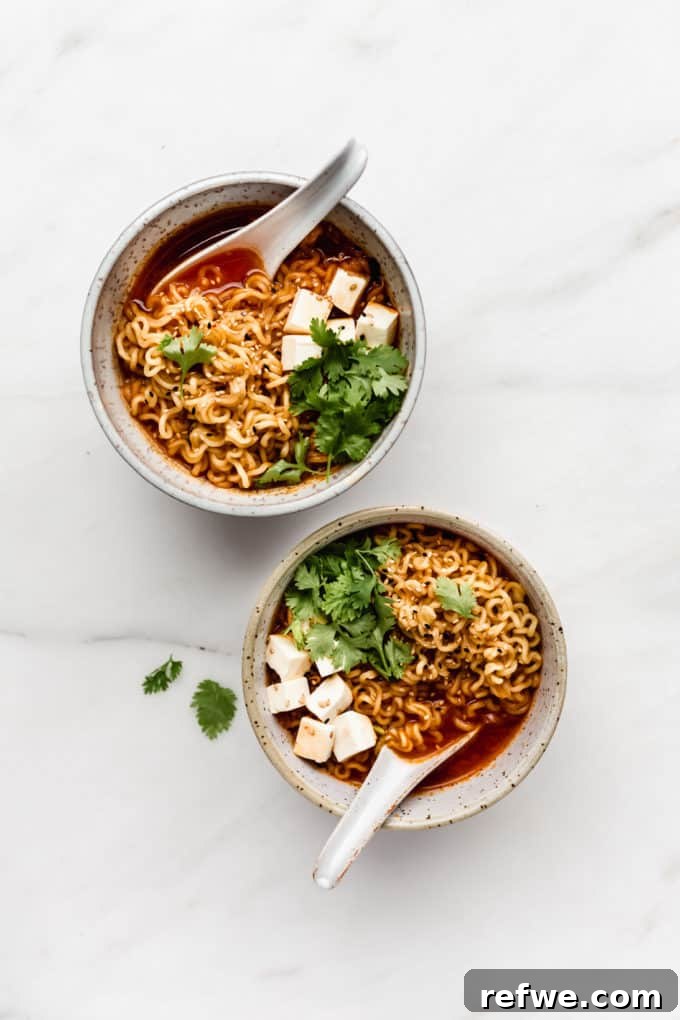
Quick & Flavorful Kimchi Ramen: Your Ultimate Vegetarian & Vegan Guide
If you’re looking to elevate your noodle game, look no further than Kimchi Ramen. This isn’t just another soup; it’s a culinary journey packed with bold, umami-rich flavors that tantalize your taste buds. Many associate ramen with long simmering broths, but this recipe defies expectations, proving that you can achieve incredibly deep and satisfying flavors in less than half an hour. It’s significantly healthier and more customizable than store-bought instant ramen and often surpasses the flavor of many restaurant offerings, all while being wonderfully accessible for vegetarian and vegan diets.
Preparing a flavorful ramen soup at home doesn’t have to be an all-day affair. Our recipe focuses on maximizing flavor through key ingredients and efficient cooking techniques, ensuring that every spoonful of this rich broth is a delight. The blend of spicy, sour, and savory notes creates a truly addictive experience, making it a perfect dish for busy weeknights or when you need a quick, nourishing pick-me-up.
What is Kimchi? The Heart of Korean Flavor
At the core of this incredible ramen lies kimchi, a staple Korean fermented vegetable dish. Most commonly made with napa cabbage, kimchi is renowned for its complex, tangy, and often spicy flavor profile. The fermentation process gives kimchi a distinct sourness, somewhat comparable to pickled vegetables, but with a unique depth derived from a blend of gochugaru (Korean chili powder), garlic, ginger, and other seasonings. It’s a condiment, a side dish, and a star ingredient all rolled into one.
Beyond its incredible taste, kimchi is celebrated for its health benefits. As a fermented food, it’s rich in probiotics, which are beneficial bacteria known to support gut health and boost the immune system. Incorporating kimchi into your diet can contribute to a healthier digestive system and overall well-being. It’s a delicious way to enjoy the advantages of fermented foods!
You can readily find kimchi in various places. Your local Asian grocery store is always a great starting point, often offering a wide selection of brands and types. Many larger chain supermarkets now stock kimchi in their international or refrigerated sections due to its growing popularity. Specialty health food stores are another excellent option, frequently carrying organic or artisanal varieties. A crucial tip for vegetarians and vegans: always check the ingredient label carefully, as some traditional kimchi brands may contain non-vegan ingredients like shrimp paste (saeujeot) or fish sauce. Fortunately, many brands now explicitly label their products as “vegetarian” or “vegan” to cater to these dietary needs.
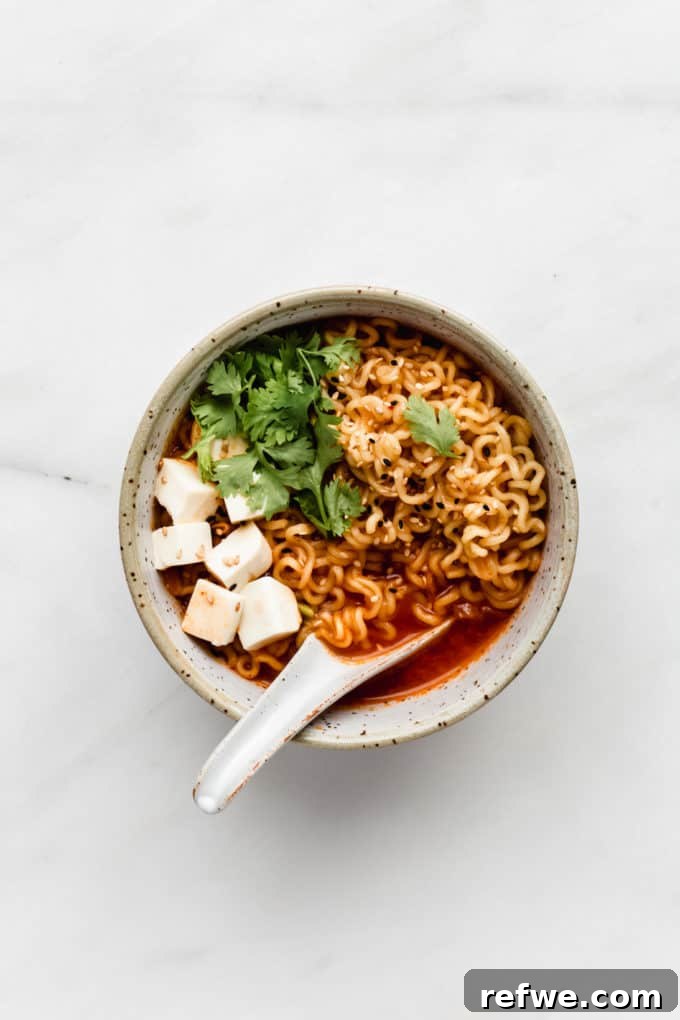
Why Homemade Kimchi Ramen Beats the Rest
When it comes to ramen, many of us default to instant packets or dining out. However, making Kimchi Ramen at home offers distinct advantages. Firstly, health. Instant ramen often comes loaded with sodium, artificial flavors, and preservatives. Our homemade version uses fresh ingredients, allowing you to control the salt content and ensure you’re consuming wholesome, nutritious components. You’ll avoid excessive additives and enjoy a meal that genuinely nourishes your body.
Secondly, flavor and customization. While restaurant ramen can be delicious, it’s often tailored to a specific taste profile. At home, you’re the chef! You can adjust the spice level, add more of your favorite vegetables, swap out proteins, and fine-tune the seasoning to your exact preference. This freedom allows for endless experimentation and ensures every bowl is exactly how you like it. The vibrant, tangy, and savory notes in our broth are far superior to anything you’ll get from a packet, providing a truly authentic and rich experience.
Finally, the sheer speed and cost-effectiveness. This recipe is designed to be ready in under 30 minutes, making it faster than ordering takeout and significantly cheaper. You’ll be amazed at how quickly you can whip up a gourmet-quality meal that feels incredibly special yet is so simple to prepare. It’s the perfect solution for a busy weeknight when you crave something hearty, flavorful, and homemade.
Essential Ingredients for Your Delicious Kimchi Ramen
Crafting the perfect Kimchi Ramen relies on a few key components that contribute to its rich and balanced flavor. Here’s what you’ll need, along with some tips for each:
- Vegetable Oil: Essential for sautéing our aromatics and building the flavor base. Any neutral oil like canola, sunflower, or grapeseed oil works perfectly here.
- Garlic: Use fresh, finely chopped garlic – a generous amount. Fresh garlic provides a much more pungent and authentic flavor compared to garlic powder, which simply won’t yield the same depth.
- Green Onions (Scallions): These serve a dual purpose: a portion will be sautéed to infuse the broth with mild oniony notes, and the remainder can be used as a fresh, crisp garnish. Shallots can also be used for a slightly sweeter, milder onion flavor.
- Shiitake Mushrooms: These mushrooms are a fantastic source of umami, adding a savory depth to the soup. Both fresh and dried shiitake mushrooms work well; if using dried, rehydrate them first and save the soaking liquid to add to your broth for an extra layer of flavor. I personally prefer fresh for their texture.
- Red Curry Paste: This is our secret weapon for instant, complex flavor. It provides a quick burst of aromatic spices and a gentle heat without requiring hours of simmering. Ensure you choose a vegan red curry paste if following a strictly plant-based diet, as some brands may contain shrimp paste.
- Kimchi: The undeniable star of the show! Use good quality, well-fermented kimchi for the best results. Its tangy, spicy, and savory notes are what define this ramen.
- Kimchi Juice: Don’t discard the liquid from your kimchi jar! This precious juice is packed with fermented flavor and probiotics, adding an indispensable layer of tang and depth to the broth. It’s crucial for achieving that authentic kimchi flavor.
- Vegetable Broth: The foundation of our soup. I highly recommend using a low-sodium vegetable broth. This gives you complete control over the final saltiness, allowing you to adjust it to your preference with soy sauce or tamari.
- Soy Sauce or Tamari: Used for seasoning and adding a profound umami richness. Opt for tamari if you need a gluten-free alternative. Taste as you go, adding more or less based on the saltiness of your broth and kimchi.
- Coconut Sugar: A touch of sweetness helps to balance the tartness and acidity from the kimchi, creating a harmonious flavor profile. You can substitute with a pinch of brown sugar or maple syrup if preferred.
- Soft Tofu: Provides a silky texture and a good source of plant-based protein. It’s crucial to use *soft* or *silken* tofu for this recipe, as firmer varieties won’t absorb the flavors as well and will have a different mouthfeel. Cut it into small, bite-sized cubes.
- Ramen Noodles: The soul of any ramen dish. You can use dried ramen noodles (discarding the seasoning packets) or fresh ramen noodles for an even better texture. Cook them according to package directions, but be careful not to overcook them as they will continue to soften in the hot broth.
How to Make Kimchi Ramen: A Simple Step-by-Step Guide
Creating this flavorful Kimchi Ramen is incredibly straightforward. Follow these steps for a delicious meal in no time:
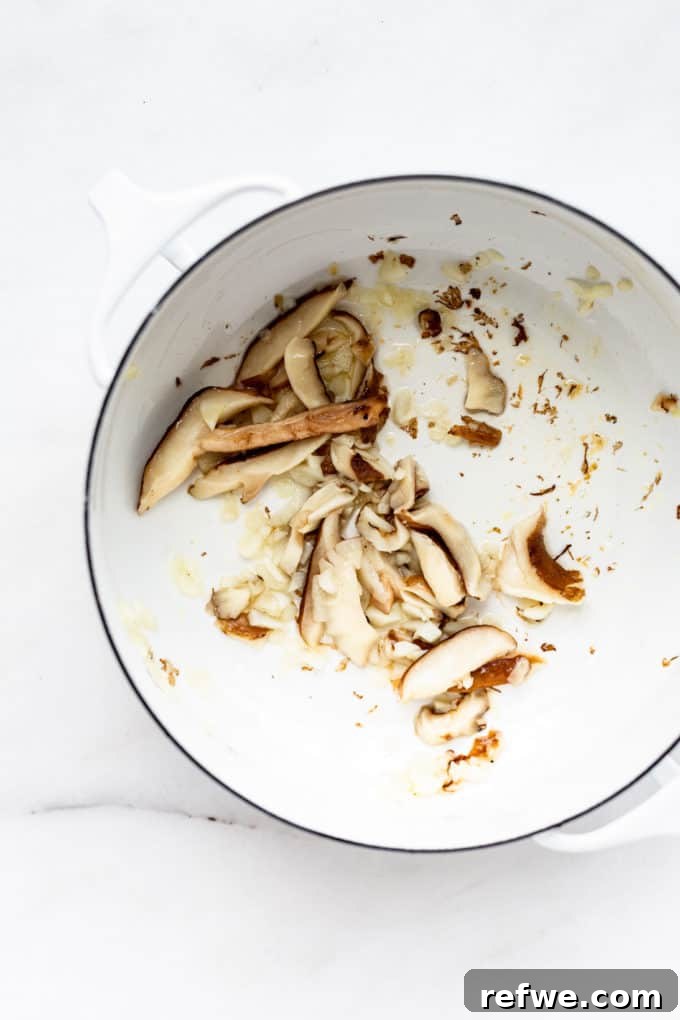
- Sauté the Aromatics: Begin by heating a tablespoon of vegetable oil in a large pot or Dutch oven over medium-high heat. Once shimmering, add the finely chopped garlic and the white and light green parts of your green onions. Sauté for about 1 minute until fragrant, being careful not to burn the garlic.
- Add Mushrooms and Build Flavor: Stir in the sliced shiitake mushrooms and continue to sauté for another 1-2 minutes. This helps to soften the mushrooms and allows them to release their earthy aroma.
- Bloom the Curry Paste & Kimchi: Next, add the red curry paste and your kimchi to the pot. Stir everything together, allowing the curry paste to cook for a minute or two. This “blooming” step helps to deepen its flavor and aromatic qualities, infusing the base with spicy and savory notes.
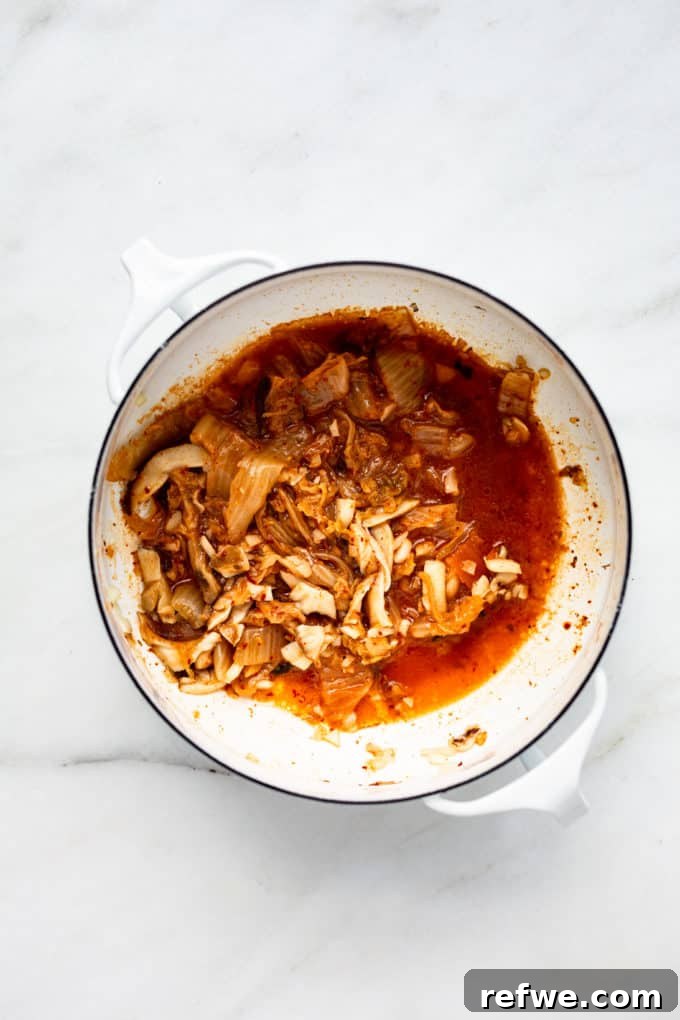
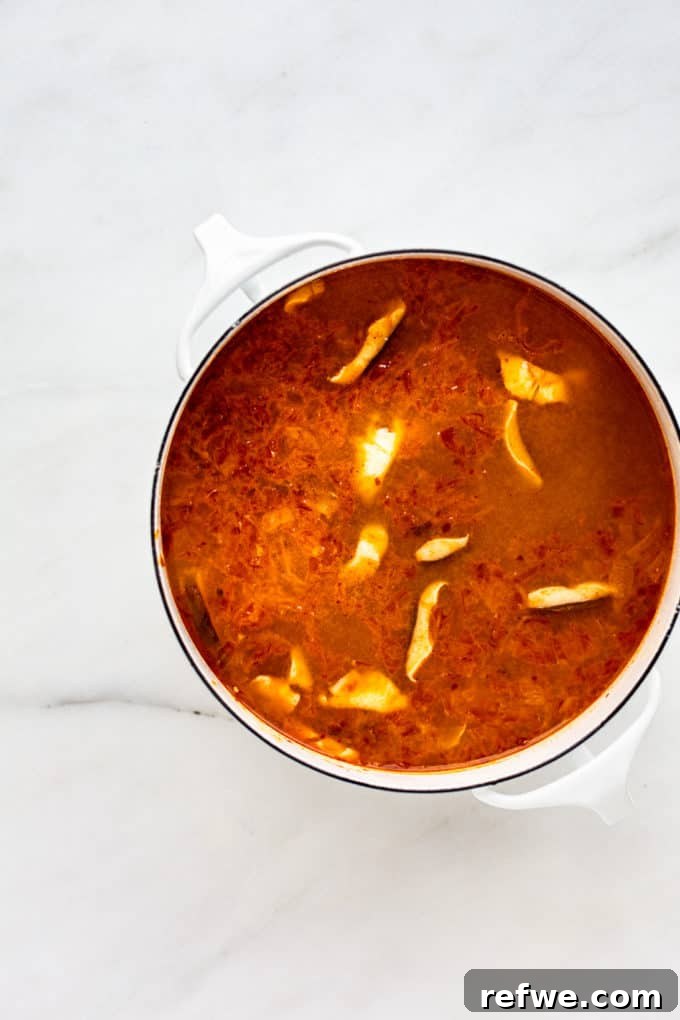
- Create the Broth: Pour in the kimchi juice, vegetable broth, soy sauce (or tamari), and coconut sugar. Give everything a good stir to combine. Bring the mixture to a rolling boil, then reduce the heat to a gentle simmer. Allow the broth to simmer for at least 10 minutes; this crucial step allows all the flavors to meld and deepen beautifully.
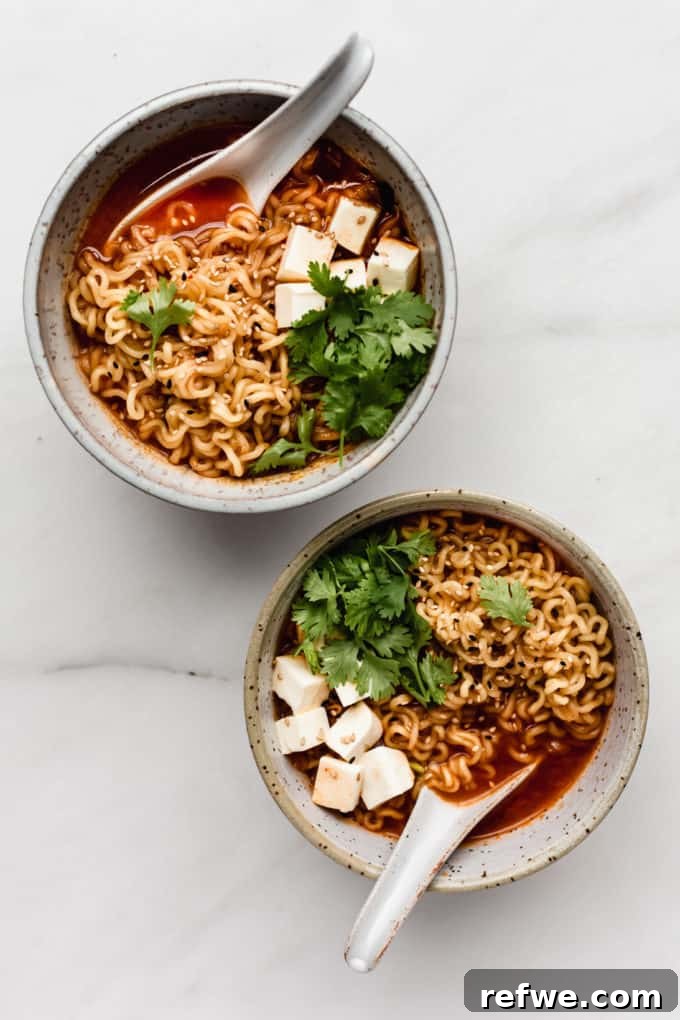
- Add Tofu and Noodles: After the broth has simmered, raise the heat back to medium. Carefully add the cubed soft tofu and your ramen noodles to the pot. Cook for 2-3 minutes, or according to the noodle package instructions, until the noodles are tender yet still have a pleasant chew. Be careful not to overcook them!
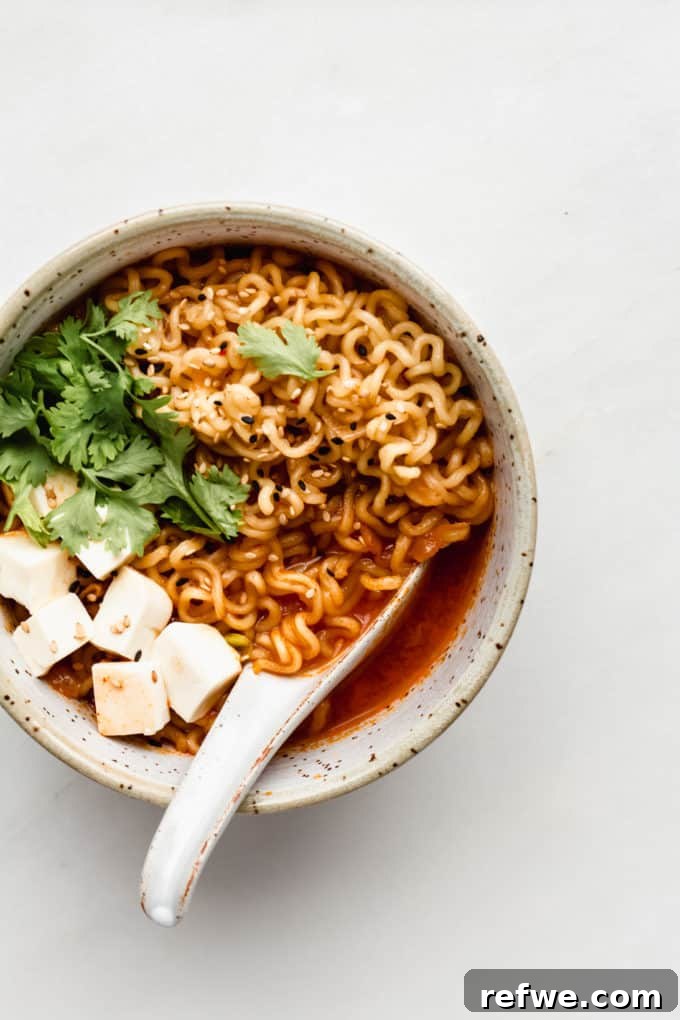
- Serve and Garnish: Taste the soup and adjust the seasoning if needed – you might want a little more soy sauce for saltiness or sugar for balance. Ladle the hot Kimchi Ramen into bowls. Garnish with fresh chopped green onions, a sprinkle of sesame seeds, or a drizzle of chili oil if you like extra heat. Enjoy immediately!
Expert Tips for the Ultimate Kimchi Ramen Experience
To ensure your Kimchi Ramen turns out perfectly every time and to maximize its flavor, keep these expert tips in mind:
- Control Saltiness with Low-Sodium Broth: Always start with a low-sodium vegetable broth. This is crucial because kimchi itself is salty, and you’ll be adding soy sauce (or tamari) for seasoning. Using low-sodium broth allows you to gradually build the salt level to your preference, preventing an overly salty soup. You can always add more soy sauce at the end if needed.
- Don’t Skimp on Kimchi Juice and Curry Paste: These two ingredients are non-negotiable for the authentic, deep flavor of this ramen. The kimchi juice adds a vital layer of fermented tang and probiotic goodness, while the red curry paste provides immediate, complex spices and a gentle warmth. They are the backbone of the broth’s unique character.
- Prepare Ahead for Enhanced Flavor: Kimchi Ramen, like many soups, often tastes even better the next day after the flavors have had more time to meld and deepen. If you plan to prepare this soup ahead of time, cook the broth and all ingredients *except* the noodles.
- Prevent Soggy Noodles: If making ahead, store the cooked noodles separately from the soup. Reheat the broth gently on the stovetop, then add fresh or pre-cooked (but still firm) noodles to individual bowls just before serving. This prevents the noodles from absorbing too much liquid and becoming soggy or mushy.
- Adjust Spice Levels to Your Liking: The spice level can vary based on your kimchi and curry paste. For more heat, add a dash of gochujang (Korean chili paste), sriracha, or a sprinkle of red chili flakes to your bowl. For a milder soup, use less curry paste and choose a less spicy kimchi.
- Experiment with Garnishes: While green onions are classic, feel free to get creative with your garnishes. Toasted sesame seeds, a drizzle of chili oil, shredded nori (seaweed sheets), fresh cilantro, or even a wedge of lime can add extra layers of flavor and texture.
- Consider Additional Vegetables: This ramen is highly adaptable. Feel free to stir in other quick-cooking vegetables like spinach, bok choy, thinly sliced carrots, or corn kernels during the last few minutes of simmering to boost nutrition and flavor.
Customize Your Kimchi Ramen: Endless Variations
One of the joys of cooking at home is the ability to customize. Our Kimchi Ramen recipe is an excellent base for your culinary creativity:
- Add More Greens: Stir in a handful of fresh baby spinach, chopped bok choy, or napa cabbage during the last minute of cooking for extra vitamins and a vibrant color.
- Boost the Protein: For non-vegan options, a perfectly soft-boiled egg is a classic ramen topping. For vegan alternatives, consider adding edamame, pan-fried tempeh, or even some crumbled plant-based ground meat for a heartier meal.
- Enhance Umami: A splash of mirin (sweet rice wine) or a tiny bit of miso paste (dissolved in a little hot water) can add even more depth and umami to the broth.
- Extra Kick: If you love a fiery ramen, stir in a spoonful of gochujang (Korean chili paste) along with the curry paste, or top your bowl with extra chili flakes or a generous swirl of chili oil.
- Different Noodles: While ramen noodles are traditional, feel free to experiment with other noodle types like udon or soba for a different texture and experience.
Frequently Asked Questions About Kimchi Ramen
Here are some common questions about making and enjoying Kimchi Ramen:
- Is Kimchi Ramen naturally spicy? Yes, kimchi ramen typically has a moderate to high level of spiciness due to the kimchi and red curry paste. However, you can adjust the heat by choosing a milder kimchi, reducing the amount of curry paste, or adding less chili when serving.
- Can I make this recipe gluten-free? Absolutely! To make this Kimchi Ramen gluten-free, ensure you use tamari instead of soy sauce, and verify that your vegetable broth and red curry paste are certified gluten-free. Most ramen noodles contain wheat, so look for gluten-free rice noodles or specific gluten-free ramen noodle brands.
- What’s the best type of tofu to use? Soft or silken tofu is highly recommended for this recipe. Its delicate texture absorbs the rich flavors of the broth beautifully and provides a creamy contrast to the chewy noodles. Firm or extra-firm tofu will have a different texture and may not soak up the flavors as well.
- How long does Kimchi Ramen last in the fridge? The broth, without the noodles, can be stored in an airtight container in the refrigerator for up to 3-4 days. Cooked noodles are best stored separately and added just before serving to prevent them from becoming soggy.
- Can I freeze Kimchi Ramen? You can freeze the broth successfully. Allow it to cool completely, then transfer it to a freezer-safe container for up to 2-3 months. Thaw overnight in the refrigerator before reheating. Do not freeze the noodles or tofu, as their texture will change significantly upon thawing.
- What if I can’t find shiitake mushrooms? If shiitake mushrooms are unavailable, cremini (baby bella) mushrooms or even white button mushrooms can be used as a substitute. While they won’t provide the exact same umami depth, they will still contribute an earthy flavor and good texture.
More Ramen Recipes to Satisfy Your Cravings
If you loved this Kimchi Ramen, you might enjoy exploring other delicious ramen variations:
- Quick and Easy Vegan Ramen: A fantastic option for a straightforward, plant-based ramen experience.
- Ramen Noodle Stir Fry: A creative way to use ramen noodles in a vibrant stir-fry dish.
- Spicy Thai Vegan Ramen: For those who love a fusion of Thai flavors with the comforting warmth of ramen.
If you’ve tried this delicious Kimchi Ramen or any other recipe on the blog, we’d love to hear from you! Please leave a comment and a rating below to share your experience. Your feedback helps us improve and inspires others. Don’t forget to follow along on Pinterest, Instagram, and Facebook for even more delicious and healthy recipes!
Print Recipe
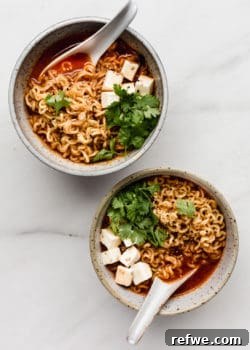
Kimchi Ramen
- Author: Jessica Hoffman
- Prep Time: 10 minutes
- Cook Time: 15 minutes
- Total Time: 25 minutes
- Yield: 4 servings
- Category: Main
- Method: Cook
- Cuisine: Korean
- Diet: Vegan, Vegetarian
Description
A delicious ramen noodle soup featuring the bold flavors of kimchi, crafted in under 30 minutes for a quick and satisfying meal!
Ingredients
- 1 tbsp vegetable oil
- 2 garlic cloves, finely chopped
- 2 green onions, chopped
- 5 shiitake mushrooms, sliced (fresh or rehydrated dried)
- 1 tbsp red curry paste (ensure vegan if needed)
- 1/2 cup kimchi, roughly chopped
- 1/4 cup kimchi juice (from the kimchi jar)
- 1 litre low-sodium vegetable broth
- 1-2 tbsp soy sauce or tamari (for gluten-free)
- 1 tsp coconut sugar (or other sweetener)
- 1 block soft tofu (about 14 oz / 400g), cut into 1-inch cubes
- 2 packs ramen noodles (discard seasoning packets, or use fresh)
Instructions
- Heat 1 tbsp vegetable oil in a large pot or Dutch oven over medium-high heat.
- Add the finely chopped garlic and the white and light green parts of the green onions. Sauté for 1 minute until fragrant.
- Add the sliced shiitake mushrooms and cook for another 1-2 minutes until slightly softened.
- Stir in the red curry paste and chopped kimchi, cooking for about 2 minutes to bloom the flavors.
- Pour in the kimchi juice, vegetable broth, 1 tbsp soy sauce (or tamari), and coconut sugar. Bring to a boil, then reduce heat and simmer for 10 minutes to allow flavors to meld.
- Raise the heat to medium, then add the cubed soft tofu and ramen noodles. Cook for 2-3 minutes, or according to noodle package directions, until the noodles are tender.
- Taste and adjust seasoning if needed, adding more soy sauce for saltiness or sugar for balance.
- Serve hot, garnished with the remaining fresh green onions, and enjoy your flavorful Kimchi Ramen!
Notes
*The amount of soy sauce needed can vary based on the saltiness of your vegetable broth and kimchi. Start with 1 tbsp and add more to taste if the soup requires additional saltiness.
Using a low-sodium broth is key to controlling the overall salt content of the soup. This way, you can easily adjust the seasoning without making it too salty.
Do not omit the red curry paste or kimchi juice. These ingredients are vital for developing the rich, complex, and authentic flavor of this Kimchi Ramen.
This soup often tastes even better the next day as the flavors continue to develop. It’s a great option for meal prep!
If preparing this ramen ahead of time, always store the cooked noodles separately from the broth to prevent them from becoming soggy. Add noodles to the hot broth just before serving.
Nutrition
- Serving Size: 1/4 of recipe
- Calories: 230
- Sugar: 4g
- Fat: 4g
- Carbohydrates: 35g
- Fiber: 3g
- Protein: 8g