
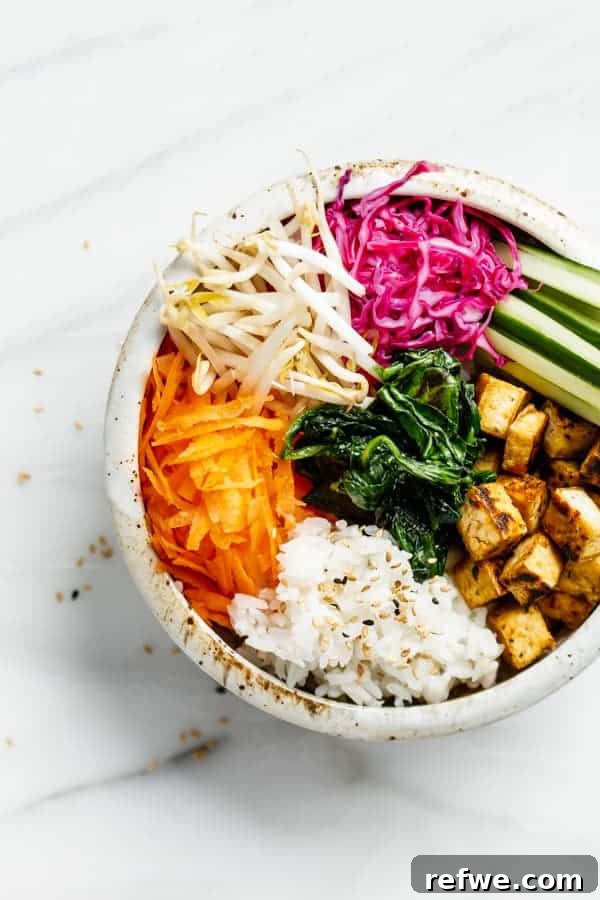
Welcome to a culinary journey that brings the vibrant flavors of Korea right into your kitchen! This **Vegan Bibimbap recipe** is a delectable plant-based rendition of the beloved classic Korean rice dish, meticulously crafted to deliver an explosion of taste and texture. Imagine a harmonious bowl filled with fluffy rice, golden-crisp tofu, a colorful array of fresh and pickled vegetables, all brought together by a rich, savory, and slightly sweet sauce. It’s a truly balanced and incredibly flavorful meal that’s naturally vegan and gluten-free, proving that healthy eating can be utterly delicious!
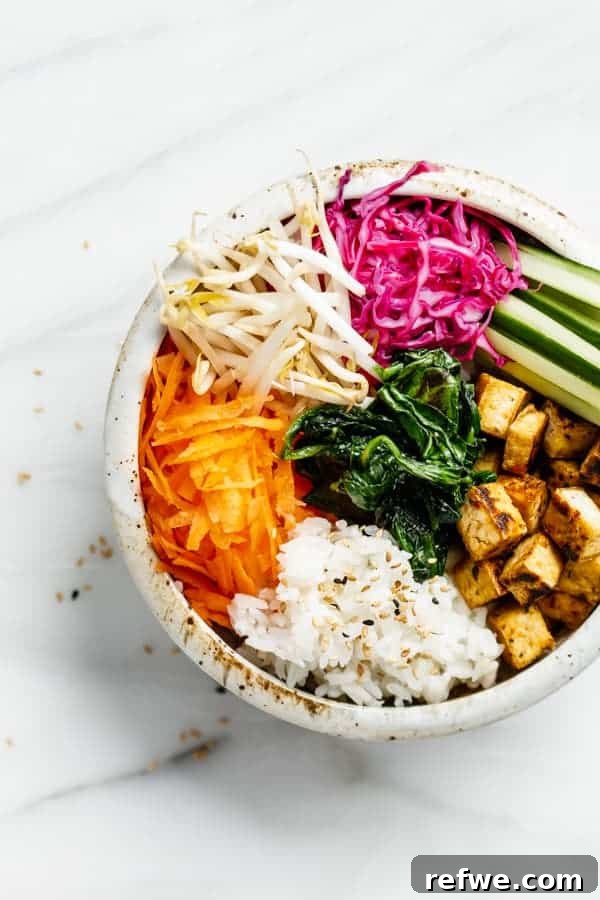
This recipe has been lovingly updated and perfected to ensure an even more delightful experience, making it a go-to for anyone craving a nutritious and satisfying meal.
What is Bibimbap? A Korean Culinary Gem
Bibimbap, which literally translates to “mixed rice,” is one of Korea’s most iconic and cherished dishes. Traditionally, it’s served in a “dolsot” (hot stone pot), where sizzling rice develops a delightful crispy crust at the bottom. This textural contrast is a hallmark of authentic bibimbap and one that we strive to replicate in our vegan version. The rice is then topped with an artful arrangement of assorted seasoned vegetables (namul), a protein (often beef or tofu), and typically a fried egg, all finished with a dollop of gochujang (Korean chili paste). The beauty of bibimbap lies in its versatility and the balanced medley of flavors and nutrients each spoonful offers.
While traditional bibimbap is undeniably delicious, this **plant-based Vegan Bibimbap** recipe offers all the comfort and complexity of the classic, tailored for a vegan lifestyle. We replace the meat and egg with perfectly seasoned, extra-crispy tofu, ensuring a satisfying protein punch, while retaining the essential combination of vibrant veggies and a deeply flavorful sauce. If you adore Korean flavors, you might also enjoy our Kimchi Fried Rice and Korean Tofu Soup, which share similar rich and aromatic profiles!
Why You’ll Love This Vegan Bibimbap Recipe
There are countless reasons why this **Vegan Bibimbap** will become a staple in your recipe rotation. First and foremost, it’s incredibly **flavorful**. Each component, from the tangy pickled cabbage to the savory stir-fried spinach and the irresistible sauce, contributes to a symphony of tastes that excite the palate. Secondly, it’s a powerhouse of **nutrition**. Loaded with a variety of vegetables, plant-based protein from tofu, and wholesome rice, it’s a well-rounded meal that nourishes your body. Plus, it’s naturally **gluten-free**, making it suitable for those with dietary restrictions.
Beyond its health benefits, this recipe is surprisingly **easy to make**. With a few simple preparation steps, you can assemble a restaurant-quality meal right at home. The process is broken down into manageable tasks, making it accessible even for novice cooks. The vibrant presentation also makes it a fantastic dish to impress guests, or simply to brighten up your weeknight dinner. It’s a meal that truly delivers on taste, health, and convenience.
Mastering the Art of Vegan Bibimbap: A Step-by-Step Guide
Crafting a delicious **Vegan Bibimbap** is a rewarding experience, and we’ve streamlined the process into a few straightforward steps. While it may seem like many components, each is simple to prepare individually, making assembly a breeze. Here’s a quick overview of how we bring this vibrant dish to life:
- **Prepare Your Pickled Cabbage:** This crucial step adds a fantastic tangy depth. It’s best done the night before to allow the flavors to fully develop.
- **Cook Your Rice:** The foundation of any good bibimbap, ensuring it’s cooked to perfection is key. We recommend using short-grain rice for optimal texture.
- **Achieve Crispy Tofu:** Pressing and pan-frying firm tofu until it’s beautifully golden and crisp transforms it into a delightful protein centerpiece.
- **Sauté Your Greens:** Lightly cooking spinach adds a soft, earthy element that complements the other textures.
- **Prepare Fresh Vegetables:** Quick preparation of carrots, cucumber, and bean sprouts adds freshness and crunch.
- **Whisk Up the Sauce:** The heart of the bibimbap, a perfectly balanced sauce ties all the ingredients together.
- **Assemble Your Bowl:** The exciting final step where you artfully arrange all your prepared ingredients over the rice, ready to be mixed and enjoyed!
Essential Components of Your Vegan Bibimbap Bowl
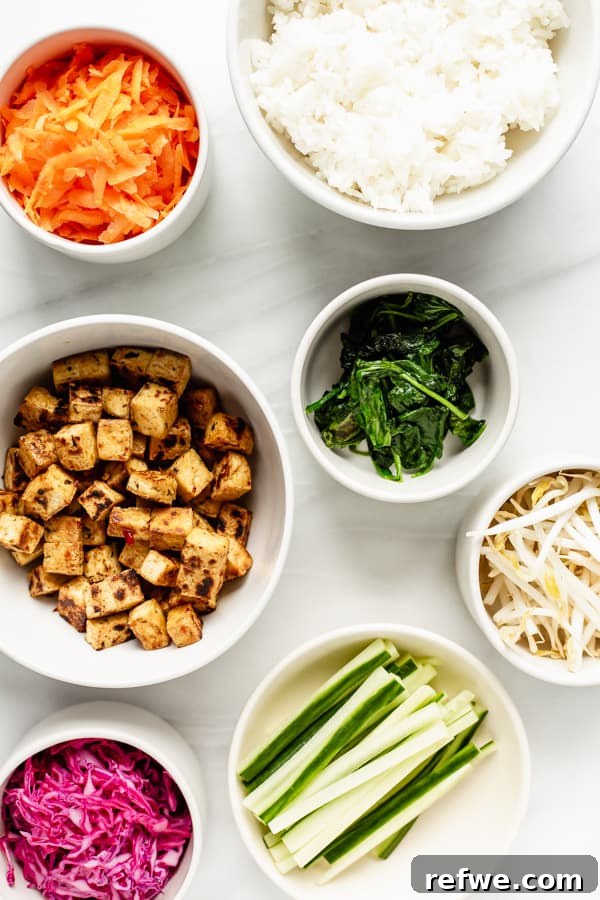
Every element in this **Vegan Bibimbap** recipe plays a vital role in creating a truly memorable dish. Understanding the contribution of each component will help you appreciate the balance and depth of flavor.
The Star: Perfectly Crispy Tofu
Tofu is the excellent plant-based protein substitute in this bibimbap, and getting it **crispy** is non-negotiable for the best experience. To achieve this, always start with **firm or extra-firm tofu**. The first and most crucial step is pressing the tofu to remove excess water. This allows it to absorb marinades better and crisp up beautifully. You can do this by wrapping the tofu block in paper towels, placing it between two plates, and weighting it down for at least 30 minutes, or even an hour. Once pressed, cut the tofu into uniform cubes. Pan-frying them in a little avocado or vegetable oil over medium-high heat until all sides are golden brown and firm will yield that coveted crispy exterior, adding a wonderful textural contrast to the soft rice and varied vegetables. This method ensures your vegan protein stands out.
The Foundation: Fluffy, Crispy Rice
The rice is the canvas for your bibimbap masterpiece. For an authentic experience, **short-grain rice** like Jasmine or sushi rice is highly recommended. These varieties have a stickier texture when cooked, which is perfect for building your bowl and achieving that desired crispy bottom if you’re using a hot stone pot or reheating in a pan. While long-grain rice like Basmati can be used, it won’t offer the same classic texture. Cooking the rice according to package directions is usually sufficient, but if you want that “sizzling rice” effect, simply add cooked rice back to a lightly oiled hot pan and let it cook undisturbed for a few minutes until a golden, crispy crust forms at the bottom.
The Rainbow: Vibrant Vegetable Medley
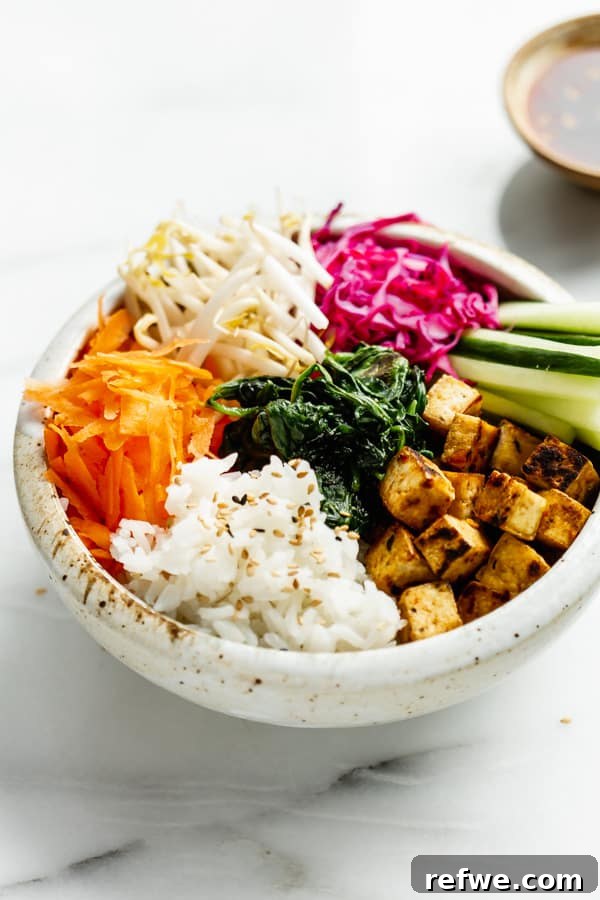
Bibimbap is renowned for its colorful array of vegetables, and this vegan version is no exception. We use a combination of fresh and lightly prepared veggies to add both nutritional value and appealing textures. **Spinach** is quickly sautéed with a touch of green onion until just wilted, bringing a soft, earthy flavor. Freshly **grated carrots** and thinly sliced **cucumber matchsticks** provide a refreshing crunch and vibrant color. And, of course, the **pickled cabbage** (or kimchi) is a non-negotiable component, offering a tangy, fermented bite that brightens the entire dish and adds a complex flavor dimension. Don’t hesitate to explore other vegetables like shiitake mushrooms, bean sprouts, zucchini, or bell peppers, all lightly sautéed or blanched, to further customize your bowl and boost its nutritional profile.
The Soul: The Irresistible Bibimbap Sauce
The sauce is arguably what truly brings a bibimbap bowl to life, coating every ingredient with its rich and balanced flavor. Our **homemade Vegan Bibimbap sauce** perfectly blends sweet, savory, tangy, and a hint of spicy notes. It features sweet chili sauce for its gentle sweetness and mild heat, balanced by rice vinegar for tanginess. Soy sauce (ensure it’s gluten-free if needed) provides umami depth, while a dash of sesame oil adds a nutty aroma. A touch of Sriracha can be included for an extra kick, and minced garlic infuses the sauce with aromatic warmth. This blend creates a versatile sauce that harmonizes with all the components, elevating each bite into a flavorful experience. Don’t be shy about adjusting the spice level to your preference!
Smart Meal Prep: Saving Time Without Sacrificing Flavor
One of the beauties of this **Vegan Bibimbap** recipe is how amenable it is to **meal prepping**. Preparing certain elements ahead of time can significantly cut down on your cooking time on busy weeknights, allowing you to enjoy a fresh, healthy meal with minimal effort. This makes it an ideal option for anyone looking to eat well even with a packed schedule.
The **pickled cabbage**, for instance, is not just *possible* to prepare in advance—it’s actually recommended! Giving it at least one night in the fridge allows the cabbage to fully absorb the pickling liquid, developing a deeper, more robust tangy flavor. You can even make a larger batch, as it stores wonderfully in an airtight jar in the refrigerator for up to a couple of weeks, ready to add a zesty punch to any meal.
Beyond the pickled cabbage, you can also prepare the **rice**, slice the **cucumber**, grate the **carrots**, and mix the **sauce** several days ahead. Store each component separately in airtight containers in the fridge. When you’re ready to enjoy your **Vegan Bibimbap**, all that’s left to do is cook the tofu and quickly sauté the spinach. If your pre-cooked rice has cooled, simply warm it up in a pan with a touch of oil, letting it sit undisturbed for a few minutes to create that coveted slightly crispy bottom. Then, simply assemble your bowl with all the fresh and prepped ingredients, drizzle with the sauce, and enjoy a quick, fresh, and unbelievably delicious meal!
Top Tips for Your Best Vegan Bibimbap
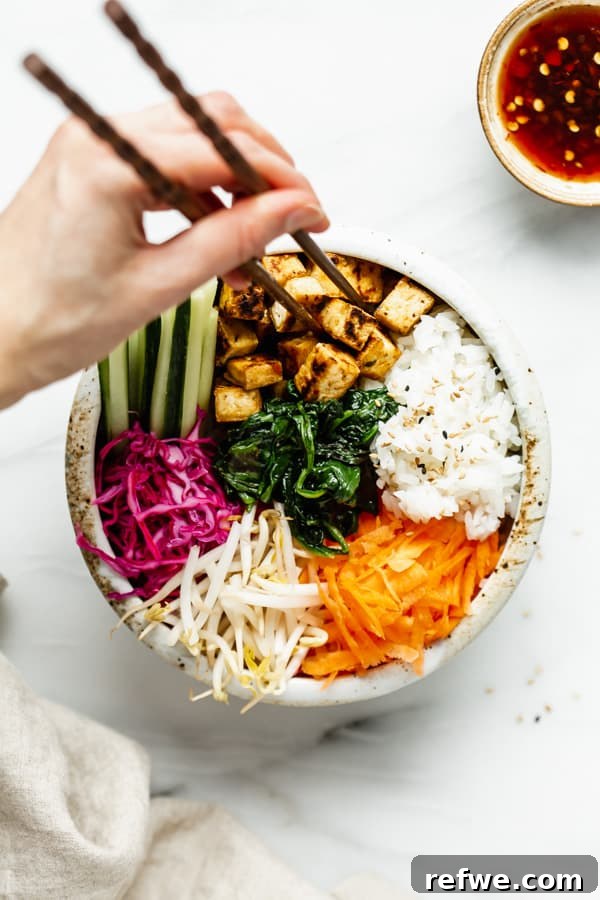
Achieving a truly outstanding **Vegan Bibimbap** is all about paying attention to a few key details. Follow these expert tips to ensure every bowl you make is perfect:
- **Opt for Short-Grain Rice:** As mentioned, the type of rice matters significantly for texture. **Short-grain rice**, such as Jasmine or sushi rice, creates a lovely chewy, slightly sticky base that’s ideal for bibimbap. Avoid long-grain varieties like Basmati, which tend to be too fluffy and separate, not providing the cohesive base needed for mixing.
- **Embrace Pickled or Fermented Veggies:** The tangy, complex flavor of a pickled or fermented vegetable is essential for authentic bibimbap. Our recipe calls for **pickled cabbage**, which is easy to make and adds a wonderful zing. If you’re short on time or prefer a different flavor, **store-bought kimchi** is an excellent alternative that offers a similar fermented kick and authentic Korean taste.
- **Select Firm Tofu:** To get that desirable crispy exterior on your tofu, always choose **firm or extra-firm tofu**. Softer varieties won’t hold their shape as well and will struggle to achieve the same satisfying crispiness. Remember to press your tofu thoroughly before cooking to remove excess moisture for the best results.
- **Serve Immediately for Maximum Freshness:** While components can be prepped, **Vegan Bibimbap is best enjoyed right after assembly**. The tofu will be hot and crispy, the rice will be warm, and the fresh vegetables will retain their delightful crunch. Mixing everything together while it’s still warm allows the flavors to meld beautifully.
- **Don’t Overcrowd Your Pan:** When cooking the tofu, ensure you’re not overcrowding the skillet. Tofu needs space to breathe and brown properly. Cook in batches if necessary to guarantee each piece achieves ultimate crispiness. Overcrowding leads to steaming, not searing.
- **Taste and Adjust the Sauce:** The sauce is personal! Before drizzling it over your bowls, give it a taste test. Adjust the level of sweetness, spiciness, or tanginess to suit your preference. A perfect sauce elevates the entire dish.
- **Mindful Mixing:** Once assembled, the traditional way to enjoy bibimbap is to mix all the ingredients together thoroughly with chopsticks or a spoon. This ensures every bite contains a medley of flavors and textures, making for a truly cohesive and delightful experience.
Customize Your Bowl: Endless Possibilities
One of the most wonderful aspects of Bibimbap, whether traditional or vegan, is its incredible flexibility. This recipe provides a fantastic base, but don’t hesitate to get creative and customize your bowl based on your preferences or what you have available in your pantry. Consider adding:
- **Different Proteins:** While crispy tofu is phenomenal, you could also try seasoned tempeh, sautéed mushrooms (like shiitake or oyster mushrooms), or even crumbled vegan mince for an alternative protein source.
- **More Vegetables:** Feel free to incorporate other thinly sliced or lightly cooked vegetables such as zucchini, bell peppers, rehydrated fernbrake (gosari), or blanched broccoli florets. Each addition contributes unique flavors, textures, and nutrients.
- **Spice Level Adjustment:** If you love heat, increase the amount of Sriracha in the sauce or add a sprinkle of gochugaru (Korean chili flakes) to your bowl. For a milder version, reduce the Sriracha.
- **Garnishes and Toppings:** Elevate your bibimbap with a sprinkle of toasted sesame seeds for added crunch and nutty flavor, shredded nori (seaweed) for umami, or fresh cilantro. Some even enjoy a vegan “egg yolk” made from pureed pumpkin or sweet potato for that classic touch!
Experimentation is encouraged! This recipe is designed to be a starting point for your own culinary adventures, allowing you to create a **Vegan Bibimbap** that perfectly suits your taste buds every time.
More Plant-Based Delights to Explore
If you’ve fallen in love with the versatility and deliciousness of tofu in this **Vegan Bibimbap**, you’re in for a treat! Tofu is a fantastic canvas for countless plant-based meals. Here are a few more of our favorite tofu-centric recipes that you might enjoy adding to your cooking repertoire:
- Vietnamese Noodle Bowls with Lemongrass Tofu: A refreshing and aromatic dish featuring fragrant lemongrass-infused tofu.
- Vegan Poke Bowls: A vibrant and fresh bowl where marinated tofu takes center stage in this Hawaiian-inspired classic.
- Kung Pao Tofu: A spicy, sweet, and savory stir-fry that’s packed with flavor and satisfying textures.
Vegan Bibimbap
- Author: Jess
Prep Time: 15 minutes
Cook Time: 20 minutes
Total Time: 35 mins
Yield: 4 bowls
Category: Entree
Method: Cook
Cuisine: Korean
Description
This **Vegan Bibimbap** is a healthy and flavorful plant-based Korean dish, loaded with savory crispy tofu, a vibrant assortment of fresh and pickled vegetables, and an utterly irresistible homemade sauce. It’s perfect for a wholesome, satisfying meal that’s easy to prepare and naturally gluten-free.
Ingredients
For the Pickled Cabbage
- 1 cup shredded red cabbage
- 1/2 cup white vinegar
- 1 cup of water
- 1 garlic clove, crushed
- 1/2 tsp salt
- 1 tbsp sugar
For the Flavorful Bibimbap Sauce
- 1/2 cup sweet chilli sauce
- 3 tbsp rice vinegar
- 2 tbsp soy sauce (gluten-free if needed)
- 1 tsp sesame oil
- 1 tsp Sriracha (adjust to taste for desired heat)
- 1 garlic clove, minced
For the Bibimbap Bowls
- 1 pack firm tofu, pressed and cut into cubes
- 2 tbsp avocado oil (or other high-heat vegetable oil), divided
- 6 cups fresh spinach
- 2 green onions, thinly chopped
- 2 cups Jasmine rice, cooked according to package directions (short-grain is best)
- 1 cup fresh beansprouts
- 2 carrots, grated
- 1 cucumber, chopped into matchsticks
- Optional: Toasted sesame seeds for garnish
Instructions
- Prepare the Pickled Cabbage: In a medium bowl, combine the shredded red cabbage, white vinegar, water, crushed garlic clove, salt, and sugar. Mix thoroughly until the cabbage is well coated. Cover the bowl and place it in the fridge for a minimum of one hour, though overnight is ideal for the best flavor development. This can be prepared days in advance.
- Prepare the Bibimbap Sauce: In a small jar or bowl, whisk together the sweet chili sauce, rice vinegar, soy sauce, sesame oil, Sriracha (if using), and minced garlic. Mix until all ingredients are well combined. Taste and adjust for sweetness or spice if desired. Set aside.
- Cook the Crispy Tofu: Heat 2 tablespoons of avocado oil in a large non-stick skillet over medium-high heat. Once the oil is shimmering, add the pressed and cubed tofu in a single layer, ensuring not to overcrowd the pan. Cook for 3-4 minutes on each side, or until each side is golden brown and deliciously crispy. Remove the crispy tofu from the pan and set aside.
- Sauté the Spinach: In the same pan (no need to clean it), add 1 teaspoon of avocado oil if needed, and reduce heat to medium. Add the thinly chopped green onions and sauté for 1 minute until fragrant. Add the fresh spinach and cook for 2-3 minutes, stirring occasionally, until the spinach has wilted down significantly. Remove from heat.
- Assemble Your Vegan Bibimbap Bowls: To build your bowls, start by adding a generous serving of cooked Jasmine rice to the bottom of each bowl. If using a hot stone bowl, allow the rice to sizzle for a few minutes to create a crispy bottom. Arrange the prepared components artfully over the rice: the crispy tofu, sautéed spinach, fresh bean sprouts, grated carrots, sliced cucumber matchsticks, and a portion of the tangy pickled cabbage. Drizzle generously with the prepared Bibimbap sauce. Garnish with toasted sesame seeds if desired.
- Serve and Enjoy: Serve your **Vegan Bibimbap** immediately while all components are warm and fresh. Gently mix all the ingredients together in your bowl before eating to ensure every spoonful is bursting with all the wonderful flavors and textures. Enjoy!
Notes
For the best texture in your bibimbap, always use **short-grain rice** like Jasmine or sushi rice, as it becomes deliciously sticky when cooked. Long-grain varieties may not provide the desired consistency.
Preparing the pickled cabbage at least one night in advance is highly recommended to allow the flavors to fully infuse. This also helps streamline your cooking process on the day of assembly. If you prefer, you can substitute homemade pickled cabbage with store-bought kimchi for a similar tangy, fermented element.
When selecting tofu, **firm or extra-firm tofu** is essential for achieving that delightful crispy texture. Remember to press out as much excess water as possible before cutting and cooking.
Any leftover bibimbap components should be stored separately in airtight containers in the refrigerator. This allows you to easily reheat the rice and tofu in a pan before assembling another fresh bowl, ensuring optimal taste and texture for future meals.
Feel free to adjust the spice level of the sauce to your preference by adding more or less Sriracha. You can also experiment with other vegetables like sautéed zucchini or mushrooms.
Nutrition
- Serving Size: 1/4 of the recipe
- Calories: 226
- Sugar: 12g
- Fat: 6g
- Saturated Fat: 1g
- Carbohydrates: 35g
- Fiber: 5g
- Protein: 9g
If you tried this incredible **Vegan Bibimbap** or any other delicious recipe on the blog, please let us know how you liked it! Your feedback means the world to us. Leave a comment and a rating below to share your experience. For even more wholesome and delicious plant-based inspiration, be sure to follow along on Pinterest, Instagram, and Facebook!