
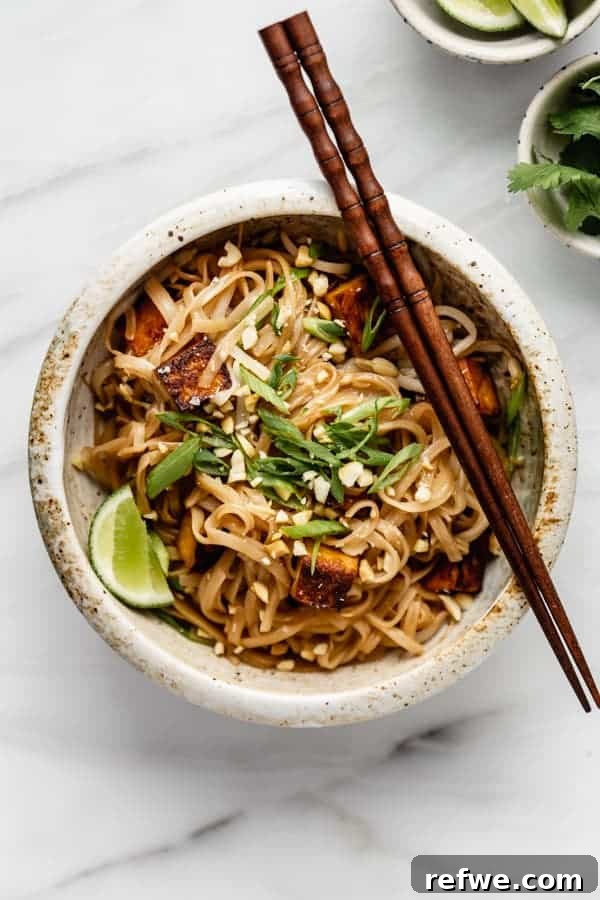
Embark on a culinary journey to Thailand with this incredible Tofu Pad Thai recipe, designed for convenience without compromising on authentic taste. Crafted with fresh, wholesome ingredients, this vibrant noodle dish comes together in just 20 minutes, making it an ideal choice for a healthy, satisfying weeknight meal. It’s not only a fantastic vegan option but also naturally gluten-free, ensuring everyone can enjoy its delightful flavors. Prepare to be amazed by the perfect balance of sweet, tangy, and savory notes in every bite.
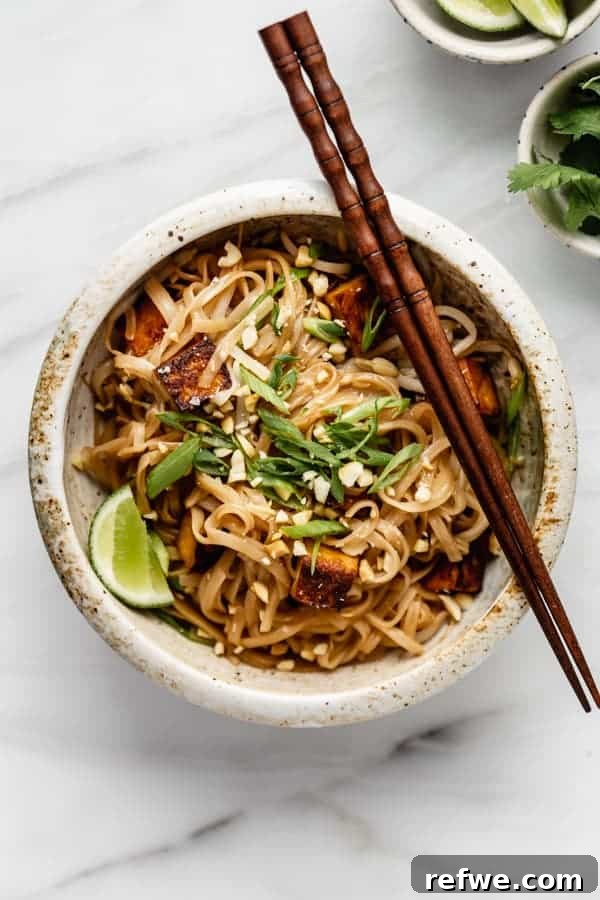
What Exactly is Pad Thai? Unveiling Thailand’s Iconic Noodle Dish
Pad Thai stands as a cornerstone of Thai cuisine, a beloved stir-fried noodle dish renowned globally for its complex yet harmonious flavor profile. This iconic meal typically features slender, chewy rice noodles, expertly stir-fried with a selection of protein – traditionally shrimp or chicken, but often with tofu for a plant-based twist. What truly defines Pad Thai, however, is its distinctive sauce: a magical blend that perfectly marries sweet, sour, salty, and umami notes, creating an unforgettable taste experience.
Originating as a popular street food, Pad Thai can be found at nearly every corner in Thailand, from bustling night markets to elegant restaurants. My most memorable experience involved learning to prepare an authentic Pad Thai from a local chef in Thailand, which deepened my appreciation for this incredible dish.
To craft this specific Tofu Pad Thai as a vegan and gluten-free delight, we’ve made thoughtful adaptations while retaining its essential character. The traditional fish sauce, a staple in many Thai dishes, is here thoughtfully substituted with high-quality soy sauce (or tamari for strictly gluten-free diets). Furthermore, the customary addition of egg is omitted, ensuring this recipe is entirely plant-based without sacrificing flavor or texture. If you’re looking for other refreshing Thai noodle options, especially for warmer weather, you absolutely must try our Thai Peanut Noodle Salad!
Why This Tofu Pad Thai Recipe Will Become Your New Favorite
- Effortlessly Quick & Simple: Forget long hours in the kitchen! This exceptional Tofu Pad Thai comes together from start to finish in a mere 20 minutes. It’s the perfect solution for busy weeknights when you crave something healthy, homemade, and utterly delicious without the fuss.
- Explosion of Vibrant Flavors: Prepare your taste buds for an unforgettable experience. This recipe masterfully combines the classic Pad Thai taste profile: a delightful sweetness from coconut sugar, a savory depth from soy sauce, a hint of salt, and a refreshing tang from fresh lime juice. Each spoonful delivers a balanced symphony of flavors that will leave you wanting more.
- Perfectly Vegan & Gluten-Free Friendly: Designed with dietary needs in mind, this recipe is naturally suitable for vegetarian, vegan, and gluten-free lifestyles. By replacing traditional animal products and using tamari if necessary, we ensure that everyone can enjoy the authentic taste of Pad Thai. It’s a truly inclusive dish that doesn’t compromise on taste or quality.
- Endlessly Versatile for Customization: One of the greatest joys of cooking is personalizing your meals, and this Tofu Pad Thai is incredibly adaptable. Feel free to incorporate your favorite vegetables, such as bell peppers, carrots, or broccoli, to boost nutrient content and texture. You can also experiment with different plant-based proteins or adjust the spice level to suit your preference.
- Healthy & Wholesome Meal: Packed with plant-based protein from tofu, complex carbohydrates from rice noodles, and fresh vegetables, this Pad Thai is a genuinely healthy meal. It offers sustained energy and a satisfying experience, proving that fast food can indeed be good for you.
Essential Tofu Pad Thai Ingredients: Crafting Culinary Magic
*For precise ingredient measurements and detailed cooking instructions, please refer to the comprehensive recipe card located further down on this page.
Creating an outstanding Tofu Pad Thai begins with selecting the right ingredients. Each component plays a vital role in building the layered flavors and textures that make this dish so irresistible:
- Rice Noodles: The foundation of any great Pad Thai. Opt for flat, dried rice noodles, which provide a naturally gluten-free base and absorb the sauce beautifully. They cook quickly and achieve that perfect chewy consistency crucial for this dish.
- Extra-Firm Tofu: Our star protein! Extra-firm tofu is essential for achieving those delightfully crispy, golden-brown cubes. Its robust texture holds up well to stir-frying and readily soaks up the savory sauce. If you love crispy tofu, you might also enjoy our Crispy Gochujang Tofu.
- Garlic Cloves: A cornerstone of flavor in countless cuisines, garlic infuses our Pad Thai with a deeply aromatic and savory base, essential for that authentic Thai taste.
- Garlic Chives: Offering a mild, delicate onion-like flavor with a hint of garlic, these chives contribute to the dish’s freshness and aromatic depth. Regular chives can be a suitable substitute if garlic chives are hard to find.
- Soy Sauce (or Tamari): This provides the crucial umami and savory notes that form the backbone of our vegan Pad Thai sauce, replacing traditional fish sauce. Ensure you use a gluten-free variety like tamari if catering to gluten sensitivities.
- Coconut Sugar: A natural sweetener that brings a subtle caramel-like sweetness, balancing the tangy and savory elements of the sauce. It’s an excellent, healthier alternative to refined sugars, and commonly used in authentic Asian cooking.
- Fresh Lime Juice: The indispensable ingredient for that signature tangy, bright, and refreshing kick. Freshly squeezed lime juice elevates all other flavors, providing a crucial acidic balance.
- Bean Sprouts: Added at the end, these deliver a wonderful crunch and a burst of freshness, essential for the authentic Pad Thai texture.
- Green Onion (Scallions): Used as both an ingredient and a garnish, green onions add a mild, pungent flavor and a beautiful splash of vibrant green color.
- Crushed Peanuts: Offering a delightful nutty flavor and a satisfying crunchy texture, crushed peanuts are a classic Pad Thai topping that adds another layer of complexity to the dish.
Crafting the Perfect Vegan Pad Thai Sauce
The sauce is arguably the most critical component of any Pad Thai, and our vegan rendition is a masterpiece of balanced flavors. It’s designed to be effortlessly delicious and adaptable to your pantry staples:
- Soy Sauce: This provides the foundational savory and umami taste for the sauce. You can use regular soy sauce or opt for a gluten-free soy sauce or tamari to ensure the dish is completely gluten-free. Tamari offers a very similar flavor profile to soy sauce but without the wheat.
- Coconut Sugar: Essential for balancing the tangy and savory elements, coconut sugar imparts a rich, subtle caramel-like sweetness. While traditional Pad Thai often uses palm sugar, which you can certainly use if available, coconut sugar is a readily accessible and excellent substitute found in most North American grocery stores. Brown sugar, agave syrup, or maple syrup can also be used as alternatives, each lending a slightly different nuance to the sweetness.
- Fresh Lime Juice: Fresh lime juice is non-negotiable for that bright, zesty acidity that cuts through the richness and truly brings the Pad Thai sauce to life. Always use freshly squeezed lime juice for the best results; bottled lime juice simply won’t deliver the same vibrant flavor.
- Optional: Sriracha or Chili Flakes: For those who love a bit of heat, a dash of sriracha or a pinch of chili flakes can be incorporated into the sauce for a spicy kick, elevating the flavor profile even further.
This harmonious blend creates a sauce that is both robust and refreshing, coating every noodle and piece of tofu with irresistible flavor.
Step-by-Step Guide: How to Make Tofu Pad Thai at Home
Making delicious Tofu Pad Thai in your own kitchen is simpler than you might think. Follow these straightforward steps to create a restaurant-quality meal in just minutes:
Step 1: Prepare the Tofu
Begin by heating a tablespoon or two of vegetable oil in a large wok or a spacious frying pan over medium-high heat. Carefully cut your extra-firm tofu block into bite-sized cubes. Once the oil is shimmering, add the tofu cubes to the pan in a single layer, ensuring not to overcrowd the pan. Cook the tofu for 2-3 minutes on each side, turning occasionally, until each cube achieves a beautiful golden-brown crispness. This crucial step develops a wonderful texture and rich flavor in the tofu.
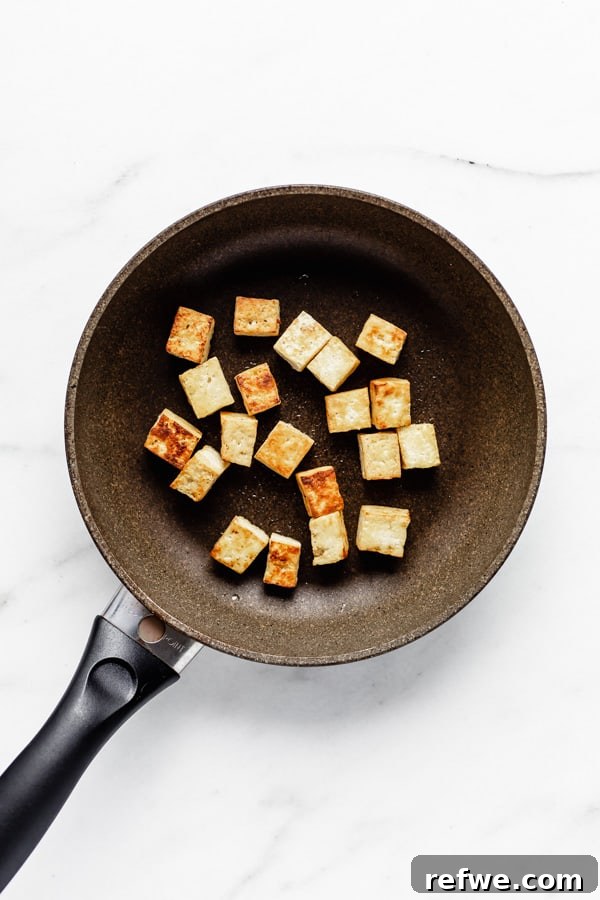
Step 2: Add Aromatics and Noodles
Once the tofu is perfectly golden, push it to one side of the pan to make room. Add the finely chopped garlic and the garlic chives (or regular chives) to the open space in the pan. Sauté for about one minute until fragrant, allowing their aromas to release and mingle. Next, introduce the pre-soaked rice noodles to the pan, along with the soy sauce, coconut sugar, and fresh lime juice. Toss all the ingredients vigorously, ensuring the noodles are thoroughly coated with the delicious Pad Thai sauce and everything is well combined.
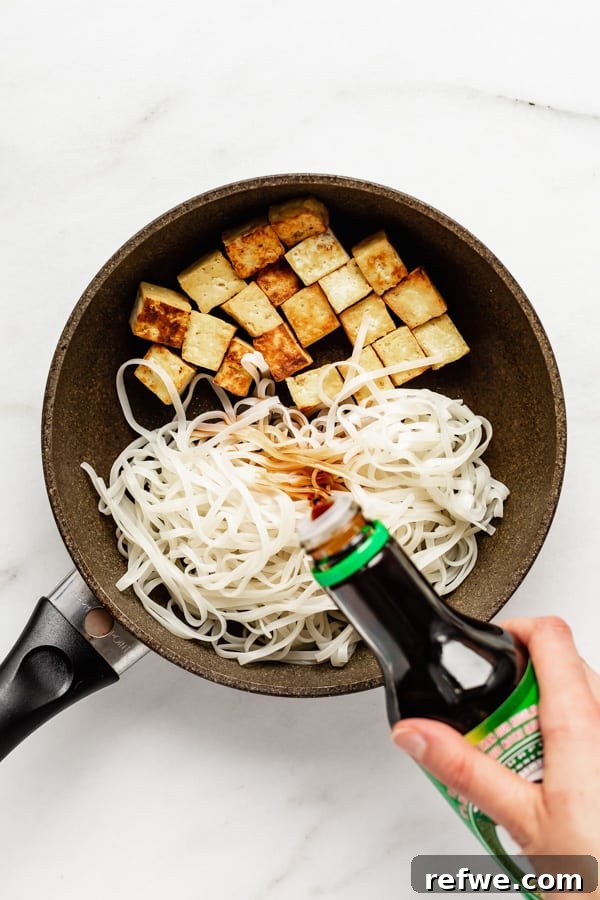
Step 3: Perfect the Noodles
To help the noodles cook to their ideal tender-chewy consistency and prevent them from sticking, gradually add water to the pan, about 2 tablespoons at a time. Continue to stir-fry gently, allowing the noodles to absorb the moisture and soften. Repeat this process until the noodles are perfectly tender but still retain a slight bite – avoid overcooking them, as they can become mushy. Finally, add the fresh bean sprouts to the pan and give everything another quick stir, just until the sprouts are slightly warmed through but still retain their crispness.
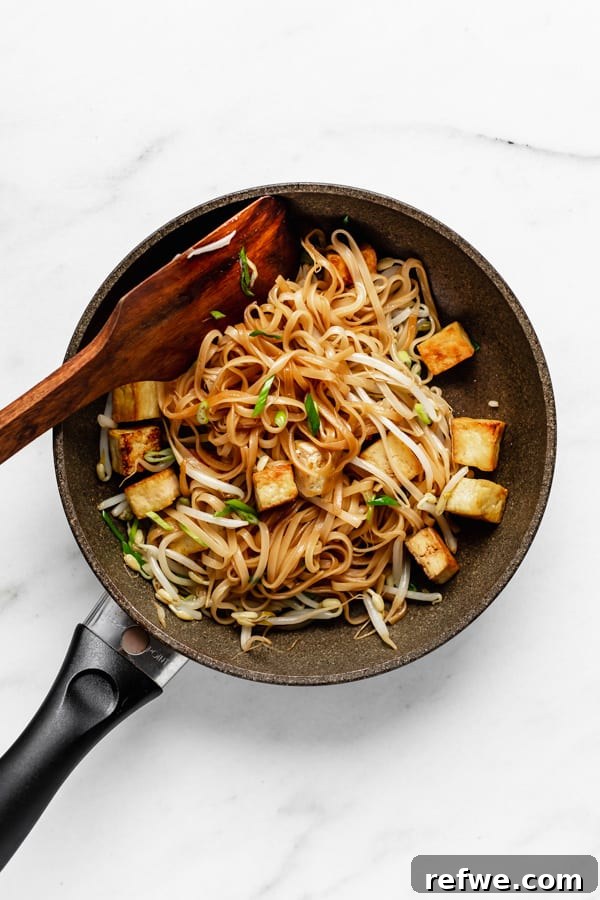
Step 4: Serve and Garnish
Once your Tofu Pad Thai is perfectly cooked, transfer it immediately to serving bowls. Garnish generously with freshly sliced scallions (green onions) and a sprinkle of crunchy crushed peanuts. For an extra burst of freshness and acidity, serve with a wedge of fresh lime on the side, allowing diners to squeeze more juice over their dish to taste. Enjoy this delightful meal instantly for the best flavor and texture!
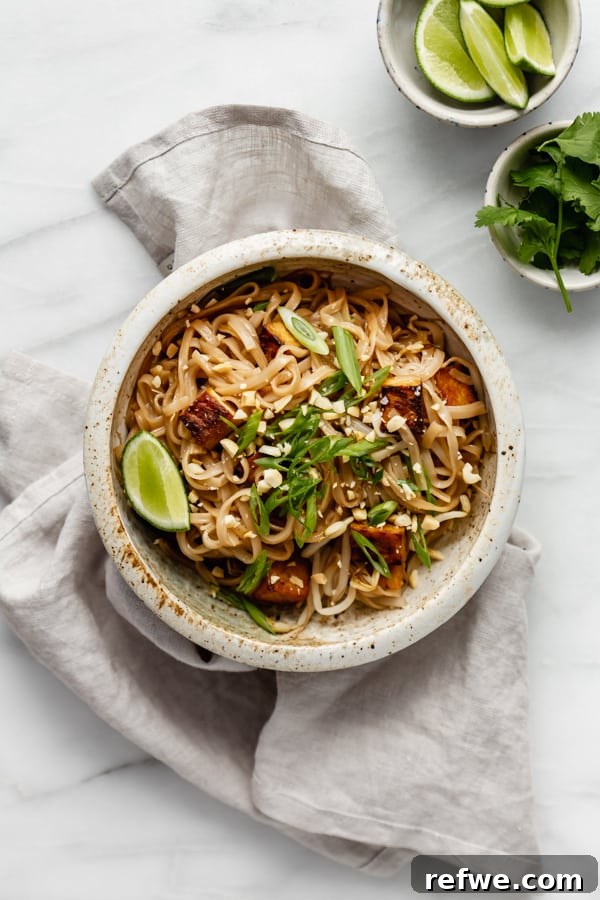
Inspiring Recipe Variation Ideas to Customize Your Pad Thai
While this Tofu Pad Thai recipe is perfect as is, it also serves as an excellent canvas for culinary creativity. Don’t hesitate to experiment with these ideas to make it uniquely yours:
- Protein Power-Up: For alternative plant-based proteins, consider swapping tofu with crumbled tempeh for an earthier flavor and firmer texture, or add shelled edamame for a boost of green goodness and protein. Pan-fried seitan can also offer a meaty bite.
- Veggies Galore: Amp up the nutritional value and vibrant colors by incorporating your favorite vegetables. Sliced bell peppers (red, yellow, or orange), shredded carrots, tender broccoli florets, snow peas, or sliced mushrooms all make excellent additions. Add harder vegetables earlier in the stir-frying process to ensure they cook through.
- Spice It Up: If you crave a fiery kick, introduce some heat! A drizzle of sriracha sauce or a pinch of red chili flakes stirred into the sauce or sprinkled over the finished dish will provide a delightful warmth. For more intense heat, finely chopped bird’s eye chilies can be added with the garlic.
- Low-Carb Alternatives: For a lighter, low-carb rendition, experiment with vegetable noodles. Zucchini noodles, spiralized sweet potato noodles, or even shredded cabbage can be used in place of or alongside rice noodles. Adjust cooking times accordingly, as vegetable noodles cook much faster.
- Nut-Free Option: If you have peanut allergies or prefer a different flavor, simply omit the peanuts. Toasted sesame seeds or even crunchy fried onions can offer a similar textural contrast without the peanuts.
- Herbaceous Freshness: Fresh cilantro, Thai basil, or mint leaves torn and sprinkled over the top just before serving can add an incredible layer of aromatic freshness that complements the Pad Thai flavors beautifully.
What to Serve with Your Delicious Tofu Pad Thai
Tofu Pad Thai is incredibly satisfying on its own, but it also pairs beautifully with a range of other Thai-inspired dishes to create a more expansive and festive meal. Here are some fantastic options to complement your Pad Thai:
- Thai Mango Salad: The sweet and tangy notes of a fresh mango salad provide a refreshing counterpoint to the richness of the Pad Thai.
- Thai Crunch Salad: For an extra boost of fresh vegetables and a different textural experience, a crisp Thai crunch salad with a vibrant sesame ginger dressing is an excellent choice.
- Thai Peanut Cauliflower Wings: If you’re looking for a delightful appetizer or side dish with a similar flavor profile and a satisfying crunch, these cauliflower wings are a perfect match.
- Thai Coconut Curry Tofu: To create a more elaborate Thai feast, serving your Pad Thai alongside a rich and aromatic Thai coconut curry adds another layer of flavor and warmth.
- Fresh Spring Rolls: Light and refreshing, fresh spring rolls with a peanut dipping sauce offer a cool contrast and a great way to incorporate more fresh veggies.
- Cucumber Salad: A simple, zesty cucumber salad can cleanse the palate and add a cool, crisp element to your meal.
Storing and Reheating Your Vegan Tofu Pad Thai
While Tofu Pad Thai is undoubtedly best enjoyed fresh, you can certainly store leftovers for future enjoyment. To maintain its quality, transfer any remaining Vegan Pad Thai into an airtight container and refrigerate promptly. It will stay delicious for up to 3 days. When you’re ready to savor it again, gently reheat it in the microwave until warmed through, or for a more revived texture, warm it in a skillet on the stovetop over medium heat with a tiny splash of water or vegetable broth to prevent sticking and rehydrate the noodles slightly.
Expert Tips for Crafting the Perfect Tofu Pad Thai
Achieving a truly exceptional Tofu Pad Thai at home is simple with these expert tips:
- Press Your Tofu for Maximum Crispness: For the crispiest tofu cubes, it’s crucial to use extra-firm tofu and press out as much excess water as possible before cooking. You can do this by wrapping the tofu in paper towels or a clean kitchen towel and placing a heavy object on top for at least 15-30 minutes. This ensures the tofu gets perfectly golden and absorbs the flavors better.
- Invest in a Large Wok or Skillet: A large pan or, ideally, a wok, is essential. It provides ample surface area for the ingredients to spread out and cook evenly, preventing steaming and ensuring proper stir-frying. Overcrowding the pan can lead to soggy noodles and tofu, so work in batches if necessary.
- Master the Noodle Soak: Rice noodles cook very quickly. Instead of boiling them fully, soak them in hot (not boiling) water until they are pliable but still slightly firm or “al dente.” They will finish cooking in the wok, absorbing the sauce and achieving the perfect texture without becoming mushy or clumpy.
- Taste and Adjust Seasoning: The key to great Pad Thai is a perfectly balanced sauce. Always taste the sauce before adding it to the noodles, and again at the end of cooking. Adjust the sweetness with more coconut sugar, the tanginess with additional lime juice, or the savory depth with more soy sauce to suit your personal preference.
- Garnish Generously for Flavor and Texture: Don’t underestimate the power of garnishes! Fresh lime wedges for squeezing, a generous sprinkle of crushed roasted peanuts, and vibrant chopped scallions are non-negotiable. Fresh cilantro or a few sprigs of Thai basil can also add an aromatic flourish. These additions provide bursts of flavor and crucial textural contrast.
- Prepare All Ingredients in Advance (Mise en Place): Pad Thai is a fast-paced dish. Have all your ingredients chopped, measured, and ready to go before you even turn on the stove. This “mise en place” approach ensures a smooth cooking process and prevents anything from burning while you’re scrambling for the next ingredient.
- High Heat, Quick Cooking: Stir-frying is all about high heat and quick cooking. Maintain a medium-high to high heat throughout the process to achieve that desirable “wok hei” (breath of the wok) flavor and prevent ingredients from becoming waterlogged.
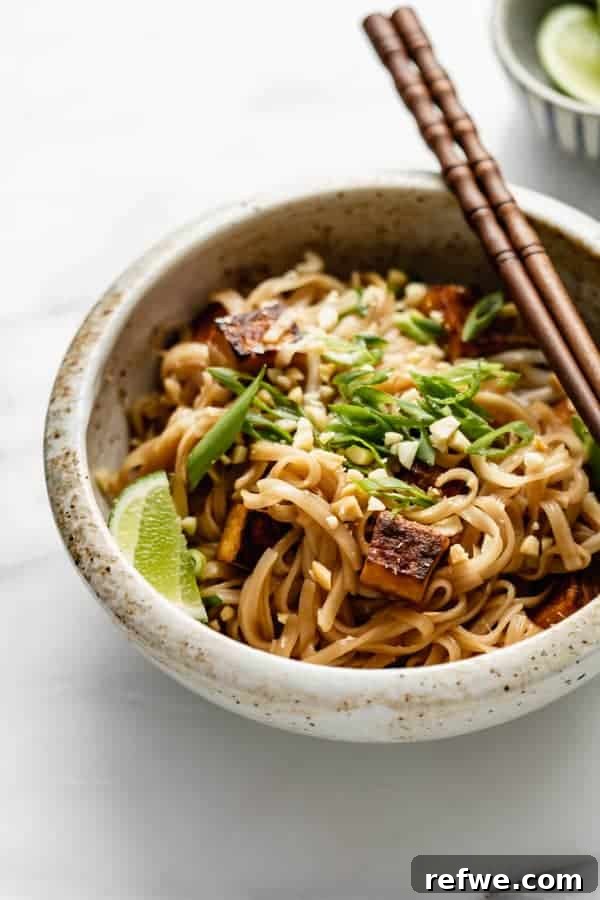
Frequently Asked Questions About Vegan Tofu Pad Thai
Traditionally, Pad Thai is indeed gluten-free, as it primarily uses rice noodles. However, many recipes or restaurant versions might include soy sauce that contains wheat. For this recipe, if you ensure you use gluten-free tamari or a certified gluten-free soy sauce, your Pad Thai will be completely gluten-free.
No, traditional Pad Thai is not vegan. Authentic recipes typically incorporate fish sauce for its distinctive umami flavor, along with egg, and sometimes even dried shrimp, especially in Thailand. This specific recipe, however, has been carefully crafted to be entirely vegan-friendly, using plant-based substitutes without compromising on the classic taste.
The best noodles for Pad Thai are flat, dried rice noodles. They have the perfect texture and absorb the sauce beautifully. These are widely available at most major grocery stores in the international aisle or, for a broader selection, at your local Asian supermarket.
Soaking Pad Thai noodles in hot water (rather than boiling them) is a traditional technique because rice noodles cook very quickly. Soaking them makes them pliable and partially cooked, allowing them to finish cooking directly in the stir-fry pan with the sauce. This method prevents overcooking, which can lead to mushy, sticky noodles, and allows the noodles to thoroughly absorb the rich flavors of the Pad Thai sauce, resulting in a perfectly tender and flavorful dish.
While Pad Thai is always best enjoyed immediately after cooking for optimal texture and freshness, you can certainly prepare components in advance. The sauce can be mixed and stored in the refrigerator for up to 3-4 days, and all vegetables and tofu can be chopped and ready to go. This “mise en place” strategy will significantly cut down on active cooking time when you’re ready to make the dish.
Absolutely! If you have a peanut allergy or simply prefer to omit them, this Pad Thai recipe is still wonderfully delicious without peanuts. You can leave them out entirely or substitute them with toasted sesame seeds or even crispy fried onions for a similar textural crunch, ensuring a peanut-free option that everyone can enjoy.
Explore More Delicious Noodle Recipes!
If you’ve fallen in love with this Tofu Pad Thai, you’ll surely enjoy exploring other fantastic noodle dishes from our collection. Expand your repertoire with these flavorful recipes:
- Vegan Pad See Ew: A savory, slightly sweet stir-fried noodle dish with wide rice noodles and Chinese broccoli.
- Thai Peanut Butter Ramen: A comforting and rich ramen bowl infused with creamy peanut butter and Thai-inspired flavors.
- 15-Minute Sesame Noodles: A quick, easy, and incredibly flavorful cold noodle dish perfect for a light meal or side.
- Pad Kee Mao [Drunken Noodles]: A spicy and aromatic stir-fried noodle dish with broad rice noodles, vegetables, and a robust sauce.
- Yaki Udon: Thick, chewy udon noodles stir-fried with vegetables and a savory Japanese sauce.
If you’ve had the pleasure of trying this Tofu Pad Thai recipe or any other delicious dish from our blog, we would love to hear from you! Please share your thoughts and rate the recipe by leaving a comment below. Your feedback helps us grow and inspires other home cooks. Don’t forget to connect with us and discover even more delectable recipes by following us on Pinterest, Instagram, TikTok, and Facebook for daily inspiration and culinary adventures!
Join our community and never miss out on delicious, healthy recipes. Subscribe today!
Print Recipe
Tofu Pad Thai
- Author: Jessica Hoffman
Prep Time: 10 minutes
Cook Time: 10 minutes
Total Time: 20 minutes
Yield: 2 servings
Category: Entree
Method: Cook
Cuisine: Thai
Diet: Vegan
Description
A simple yet incredibly flavorful Tofu Pad Thai recipe that’s easy to prepare and ready in under 20 minutes, perfect for a healthy and quick weeknight meal!
Ingredients
Units
- 1/2 pack rice noodles (approx 7 oz)
- 1/2 block of extra-firm tofu, pressed and cut into small cubes
- 2 tbsp vegetable oil
- 1/4 cup – 1/2 cup water
- 1 garlic clove, finely chopped
- 1 large handful garlic chives (can sub regular chives)
- 2 tbsp soy sauce (gluten-free tamari if needed)
- 1 tbsp coconut sugar (can sub agave, maple syrup, or brown sugar)
- juice of 1/2 lime (freshly squeezed)
- 1 cup bean sprouts
- crushed peanuts and sliced scallions for serving
Instructions
- Bring a pot of water to a boil, then pour it into a large heat-proof bowl. Add the flat rice noodles to the hot water and let them soak until they are tender but still retain a slight firmness (al dente). They should not be overly soft, as they will continue to cook in the pan. Drain the noodles thoroughly and set them aside.
- Heat the vegetable oil in a large non-stick frying pan or wok over medium-high heat. Add the cubed, pressed extra-firm tofu and cook for 2-3 minutes on each side, turning gently, until all sides are beautifully golden brown and crispy.
- Carefully push the cooked tofu to one side of the pan. Reduce the heat to medium. Add the finely chopped garlic and garlic chives to the clear side of the pan and sauté for about one minute until fragrant. Then, add the pre-soaked rice noodles, soy sauce (or tamari), coconut sugar, and fresh lime juice to the pan. Toss everything together, ensuring the noodles and tofu are well coated with the sauce.
- Slowly add water to the pan, 1-2 tablespoons at a time, continuously stirring. This helps the noodles cook through evenly and prevents them from sticking together. Continue adding water and mixing until the noodles are perfectly tender but still have a pleasant chew.
- Reduce the heat to low. Add the fresh bean sprouts to the pan and gently mix them into the Pad Thai. Cook for just about 30 seconds to 1 minute, until the bean sprouts are slightly warmed but still crisp.
- Serve the Tofu Pad Thai immediately. Garnish generously with crushed peanuts and freshly sliced scallions (green onions) for an extra layer of flavor and texture. A lime wedge on the side is also recommended for a fresh squeeze.
Notes
For the best experience, Tofu Pad Thai is most enjoyable when served immediately after cooking. The noodles retain their ideal texture, and the flavors are at their peak.
Should you have any leftovers, store them in an airtight container in the refrigerator for up to 3 days. Reheat gently in a microwave or on the stovetop with a little water or broth to loosen the noodles.
Nutrition
- Serving Size: 1/3 recipe
- Calories: 265
- Sugar: 6g
- Sodium: 600mg
- Fat: 13g
- Saturated Fat: 2g
- Carbohydrates: 50g
- Fiber: 3g
- Protein: 8g