
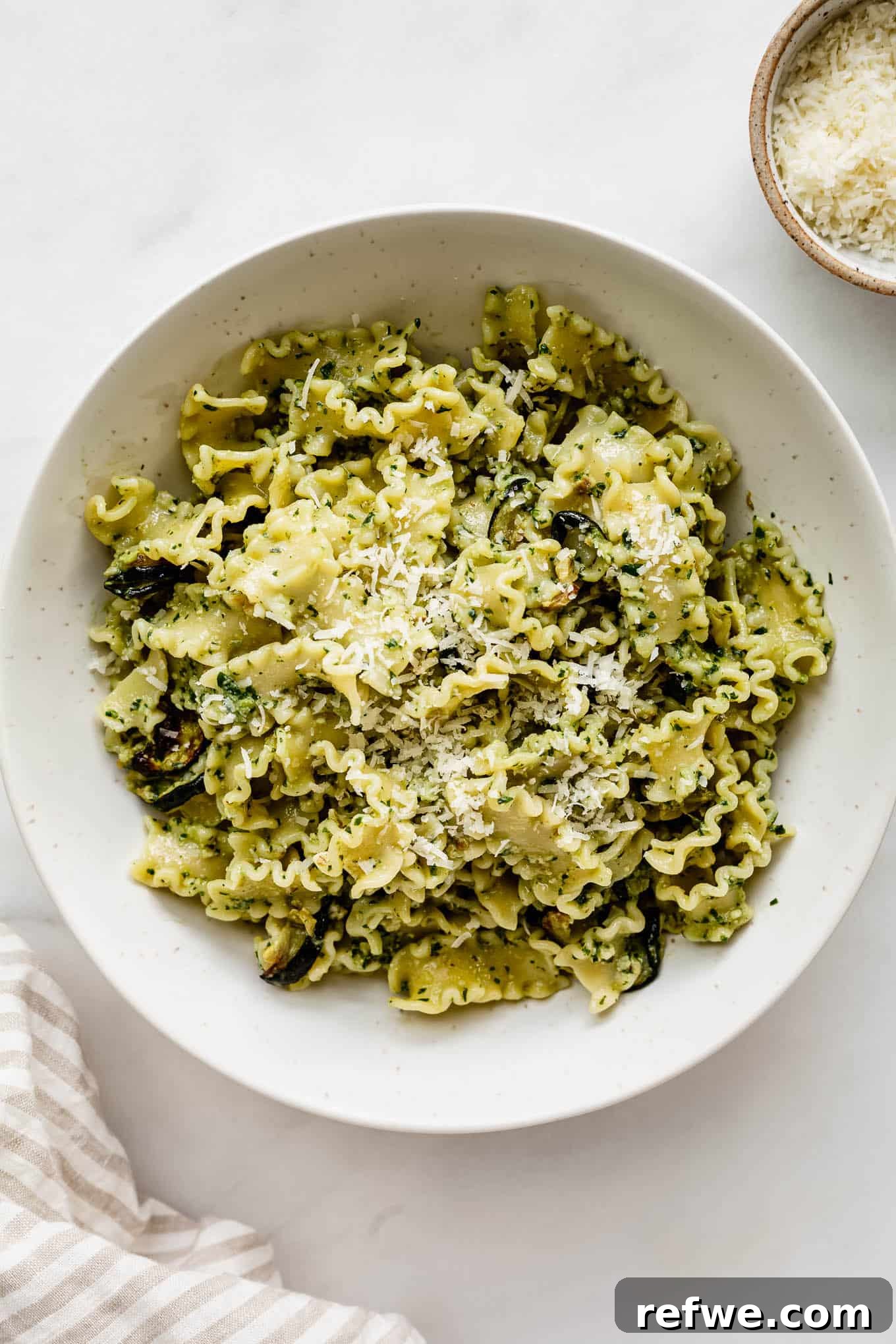
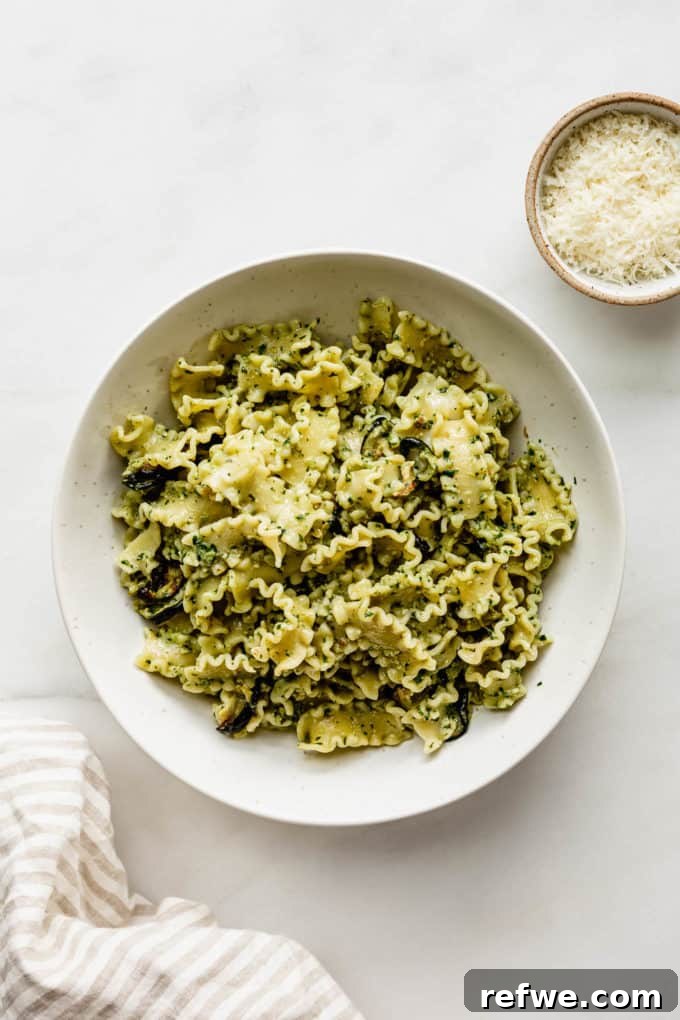
This Veggie Pesto Pasta recipe offers a healthy and incredibly simple way to enjoy a comforting pasta dish, elevated by the vibrant flavors of homemade walnut pesto and tender roasted zucchini. It’s a complete meal that delivers a satisfying serving of vegetables in every forkful. Whether you prefer traditional pasta, or need a gluten-free or grain-free alternative, this versatile recipe adapts beautifully to your dietary needs, promising a delicious experience for everyone.
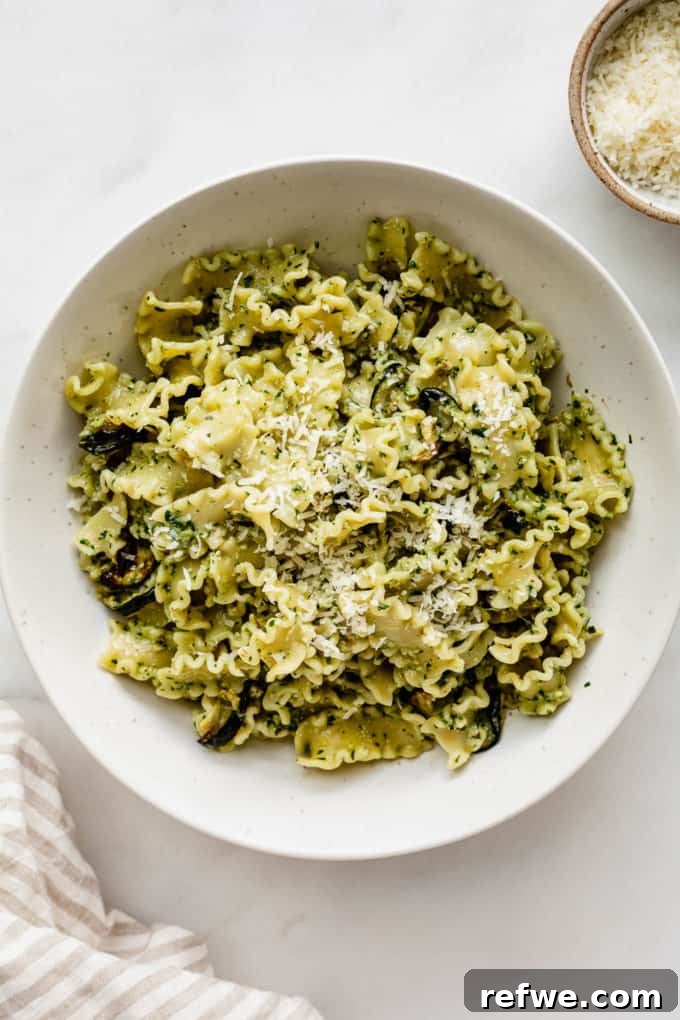
Vegetarian Pesto Pasta: A Summer Favorite with Zucchini
Today, we’re thrilled to share an absolutely amazing and simple recipe perfect for those busy weeknights or whenever you crave something fresh and flavorful: our signature Veggie Pesto Pasta! This dish isn’t just a meal; it’s an experience, especially during the warmer months when garden-fresh ingredients are at their peak.
This recipe truly shines in the summer, benefiting from the abundance of fresh, locally sourced basil and zucchinis. Imagine strolling through your local farmer’s market, picking out the most fragrant basil leaves and crisp zucchinis—that’s the magic behind this dish! While it’s certainly a summer star, don’t hesitate to whip it up year-round; quality ingredients are often available in most grocery stores. Pesto, with its rich, herbaceous profile, stands out as one of my absolute favorite vegetarian sauces. Its versatility is truly unmatched, transforming everything from a refreshing pesto pasta salad into a vibrant main course, or even forming the base for a gourmet pesto pizza. Here, it beautifully coats your chosen pasta, creating a harmonious blend of flavors and textures.
The star vegetable in this particular Veggie Pesto Pasta is none other than zucchini! This mild, versatile squash is incredibly plentiful during summertime, and in my humble opinion, nothing complements the robust, garlicky notes of pesto quite like perfectly roasted zucchini. Roasting brings out its natural sweetness and gives it a delightful tender-crisp texture that stands up wonderfully to the pasta and sauce. Beyond its taste, zucchini adds valuable nutrients, making this dish both delicious and incredibly healthy.
If zucchini isn’t quite to your liking, or if you simply wish to explore other options, feel free to substitute or add other summer vegetables. Asparagus and fresh spinach would lend a delicate, earthy flavor, while roasted Brussels sprouts could introduce a wonderful depth and slight bitterness. The beauty of this recipe lies in its adaptability. Incorporating a generous serving of vegetables into this pasta dish not only boosts its nutritional value but also adds vibrant color and diverse textures, ensuring you get your daily dose of goodness in a truly enjoyable way.
Crafting Your Perfect Pesto Pasta: The Essential Ingredients
Creating an exceptional Veggie Pesto Pasta starts with understanding the role of each ingredient. Here’s a closer look at what you’ll need and some tips for selection:
- Pasta: The foundation of our dish! The wonderful thing about pesto is its compatibility with virtually any pasta shape—from long strands like spaghetti or linguine to short, robust shapes like penne, fusilli, or orecchiette. Choose your favorite, or experiment with different textures. For those with dietary restrictions, this recipe is incredibly adaptable to gluten-free or grain-free pasta varieties, ensuring everyone can enjoy a hearty bowl.
- Pesto: This is where the magic truly happens! Our recipe features a luscious homemade walnut pesto, which offers a richer, slightly earthier flavor than traditional pine nut pesto, along with a creamy texture. While store-bought pesto is an option for convenience, I wholeheartedly recommend making it from scratch for the freshest, most vibrant results. You’ll taste the difference! For an adventurous twist, you could even try it with a homemade Kale Pesto for an extra boost of greens and a slightly different flavor profile.
- Zucchini: Our star vegetable! When roasted, zucchini develops a wonderful sweetness and tender texture that complements the bright pesto perfectly. It’s an effortless way to incorporate an extra serving of healthy vegetables into your meal. Don’t limit yourself, though; feel free to add any other vegetables you adore, making this dish truly your own.
- Parmesan cheese: Optional, but highly, highly recommended! A generous sprinkle of freshly grated Parmesan cheese over the finished pasta adds a savory, salty, and umami-rich finish that truly ties all the flavors together. For the best flavor, opt for a block of genuine Parmigiano-Reggiano and grate it yourself.
Step-by-Step: Mastering Your Veggie Pesto Pasta
Preparing this delightful Veggie Pesto Pasta is a straightforward process, broken down into a few simple steps. Let’s get cooking!
Step 1: Prepare Your Signature Walnut Pesto. Begin by assembling all the ingredients for your homemade walnut pesto. This includes fresh basil, walnuts, grated Parmesan, olive oil, a garlic clove, salt, pepper, and lemon juice. Add all these vibrant components to a food processor. Pulse the ingredients until they transform into a smooth, creamy, and wonderfully fragrant sauce. Make sure to stop and scrape down the sides of the food processor bowl as needed, ensuring all ingredients are thoroughly blended for a consistent texture. The specific measurements and detailed instructions for this delicious pesto can be found in the recipe card further down this page.
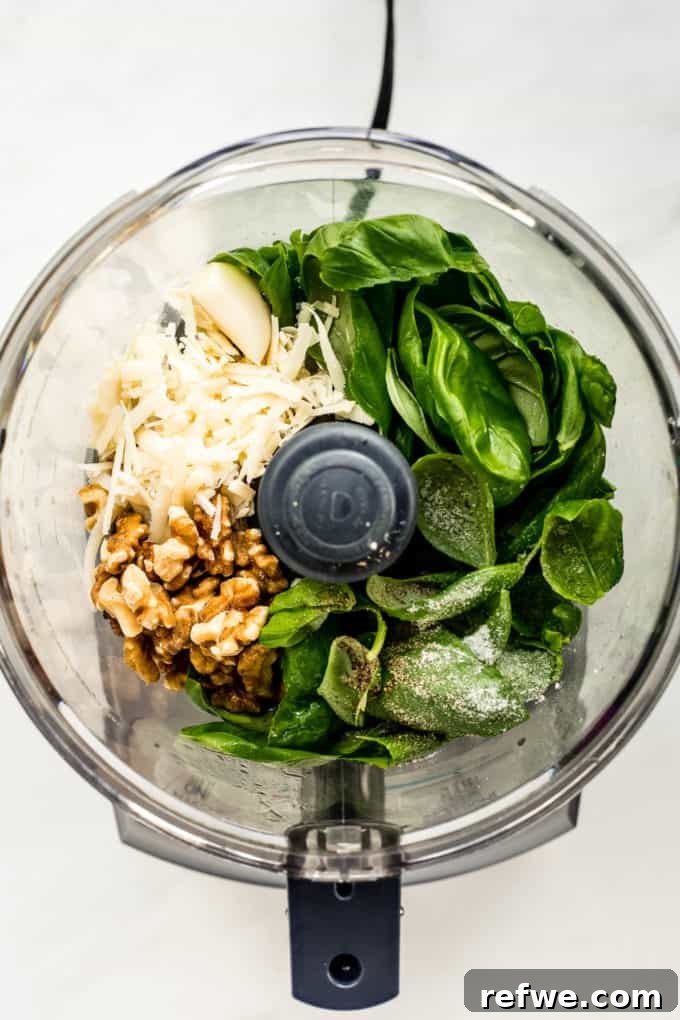
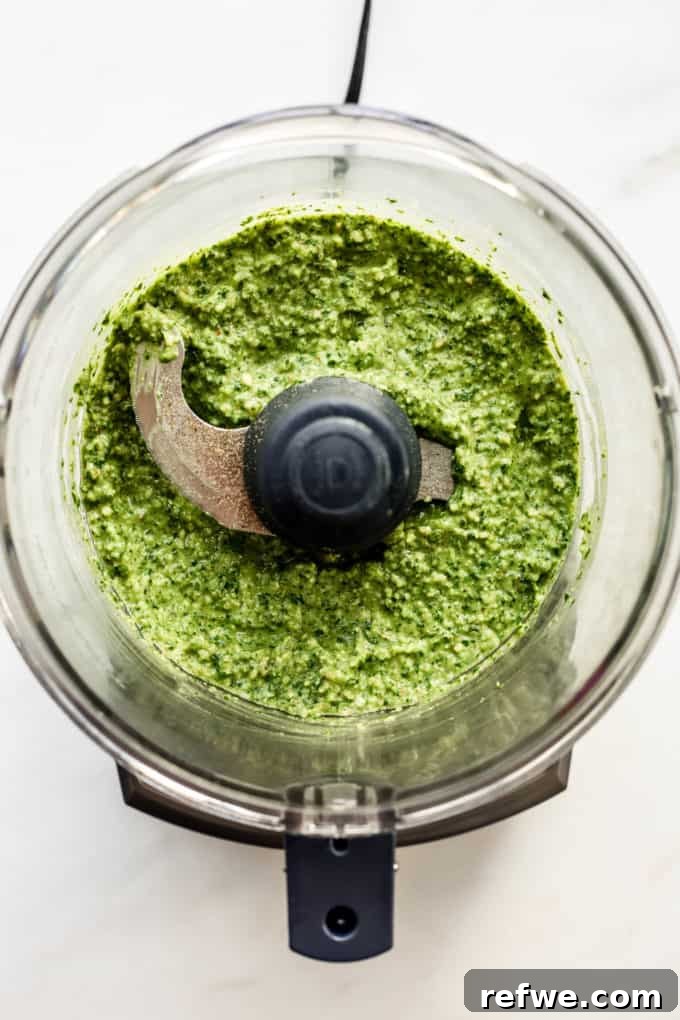
Step 2: Roast the Zucchini and Cook the Pasta. While your pesto is ready, preheat your oven to 400°F (200°C) for the zucchini. Slice your zucchini into uniform half-moon shapes or bite-sized pieces, then gently toss them with a touch of olive oil, salt, and pepper on a baking sheet lined with parchment paper. Spread the zucchini in a single layer to ensure even roasting and bake for about 15 minutes, or until tender and slightly caramelized at the edges. Simultaneously, bring a large pot of generously salted water to a rolling boil and cook your chosen pasta according to its package directions until al dente. This typically means it’s firm to the bite but cooked through. Once done, drain the pasta, reserving about ½ cup of the starchy pasta water before discarding the rest.
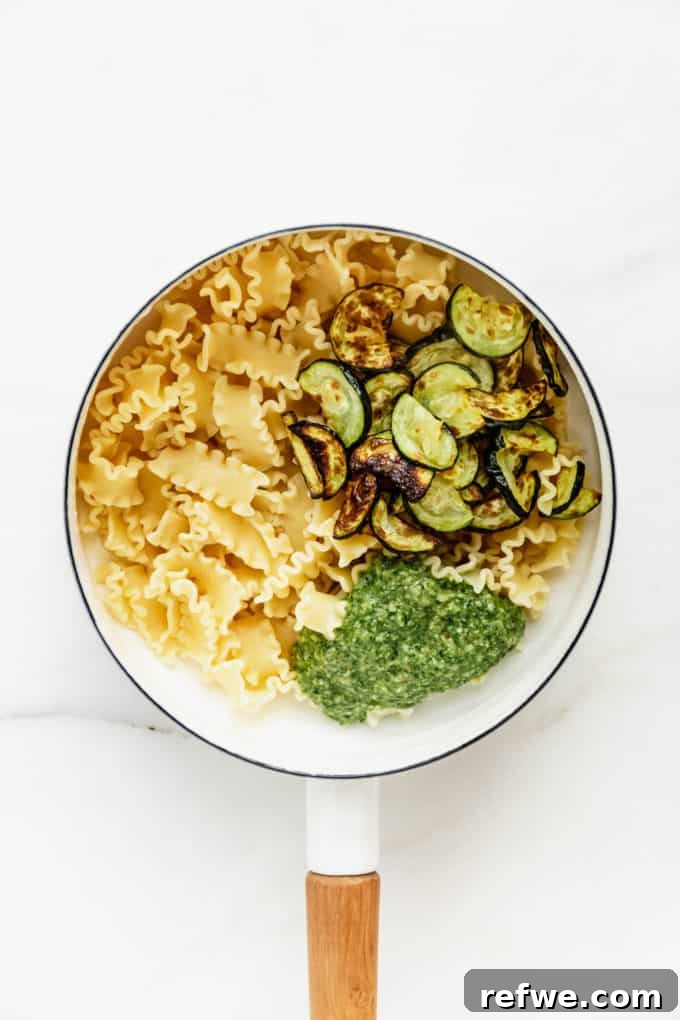
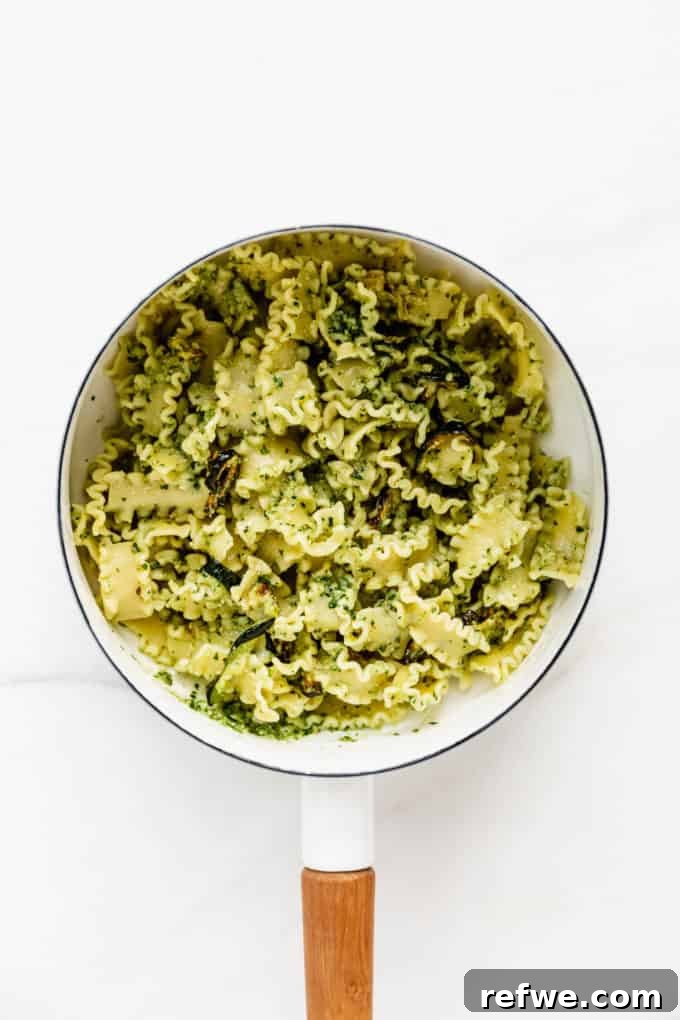
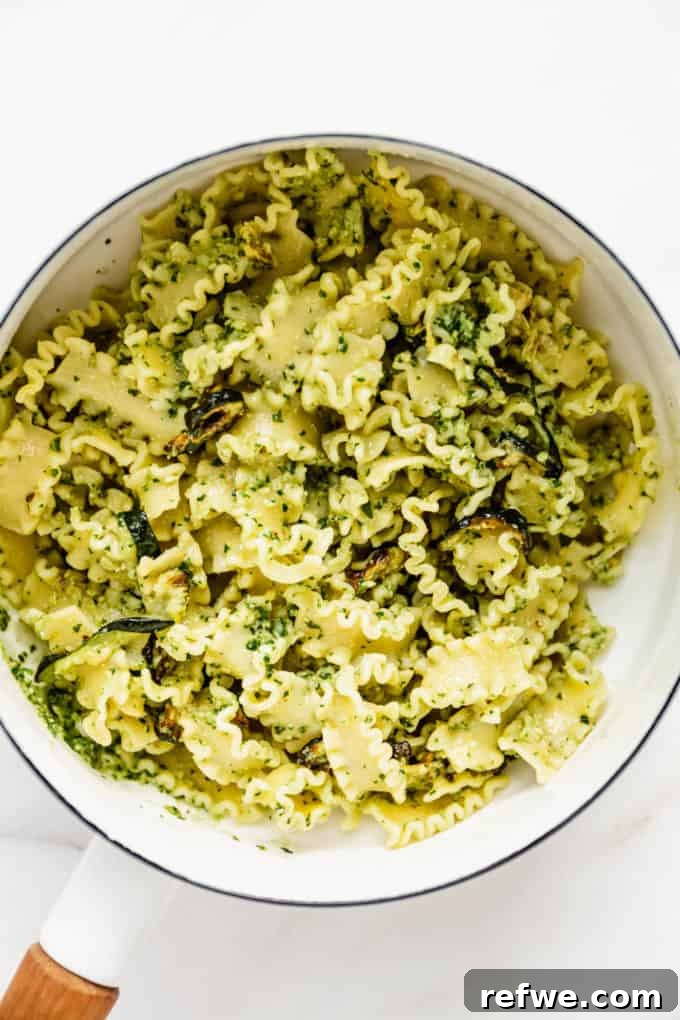
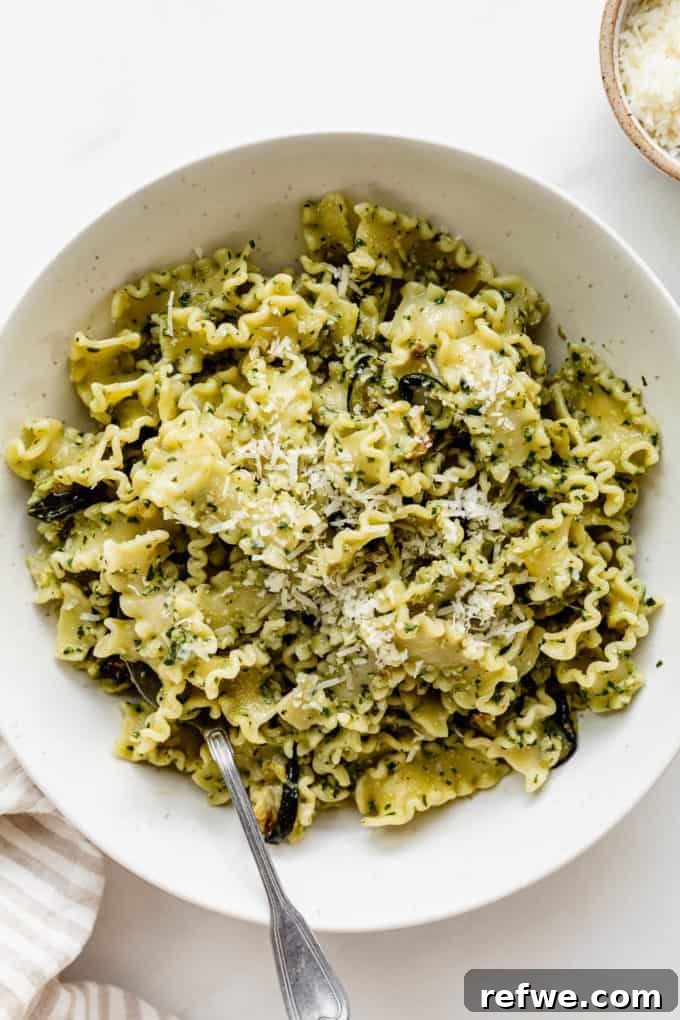
Step 3: Combine and Serve. Return the drained pasta to its pot. Add the roasted zucchini and a generous 1/3 cup of your freshly made pesto. Toss everything together thoroughly on the stovetop over medium-low heat for a minute or two. This gentle heating helps the pesto emulsify slightly with any residual moisture on the pasta and ensures all the flavors meld beautifully. If the sauce seems too thick, add a splash of the reserved pasta water, a tablespoon at a time, until it reaches your desired consistency. Taste the pasta and adjust the seasoning as needed with a pinch more salt and pepper, or add more pesto if you prefer an even richer flavor. Serve immediately in warm bowls, crowned with a generous sprinkle of freshly grated Parmesan cheese for that perfect savory finish. Enjoy this wholesome, flavorful dish!
Creative Variations: Other Vegetables You Can Add to Pesto Pasta
The beauty of pesto pasta lies in its versatility. While zucchini is a fantastic choice, you can truly make this dish your own by incorporating a variety of other fresh vegetables. Feel free to experiment with whatever produce is in season or what you simply love!
- Roasted broccoli: Florets roasted until tender-crisp with slightly charred edges add a wonderful nutty flavor and satisfying texture.
- Roasted peppers: Bell peppers (any color) cut into strips and roasted develop a sweet, smoky flavor that pairs beautifully with pesto.
- Peas: Fresh or frozen (thawed) peas add a burst of sweet, vibrant green and a lovely tender bite. Stir them in at the very end.
- Grilled asparagus: Lightly grilled asparagus spears offer a smoky flavor and a delicate crunch, a perfect complement to the rich pesto.
- Sautéed rapini: Also known as broccoli rabe, rapini sautéed with garlic provides a delightful bitterness that cuts through the richness of the pesto.
- Sautéed mushrooms: Slices of your favorite mushrooms (cremini, shiitake) sautéed until golden brown add an earthy, umami depth to the dish.
- Cherry tomatoes: Halved cherry tomatoes, roasted until they burst or simply tossed in fresh, add a juicy sweetness and pop of color.
- Spinach or kale: Wilted into the hot pasta, these leafy greens disappear almost entirely, adding a nutritional boost without altering the texture significantly.
Expert Tips for Making This Recipe Perfectly Every Time
Achieving restaurant-quality pesto pasta at home is easier than you think. Keep these key tips in mind to elevate your dish:
- Don’t forget to salt the pasta water! This is a crucial step that many overlook, yet it’s vital for infusing flavor directly into the pasta itself. Think of it like seasoning your pasta from the inside out. A good rule of thumb is to add about 2 tablespoons of coarse sea salt per gallon of water. The water should taste like the sea! This small effort will make a significant difference in the overall flavor of your dish.
- Adjust pesto to your personal taste. Pesto is potent, and everyone has a different preference for how much sauce they like. The 1/3 cup suggested in the recipe is a great starting point, but don’t be afraid to add more if you prefer your pasta saucier and more intensely flavored. You can always add a little at a time until it’s just right.
- Want to make it creamy pesto pasta? For an extra layer of indulgence and a luxuriously creamy texture, simply stir in a splash of heavy cream or a dairy-free alternative like cashew cream when you’re mixing all the ingredients together on the stovetop. This transforms the dish into a richer, more comforting meal.
- Reserve some pasta water. Before draining your cooked pasta, always scoop out about ½ to 1 cup of the starchy cooking water. This liquid is gold! If your pesto sauce seems too thick or dry when you combine it with the pasta, a splash of this starchy water will help emulsify the sauce, making it silkier and helping it cling beautifully to the noodles.
- Use fresh, quality ingredients. Especially for the pesto, using vibrant, fresh basil and good quality olive oil will make a noticeable difference in flavor. Fresh garlic and lemon juice also contribute significantly to the brightness of the sauce.
Storage Tips for Pesto Pasta and Pesto
Thoughtful storage can help you enjoy this delicious dish and homemade pesto for days to come:
- Store leftover pasta in the fridge for up to 3 days. To reheat, gently warm on the stovetop over low heat with a splash of water or vegetable broth to prevent drying out, or use the microwave. For optimal freshness and texture, you can also store the cooked noodles and the pesto separately, then combine them when you’re ready to serve. This prevents the pasta from absorbing too much pesto and becoming soggy.
- Store leftover pesto in a jar in the fridge for up to 7 days. To preserve its vibrant green color and prevent oxidation (which can turn it brown), pour a thin layer of olive oil over the surface of the pesto before sealing the jar.
- Freezing pesto for longer storage: Pesto freezes beautifully! The best method is to spoon the pesto into an ice cube tray, filling each compartment. Top each pesto cube with a small layer of olive oil to create a protective seal and prevent browning. Let the pesto freeze completely until solid. Once frozen, remove the cubes and transfer them to a freezer-safe ziplock bag or airtight container. Frozen pesto cubes can be stored for several months, ready to be thawed and used in future meals.
More Irresistible Pasta Recipes to Try
If you’re a pasta enthusiast like us, you’ll love exploring these other delicious and wholesome pasta dishes from our collection:
- Mediterranean Pasta
- One-Pot Vegan Mushroom Stroganoff
- Creamy Avocado Pasta
- One-Pot Broccoli Cheddar Orzo
If you’ve tried this delightful Veggie Pesto Pasta or any other recipe on our blog, we’d love to hear from you! Please let us know how you liked it by leaving a comment and rating below. Your feedback helps us grow and inspires others! Be sure to follow along on Pinterest, Instagram, and Facebook for even more delicious and healthy recipe ideas!
Print Recipe
Veggie Pesto Pasta
- Author: Jessica Hoffman
Prep Time: 15 minutes
Cook Time: 15 minutes
Total Time: 30 minutes
Yield: 2 servings
Category: Dinner, Main Dish
Method: Cook, Roast, Blend
Cuisine: Italian-Inspired, Mediterranean
Diet: Vegetarian, Customizable for Vegan/Gluten-Free
Description
This exquisite Veggie Pesto Pasta is a celebration of fresh flavors and wholesome ingredients. It features a rich, aromatic homemade walnut and basil pesto, perfectly combined with tender, caramelized roasted zucchini for a deeply satisfying and nutritious meal. Ideal for a quick dinner, this recipe brings a touch of gourmet to your everyday cooking.
Ingredients
For the Homemade Walnut Pesto:
- 2 cups fresh basil leaves, tightly packed (choose vibrant, green leaves for the best flavor)
- 1/3 cup walnuts (for a creamy texture and nutty depth, a great alternative to pine nuts)
- 1/3 cup grated Parmesan cheese (freshly grated is always superior)
- 1/3 cup high-quality olive oil (extra virgin for robust flavor)
- 1 large garlic clove (or 2 small, depending on your preference for garlic intensity)
- 1/4-1/2 teaspoon sea salt (to taste, start with less and adjust)
- 1/2 teaspoon freshly ground black pepper
- 1/2 tablespoon fresh lemon juice (brightens the flavors beautifully)
For the Pasta:
- 6 oz pasta of choice (approximately 2 servings, choose your favorite shape, or gluten-free/grain-free alternatives)
- 1 medium zucchini (about 8-10 inches long, sliced into half-moons)
- 1/2 tablespoon olive oil (for roasting the zucchini)
- Parmesan cheese to top (optional, but highly recommended for serving)
Instructions
- Prepare the Homemade Walnut Pesto: Begin by gathering all the ingredients for your pesto. Add the fresh basil leaves, walnuts, grated Parmesan cheese, olive oil, garlic clove, salt, pepper, and lemon juice into a food processor. Pulse the mixture repeatedly until it transforms into a smooth, creamy, and consistently textured sauce. Make sure to stop and scrape down the sides of the food processor bowl several times during this process to ensure all ingredients are fully incorporated. Set aside this aromatic pesto.
- Roast the Zucchini: Preheat your oven to a temperature of 400°F (200°C). Wash and slice the zucchini into attractive half-circle shapes, approximately 1/4-inch thick. In a medium bowl, toss the sliced zucchini with 1/2 tablespoon of olive oil, a pinch of salt, and a dash of pepper until evenly coated. Line a baking sheet with parchment paper, then spread the seasoned zucchini in a single layer on the sheet. Bake for about 15 minutes, or until the zucchini is tender-crisp and exhibits beautiful, slightly caramelized edges. This roasting process enhances its natural sweetness and texture.
- Prepare the Pasta: While the zucchini is roasting, bring a large pot of generously salted water to a rolling boil. Add your chosen pasta and cook it according to the package instructions until it reaches an al dente consistency – firm to the bite. Before draining, remember to reserve about ½ cup of the starchy pasta cooking water. This liquid will be valuable for adjusting the consistency of your sauce later. Drain the pasta thoroughly.
- Combine and Serve: Return the hot, drained pasta to the empty pot (off the heat). Add the perfectly roasted zucchini and 1/3 cup of your freshly made walnut pesto to the pot. Gently toss all the ingredients together using tongs or a large spoon until the pasta and zucchini are evenly coated in the vibrant green pesto. If the sauce appears too thick, slowly add a tablespoon or two of the reserved pasta water until it reaches your desired creamy consistency. Taste the pasta and adjust the seasoning with additional salt and pepper if needed, or stir in more pesto for a more intense flavor. Serve immediately in warm bowls, finishing each portion with a generous sprinkle of freshly grated Parmesan cheese.
Equipment
Always Pan
Buy Now →
Food Processor
Buy Now →
Notes
- For more in-depth instructions, additional tips, and information on mastering homemade pesto, we highly recommend referring to our dedicated Easy Walnut Pesto recipe.
- Always remember to generously salt your pasta water. This is a fundamental step to properly season the pasta itself and infuse it with flavor, leading to a much more delicious final dish.
- The amount of pesto you add to your pasta is entirely a matter of personal preference. Feel free to use more or less than the suggested 1/3 cup to achieve your desired level of sauciness and flavor intensity.
- For those who enjoy a richer, creamier sauce, consider adding a small splash of heavy cream or your favorite dairy-free cream alternative when mixing all the ingredients together.
- The nutritional information provided is an estimate only. Actual values may vary based on specific ingredients used, precise measurements, and especially how much pesto is incorporated into the dish.
Nutrition
- Serving Size: 1/2 recipe
- Calories: 550
- Fat: 30g
- Carbohydrates: 52g
- Fiber: 2g
- Protein: 5g
This post contains affiliate links which means I will make a small commission if you purchase through those links. I only recommend products that I know, trust and love!