
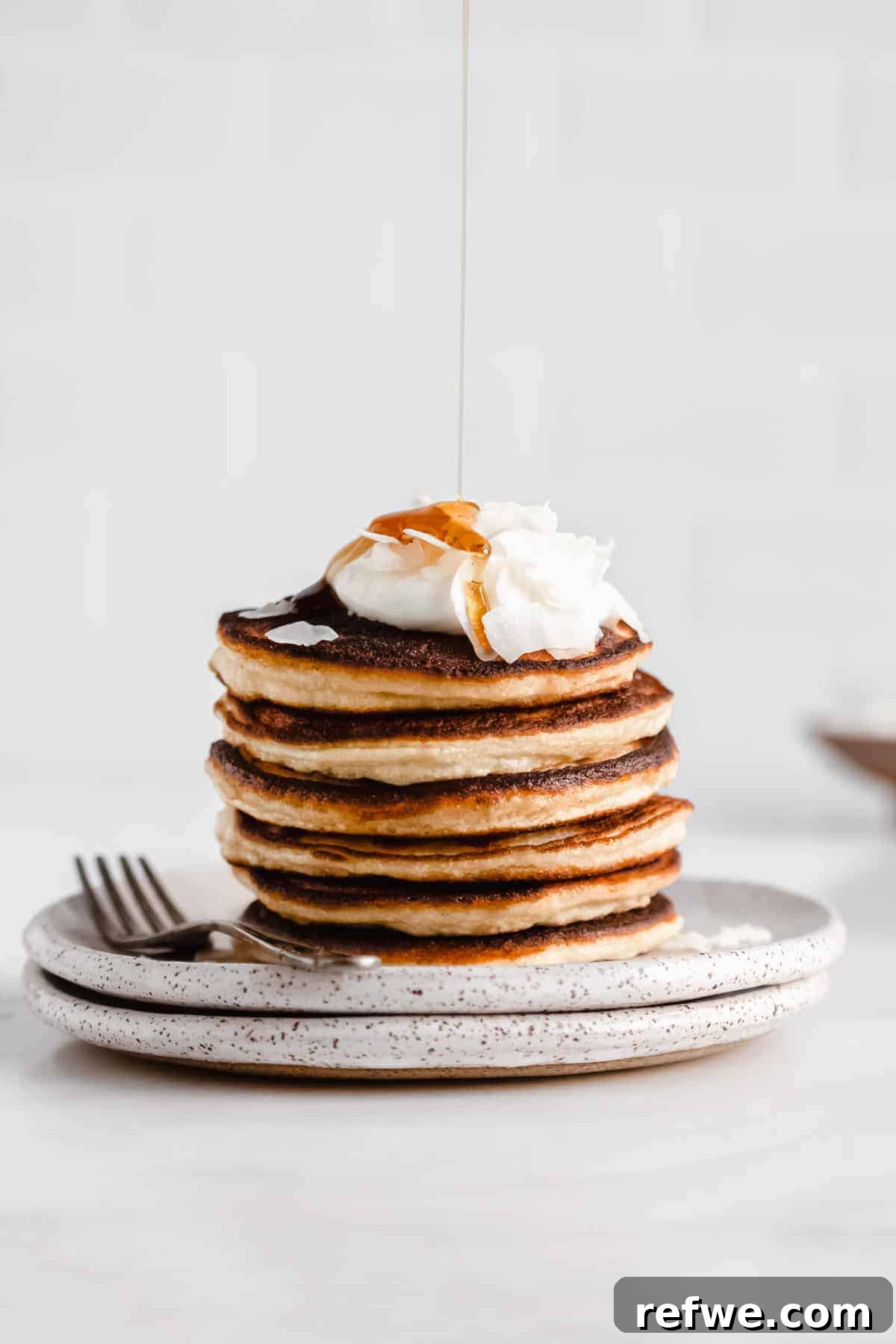
Start your day the delicious and healthy way with our incredible Coconut Flour Pancakes! This recipe offers a delightful twist on a breakfast classic, making it entirely gluten-free, grain-free, paleo, and easily adaptable for keto diets. Each bite delivers a light, fluffy texture and a subtle, irresistible hint of coconut, perfect for a nourishing morning meal. Whether you’re adhering to a specific dietary plan or simply seeking a wholesome and flavourful breakfast option, these pancakes are sure to become a new favourite in your kitchen. And if you’re keen on exploring more healthy breakfast ideas, don’t forget to check out our Protein Pancake Bowl for another high-protein delight!
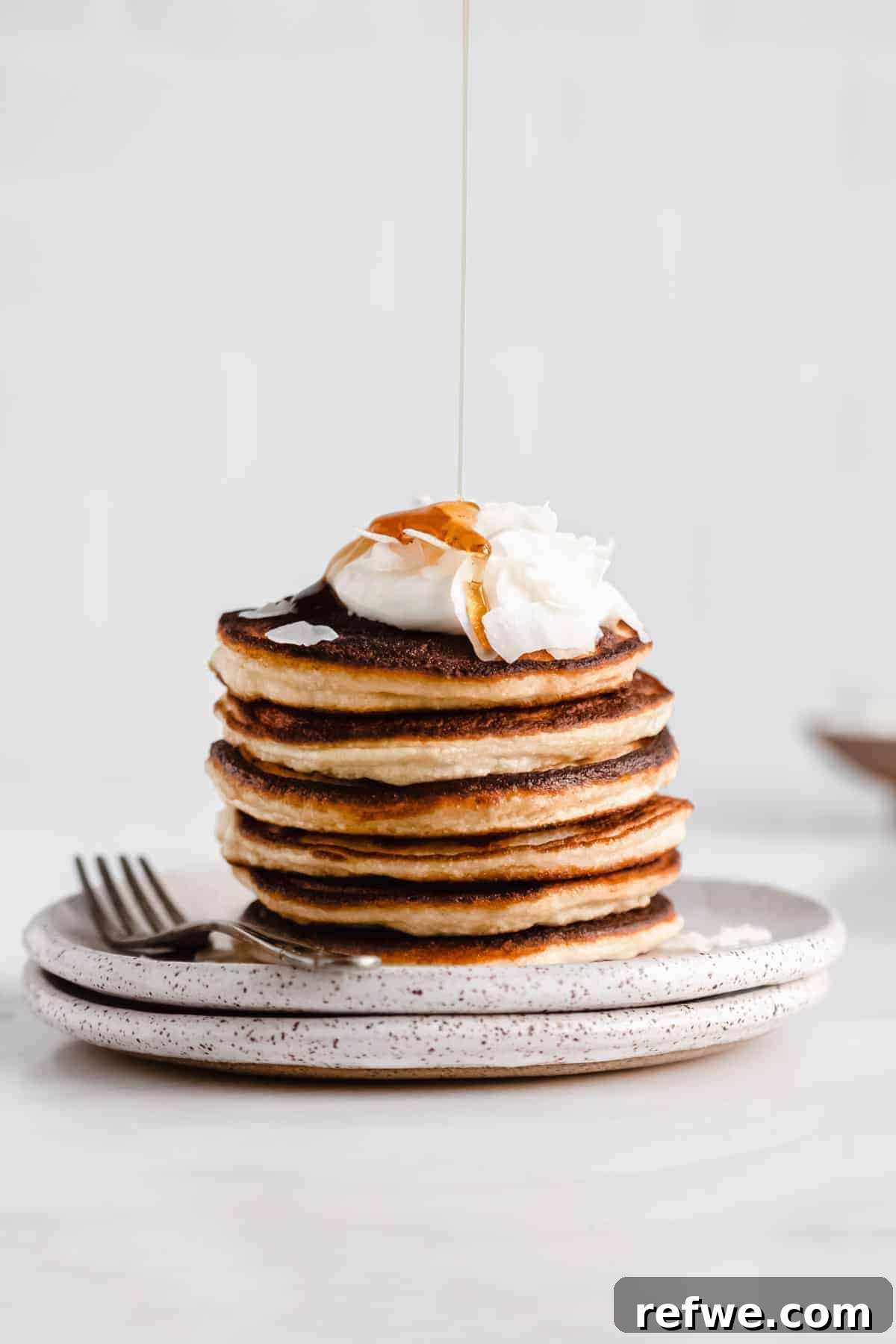
Fluffy Coconut Flour Pancakes: Your New Favorite Grain-Free Breakfast
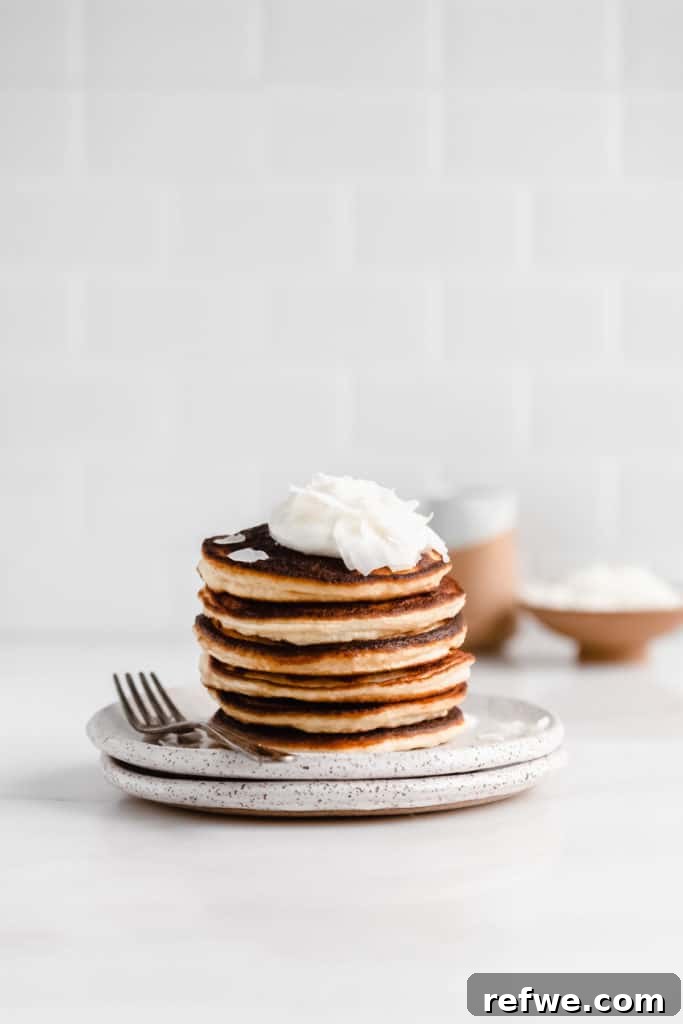
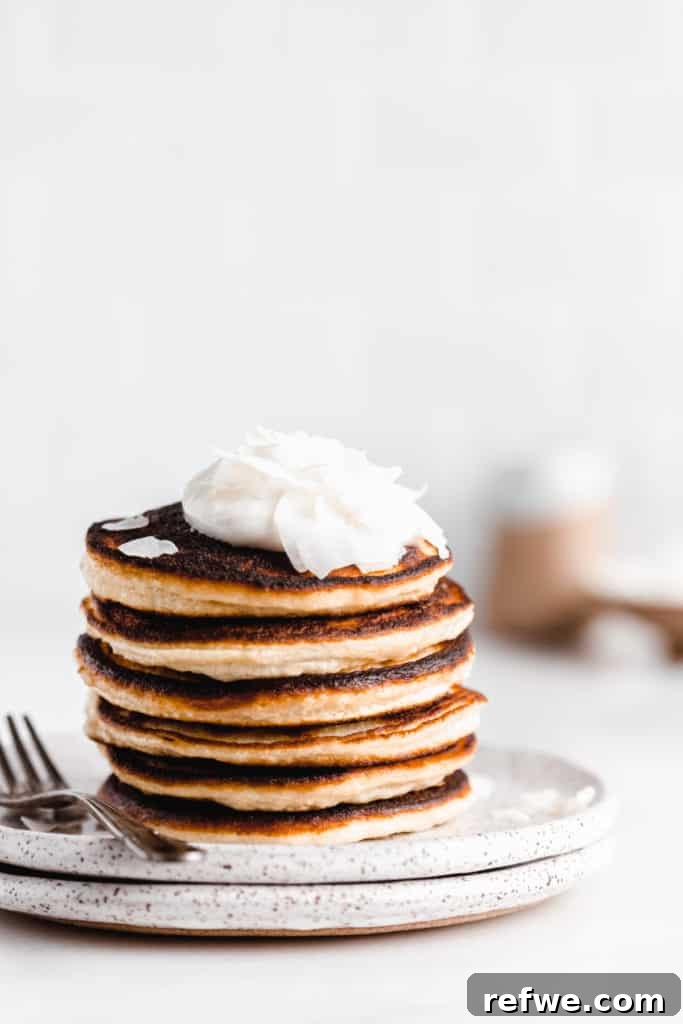
Embrace the joy of a sweet and satisfying start to your day with our signature Fluffy Coconut Flour Pancakes. While I adore a variety of sweet breakfast treats, from our delectable French Toast Muffins to our hearty Almond Flour Waffles and fluffy Almond Flour Pancakes, there’s something uniquely special about these coconut-infused beauties. They stand out as an exceptional choice for anyone seeking a light, airy, and truly delicious grain-free pancake. Crafted to perfection, they offer a delicate sweetness that can be enjoyed plain, or elevated with your favorite toppings. Imagine a stack adorned with creamy coconut yogurt, a sprinkle of toasted shredded coconut, and a generous drizzle of pure maple syrup. These pancakes aren’t just a meal; they’re an experience that transforms your morning routine into a delightful culinary adventure. They are a testament to how healthy eating can be both indulgent and incredibly simple, providing a wholesome foundation for a productive day.
What is Coconut Flour? A Guide to this Versatile Gluten-Free Staple
For those new to the world of alternative baking, understanding “What is Coconut Flour?” is key to appreciating this recipe and its unique properties. Coconut flour is a remarkable, naturally grain-free and gluten-free flour derived from dried coconut meat. Unlike many other flours, it’s a byproduct of coconut milk production, where the leftover coconut pulp is dried and then finely ground into a fine, soft powder. This process makes it an incredibly sustainable ingredient.
Beyond its culinary applications, coconut flour boasts a unique nutritional profile. It’s exceptionally rich in dietary fiber, which aids digestion and helps you feel fuller for longer, contributing to better satiety. It’s also relatively low in digestible carbohydrates and contains a good amount of protein and healthy fats, making it a stellar choice for paleo, keto, and gluten-free lifestyles. While it carries a subtle, sweet coconut aroma, the flavor itself is surprisingly mild once incorporated into recipes like these pancakes, ensuring it complements rather than overwhelms other ingredients. When shopping, always opt for brands that list “coconut” as the sole ingredient to avoid any unwanted additives or fillers. Its highly absorbent nature means you’ll typically use much less coconut flour compared to traditional wheat flour, which is an important consideration in recipe development to achieve the right consistency.
Key Ingredients for Perfect Coconut Flour Pancakes
Crafting these delicious pancakes requires a handful of simple, wholesome ingredients. Here’s a closer look at what you’ll need and why each component is essential for achieving the perfect texture and flavor:
- Coconut flour: The foundational ingredient for these pancakes. Its high absorbency means we use a surprisingly small amount (just ¼ cup for a batch!) to achieve the perfect texture, while delivering a subtle, natural sweetness and a good dose of fiber.
- Tapioca flour: Just a tablespoon of tapioca flour (which can also be substituted with cornstarch if needed, though tapioca is preferred for paleo diets) acts as a crucial binder. It helps hold the pancakes together, preventing crumbliness, and contributes to that desirable slight chewiness without compromising the overall fluffy texture.
- Baking Powder: Essential for achieving that signature pancake rise, baking powder ensures our coconut flour pancakes are light, airy, and beautifully plump, rather than dense.
- Salt: A tiny pinch of salt enhances all the other flavors, balancing the sweetness and bringing out the natural deliciousness of the coconut and vanilla.
- Eggs: Crucial for structure and moisture in coconut flour baking. Due to coconut flour’s incredible absorbency, this recipe calls for two eggs to provide ample liquid and binding, preventing a dry or crumbly texture. They are the primary liquid component here.
- Light coconut milk: This adds rich, creamy moisture and reinforces the coconut flavor profile, contributing to the pancakes’ delicate taste. Feel free to use any type of milk you like; almond milk, cashew milk, or even dairy milk would work well, though coconut milk offers the best synergy with coconut flour.
- Maple syrup: A touch of pure maple syrup naturally sweetens the batter. For a stricter keto version, you can reduce or omit this entirely, or substitute with a keto-friendly sweetener like erythritol or stevia drops to control sugar intake.
- Vanilla extract: A classic complement to sweet dishes, vanilla extract adds a warm, aromatic depth that rounds out the flavors beautifully and enhances the overall taste experience.
- Coconut oil or butter for frying: Used to grease your skillet, ensuring a beautiful golden crust and preventing any sticking. Both coconut oil and butter lend a delicious flavor to the finished pancakes, so choose your preference.
Step-by-Step: Crafting Your Fluffy Coconut Flour Pancakes
Making these gluten-free pancakes is surprisingly simple. Follow these detailed steps to ensure a perfect batch every time:
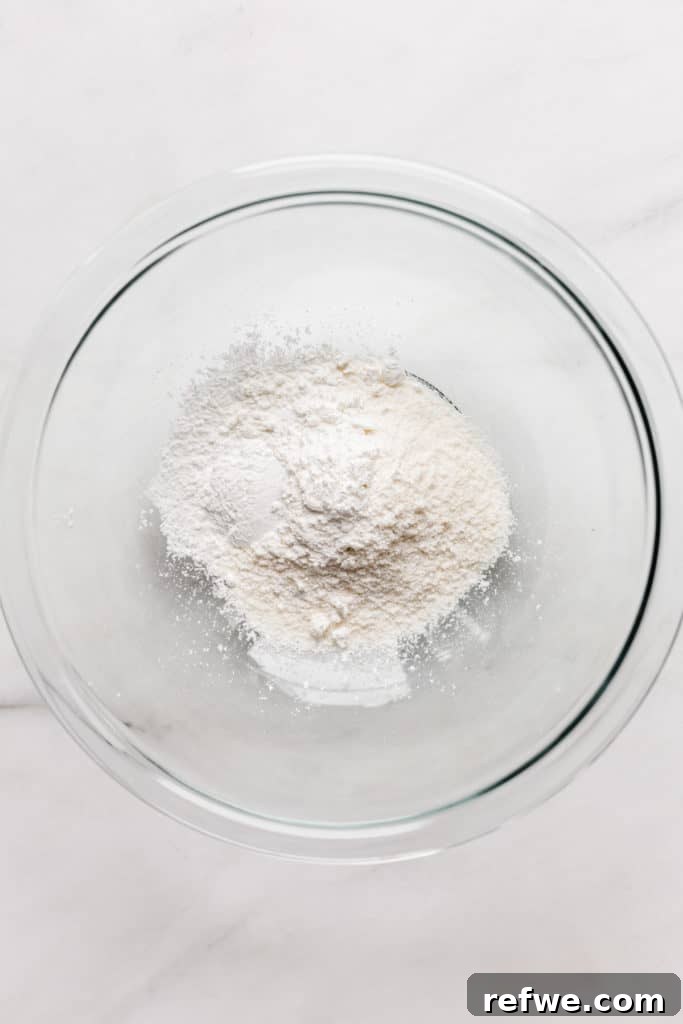
- Combine Dry Ingredients: Begin by combining all the dry ingredients. In a medium-sized mixing bowl, whisk together the coconut flour, tapioca flour, baking powder, and a pinch of salt until thoroughly combined. This ensures an even distribution of leavening agents and seasoning throughout your batter, which is key for a consistent rise.
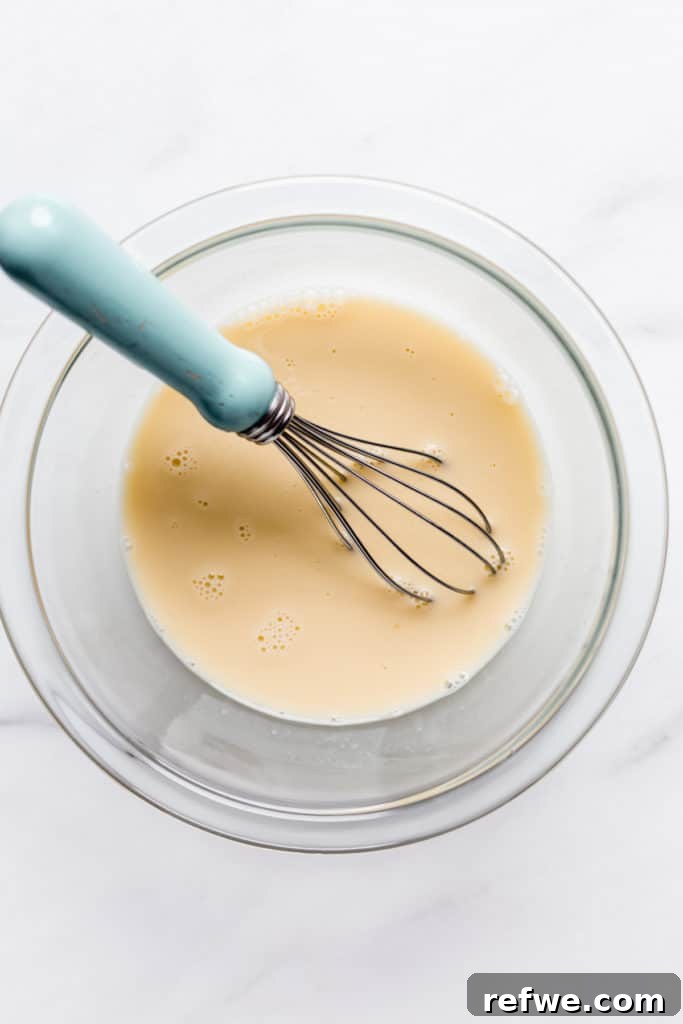
- Mix Wet Ingredients: In a separate, slightly larger bowl, prepare your wet ingredients. Whisk the eggs until they are well beaten and frothy. Then, add the light coconut milk, maple syrup, and vanilla extract. Continue to whisk until this mixture is smooth and fully incorporated, creating a homogenous liquid base.
- Combine Wet and Dry: Carefully pour the wet ingredients into the bowl containing the dry ingredients. Using a whisk, gently mix everything together until the batter is smooth and no dry clumps of flour remain. Avoid overmixing, but ensure a uniform consistency. Coconut flour absorbs liquid quickly, so the batter will be thicker than traditional pancake batter – this is perfectly normal and expected for these grain-free pancakes!
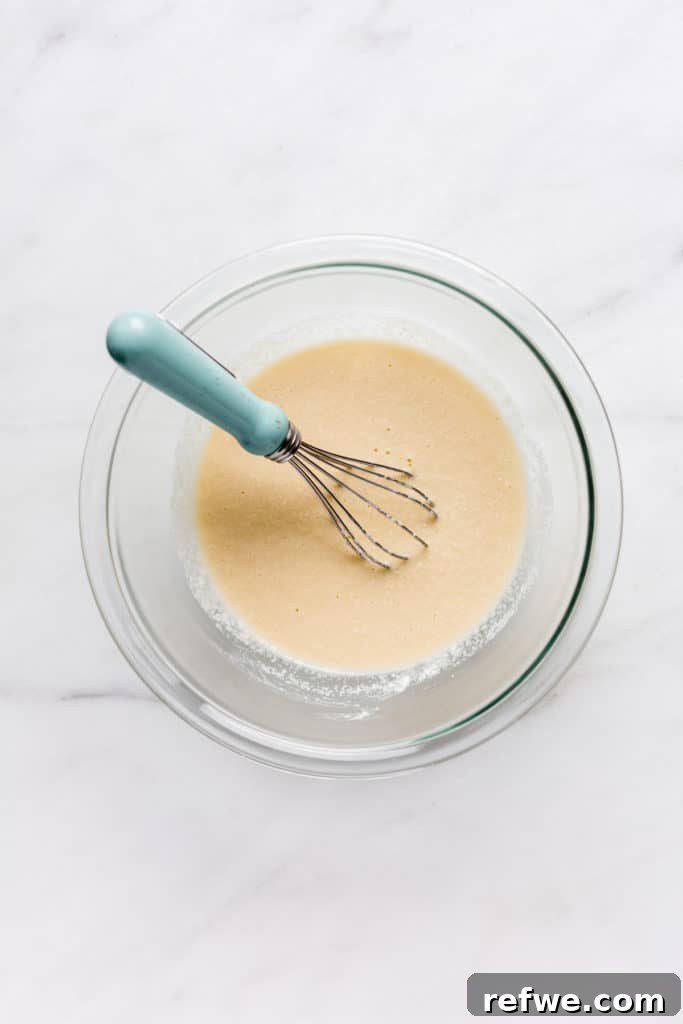
- Pan-Fry the Pancakes: Heat a large non-stick skillet or griddle over medium to medium-low heat. Add a small amount of coconut oil or butter, just enough to lightly coat the surface. Once hot, pour about ¼ cup of batter per pancake onto the pan. Cook for approximately 3-4 minutes on the first side, or until you see small bubbles forming on the surface and the edges appear set and lightly golden. With a spatula, carefully flip the pancakes and cook for another 2-3 minutes on the second side, or until cooked through and golden brown. Remember, coconut flour pancakes cook faster and can burn more easily than wheat flour pancakes, so patience and a lower heat are key!
- Serve Immediately: Serve your freshly made Coconut Flour Pancakes immediately! Stack them high and top with your favorite accompaniments, such as extra maple syrup, fresh berries, coconut cream, or a dusting of powdered sugar. These pancakes are best enjoyed warm.
Are These Coconut Flour Pancakes Paleo and Keto-Friendly?
Absolutely! One of the fantastic advantages of this recipe is its versatility, making these delicious pancakes suitable for both paleo and keto dietary guidelines with just minor adjustments.
For a Paleo-Friendly Version: To ensure your pancakes align with paleo principles, it’s crucial to stick with tapioca flour as specified in the ingredients. While cornstarch can be a convenient substitute for binding in many recipes, it is not considered paleo-compliant due to its processing. Tapioca flour, derived from the cassava root, is a natural, suitable, and commonly accepted paleo alternative that provides the necessary binding without compromising your dietary goals.
For a Keto-Friendly Version: To make these pancakes strictly keto, the primary adjustment involves the sweetener. We highly recommend either completely omitting the maple syrup or replacing it with a keto-approved, sugar-free alternative. Excellent options include a sugar-free maple syrup substitute, erythritol (which can be used granulated or powdered), or a few drops of liquid stevia, adjusted to your preferred level of sweetness. Additionally, ensure your coconut milk is unsweetened and, if you prefer, full-fat for maximum richness and healthy fats, though light coconut milk is also perfectly acceptable. With these simple modifications, you can enjoy a delicious and satisfying breakfast that perfectly fits your ketogenic lifestyle without any guilt.
Expert Tips for Flawless Coconut Flour Pancakes
Achieving the perfect stack of coconut flour pancakes is easier than you think with these expert tips. By paying attention to these details, you’ll consistently create fluffy, flavorful, and perfectly cooked pancakes:
- Mix the Batter Until Smooth, But Don’t Overthink It: Unlike traditional wheat-based pancake batters that can become tough from over-mixing due to gluten development, coconut flour contains no gluten. This means you want to whisk the batter until it’s perfectly smooth with no dry clumps. This ensures a uniform, delicate texture throughout each pancake. If you prefer, you can even achieve an ultra-smooth consistency by briefly blending the ingredients in a blender. Just mix until everything is well combined and hydrated – you won’t risk toughness.
- The Golden Rule: Cook on Medium to Medium-Low Heat! This is perhaps the most critical tip for success with coconut flour pancakes. Coconut flour batter is incredibly delicate and prone to burning much more easily than regular pancake batter. High heat can quickly scorch the outside while leaving the inside raw and gummy. Always set your stove to a steady medium or even medium-low (especially if your stove tends to run hot). Be patient – allow 3-4 minutes per side for the pancakes to cook evenly through, turning a beautiful golden brown without any charring. This slow cooking allows them to set properly.
- Maximize Your Skillet Space: Cook Multiple Pancakes at Once: Coconut flour is incredibly absorbent, and your batter will continue to thicken as it sits. To ensure all your pancakes have a similar, desirable texture and don’t become overly dense, it’s best to cook them relatively quickly. If you have the space, cook 2-3 pancakes simultaneously. This helps prevent the latter part of your batter from becoming too thick, which could result in denser, heavier pancakes. If your batter does become excessively thick towards the end, you can add a tiny splash of milk (about 1-2 teaspoons) to loosen it slightly, whisking gently until it reaches the right pourable consistency again.
- Don’t Rush the Flip: Patience is a virtue, especially when flipping pancakes. Wait until you see small bubbles actively forming on the surface of the pancake and the edges appear set and dry before attempting to flip. This indicates that the first side is adequately cooked through and the pancake has enough structural integrity to hold together during the flip, ensuring it won’t break apart.
- Adjust Sweetness to Taste: The recipe provides a delicious base level of sweetness, but your preferences might differ. You can always adjust the amount of maple syrup to suit your personal taste or dietary needs. For a quick check, you can taste a tiny bit of the batter (before adding to the pan, of course!) if you’re unsure about the sweetness level.
- Storage and Reheating: Cooked coconut flour pancakes can be stored in an airtight container in the refrigerator for up to 3-4 days. To reheat, you can use a toaster, microwave, or gently warm them on a skillet over low heat until heated through.
Explore More Delicious Pancake Recipes
If you’re a fan of these Coconut Flour Pancakes, you’ll love exploring other creative and healthy pancake variations from our collection:
- Fluffy Almond Flour Pancakes: Another fantastic gluten-free option, offering a different nutty flavor profile.
- Matcha Pancakes: For a unique and vibrant twist, infused with the earthy notes of matcha.
- Vanilla Buckwheat Pancakes: A hearty and wholesome choice for those who enjoy the distinct taste of buckwheat.
We hope you enjoy these incredibly versatile and delicious Coconut Flour Pancakes as much as we do! If you’ve given this recipe a try, or sampled any other delightful creations from our blog, please share your experience by leaving a comment and rating below. Your feedback means the world to us and helps others discover these fantastic recipes. For daily inspiration, behind-the-scenes glimpses, and a constant stream of new healthy recipes, be sure to follow us on Pinterest, Instagram, and Facebook. Happy cooking and happy eating!
Coconut Flour Pancakes
Author: Jessica Hoffman
Prep Time: 10 minutes
Cook Time: 10 minutes
Total Time: 20 minutes
Yield: 6-8 pancakes
Category: Breakfast
Method: pan fry
Cuisine: American
Diet: Gluten Free
Description
These coconut flour pancakes are grain-free, gluten-free and have a soft delicate texture for a healthy breakfast!
Ingredients
- 1/4 cup coconut flour
- 1 tbsp tapioca flour (can sub cornstarch if needed*)
- 1 tsp baking powder
- pinch of salt
- 2 eggs
- 1/2 cup light coconut milk
- 1/2 tbsp maple syrup
- 1 tsp vanilla extract
- coconut oil or butter for frying
Instructions
- Mix the coconut flour, tapioca flour, baking powder and salt together in a bowl.
- In a separate bowl, whisk the eggs, coconut milk, maple syrup and vanilla extract.
- Pour the wet ingredients into the dry ingredients and whisk together until no clumps remain
- Add some oil or butter or a large skillet on medium heat and pour a large spoon of batter into the pan. Let cook for 3-4 minutes on medium-low heat until little bubbles start to form, then flip and cook another 2-3 minutes on the other side. (Be patient and don’t cook these pancakes on a higher heat otherwise they can burn!)
- Serve with your favourite toppings like maple syrup, yogurt and coconut chips!
Notes
Mix the batter until smooth. Unlike flour pancakes that can become tough from over mixing, these pancakes we want the batter to be smooth with no clumps. Whisk it just until no clumps remain. You can also make these pancakes in a blender.
COOK ON MEDIUM OR MEDIUM LOW! Coconut flour pancake batter can burn much more easily than regular pancake batter. Coconut flour is delicate and can burn on high-heat. You need to cook these pancakes on medium (or medium-low if your stove runs hot) for 3-4 minutes and then another 2-3 minutes on the second side.
Cook multiple pancakes at a time. As the batter sits, you’ll notice it will begin to thicken even more. That’s because the coconut flour continues to absorb the liquid as it sits. If you have the space cook multiple pancakes at a time to ensure they all have the same texture.
Nutrition
- Serving Size: 1/2 recipe
- Calories: 245
- Sugar: 5g
- Fat: 9.8g
- Carbohydrates: 22g
- Fiber: 12g
- Protein: 12g