

Irresistible Vegetarian Thai Green Curry Tofu: A Flavorful and Healthy Delight
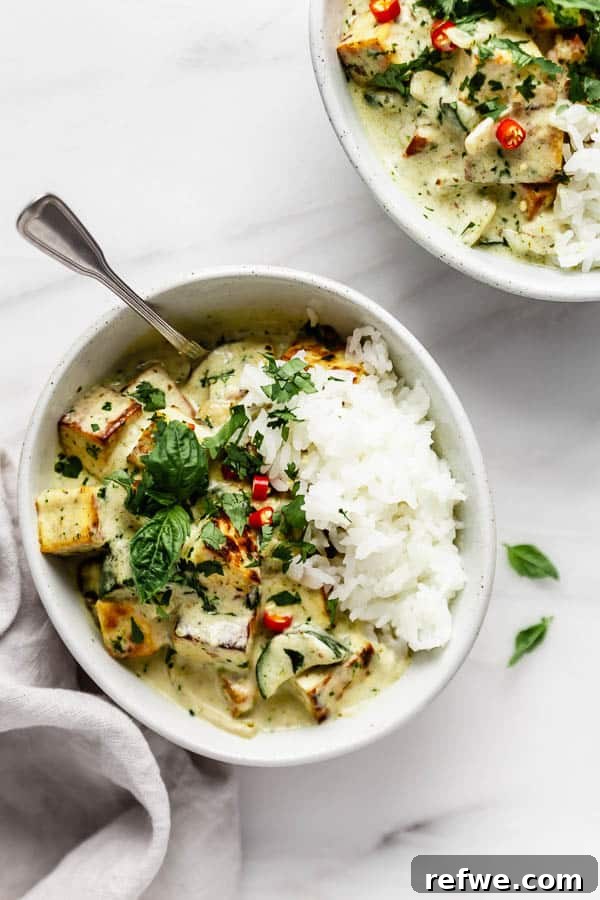
Welcome to a culinary journey that brings the vibrant flavors of Thailand right to your kitchen! This **Thai Green Curry Tofu** recipe is a true masterpiece, featuring perfectly crispy tofu bathed in a rich, creamy coconut sauce, infused with aromatic and spicy green curry. It’s not just a meal; it’s an experience – simple to prepare, incredibly healthy, and absolutely bursting with authentic Thai taste. Whether you’re a seasoned chef or a beginner in the kitchen, this plant-based dish promises to impress with its depth of flavor and satisfying textures, all while being ready in just 30 minutes.

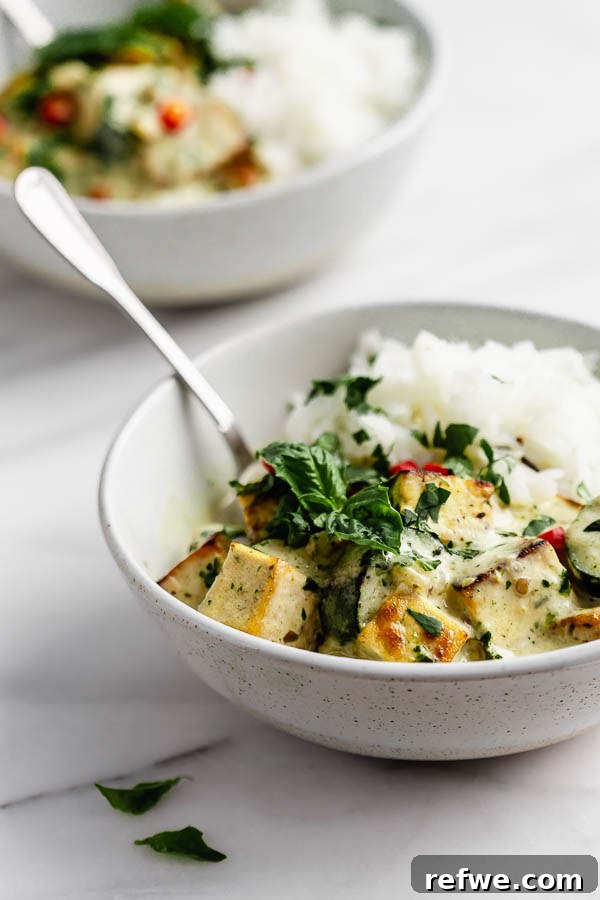
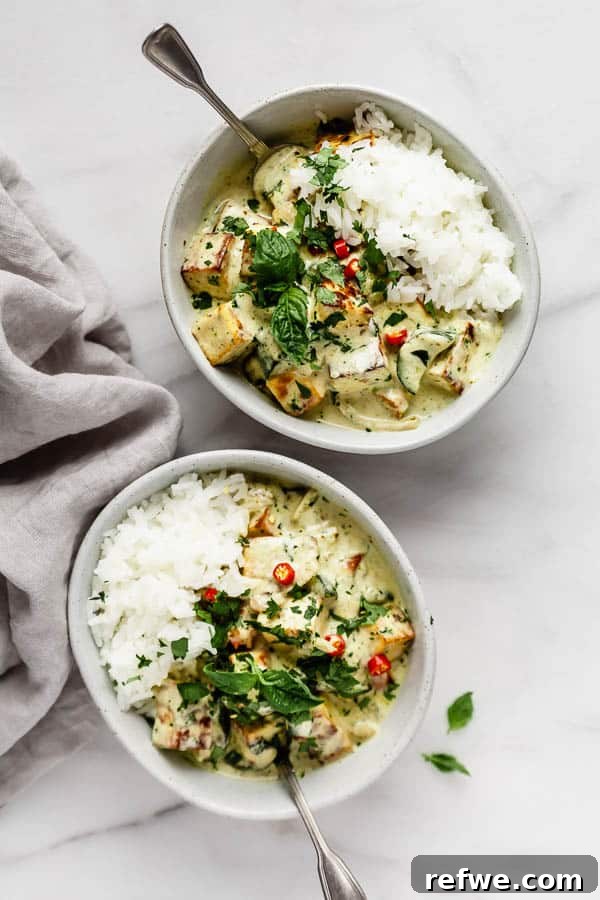
If there’s one dish I could enjoy every single day without fail, it would undoubtedly be a fragrant Thai green curry. Imagine this: golden-brown, crispy pan-fried tofu enveloped in a luxurious, spicy green curry sauce, served steaming hot over a bed of fluffy jasmine rice. It’s a symphony of textures and tastes – the tender crispness of the tofu, the velvety heat of the curry, and the fragrant neutrality of the rice, all coming together in perfect harmony. There’s simply no going wrong with such a delightful combination! My love for delicious curries runs deep, from a classic Red Coconut Curry Tofu to the innovative Red Curry Tofu Tacos. So, it felt only natural to share this incredible green curry recipe, designed for both seasoned enthusiasts and newcomers to Thai cuisine.
Crafting the Perfect Vegetarian Thai Green Curry
Traditional Thai green curry, known as “Gaeng Keow Wan Gai” (which translates to green sweet curry with chicken), typically includes chicken or fish and relies on fish sauce for its characteristic salty depth. However, this recipe offers a delicious and authentic vegetarian and vegan adaptation, making it accessible to a wider audience without compromising on flavor. Our version thoughtfully replaces traditional animal-based ingredients with plant-powered alternatives, drawing inspiration from the profound culinary knowledge gained from immersive cooking classes in Thailand itself. This ensures that every bite delivers an experience reminiscent of the bustling streets and serene kitchens of Southeast Asia.
The magic of green curry lies primarily in its paste – a vibrant, aromatic blend of fresh ingredients that give the dish its distinctive color and complex flavor profile. When you delve into what spices are in green curry, you’ll find an exquisite combination: fiery green chilies (the source of its signature hue and heat), intensely aromatic lemongrass, pungent galangal (a ginger-like rhizome), robust garlic, shallots, and fresh herbs like Thai basil and kaffir lime zest. This intricate blend creates a rich, earthy, yet intensely fresh, and subtly sweet base that forms the very heart of our curry, providing layers of flavor that tantalize the palate.
Making it Vegan and Vegetarian-Friendly: Key Substitutions
To successfully transform a traditional Thai green curry into a vegetarian or vegan delight, the primary swap involves replacing fish sauce with a plant-based alternative. **Soy sauce** is an excellent choice, providing the necessary umami and saltiness without animal products. For those avoiding gluten, Tamari works perfectly, and even a liquid soy seasoning can be used. While regular soy sauce can impart a slightly darker color, opting for a light soy sauce helps maintain the curry’s bright green aesthetic. The flavor contribution from these substitutes is undeniably rich and satisfying, ensuring your curry doesn’t miss that crucial savory element.
Beyond the seasoning, the choice of protein is paramount. While traditional recipes often feature chicken, our recipe proudly spotlights **tofu** – a versatile and popular ingredient in Thai cuisine, beloved for its ability to absorb flavors and its satisfying texture. Tofu is an ideal canvas, readily soaking up the rich curry sauce. But the possibilities for plant-based proteins don’t end there! Feel free to experiment with other delightful alternatives like tempeh, which offers a nuttier flavor and firmer texture, or protein-packed chickpeas. A colorful assortment of your favorite vegetables, such as mushrooms, bamboo shoots, or baby corn, can also be incorporated to add more texture and nutritional value. Each option brings its unique characteristics, allowing you to customize your curry to your preference and dietary needs.

Mastering the Art of Thai Green Curry: A Simple Guide
Creating this delectable Thai green curry at home is surprisingly straightforward, and once you’ve mastered the basic technique, it’s a recipe you’ll find yourself turning to again and again. The entire process comes together quickly, making it perfect for weeknight dinners or a special weekend treat when you crave authentic Asian flavors.
- **Prepare the Crispy Tofu:** Start by pressing your firm or extra-firm tofu to remove excess water. This crucial step is key to achieving that desirable crispy exterior when cooked. Cut the tofu into uniform cubes and pan-fry them in a pan with a touch of avocado oil over medium-high heat until they turn beautifully golden brown and crispy on all sides. Once done, remove the tofu from the pan and set it aside to preserve its delightful texture while you prepare the curry sauce.
- **Craft the Aromatic Curry Base:** In the same pan, add another tablespoon of avocado oil if needed. Sauté chopped onion and minced garlic until they become fragrant and translucent, typically about 2 minutes. This creates a sweet and pungent foundational layer of flavor for your curry. Then, introduce your chosen vegetables, such as zucchini and sliced red bell pepper, and cook them for an additional 2-3 minutes until they begin to soften slightly, absorbing the aromatic oils.
- **Develop the Signature Curry Flavor:** Add the green curry paste to the sautéed aromatics and vegetables. Stir everything well, allowing the paste to cook for about a minute or two. This vital step, often called “blooming” the paste, helps to awaken its spices and deepen its flavor profile, making the curry truly authentic and rich.
- **Simmer to Perfection:** Pour in the creamy full-fat coconut milk, stirring thoroughly to combine it with the curry paste and vegetables. Now comes the essential art of balancing Thai flavors: add coconut sugar for sweetness, soy sauce (or tamari) for saltiness, and a generous squeeze of fresh lime juice for that essential sour tang. These three elements – sweet, salty, and sour – are the cornerstones of authentic Thai cuisine. Allow the curry to gently simmer for 5-7 minutes, letting the flavors meld beautifully and the sauce to thicken slightly.
- **Combine and Serve:** Finally, reintroduce the crispy tofu into the simmering curry sauce. Stir gently to coat the tofu, allowing it to warm through without losing its delightful crispiness. Taste the curry and adjust the seasonings as needed – perhaps a little more lime for brightness, a dash more soy sauce for depth, or an extra pinch of sugar to round out the flavors. Green curry is traditionally and exquisitely served over fragrant jasmine rice, which perfectly soaks up the rich sauce, creating a truly satisfying meal.
Expert Tips for an Unforgettable Thai Green Curry
- **Spice Level Control:** Green curry pastes vary significantly in their heat and intensity. To avoid an overly spicy dish, always start by adding just 1 tablespoon of curry paste, then taste the sauce after it has simmered for a few minutes. Gradually add more, up to 2-3 tablespoons, until you reach your preferred level of spiciness. It’s always easier to add more heat than to reduce it!
- **Vegetable Versatility:** This curry is a fantastic vehicle for a wide variety of vegetables. Beyond zucchini and red pepper, consider adding sliced Asian eggplant (Thai eggplant is traditional and delicious), diced potatoes, crisp broccoli florets, tender baby corn, crunchy bamboo shoots, or leafy bok choy. Add firmer vegetables earlier in the cooking process to ensure they cook through evenly.
- **Perfect Pairings:** While fragrant jasmine rice is the classic accompaniment for Thai curries, offering a delicate base that soaks up the rich sauce beautifully, for a lighter meal or a different texture, serve your Thai green curry tofu with thin vermicelli rice noodles. Quinoa or brown rice also make excellent healthy and hearty alternatives.
- **Crispy Tofu Secret:** For the crispiest tofu, ensure you press it thoroughly before cooking to remove as much excess moisture as possible. A dedicated tofu press is ideal, but you can also wrap it in paper towels and place a heavy object (like a cast iron pan) on top for 20-30 minutes. When pan-frying, don’t overcrowd the pan; cook the tofu in batches if necessary to allow for even browning and crisping.
- **Fresh Herb Finish:** A generous scattering of fresh Thai basil leaves, cilantro, or even some chopped mint just before serving adds an explosion of fresh aroma and vibrant flavor that truly elevates the entire dish and provides a beautiful garnish.
- **Creaminess Adjustment:** For a lighter version of this curry, you can opt for light coconut milk instead of full-fat. However, full-fat coconut milk provides a richer, more luxurious texture and a deeper, more authentic flavor that truly defines a great Thai curry.
- **Meal Prep Friendly:** This curry is excellent for meal prepping! You can prepare the sauce and vegetables ahead of time. Store the crispy tofu separately and add it back to the warmed curry just before serving to maintain its crispiness.
Frequently Asked Questions About Thai Green Curry Tofu
When selecting a green curry paste, it is crucial to check the label carefully to ensure it’s genuinely vegetarian or vegan-friendly. Many traditional and authentic green curry pastes contain shrimp paste, a common ingredient in Thai cooking, which is not suitable for a plant-based diet. Fortunately, numerous excellent vegan-friendly brands are available in most Asian markets and large grocery stores. Look for labels specifically indicating “vegan” or “vegetarian.”
Absolutely! This dish is a powerhouse of nutrition. It’s packed with plant-based protein from the tofu, which provides essential amino acids, and a wealth of vitamins, minerals, and dietary fiber from the various fresh vegetables. The spices in green curry paste also offer numerous health benefits, known for their anti-inflammatory and antioxidant properties. If you’re mindful of your saturated fat intake, you can opt for light coconut milk instead of full-fat coconut milk, though full-fat provides a richer, more authentic texture and flavor.
Thai green curry is celebrated for its complex, aromatic, and deeply flavorful profile. It tends to be slightly less spicy than red curry (though this can vary significantly by paste brand and chili content) and boasts a fresher, more herbaceous taste. The presence of key ingredients like kaffir lime leaves, galangal, fresh green chilies, and Thai basil in the paste contributes to its vibrant, citrusy, and intensely fragrant character, all balanced with the creamy richness of coconut milk and the fundamental sweet, salty, and sour notes that define Thai cuisine.
Yes, this curry is an excellent candidate for meal prep! The flavors often deepen and meld even more beautifully after a day or two. You can prepare the curry sauce and vegetables ahead of time and store them in an airtight container in the refrigerator for up to 3-4 days. For the best experience, cook the tofu fresh just before serving to maintain maximum crispiness, or if storing with tofu, be aware it might soften slightly upon reheating. Reheat gently on the stovetop, adding a splash of water or coconut milk if needed to adjust consistency.
Leftover Thai green curry tofu can be stored in an airtight container in the refrigerator for up to 3-4 days. While the tofu might lose some of its initial crispiness upon reheating, the curry itself will remain incredibly delicious. For optimal texture, some prefer to store the crispy tofu separately and add it back to the warmed curry when ready to eat.
For achieving that desirable crispy exterior, extra-firm or super-firm tofu is highly recommended. These types of tofu contain less water, making them easier to press and resulting in a much crisper texture when pan-fried. While medium tofu can be used if you prefer a softer texture, it will not yield the same level of crispiness.
The Wholesome Benefits of This Plant-Based Delight
Beyond its incredible taste, this Vegetarian Thai Green Curry Tofu offers a myriad of impressive health benefits. Tofu, a complete plant-based protein, provides all nine essential amino acids, making it an excellent and versatile alternative to meat. It’s also a good source of iron, calcium, and magnesium. The coconut milk, while rich, provides healthy medium-chain triglycerides (MCTs), which are easily digestible and provide energy. The abundance of fresh vegetables contributes essential vitamins, minerals, antioxidants, and vital dietary fiber, supporting overall digestive health. Furthermore, many of the spices found in green curry paste, such as ginger, garlic, and turmeric (if present), are known for their powerful anti-inflammatory and immune-boosting properties. By choosing this vibrant, homemade curry, you’re not only treating your taste buds to an exotic culinary adventure but also nourishing your body with wholesome, nutrient-dense ingredients.
Serving Suggestions and Customization for Your Curry
While fragrant jasmine rice is the quintessential pairing for Thai Green Curry, providing a wonderfully soft and aromatic base to soak up every drop of the luscious sauce, don’t hesitate to explore other delicious options. For those seeking additional fiber and a nuttier flavor, brown rice or quinoa make excellent healthy alternatives. If you’re looking for a low-carb alternative, consider serving it with fluffy cauliflower rice, spiralized zucchini noodles (zoodles), or even steamed greens. To elevate your dish further, garnish generously with fresh cilantro, more vibrant Thai basil leaves, chopped roasted peanuts for an irresistible crunch, or a sprinkle of chili flakes or sliced fresh chilies for an extra kick of heat. This recipe is also wonderfully adaptable – feel free to adjust the proportions of vegetables based on what’s in season or what you have on hand, or experiment with other plant-based protein sources like chickpeas or tempeh to make it uniquely yours and suit your preferences perfectly!
Explore More Delicious Plant-Based Recipes
If you loved this Thai Green Curry Tofu, we invite you to discover more of our incredible vegetarian and vegan creations. Expand your culinary repertoire with these equally flavorful and satisfying dishes, perfect for any occasion:
- Crispy Pan-Fried Sesame Tofu
- Hearty Vegan Lentil Loaf Recipe
- Creamy Coconut Chickpea Curry
- Comforting Vegan Bolognese Sauce
- Flavorful Veggie Enchiladas Recipe
- Baked Teriyaki Tofu
- One-Pot Vegan Mushroom Stroganoff
- Our Favorite Vegan Pad Thai Sauce Recipe
- Easy Red Lentil Curry
- Wholesome Buckwheat Chia Bread
- How to Make Zesty Buffalo Cauliflower Wings
- General Tso’s Bean Curd (Tofu)
Thai Green Curry Tofu Recipe
This healthy and satisfying vegetarian Thai Green Curry Tofu comes together in just 30 minutes, making it a perfect meal for any day of the week! Enjoy authentic Thai flavors with minimal effort.
- Author: Jessica Hoffman
- Prep Time: 15 minutes
- Cook Time: 15 minutes
- Total Time: 30 minutes
- Yield: 4 servings
- Category: Main Dish, Dinner
- Method: Cook, Simmer
- Cuisine: Thai
- Diet: Vegan, Vegetarian, Dairy-Free
Ingredients
- 1 tbsp avocado oil (for frying tofu)
- 1 block (approx. 14oz / 400g) extra-firm or super-firm tofu, thoroughly pressed and cut into 1-inch cubes
- 1 tbsp avocado oil (for curry base)
- 1 medium onion, finely chopped
- 2 large garlic cloves, minced
- 1 medium zucchini, chopped into half-moons or cubes
- 1/2 red bell pepper, cored, deseeded, and thinly sliced or chopped
- 2 tbsp green curry paste (ensure vegan/vegetarian-friendly)
- 14oz (400ml) can full-fat coconut milk (or light for a lighter option)
- 1 tbsp coconut sugar
- 2 tbsp soy sauce (use Tamari for gluten-free)
- A generous squeeze of fresh lime juice (from about 1/2 to 1 lime), to taste
- Optional garnishes: fresh Thai basil leaves, fresh cilantro, chopped roasted peanuts, extra lime wedges
Instructions
- Heat the first 1 tbsp of avocado oil in a large skillet or wok over medium-high heat. Add the pressed tofu cubes and cook for 5-7 minutes, turning occasionally, until they are beautifully crispy and golden brown on all sides. Remove the tofu from the skillet and set aside on a plate lined with paper towels to drain excess oil.
- Add the remaining 1 tbsp of avocado oil (if needed) to the same skillet over medium heat. Add the chopped onion and minced garlic, sautéing for about 2 minutes until fragrant and softened.
- Stir in the chopped zucchini and sliced red bell pepper. Continue to cook for another 3-4 minutes until the vegetables begin to soften slightly but still retain a bit of crunch.
- Add the green curry paste to the skillet and stir well, cooking for about 1 minute. This helps to ‘bloom’ the spices in the paste, intensifying their flavor and aroma.
- Pour in the full-fat coconut milk. Stir thoroughly to combine all the ingredients with the curry paste and vegetables. Add the coconut sugar, soy sauce (or Tamari), and a squeeze of fresh lime juice. Bring the mixture to a gentle simmer, stirring occasionally, and let it cook for 5-7 minutes to allow the flavors to meld and the sauce to thicken slightly.
- Return the crispy tofu to the skillet, stirring gently to coat it completely in the rich curry sauce. Allow it to simmer for another 2-3 minutes, just enough for the tofu to warm through without losing its delightful crispiness.
- Taste the curry and adjust seasonings as needed. You might want to add more lime juice for tang, more soy sauce for saltiness, or a touch more sugar to balance the flavors.
- Serve immediately over steamed jasmine rice, brown rice, or rice noodles. Garnish generously with fresh Thai basil leaves, cilantro, and chopped peanuts if desired, for an extra burst of flavor and texture.
Notes
- For the best crispy tofu, always use extra-firm or super-firm tofu and press out as much moisture as possible. This step is crucial for achieving that desired golden-brown, firm texture.
- Green curry pastes can vary significantly in spice level. It’s advisable to start with 1 tablespoon and add more gradually to suit your personal preference for heat. Always double-check the label to ensure it’s free from shrimp paste if you’re making a vegan/vegetarian version.
- Cooking the tofu separately and adding it back into the curry just before serving helps to maintain its crispy texture, which is a wonderful contrast to the creamy sauce.
- This dish is exquisitely paired with fragrant jasmine rice, but it also tastes fantastic with brown rice, quinoa, or thin vermicelli rice noodles for variety.
- Feel free to customize your curry by adding other vegetables like bamboo shoots, baby corn, sliced mushrooms, or even spinach for added nutrients.
- Leftovers store well in an airtight container in the refrigerator for up to 3-4 days.
Nutrition Information (per serving, approximate)
- Serving Size: 1/4 of recipe
- Calories: 450 kcal
- Sugar: 7g
- Sodium: 400mg
- Fat: 12g
- Saturated Fat: 7g
- Carbohydrates: 55g
- Fiber: 2g
- Protein: 9g
*Nutritional values are estimates and may vary based on specific ingredient brands, preparation methods, and portion sizes. This information is provided for general guidance only.
Equipment
- Large Skillet or Wok (for frying and simmering)
- Tofu Press (optional, but highly recommended for crispy tofu)
- Sharp Knife
- Cutting Board
- Measuring Spoons and Cups
If you tried this **Thai Green Curry Tofu** recipe or any other delicious creation from our blog, we would absolutely love to hear from you! Please take a moment to leave a comment and rating below to share your experience and let us know how it turned out. Your feedback is invaluable and helps other home cooks discover fantastic new meals. Don’t forget to follow us on Pinterest, Instagram, and Facebook for daily inspiration, new healthy recipes, and even more deliciousness delivered straight to your feed!