
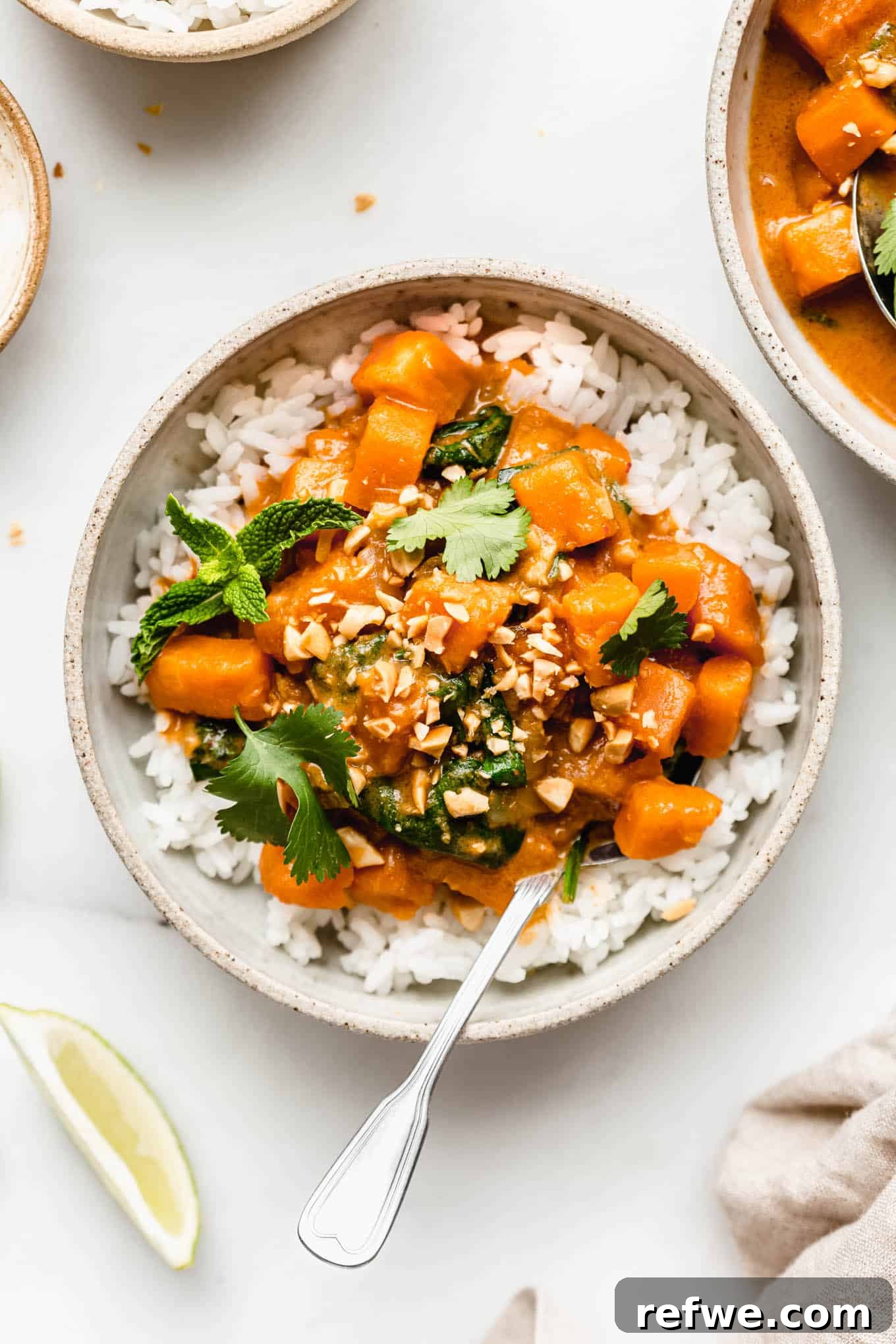
If you’re craving authentic Thai flavors fused with wholesome ingredients for a quick and satisfying dinner, this Sweet Potato Curry recipe is your perfect solution. Imagine tender sweet potatoes luxuriating in a rich, creamy, and subtly tangy curry sauce, expertly crafted from aromatic Thai red curry paste, smooth peanut butter, and luscious coconut milk. This remarkable dish isn’t just a treat for your taste buds; it’s also entirely vegan, gluten-free, and impressively ready in just 35 minutes. It’s the ideal choice for anyone seeking a nutritious, flavorful, and fuss-free meal.
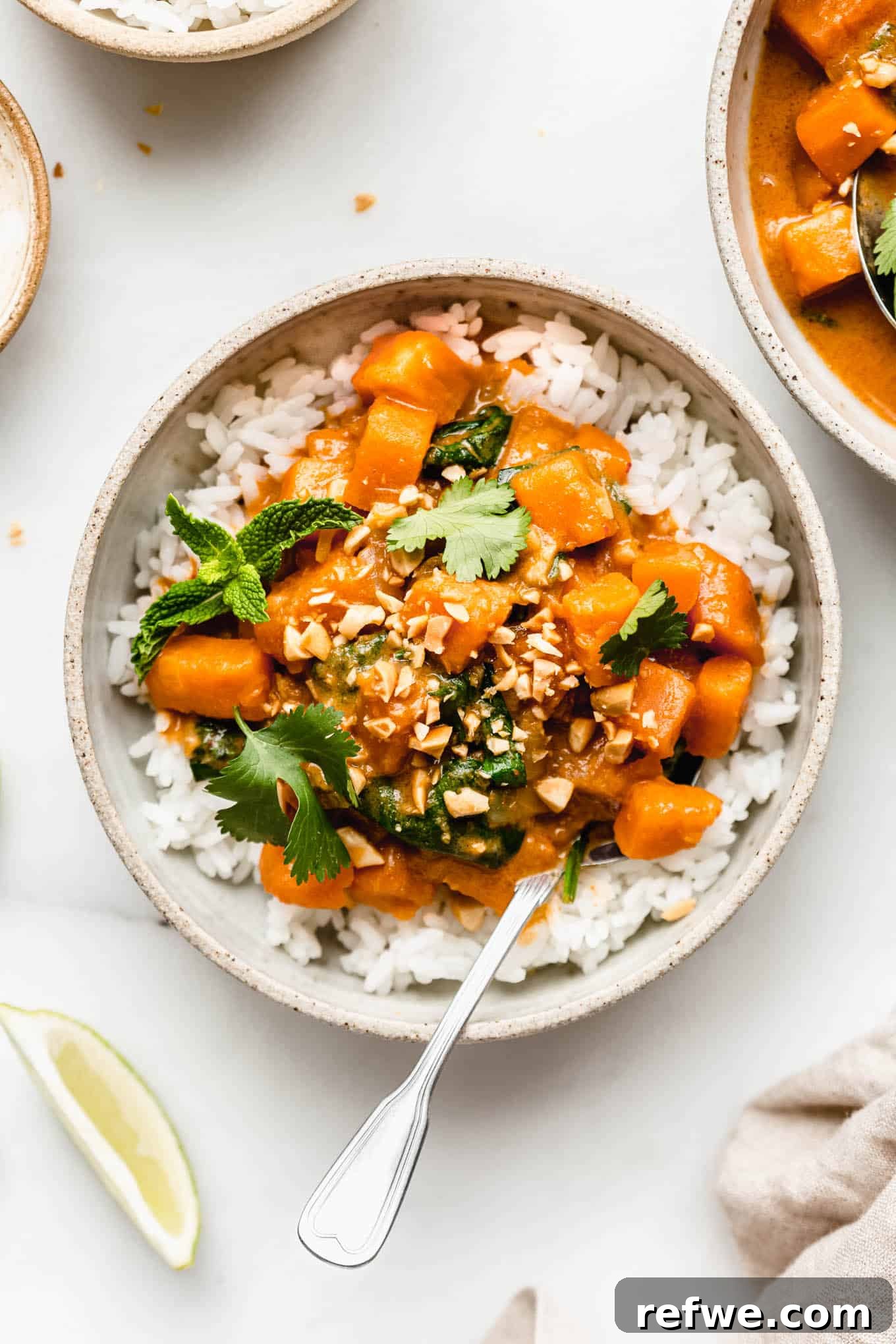
The Ultimate Sweet Potato Curry: A Flavorful and Healthy Delight
There’s an undeniable comfort that comes with a warm, aromatic curry on a chilly evening, capable of warming you from the inside out. But what if that comforting meal could also be incredibly quick and healthy? This is exactly what our Sweet Potato Curry recipe delivers. It’s a hearty, vibrant dish that can be on your dinner table in approximately 30-35 minutes, making it a dream for busy weeknights.
This Sweet Potato Curry is a unique Thai-inspired creation that brilliantly marries the bold, complex flavors of traditional Thai curry with the sweet earthiness of sweet potatoes and the freshness of spinach. While sweet potatoes might not be a staple in every classic Thai curry, their naturally sweet profile and creamy texture make them an exceptionally delicious addition, perfectly complementing the spicy and savory notes of the red curry. It’s a delightful twist that you’ll wonder how you ever lived without.
Should sweet potatoes be unavailable or if you’re looking to explore other root vegetable options, this versatile recipe can easily be adapted. For instance, you could transform this into an equally delicious Butternut Squash Curry, offering a similar creamy texture and sweet undertone.
Why You’ll Adore This Sweet Potato Curry Recipe
- Effortless Weeknight Dinner: This Thai Sweet Potato Curry is designed for ultimate convenience. Prepared in a single pot and ready in just over half an hour, it eliminates kitchen stress, making it an ideal choice for those hectic evenings when you need a delicious meal on the table fast. Its simplicity doesn’t compromise on flavor, ensuring a gourmet experience without the fuss.
- Nutrient-Dense Goodness: Sweet potatoes are nutritional powerhouses, brimming with essential vitamins, minerals, and fiber. This recipe ensures you get a generous helping of these amazing benefits. Additionally, a vibrant boost of fresh spinach is folded in, adding an extra layer of greens and vital micronutrients, making every spoonful a step towards a healthier you.
- Excellent for Meal Prep: Take the stress out of future meal planning by preparing a larger batch of this curry. It stores beautifully, whether in the fridge for up to a week or in the freezer for up to three months. This makes it a fantastic option for those who love to plan ahead, ensuring a wholesome, homemade meal is always within reach when time is tight.
- Infinitely Adaptable: This recipe serves as a perfect canvas for your culinary creativity. Feel free to customize it with your favorite proteins or additional vegetables. Broccoli florets, hearty lentils, or cauliflower (similar to how we use it in this chickpea cauliflower curry) would all be superb additions. The robust curry base can support a variety of ingredients, allowing you to tailor it to your dietary preferences and what you have on hand.
Essential Ingredients for Your Sweet Potato Red Curry
Crafting this flavorful curry requires a handful of readily available ingredients, each playing a crucial role in building its rich and complex taste profile. Quality ingredients truly make a difference in the final outcome, so aim for fresh produce and reputable brands where possible.
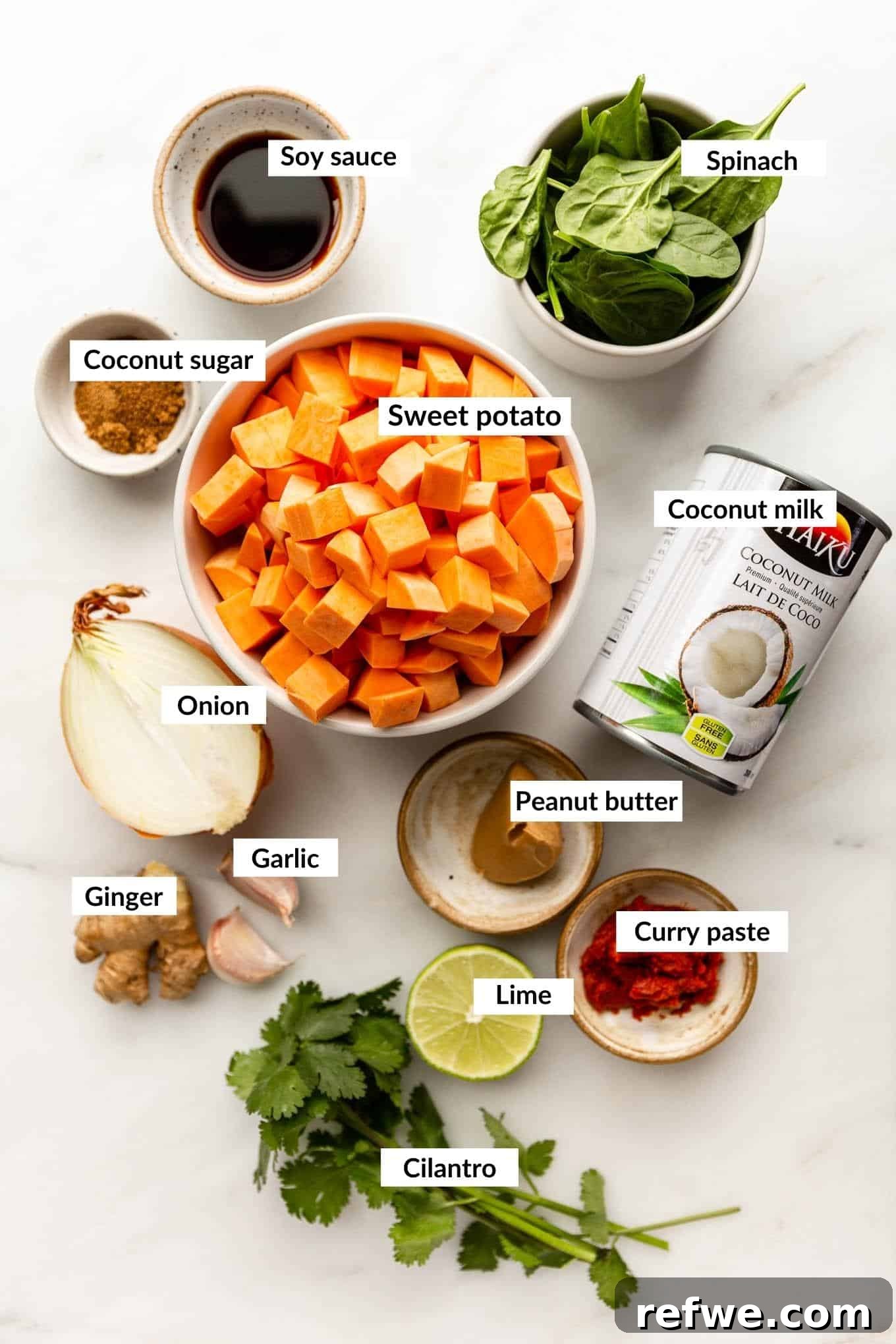
- Onion: Forms the aromatic foundation.
- Garlic: Adds pungent depth and classic savory notes.
- Ginger: Provides a warming, zesty freshness.
- Thai Red Curry Paste: The heart of the curry’s flavor; choose a vegan brand.
- Peanut Butter: Contributes a creamy texture and nutty richness, characteristic of satay-inspired sauces.
- Chili Flakes: For adjustable heat (optional, but recommended for a subtle kick).
- Sweet Potatoes: The star, offering natural sweetness and a hearty texture.
- Coconut Milk: Full-fat for ultimate creaminess and authentic Thai richness.
- Vegetable Broth: Thins the sauce and adds savory undertones.
- Soy Sauce (or Tamari): For umami depth and seasoning. Use tamari for a gluten-free option.
- Coconut Sugar: Balances the spice and tang with natural sweetness.
- Lime Juice: Brightens the flavors with a essential citrusy zest.
- Spinach: A healthy boost of greens, added at the end for freshness.
Crafting Your Delicious Sweet Potato Curry: A Step-by-Step Guide
Follow these simple steps to create a wonderfully flavorful and satisfying Sweet Potato Curry that tastes like it came from your favorite Thai restaurant, but in the comfort of your own kitchen.
Step 1: Build the Aromatic Base
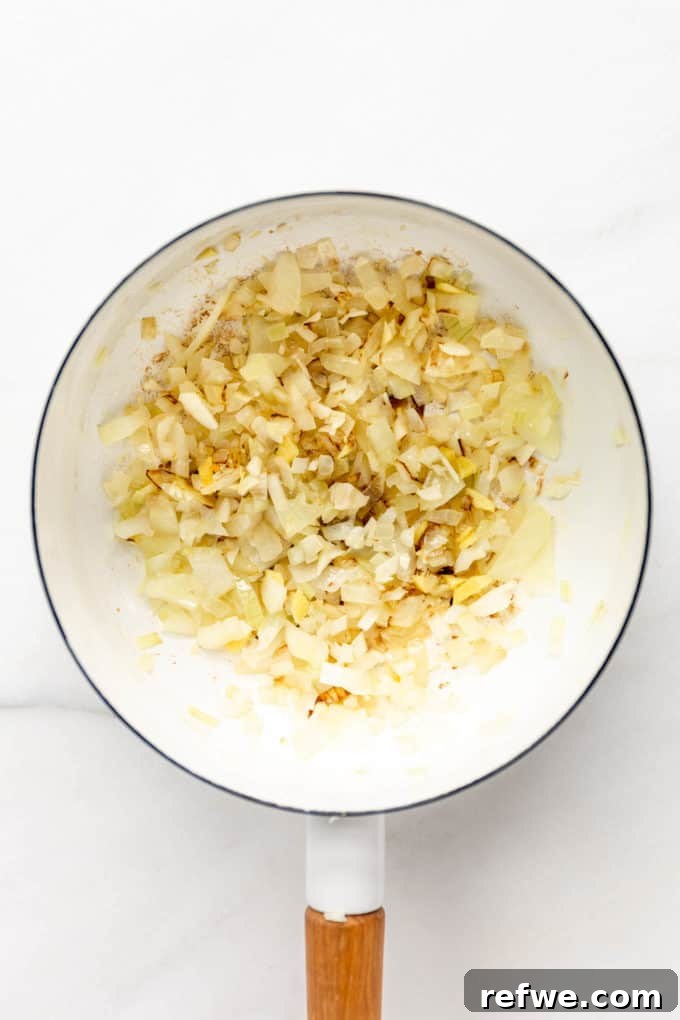
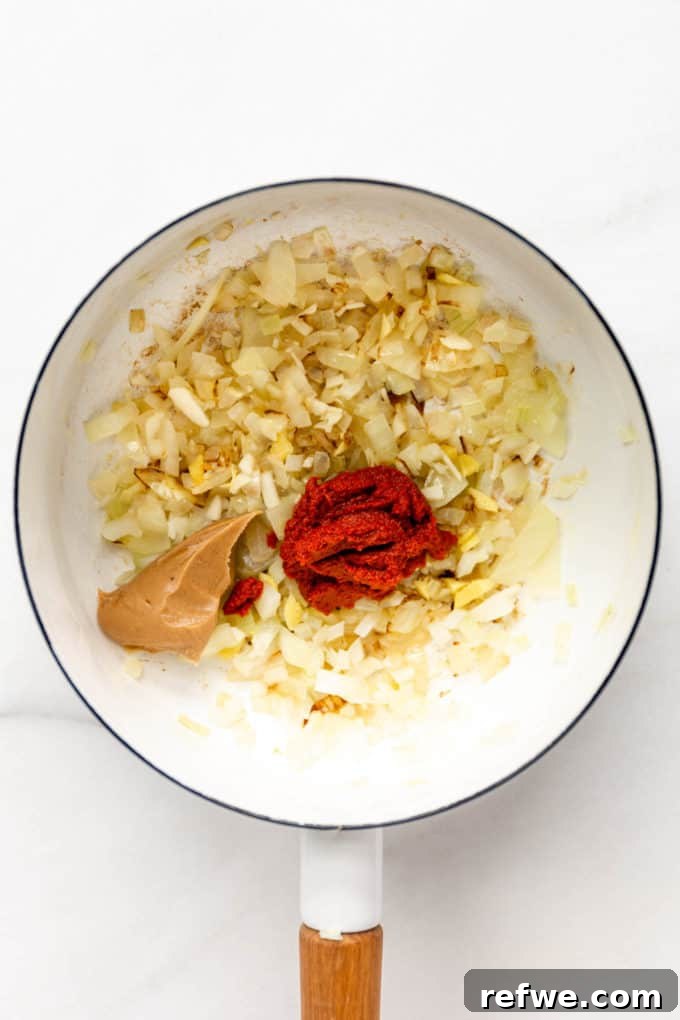
Begin by heating a tablespoon of olive oil in a large pot or Dutch oven over medium-high heat. Once shimmering, add the finely chopped onion, minced garlic, and grated ginger. Sauté these aromatics for 1-2 minutes until they become fragrant and the onion softens slightly. This step is crucial for developing the foundational flavors of your curry. Next, stir in the vibrant red Thai curry paste and creamy peanut butter. Mix well, allowing the paste to bloom and release its spices, coating the aromatics evenly.
Chef’s Tip: The intensity of Thai curry paste can vary significantly between brands. To control the spice level, especially if you’re sensitive to heat, start with a smaller amount (e.g., 1 tablespoon) and taste before adding more. You can always enhance the spice later, but it’s hard to reduce it!
Step 2: Incorporate the Sweet Potatoes
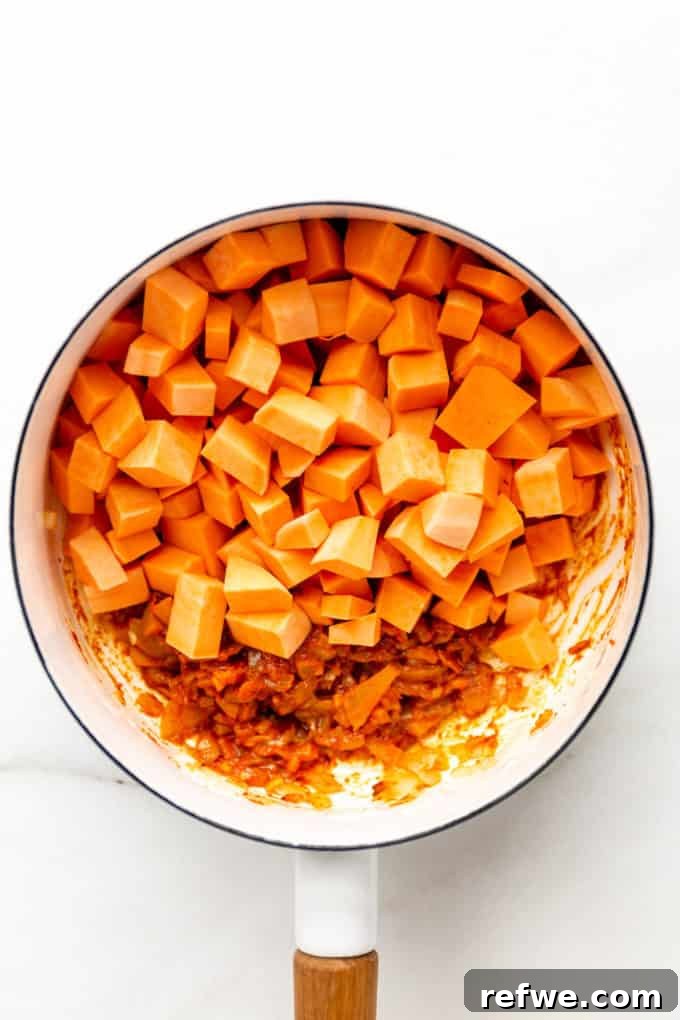
Once the curry paste and peanut butter are thoroughly combined with the aromatics, add the cubed sweet potatoes to the pot. Stir everything together meticulously, ensuring the sweet potato pieces are evenly coated with the rich curry base. This initial mixing step ensures that every bite of sweet potato will be infused with the incredible flavors of the Thai curry. If you enjoy a bit of extra warmth, now is also the time to stir in the chili flakes.

Step 3: Simmer to Perfection
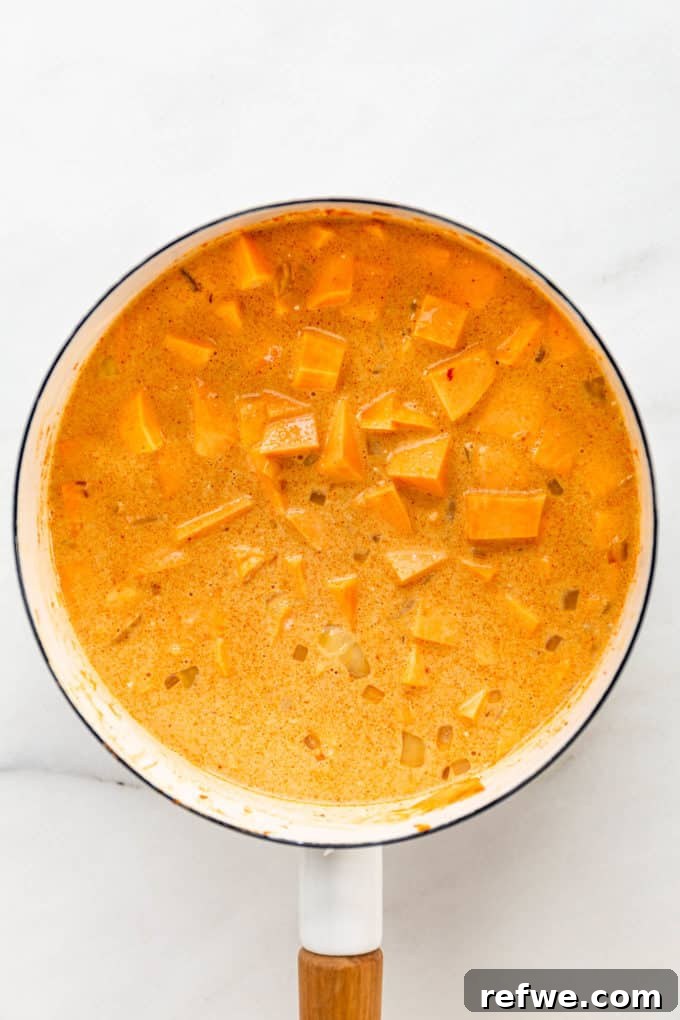
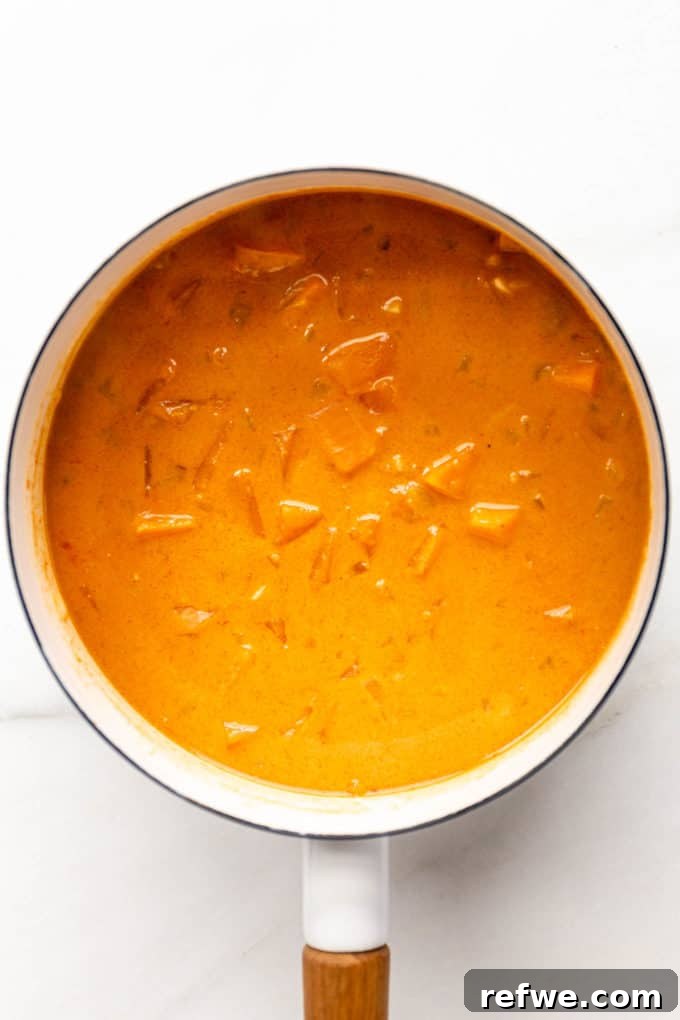
Pour in the full-fat coconut milk, vegetable broth, soy sauce (or tamari), coconut sugar, and fresh lime juice. Stir gently to combine all the liquids and ingredients. Bring the mixture to a slight boil over medium-high heat, then immediately reduce the heat to low. Cover the pot and let the curry gently simmer for about 20 minutes, or until the sweet potatoes are fork-tender and the sauce has thickened slightly. Periodically stir to prevent sticking and ensure even cooking. This simmering period is where the flavors truly meld and deepen.
Step 4: Finish and Serve
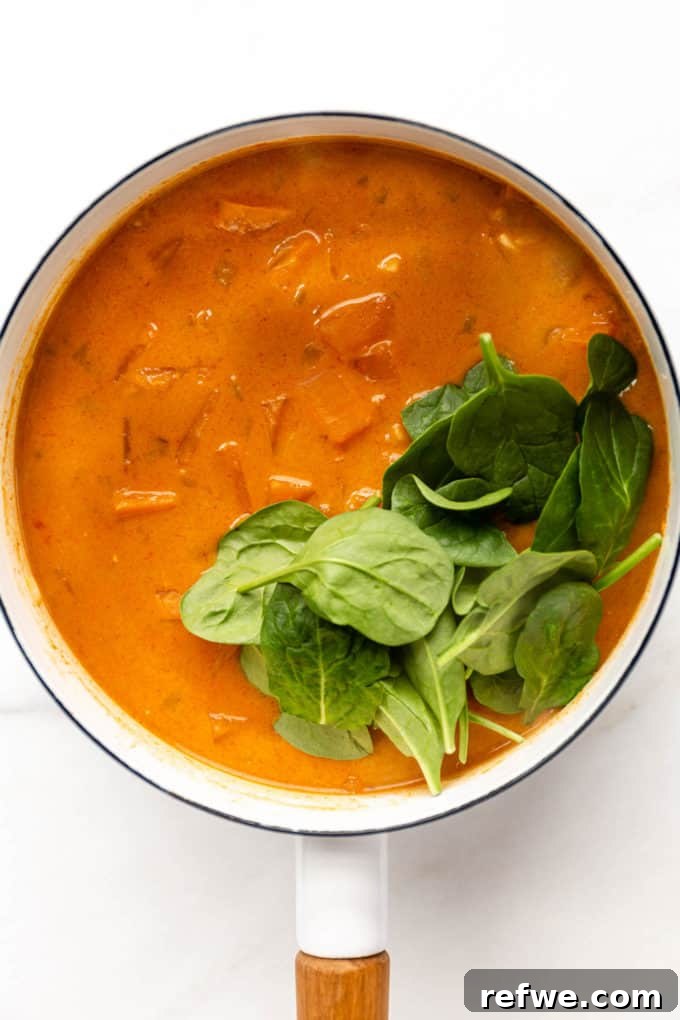
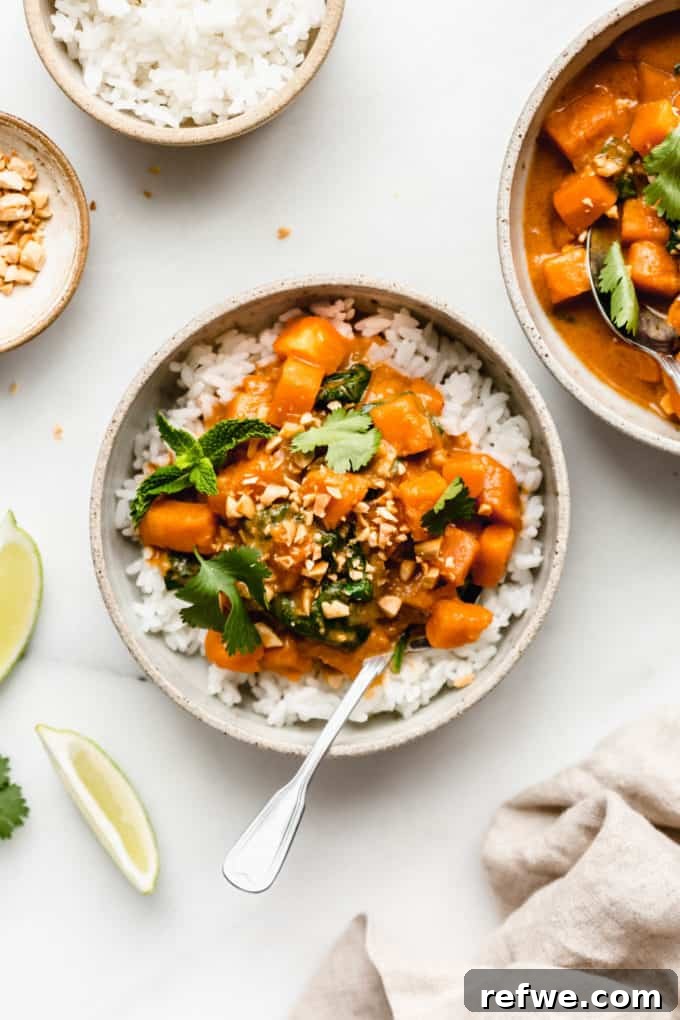
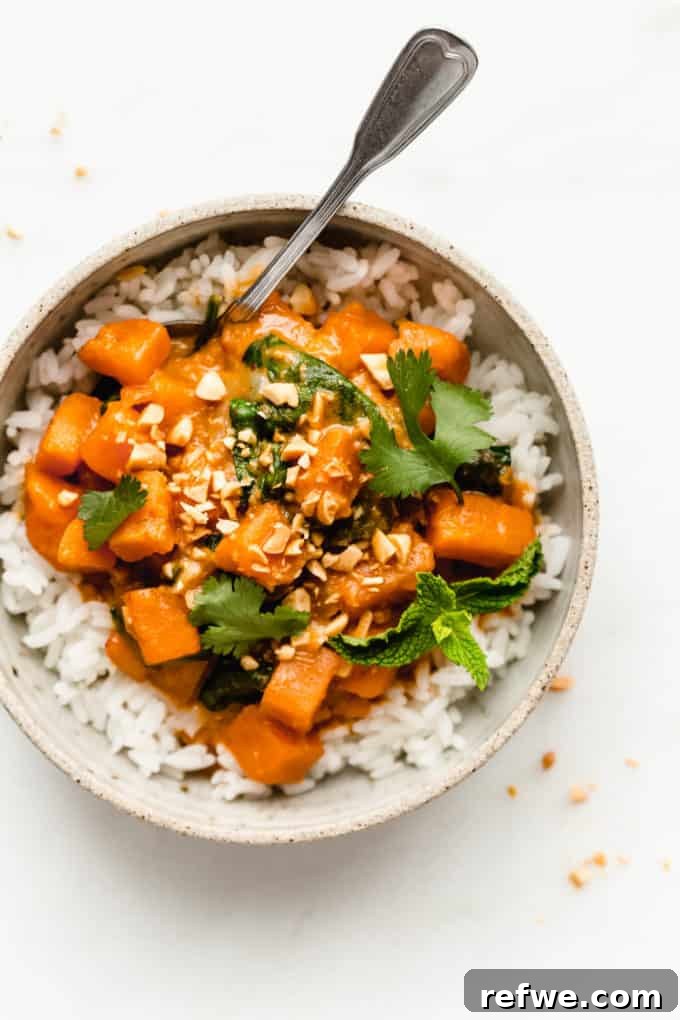
Once the sweet potatoes are perfectly tender, remove the pot from the heat. Stir in the fresh spinach leaves, allowing the residual heat of the curry to wilt them gently until they are just tender and bright green. This preserves their nutrients and vibrant color. Serve this exquisite curry immediately, either on its own for a lighter meal or traditionally over a bed of jasmine rice. Garnish generously with a sprinkle of crushed peanuts for a satisfying crunch and fresh cilantro for an herbaceous finish. A squeeze of fresh lime juice just before serving can also elevate the flavors beautifully.
Creative Ways to Serve Your Thai Sweet Potato Curry
While this Sweet Potato Curry is wonderfully satisfying on its own, it truly shines when paired with complementary sides. The most classic and traditional way to enjoy Thai curry is, of course, with rice, which beautifully soaks up the rich sauce. However, there are many delicious alternatives to explore, catering to different preferences and dietary needs:
- Jasmine Rice: The fragrant, slightly sticky grains are a perfect, traditional companion.
- Sticky Rice: Offers a unique chewy texture, ideal for scooping up every last drop of sauce.
- Brown Rice: A wholesome, nutty alternative that adds extra fiber.
- Quinoa: For a protein-packed, gluten-free grain option.
- Cauliflower Rice: An excellent low-carb, vegetable-rich choice.
- Rice Noodles: Thin and delicate, they provide a delightful textural contrast.
- Shirataki Noodles: A very low-calorie and low-carb option for a lighter meal.
- Naan or Roti: For a delightful way to mop up the flavorful sauce.
- Steamed Greens: A simple side of broccoli or green beans for added vegetables.
Storing and Reheating Your Sweet Potato Red Curry for Later Enjoyment
One of the best features of this Thai Sweet Potato Curry is how well it stores, making it perfect for meal prep or enjoying leftovers throughout the week. The flavors often deepen and meld even further after a day or two!
To Store in the Fridge: Allow any leftover Thai Sweet Potato Curry to cool completely to room temperature before transferring it to an airtight container. It will keep beautifully in the refrigerator for up to 7 days. To reheat, simply warm it gently in a pot on the stove over medium-low heat, stirring occasionally until heated through. Alternatively, you can microwave individual portions until hot, adding a splash of water or broth if the sauce has thickened too much.
To Store in the Freezer: This curry is also freezer-friendly, offering a convenient grab-and-go meal option. Once the curry has cooled entirely to room temperature, transfer it to a freezer-safe, airtight container or heavy-duty freezer bags. It can be stored in the freezer for up to 3 months. To defrost, transfer the container to the refrigerator overnight, or let it thaw on the countertop for a few hours. Reheat using the same methods as refrigerated leftovers: on the stove over low heat or in the microwave, adding liquid if necessary to restore the sauce consistency.
Expert Tips for Crafting the Perfect Thai Sweet Potato Curry
- Optimal Sweet Potato Cubes: For the best texture and fastest cooking time, cut your sweet potatoes into small, uniform bite-sized cubes. This ensures they cook evenly and become tender simultaneously. Larger pieces will require more cooking time and might result in an unevenly cooked dish. Aim for approximately 1-inch cubes.
- Mastering Curry Paste Heat: The potency of curry paste can vary dramatically across brands. Some are fiery hot, while others are milder and more aromatic. If you’re new to a particular brand or prefer less spice, always start with a conservative amount (e.g., 1 tablespoon). You can easily taste the curry during the simmering phase and stir in an additional half or full tablespoon of paste if you desire more heat and depth of flavor. It’s always easier to add more than to try and tone down an overly spicy dish.
- Embrace Full-Fat Coconut Milk: While light coconut milk might seem like a healthier option, for a truly authentic and luxuriously creamy curry, full-fat coconut milk is non-negotiable. Its higher fat content contributes significantly to the velvety texture and rich mouthfeel that defines a great Thai curry. It also helps to balance the spices and prevents the curry from tasting too thin or watery.
- Freshness of Ingredients Matters: Using fresh ginger, garlic, and quality red curry paste will elevate the flavor profile immensely. Avoid pre-minced garlic or ginger if possible, as their flavor isn’t as vibrant.
- Balance the Flavors: Thai cuisine is all about balancing sweet, sour, salty, and spicy. Taste your curry before serving and adjust as needed. A dash more lime juice can add brightness, a pinch more sugar can mellow the heat, and a splash of soy sauce can enhance the savory notes.
Frequently Asked Questions About Coconut Sweet Potato Curry
Coconut milk is a cornerstone ingredient in many Thai curries, including this Sweet Potato Curry. It contributes a decadent, rich creaminess that balances the intense spices of the curry paste. Beyond texture, it imparts a subtle, sweet coconut flavor that harmonizes beautifully with the savory, spicy, and tangy notes, creating a well-rounded and deeply satisfying sauce.
If you’re not a fan of coconut milk or have dietary restrictions, you can technically replace it with an equal amount of vegetable broth. However, it’s important to understand that this will significantly alter the curry’s character. The resulting dish will be less creamy and may lack the distinctive richness and subtle sweetness that coconut milk provides. For a different type of creaminess, a dairy-free cream alternative (like cashew cream) could be experimented with, but it would change the flavor profile from a traditional Thai curry.
Adding more protein to this curry is incredibly easy and highly recommended for a more substantial meal. You can stir in a cup of cooked chickpeas along with the sweet potatoes, allowing them to absorb the curry flavors. Alternatively, cubed firm or extra-firm tofu, pan-fried until golden before being added to the simmering curry, makes for an excellent plant-based protein boost. For non-vegan options, chicken or shrimp could also be added.
The flavor of curries can be quite variable, influenced by the specific brand of curry paste, soy sauce, and even vegetable broth you use. If your Thai Sweet Potato Curry tastes a bit flat, don’t despair! A common fix is to add another tablespoon of red curry paste to boost the spice and depth. If it’s lacking in savory notes, a splash more soy sauce (or tamari) can introduce more umami. You might also find that a pinch more salt, a squeeze of fresh lime juice, or a little more coconut sugar can help balance and brighten the overall taste.
Sweetness is an important component in balancing the flavors of a Thai curry. In Thailand, palm sugar is the most commonly used sweetener, offering a caramel-like depth. For this recipe, coconut sugar is an excellent choice as it complements the coconut milk and offers a similar rich flavor. Other suitable alternatives include brown sugar, honey, agave nectar, maple syrup, or even regular granulated sugar. Choose based on what you have on hand and your preferred flavor profile.
Based on the recipe provided, each serving of this flavorful sweet potato curry contains approximately 250 calories. This makes it a wholesome and relatively light main course, especially when paired with a simple side like rice or quinoa. Always remember that nutritional information can vary slightly depending on the exact brands and quantities of ingredients used.
Effective Ways to Thicken Your Sweet Potato Curry
If you find your Sweet Potato Curry a bit too thin for your liking, there are a few simple ways to achieve a richer consistency. The most straightforward method is to simply let the curry continue to cook down, uncovered, over medium heat. As the liquid evaporates, the sauce will naturally reduce and thicken. Additionally, the natural starches released from the sweet potatoes as they break down during simmering will also contribute to the curry’s thickness. For a quicker fix, you can remove a small portion of cooked sweet potato, mash it, and stir it back into the curry, or mix a teaspoon of cornstarch with a tablespoon of cold water to form a slurry, then whisk it into the simmering curry until it thickens.
Is All Curry Paste Vegan? What to Look For
It’s a common misconception that all curry pastes are inherently vegan, but this is not always the case. Many traditional Thai curry pastes, particularly red and green varieties, often contain shrimp paste (kapi) as a key ingredient for umami and depth of flavor. Therefore, if you are making this recipe for vegans or vegetarians, it is absolutely crucial to check the ingredient label of your curry paste carefully to ensure it is shrimp-paste-free. Thankfully, in many grocery stores, especially in North America, you’ll find a growing selection of vegan-friendly curry paste brands that explicitly state “vegan” or “vegetarian” on their packaging, or list ingredients free from animal products.
Expand Your Culinary Horizons: Try These Delicious Curry Recipes Next!
If you loved this Sweet Potato Curry, you’re sure to enjoy exploring more diverse and flavorful curry dishes. Here are a few recommendations to inspire your next meal:
- Thai Green Curry Tofu
- Roasted Eggplant Curry
- Hearty Red Lentil Curry
- Flavorful Thai Chickpea Coconut Curry
We hope you thoroughly enjoyed preparing and tasting this delightful Sweet Potato Curry! If you tried this recipe or any other on our blog, we’d love to hear from you. Please share your experience by leaving a comment or rating below. For more delicious and healthy recipes, be sure to follow us on Pinterest, Instagram, and Facebook!
Print

Thai Sweet Potato Curry
Author: Jessica Hoffman
Prep Time: 15 minutes
Cook Time: 20 minutes
Total Time: 35 minutes
Yield: 4 servings
Category: Main Course
Method: Cook, Simmer
Cuisine: Thai, Asian
Diet: Vegan, Gluten-Free, Vegetarian
Description
This Sweet Potato Curry is an incredibly easy and vibrant dish bursting with authentic Thai curry flavor! It’s vegan, gluten-free, and comes together quickly in one pot, making it the ultimate healthy weeknight meal. Enjoy tender sweet potatoes in a rich, spicy, and creamy sauce, perfect for a cozy and satisfying dinner.
Ingredients
Units
- 1 tbsp olive oil
- 1 medium onion, chopped
- 1-inch cube of ginger, finely chopped
- 2 garlic cloves, finely chopped
- 2 tbsp red Thai curry paste (ensure vegan)
- 1 tbsp creamy peanut butter
- 1/2 tsp chili flakes (optional, adjust to taste)
- 2 large sweet potatoes, peeled and cubed (approximately 3 cups)
- 1 cup full-fat coconut milk
- 1/2 cup vegetable broth
- 1–2 tbsp soy sauce (use tamari for a gluten-free option)
- 1 tbsp coconut sugar (brown sugar can be substituted)
- 1 tbsp fresh lime juice
- 2 cups fresh spinach
- Crushed peanuts and fresh cilantro for garnish
Instructions
- Heat the olive oil in a large pot or Dutch oven over medium heat. Add the chopped onion, grated ginger, and minced garlic. Sauté for 2-3 minutes until the onions are softened and the aromatics are fragrant.
- Stir in the red Thai curry paste, creamy peanut butter, and chili flakes (if using). Cook for another minute, stirring constantly, to allow the flavors to bloom.
- Add the cubed sweet potatoes, full-fat coconut milk, vegetable broth, soy sauce (or tamari), coconut sugar, and fresh lime juice to the pot. Stir everything together thoroughly. Bring the mixture to a gentle boil over medium-high heat, stirring occasionally.
- Once boiling, reduce the heat to low, cover the pot, and let the curry simmer for 20 minutes, or until the sweet potatoes are fork-tender. Stir occasionally to prevent sticking.
- Remove the pot from the heat and stir in the fresh spinach leaves. Allow the residual heat to wilt the spinach for 1-2 minutes until it’s tender and bright green.
- Taste and adjust seasonings if necessary (add more curry paste, soy sauce, lime juice, or sugar to achieve your desired balance). Serve immediately on its own, or over your choice of rice or noodles. Garnish with crushed peanuts and fresh cilantro for an extra burst of flavor and texture.
Notes
Store any leftover Sweet Potato Curry in an airtight container in the refrigerator for up to 7 days, or in the freezer for up to 3 months. Reheat gently on the stovetop or in the microwave.
For a guaranteed vegan or vegetarian dish, always check the label of your red curry paste. Some brands may contain shrimp paste, so ensure you choose one that is explicitly labeled vegan or free from animal products.
To enhance the protein content of this curry, feel free to add one cup of cooked chickpeas or some pan-fried cubed tofu along with the sweet potatoes in Step 3. These additions absorb the flavors wonderfully and make the meal even more filling.
Nutrition
- Serving Size: 1/4 of the recipe
- Calories: 250 kcal
- Sugar: 7g
- Sodium: 400mg
- Fat: 10.7g
- Saturated Fat: 5.6g
- Carbohydrates: 35g
- Fiber: 6g
- Protein: 5g
*Nutrition information is an estimate based on ingredients and serving size, and may vary.