
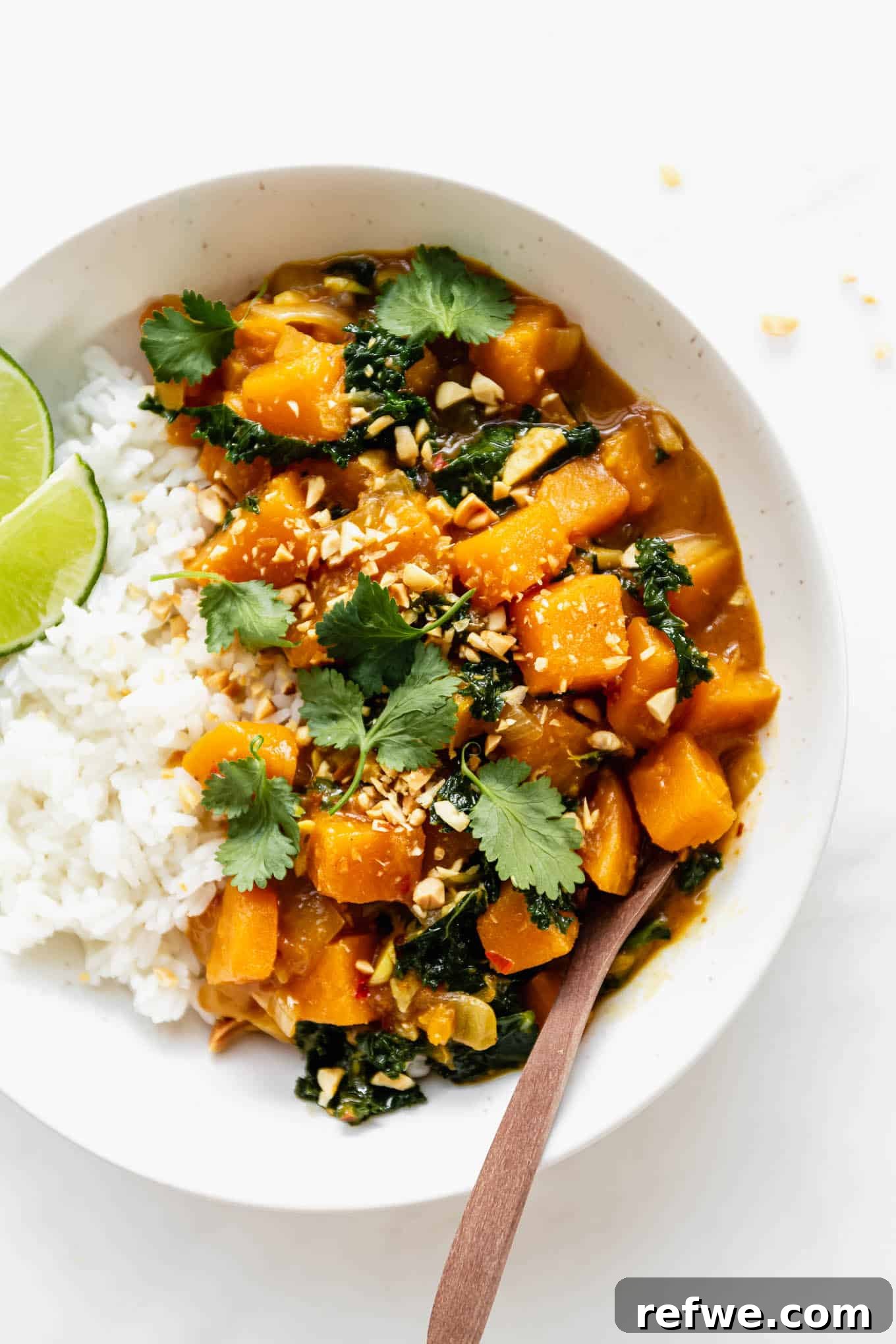
When the weather turns chilly, there’s nothing quite as comforting and satisfying as a warm, hearty meal. Dive into a bowl of this incredibly flavorful Thai Butternut Squash Curry – a true sensation for your taste buds! This delightful dish is brimming with tender butternut squash, nutrient-rich kale, and a harmonious blend of aromatic Thai spices, all brought together by the luxurious creaminess of full-fat coconut milk. Not only is this vegetarian Thai curry incredibly delicious, but it’s also entirely vegan and gluten-free, making it a fantastic option for a wide range of dietary preferences. Best of all, it comes together in just 30 minutes, proving that wholesome, homemade meals don’t have to take all day.
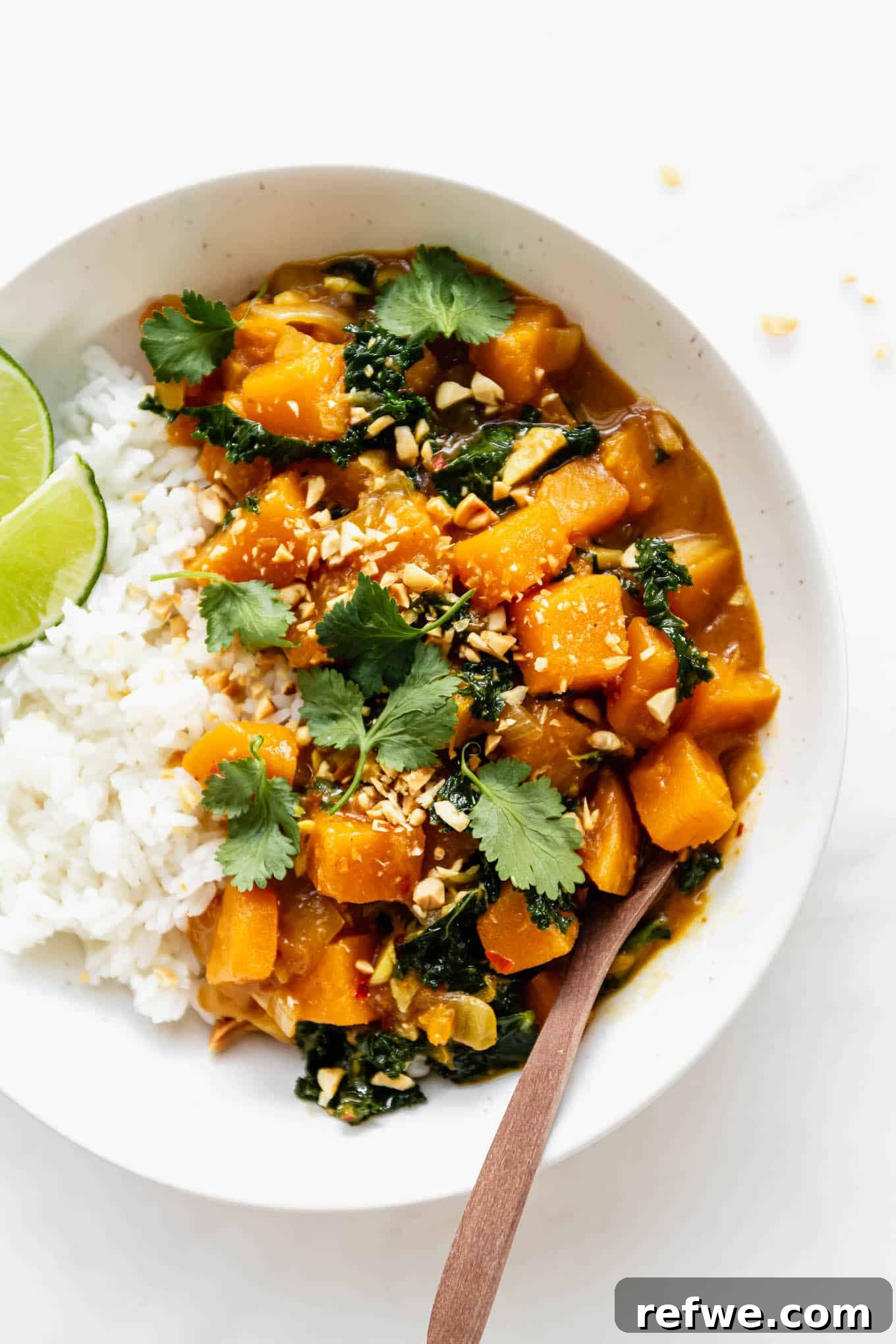
Delicious 30-Minute Thai Butternut Squash Curry
Are you craving the ultimate stay-at-home cozy meal, something you can truly savor while nestled under a warm blanket? Look no further! There’s an undeniable magic in a steaming bowl of curry on a crisp autumn or cold winter day. When made with one of the most beloved seasonal ingredients – butternut squash – it transforms into an absolute culinary delight.
Butternut squash, with its naturally light and sweet flavor profile, is incredibly versatile. It shines in a variety of dishes, from a vibrant Spicy Thai Butternut Squash Soup to a sophisticated Butternut Squash and Sage Risotto, or even a creamy Vegan Butternut Squash Mac and Cheese. Its ability to absorb and complement diverse flavors makes it a perfect canvas for the bold and fragrant notes of Thai cuisine, especially in a rich curry. This particular recipe for Thai Butternut Squash Curry harnesses the power of authentic Thai red curry paste, robust curry powder, and rich coconut milk to create an irresistibly aromatic and deeply satisfying dish that you’ll want to make again and again. Each serving of this wholesome curry offers approximately 222 calories, 5 grams of fiber, and 5 grams of protein, making it an ideal choice for a light yet incredibly fulfilling meal. For those looking to add more substance, it pairs wonderfully with a side of fluffy rice or extra plant-based protein like pan-fried tofu.
Why You’ll Fall in Love with This Butternut Squash Curry
This Thai Butternut Squash Curry isn’t just another recipe; it’s a culinary experience designed for convenience and incredible taste. Here are several reasons why this dish is destined to become a staple in your kitchen:
- Dinner on the Table in 30 Minutes: Life gets busy, and sometimes you need a delicious meal, fast. This recipe is your answer, making it perfect for hectic weeknights when you need a no-fuss, speedy dinner solution. You’ll be amazed at how quickly you can create such a complex and flavorful dish.
- Effortlessly Customizable: This curry is incredibly forgiving and adaptable. Feel free to make it your own by adding your favorite proteins like cubed tofu, tempeh, or chickpeas, or load it up with extra vegetables such as broccoli florets, cauliflower, snap peas, or bell peppers, just like in this Cauliflower and Chickpea Curry. It’s a fantastic way to use up whatever fresh produce you have on hand.
- A Meal Prep Champion: Curries are truly a dream for meal prepping. Not only do they store exceptionally well in the refrigerator for several days, but they also tend to become even more intensely flavorful over time as the ingredients meld together. Prepare a big batch at the start of the week for easy, delicious lunches or dinners.
- Freezer-Friendly for Future Cravings: Beyond being excellent for meal prep, this butternut squash curry is also incredibly freezer-friendly. You can easily store it in an airtight container in the freezer for up to 3 months, ensuring you always have a wholesome and comforting meal ready to go whenever a craving strikes. Simply thaw and reheat for a quick and satisfying dinner.
Essential Ingredients for Your Butternut Squash Curry
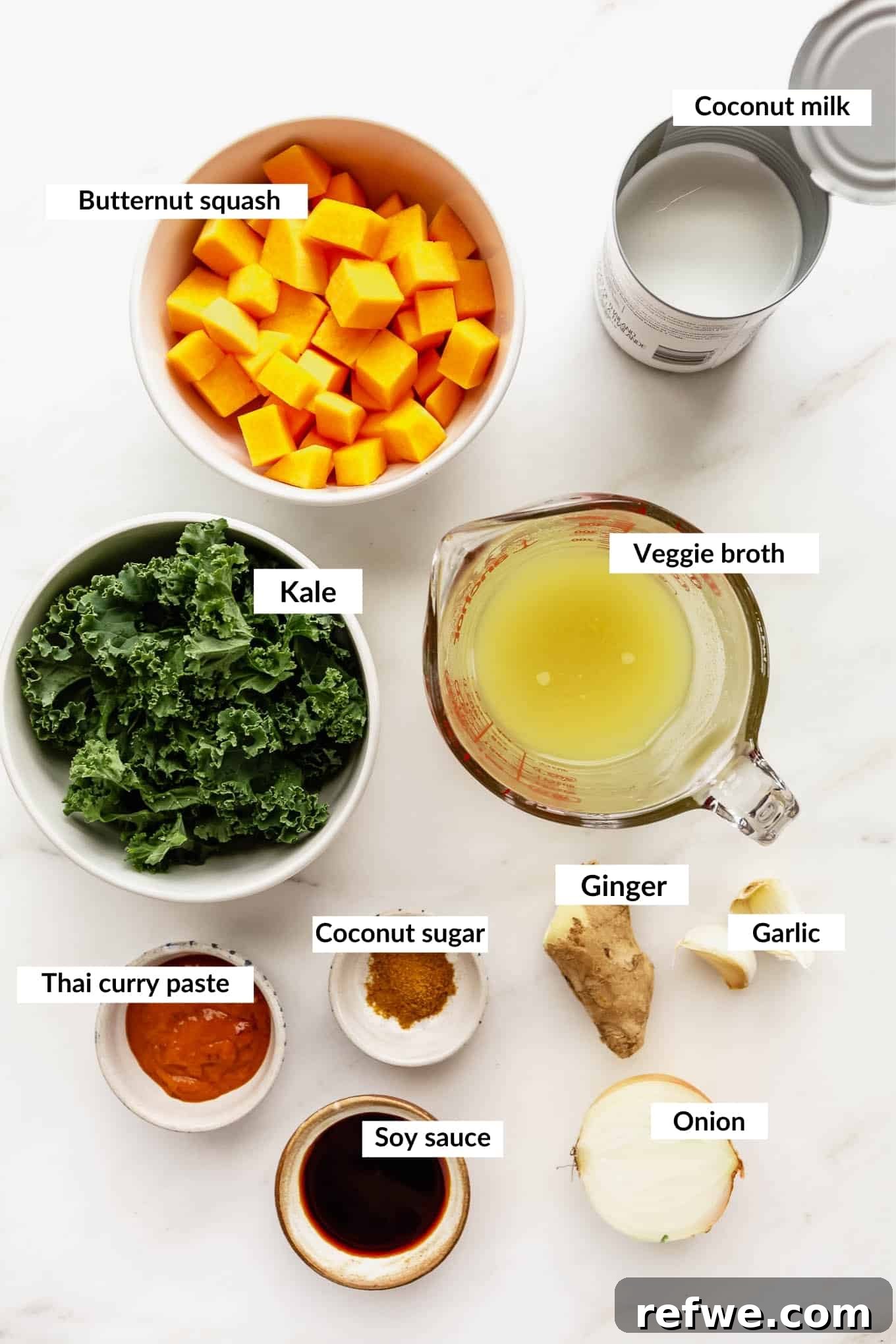
Time-Saving Tip: To shave off even more time from your prep, look for pre-cut butternut squash in the produce section of your grocery store!
- Butternut Squash: The star of our curry! This winter squash is prized for its naturally sweet taste and firm texture, which holds up beautifully in the simmering curry sauce without becoming mushy. Butternut squash is also fantastic in dishes like this Kale Butternut Squash Salad.
- Kale: I often choose kale over spinach for curries because its sturdy leaves retain more texture and integrity even after simmering, adding a delightful chewiness to the dish. It also boosts the nutritional content with vitamins and minerals.
- Fresh Ginger: Absolutely essential for that vibrant, zesty warmth that defines Thai cuisine. Freshly grated or finely chopped ginger provides a pungent aroma and a kick of flavor that dried ginger simply can’t replicate.
- Fresh Garlic: A foundational aromatic that provides depth and a savory backbone to the curry. Using fresh garlic cloves is key for the best flavor; I recommend three medium-sized cloves for a robust taste.
- Onion: A classic base ingredient that sweetens as it cooks, complementing the spices and providing an essential layer of flavor. Any regular onion, such as yellow or white, will work perfectly.
- Vegetable Broth: This liquid forms the base of our curry sauce. I typically opt for low-sodium vegetable broth to have full control over the saltiness of the finished dish, as some brands can be surprisingly high in sodium.
- Full-Fat Coconut Milk: This is the secret to achieving that rich, velvety, and incredibly creamy texture in your curry. Always use full-fat canned coconut milk for the best results; light coconut milk will yield a thinner, less luxurious sauce.
- Thai Red Curry Paste: The heart of the Thai flavor! You can find this essential ingredient in most major grocery stores or, for a more authentic and often spicier version, at your local Asian grocery store. Remember to check the label if you’re keeping it strictly vegetarian or vegan, as some brands may contain shrimp paste.
- Curry Powder: While Thai red curry paste brings specific Thai flavors, a touch of regular curry powder adds another layer of warm, earthy spice and complexity, enhancing the overall depth of the dish.
- Soy Sauce: Adds a crucial umami depth and savory seasoning to the curry. If you require a gluten-free option, be sure to use tamari or a certified gluten-free soy sauce.
- Coconut Sugar: A natural sweetener that balances the heat from the curry paste and the tartness of the lime, bringing all the flavors into perfect harmony. If coconut sugar isn’t available, you can substitute it with palm sugar, maple syrup, or agave nectar.
- Fresh Lime: A final squeeze of fresh lime juice is a game-changer! It brightens all the flavors, adds a delightful tang, and provides a fresh finish to the rich curry. Serving with an extra lime wedge is always a nice touch.
Crafting Your Butternut Squash Curry: A Simple Guide
Pro Tip: If you’re new to preparing butternut squash, or just need a refresher on how to safely choose and cut it, check out my comprehensive Ultimate Guide To Cook Butternut Squash for step-by-step instructions.
Step 1: Build the Aromatic Base
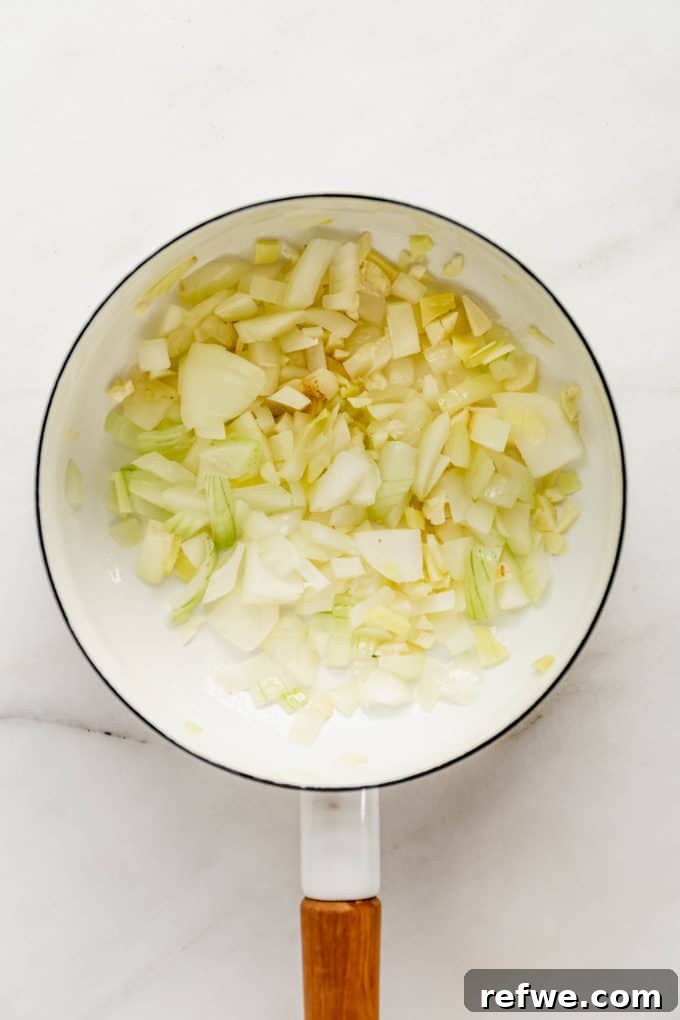
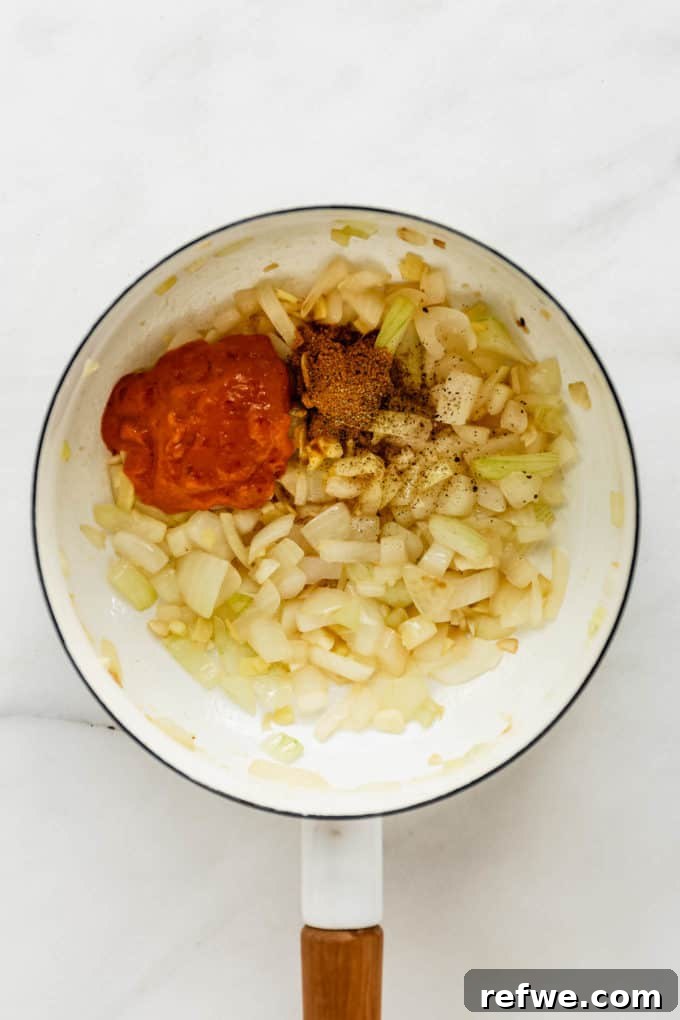
Begin by heating your chosen oil (avocado or vegetable oil) in a large pot or Dutch oven over medium-high heat. Once shimmering, add the chopped onions and sauté for about 2 minutes until they start to soften. Next, stir in the minced ginger and garlic, cooking for another 1-2 minutes until fragrant and lightly browned. This aromatic trio forms the delicious foundation of your curry. Then, add the Thai red curry paste and curry powder to the pot. Stir continuously for 20-30 seconds, allowing the spices to “toast” lightly. This step is crucial for deepening their flavors and releasing their intoxicating aromas.
Step 2: Simmer and Tenderize the Squash
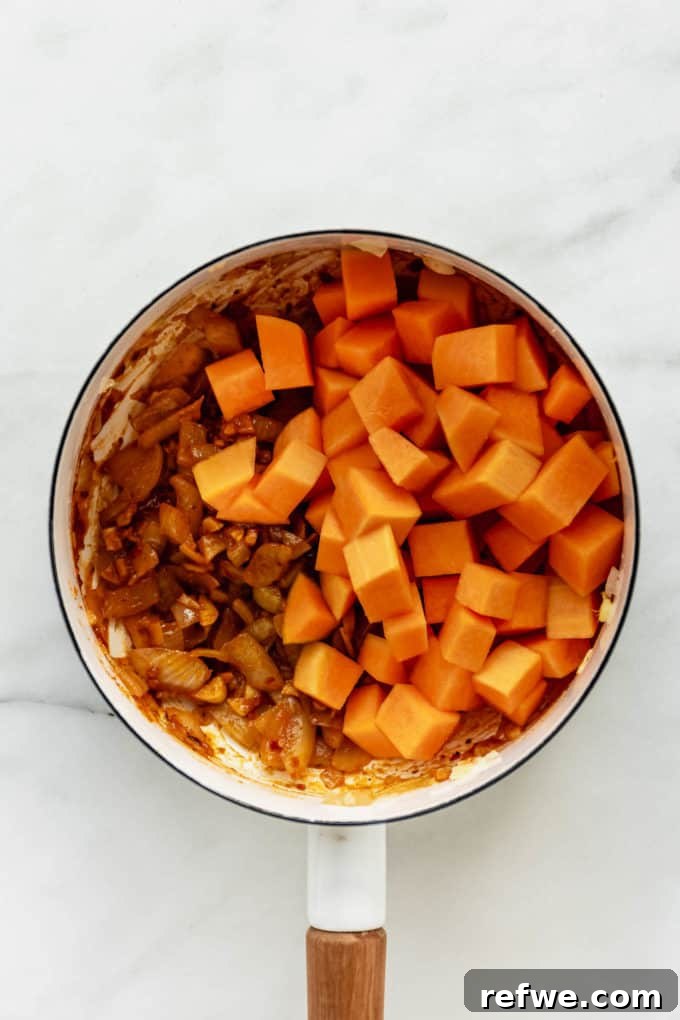
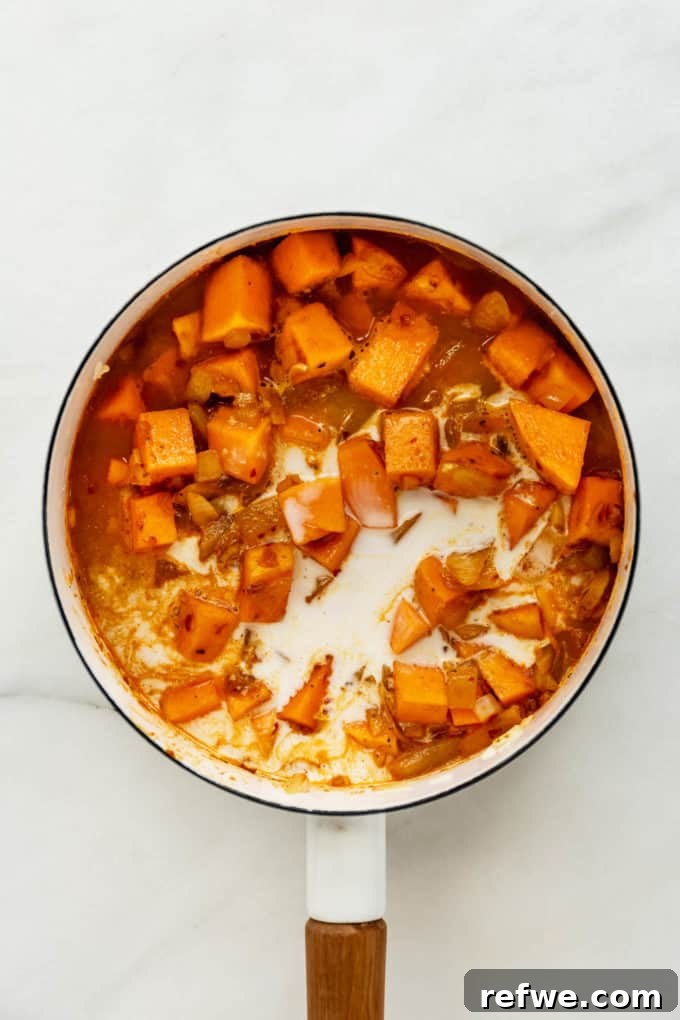
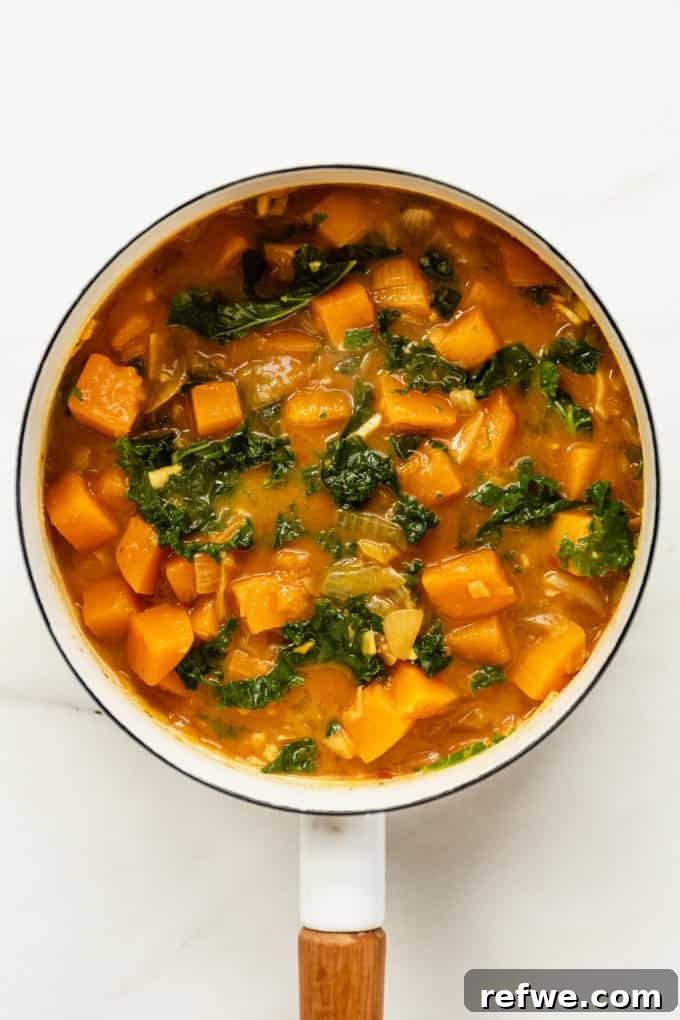
Once the curry paste is fragrant, add the cubed butternut squash to the pot and sauté for a few minutes, stirring to coat the squash evenly with the spice mixture. This helps the squash absorb all the wonderful flavors from the start. Now, pour in the vegetable broth and full-fat coconut milk, and add the remaining seasonings: soy sauce, coconut sugar, and lime juice. Stir everything well to combine. Bring the mixture to a gentle simmer, then cover the pot and allow it to cook for approximately 15 minutes, or until the butternut squash pieces are fork-tender. Cooking time may vary slightly depending on the size of your squash cubes.
Step 3: Finish and Thicken
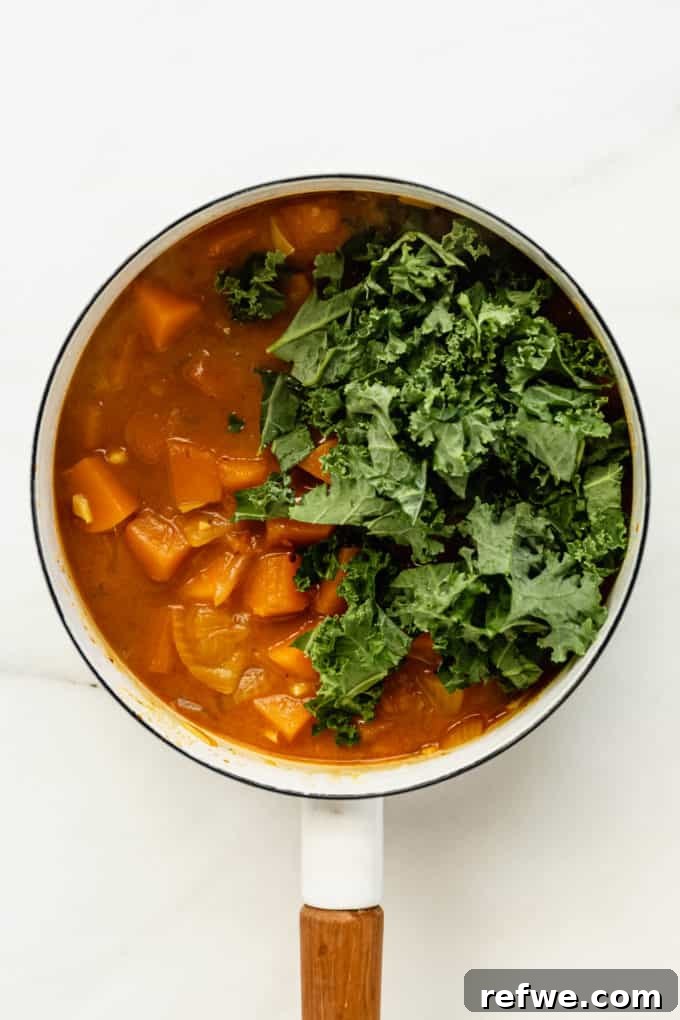
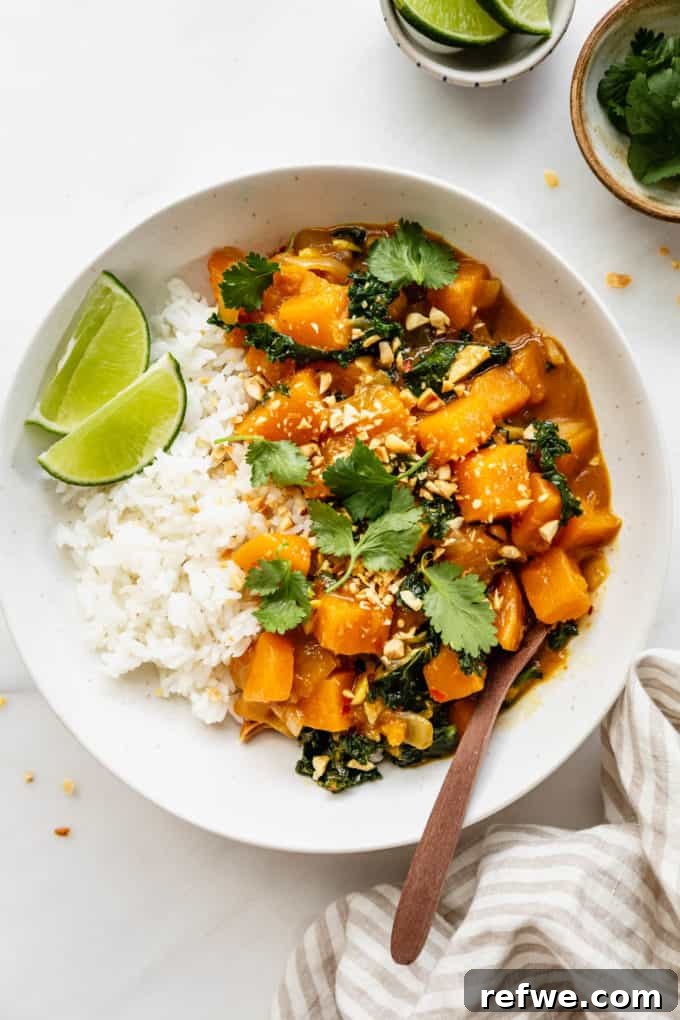
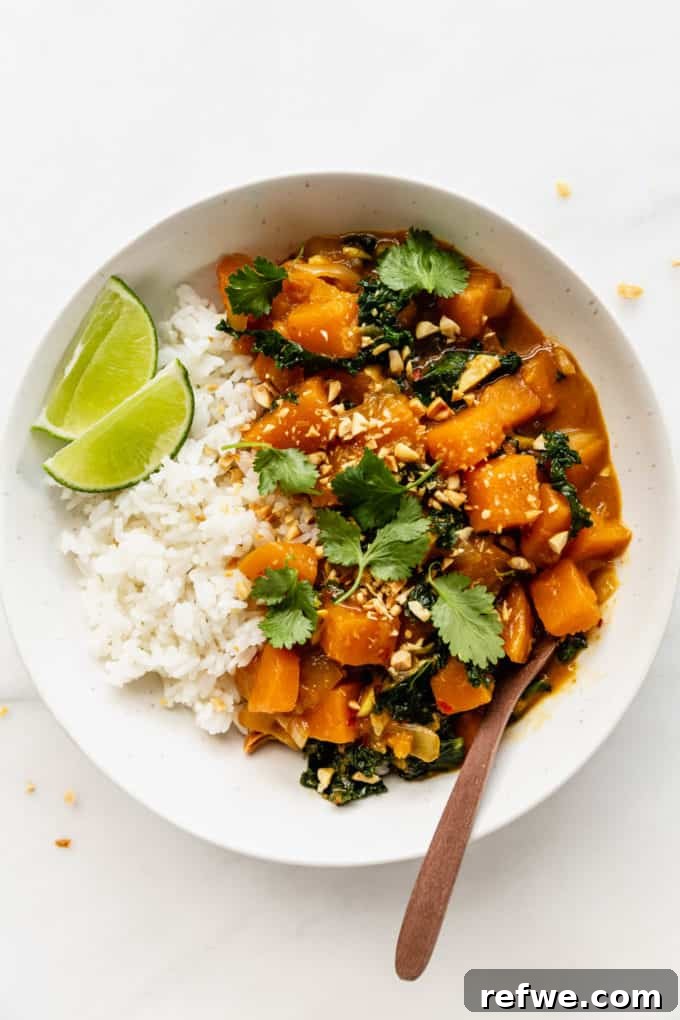
Once the butternut squash has reached perfect tenderness, remove the lid. Add the fresh kale to the pot and stir it into the hot curry until the leaves wilt and become soft, which usually takes 1-2 minutes. In a small bowl, whisk together the cornstarch with an equal amount of cold water until smooth. Pour this cornstarch slurry into the simmering curry, stirring continuously. This will help to thicken the sauce to your desired consistency, giving it that luxurious, clingy texture characteristic of a great curry. Serve your homemade Thai Butternut Squash Curry immediately, either on its own for a lighter meal or over a bed of fluffy rice or quinoa. For an extra touch of freshness and crunch, garnish with fresh cilantro and crushed peanuts.
Squash Curry: Creative Variations and Delicious Add-ins
This butternut squash curry recipe is wonderfully flexible, making it easy to adapt to your taste preferences or whatever ingredients you have on hand. Feel free to unleash your culinary creativity and customize it to your heart’s content! Here are some additional vegetables and protein-rich ingredients you can try adding to elevate your curry:
- Chickpeas: For an extra boost of plant-based protein and fiber, stir in a can of rinsed and drained chickpeas during the last 10 minutes of simmering. They add a lovely texture and heartiness.
- Sweet Potatoes: If butternut squash isn’t available or you prefer a different flavor, sweet potatoes make an excellent substitute. Cut them into similar-sized cubes and cook until tender.
- Bell Peppers: Add a vibrant pop of color and a touch of sweetness by stirring in sliced red, yellow, or orange bell peppers during the last 5-7 minutes of cooking. They provide a delightful crunch.
- Tofu: For a substantial protein addition, consider adding cubed firm or extra-firm tofu. You can pan-fry or bake the tofu separately until golden and slightly crispy before adding it to the curry at the end, or simmer soft-medium tofu directly in the sauce.
- Green Beans or Asparagus: For a fresh, crisp element, stir in trimmed green beans or chopped asparagus spears during the last few minutes of cooking until they are tender-crisp.
- Mushrooms: Sliced cremini or shiitake mushrooms add an earthy, umami depth to the curry. Sauté them with the onions and garlic, or add them with the butternut squash.
- Spinach: While kale is fantastic, fresh spinach is another great leafy green option. Stir in several handfuls at the very end, and it will wilt quickly into the hot sauce.
- Bamboo Shoots or Water Chestnuts: For authentic Thai texture and flavor, add canned bamboo shoots or water chestnuts (drained and rinsed) during the last few minutes of simmering.
Instant Pot Method: Butternut Squash Curry in Minutes
Enjoy this delicious curry even faster with the convenience of your Instant Pot! Here’s how to adapt the recipe:
Set your Instant Pot to Saute mode. Add the avocado oil, then sauté the chopped onions, minced garlic, and ginger until fragrant, about 3-5 minutes. Stir in the Thai red curry paste and curry powder, cooking for another 30 seconds to allow the spices to bloom. Next, add the cubed butternut squash, full-fat coconut milk, vegetable broth, soy sauce, coconut sugar, and lime juice. Stir everything well to combine. Secure the lid, ensure the vent is set to ‘Sealing’, and switch the Instant Pot to Manual (or Pressure Cook) mode. Cook on high pressure for 6 minutes. Once the cooking cycle is complete, carefully switch the vent to ‘Venting’ for a quick pressure release. Once the float valve drops, open the lid and stir in the fresh kale, mixing until it wilts and softens, which will only take a minute or two in the residual heat. If you prefer a thicker sauce, you can use the ‘Saute’ function again to simmer and reduce, or stir in a cornstarch slurry (as detailed in the stovetop method).
Slow Cooker Method: Effortless All-Day Simmer
For a hands-off approach that allows flavors to slowly meld and deepen throughout the day, prepare this butternut squash curry in your slow cooker:
First, to enhance the flavor, sauté the chopped onions, minced garlic, and ginger in a separate pan on the stovetop until lightly browned and fragrant. This step is crucial for building a strong flavor base. Once sautéed, transfer these aromatics to your slow cooker. Add the butternut squash, Thai red curry paste, curry powder, full-fat coconut milk, vegetable broth, soy sauce, coconut sugar, and lime juice to the slow cooker. Stir all the ingredients together until well combined. Cover and cook on low for 8 hours or on high for 4 hours, or until the butternut squash is perfectly tender. Towards the end of the cooking time, about 15-20 minutes before serving, stir in the fresh kale. Allow it to wilt into the hot curry. Give it a final stir and adjust seasonings if needed before serving.
Perfect Pairings: What to Serve with Your Butternut Squash Curry
This incredibly versatile Thai Butternut Squash Curry is absolutely delicious served on its own as a complete meal. However, it also pairs beautifully with a variety of accompaniments, transforming your dinner into a delightful family-style feast. Here are some of my favorite recipes and ideas to serve alongside this vibrant curry:
- Steamed Rice or Quinoa: A classic choice! Fluffy jasmine rice, basmati rice, or even nutritious quinoa are perfect for soaking up every last drop of the rich, flavorful curry sauce.
- Naan Bread or Roti: Warm, soft flatbreads are excellent for scooping up the curry and adding a textural contrast.
- Ramen Noodle Stir Fry: For a more substantial meal, a side of flavorful stir-fried noodles can complement the curry beautifully.
- Tofu Soup: While this curry is a main, a light, clear tofu soup could be an interesting starter.
- Tuna Tartare: For a more adventurous, fusion-style meal, a fresh tuna tartare could provide a cooling, contrasting appetizer.
- Thai Basil Tempeh Stir Fry: Another Thai-inspired main that can be served as a side for a larger spread.
- Thai Crunch Salad: A refreshing, crunchy salad with a zesty dressing offers a wonderful textural and temperature contrast to the warm curry.
- Thai Peanut Cauliflower Wings: These flavorful wings make an excellent appetizer or side dish, bringing more vibrant Thai flavors to the table.
- Thai Mango Salad: A sweet and tangy green mango salad provides a bright, refreshing counterpoint to the rich curry.
- Thai Green Curry Tofu: For those who can’t get enough curry, serving it alongside a different style of Thai curry can be an exciting option.
Storage and Freezing Instructions for Leftovers
This Thai Butternut Squash Curry is fantastic for enjoying throughout the week or saving for a quick meal in the future. Proper storage ensures its delicious flavors and textures are preserved:
Refrigerator Storage: Allow any leftover curry to cool completely to room temperature before transferring it to an airtight container. Store it in the refrigerator for up to 5 days. To reheat, simply warm portions in the microwave or gently simmer in a pot on the stovetop until heated through. It’s just as delicious on its own or served with fresh rice.
Freezer Storage: For longer storage, this curry freezes beautifully. Once the curry has cooled entirely, portion it into freezer-safe containers or heavy-duty freezer bags. It can be stored in the freezer for up to 3 months. When you’re ready to enjoy it, thaw the curry in the refrigerator overnight, or on the countertop for a few hours. Reheat gently in a pot on the stove over medium-low heat, stirring occasionally, or use the microwave until piping hot.
Expert Tips for Crafting Your Best Butternut Squash Curry
Achieving a restaurant-quality Thai Butternut Squash Curry at home is easier than you think with a few insider tricks. These expert tips will ensure your curry is perfectly cooked and bursting with flavor:
- Ensure Even Squash Cubes: For consistent cooking and texture, it’s crucial to cut your butternut squash into uniformly sized cubes. If the cubes are uneven, some pieces will be overcooked and mushy while others remain firm. If you’re aiming for a faster cooking time, simply cut the squash into smaller cubes – they’ll soften more quickly.
- Save Time with Pre-Cut Squash: Don’t feel obligated to chop the squash yourself if you’re short on time or find it challenging to handle. Most grocery stores offer pre-cut butternut squash in convenient cubes, which is a fantastic shortcut for this recipe.
- Season to Your Taste: Curry paste and vegetable broth can vary significantly in their saltiness and intensity. Always taste your curry towards the end of cooking and adjust the seasoning as needed. You might find you need a touch more soy sauce for umami, a bit more coconut sugar to balance the spice, or even an extra spoonful of curry paste for a bolder flavor.
- Properly Dissolve Cornstarch: To avoid a lumpy sauce, never add cornstarch directly to a hot liquid. Instead, always dissolve the cornstarch in an equal amount of cold water (creating a “slurry”) before stirring it into the simmering curry. This technique ensures a smooth, evenly thickened sauce.
- Understand Your Curry Paste: The potency of Thai curry paste can differ greatly between brands. Authentic curry pastes, especially those imported from Thailand or found in Asian supermarkets, tend to be much spicier than their commercial counterparts. If you’re sensitive to heat, start with a smaller amount (e.g., 2 tablespoons) and gradually add more to reach your preferred spice level. You can always add more, but you can’t take it away!
- Don’t Overcrowd the Pot: When sautéing the aromatics and squash, ensure your pot isn’t overly crowded. Giving the ingredients enough space allows them to brown properly rather than steam, which enhances their flavor. Cook in batches if necessary.
- Fresh Herbs are Key for Garnish: A sprinkle of fresh cilantro (or Thai basil) at the end isn’t just for aesthetics; it adds a burst of freshness and brightens the overall flavor profile of the rich curry. Don’t skip this step!
Butternut Squash Curry Frequently Asked Questions
Here are answers to some common questions about making this delicious Thai Butternut Squash Curry:
Is there a substitute I can use instead of butternut squash?
Absolutely! If butternut squash isn’t your favorite, or if you simply don’t have it on hand, you can easily substitute it with other hearty vegetables. Great alternatives include sweet potato (which offers a similar sweetness and texture), regular potato (such as Yukon Gold or red potatoes), or even cauliflower florets. Adjust cooking times as needed until your chosen vegetable is tender.
Can you freeze Butternut Squash Curry?
Yes, absolutely! This recipe is wonderfully freezer-friendly and perfect for making ahead. It’s an excellent way to prepare extra portions for future quick meals. Simply allow the curry to cool completely, then transfer it to a freezer-safe container or bag and freeze for up to 3 months. Thaw overnight in the refrigerator or gently on the countertop before reheating.
Can I make this curry without coconut milk?
While full-fat coconut milk is a cornerstone of this recipe, providing its signature richness and creamy texture, you can certainly experiment with alternatives. For a lighter option, you could substitute it with unsweetened almond milk or simply use more vegetable broth. However, be aware that these substitutions will significantly alter the final taste and consistency of the dish, making it less rich and possibly thinner.
Can I use light coconut milk instead of full-fat coconut milk?
You can, but expect some differences. Using light coconut milk will result in a curry that is less rich and creamy in flavor and texture. The sauce will likely be thinner. If you choose to use light coconut milk and find the sauce too thin, you may want to simmer it for a longer period to reduce it, or use a bit more cornstarch slurry to help thicken it to your desired consistency.
Can I transform this curry into a soup?
Yes, you can! If you’re looking for a smooth, creamy soup consistency, simply blend the final curry (before adding the kale) using an immersion blender directly in the pot, or carefully transfer it to a regular blender and process until smooth. If you’re specifically craving a Thai-style soup, I also have a dedicated Thai Butternut Squash Soup recipe that you might enjoy!
Discover More Irresistible Curry Recipes
If you’ve enjoyed the comforting flavors of this Thai Butternut Squash Curry, you’re in for a treat! The world of curry is vast and wonderfully diverse. Explore some of my other favorite curry recipes that promise to bring warmth and excitement to your kitchen:
- Hearty Red Lentil Curry
- Quick One-Pot Thai Red Curry Noodles
- Creamy Coconut Chickpea Curry
- Vibrant Thai Green Curry Tofu
Butternut Squash Curry Recipe Card

Butternut Squash Curry
- Author: Jessica Hoffman
- Prep Time: 10 minutes
- Cook Time: 20 minutes
- Total Time: 30 minutes
- Yield: 4 servings
- Category: Main
- Method: Cook
- Cuisine: Thai
- Diet: Vegan, Gluten-Free
Description
This Thai-style Butternut Squash Curry is incredibly flavorful, vegan, gluten-free, and ready in just 30 minutes!
Ingredients
- 4 cups butternut squash, peeled and cubed (approx. 1 small squash)
- 1 tbsp avocado oil (or vegetable oil)
- 1 onion, chopped
- 1 tbsp fresh ginger, finely chopped
- 3 garlic cloves, finely chopped
- 2-3 tbsp Thai red curry paste (check for vegan if necessary)
- 2 tsp curry powder
- 1/2 cup full-fat coconut milk (canned)
- 3/4 cup vegetable broth (low-sodium recommended)
- 1-2 tbsp soy sauce (use tamari for gluten-free)
- 1 tbsp coconut sugar (or palm sugar, maple syrup, agave)
- 1 tbsp fresh lime juice
- 3 cups kale, stemmed and chopped
- 2 tsp cornstarch dissolved in 2 tsp cold water
- Rice for serving (optional)
- Fresh cilantro and crushed peanuts for garnish (optional)
Instructions
- Heat the avocado oil in a large pot or Dutch oven over medium-high heat. Add the chopped onion and cook for 2 minutes until it begins to soften. Stir in the minced garlic and ginger, cooking for another 1-2 minutes until fragrant and lightly browned.
- Add the Thai red curry paste and curry powder to the pot. Stir continuously for 20-30 seconds, allowing the spices to toast slightly and release their aromas. Then, add the cubed butternut squash and mix well to coat. Sauté for a couple of minutes.
- Pour in the full-fat coconut milk and vegetable broth. Add the soy sauce, coconut sugar, and fresh lime juice. Stir everything together to combine thoroughly. Bring the mixture to a gentle simmer, then cover the pot and let it cook for 15 minutes, or until the butternut squash is tender when pierced with a fork.
- Once the squash is cooked, remove the cover. Add the chopped kale to the pot and stir it into the hot curry until it wilts and softens, which will take about 1-2 minutes.
- Next, add the cornstarch slurry (cornstarch dissolved in cold water) to the curry. Stir continuously until the sauce thickens to your desired consistency.
- Serve the curry immediately, either on its own or over a bed of steamed rice or quinoa. Garnish with fresh cilantro and crushed peanuts if desired.
Notes
Even Cubes for Even Cooking: Cut the butternut squash into uniform cubes to ensure it cooks evenly in the curry sauce. Smaller cubes will cook faster if you’re in a hurry.
Adjust Seasoning to Taste: The saltiness of vegetable broth and the spice level of Thai curry paste can vary. Taste the curry before serving and adjust the soy sauce, coconut sugar, or curry paste as needed to suit your preference.
Prevent Lumps with Cornstarch Slurry: Always dissolve cornstarch in a small amount of cold water before adding it to hot liquids. This prevents clumping and ensures a smooth, even thickening of the curry sauce.
Curry Paste Spice Levels: Be mindful that some brands of Thai curry paste can be significantly spicier than others. If you’re sensitive to heat, start with the lower recommended amount and add more gradually to match your spice tolerance.
Nutrition
- Serving Size: 1/4 of recipe
- Calories: 222
- Sugar: 7.1g
- Sodium: 400mg
- Fat: 10.8g
- Saturated Fat: 5.9g
- Carbohydrates: 31g
- Fiber: 5g
- Protein: 4.9g
If you tried this Butternut Squash Curry or any other recipe on the blog, I’d love to hear how you liked it! Please leave a comment and rating below. Be sure to follow along on Pinterest, Instagram, and Facebook for even more deliciousness and healthy recipe inspiration!