
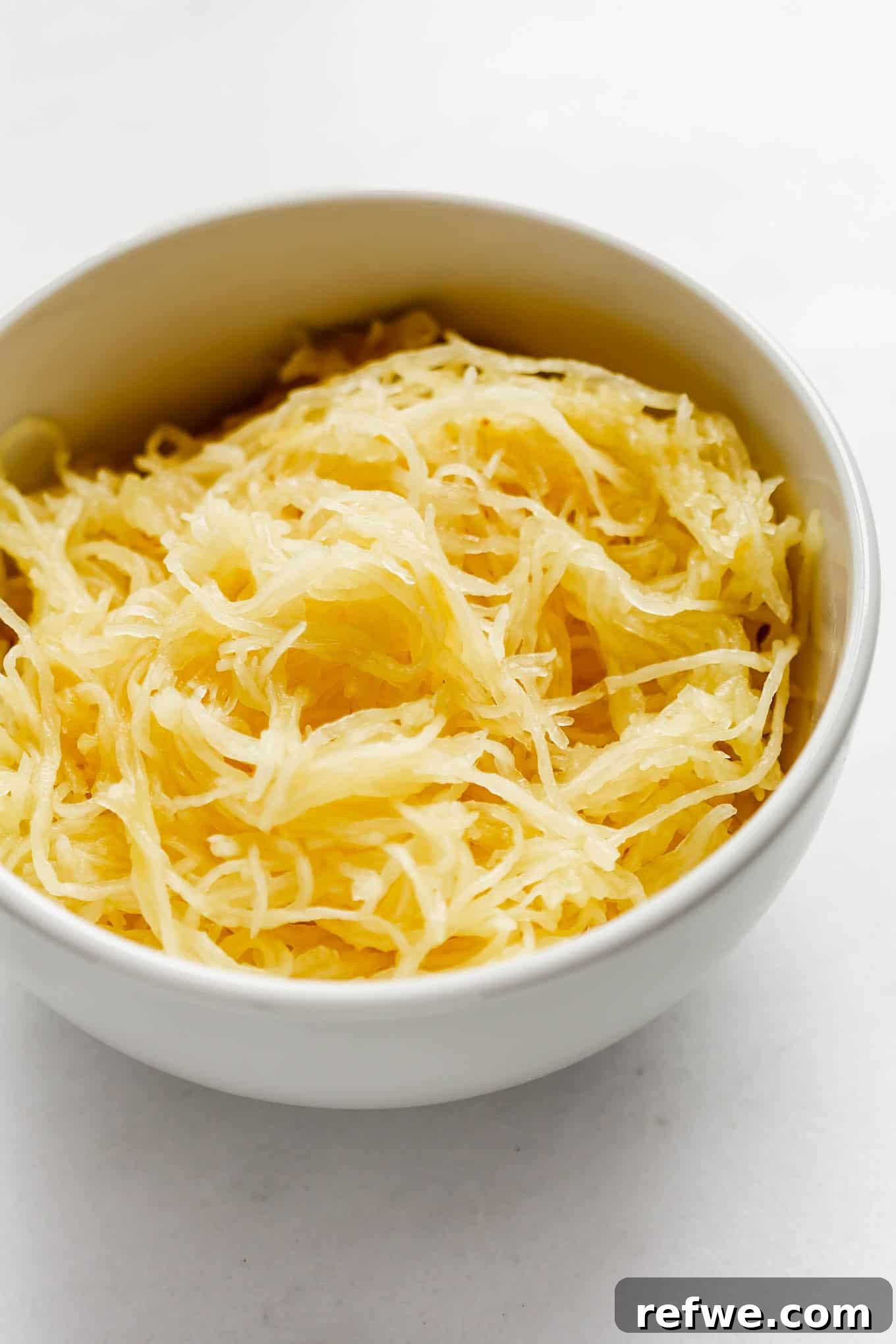
From selecting the perfect specimen to mastering various cooking techniques and exploring delicious culinary applications, this is your ultimate guide on how to cook spaghetti squash perfectly, ensuring delightful results every single time!
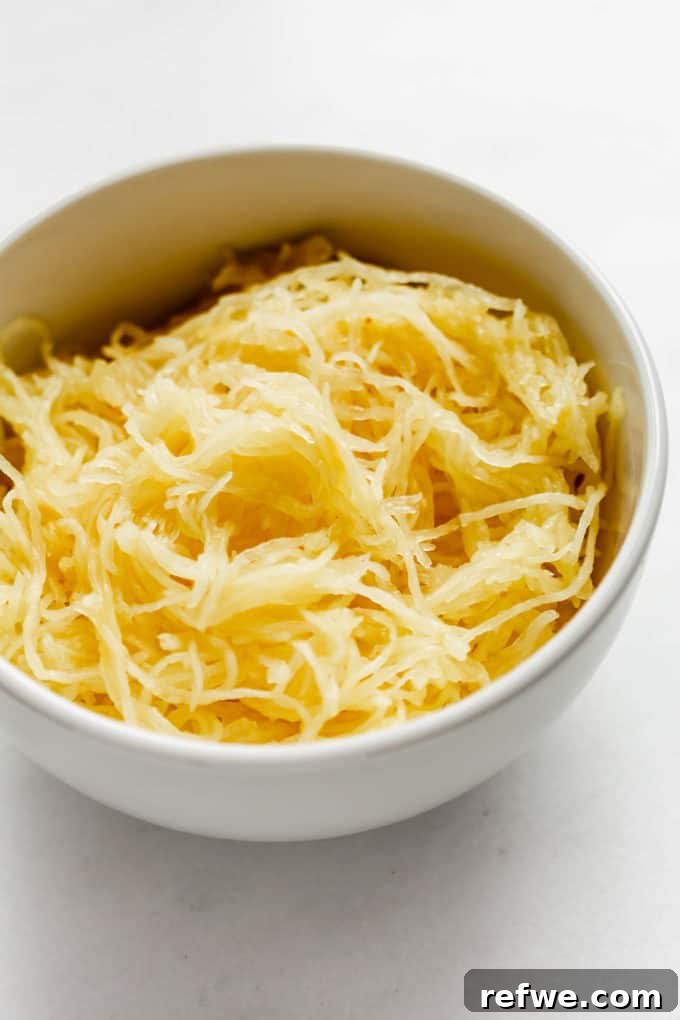
The Ultimate Guide to Perfectly Cooked Spaghetti Squash: Every Method, Every Time
What is Spaghetti Squash? A Nutritional Powerhouse
Spaghetti squash, scientifically known as Cucurbita pepo ‘Spaghetti’, is a fascinating member of the winter squash family. It earns its unique name from its flesh’s incredible ability to separate into spaghetti-like strands once cooked. This characteristic makes it an exceptionally popular and healthy substitute for traditional pasta in countless dishes, offering a light, gluten-free, and low-carb alternative.
Beyond its culinary versatility, spaghetti squash is a nutritional marvel. It is remarkably low in calories and carbohydrates, making it an excellent choice for those following keto, paleo, or low-calorie diets. Rich in dietary fiber, it actively supports digestive health and contributes to a sustained feeling of fullness, aiding in weight management. Furthermore, spaghetti squash is a good source of essential vitamins and minerals, including Vitamin C, Vitamin A (in the form of beta-carotene), B vitamins, and vital Omega-3 and Omega-6 fatty acids, which are crucial for heart health and overall well-being. Its mild, nearly neutral flavor, with a subtle hint of sweetness, allows it to beautifully absorb the flavors of any sauce or seasoning, making it an incredibly versatile canvas for both savory and occasionally sweet culinary creations.
Selecting the Perfect Spaghetti Squash: Tips for Ripeness
Choosing a ripe spaghetti squash is the crucial first step towards a truly delicious meal. A perfectly ripe squash will not only offer the best flavor but also yield the desired spaghetti-like texture. Here’s what to look for when you’re at the market:
- Firmness: The squash should be firm to the touch all over, without any soft spots, dents, or squishy areas, which can indicate spoilage.
- Color: Look for a uniform, deep golden yellow or dark yellow color. Green patches on the skin typically suggest that the squash is not fully ripe. While you can ripen it at home, one that’s already golden is ideal.
- Weight: A ripe spaghetti squash should feel surprisingly heavy for its size. This weight indicates dense flesh and a good water content, ensuring proper cooking and strand formation.
- Skin Integrity: Inspect the skin for any cracks, cuts, or blemishes. A smooth, unblemished skin helps in longer storage and indicates a healthy squash.
- Stem Condition: The stem should be firm, dry, and securely attached to the squash. Avoid squashes with soft, moldy, or missing stems.
- The Thumbnail Test: To confirm ripeness, gently try to press your thumbnail into the squash’s skin. If it resists penetration, the squash is perfectly ripe and ready. If your nail easily pierces the skin, it might be underripe.
Once purchased, a whole, uncooked spaghetti squash can be stored in a cool, dark, and dry place for several weeks, or even up to a month, without refrigeration. This extended shelf life makes it a convenient staple to keep on hand.
How to Cut Spaghetti Squash: Safely and Efficiently
The tough exterior of spaghetti squash can seem daunting, but with the right tools and technique, preparing it is straightforward. Always prioritize safety when cutting.
- Rinse and Dry: Begin by thoroughly rinsing the spaghetti squash under cold running water to remove any dirt. Pat it completely dry with a clean kitchen towel.
- Secure Your Surface: Place the squash on a stable cutting board. For added safety, you can place a damp kitchen towel underneath the cutting board to prevent it from slipping.
- Cutting Lengthwise (Most Common): This method is favored for producing longer, more spaghetti-like strands.
- Carefully position the squash on its side. Using a very sharp, heavy-duty chef’s knife, slowly and with controlled pressure, insert the tip of the knife into the squash, near one end.
- Press down firmly and carefully slice the squash lengthwise down the center, from the stem end to the blossom end. You may need to gently rock the knife back and forth to work through the tough skin and dense flesh. Be patient and keep your fingers away from the blade.
- If the squash is exceptionally hard to cut, you can microwave it whole for 2-3 minutes before attempting to slice. This softens the skin slightly, making it much easier and safer to cut.
- Scoop Out Seeds: Once the squash is cut in half, use a sturdy metal spoon to scrape out the seeds and any stringy pulp from the center cavities. Discard these, or consider setting the seeds aside to roast them like pumpkin seeds for a delicious, crunchy snack.
- Cutting into Rings (Optional): For certain roasting methods or a different presentation, you can cut the squash into rings. After halving and de-seeding the squash, place each half cut-side down on your cutting board. Carefully slice crosswise into 1-inch thick rings. This exposes more surface area, which can lead to faster cooking and crispier edges when roasted.
-

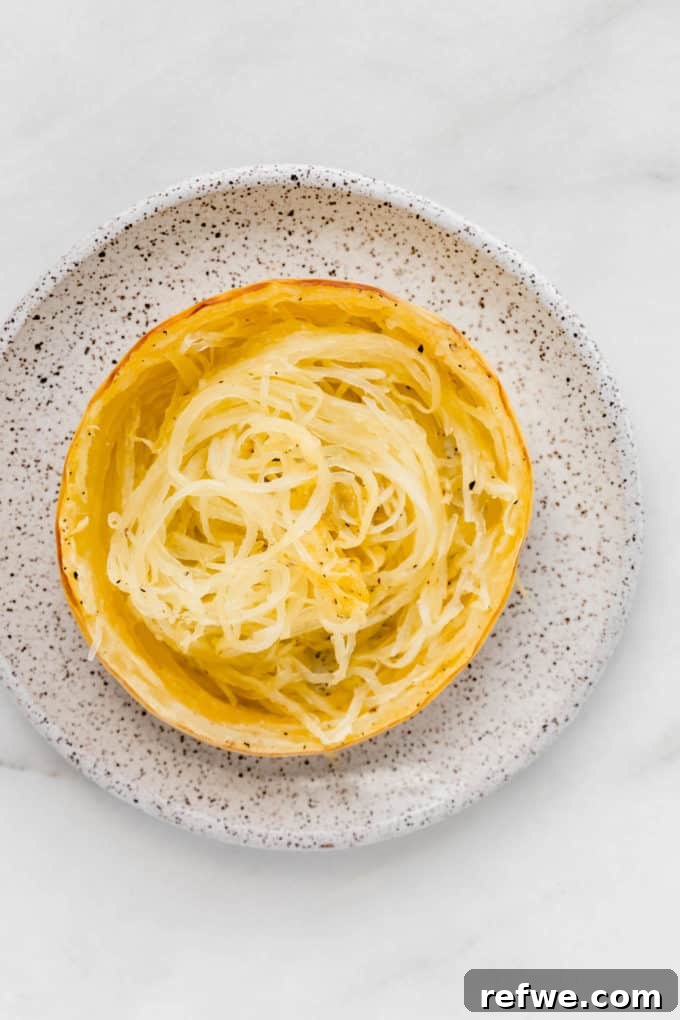
Spaghetti squash cooked and formed into a decorative ring. -
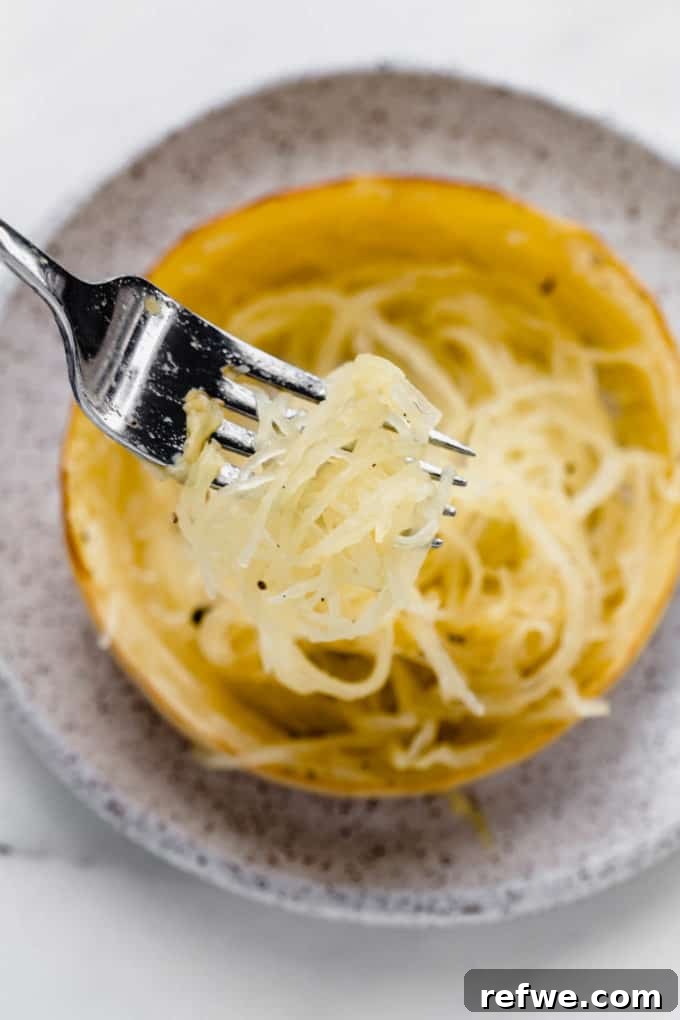
A fork demonstrating the perfect spaghetti-like strands.
How to Cook Spaghetti Squash: Multiple Methods for Perfect Strands
Spaghetti squash can be cooked in various ways, each yielding slightly different textures and requiring different cooking times. The best method depends on your desired outcome, available equipment, and how quickly you need your meal ready. Regardless of the method, the goal is tender, easily shreddable strands.
Cooking Spaghetti Squash in an Instant Pot (Pressure Cooker)
The Instant Pot is arguably the fastest and most efficient way to cook spaghetti squash, delivering perfectly tender strands in minutes.
- Preparation: Halve and de-seed the spaghetti squash as described in the “How to Cut” section.
- Set Up: Place the trivet (steamer rack) at the bottom of your Instant Pot. Pour 1 cup of water into the pot.
- Load the Squash: Carefully place the two squash halves onto the trivet, cut-side up or down (both work, but cut-side up can prevent sogginess).
- Cook: Close the lid and ensure the sealing valve is in the “Sealing” position. Select the “Manual” or “Pressure Cook” setting on High Pressure and set the timer for 7 minutes.
- Release Pressure: Once cooking is complete, allow a Natural Pressure Release (NPR) for 5 minutes, then carefully switch the valve to “Venting” for a Quick Release (QR) of any remaining pressure. Be cautious of the hot steam.
- Remove and Shred: Open the lid once the float valve drops. Using tongs or oven mitts, carefully remove the hot squash halves from the pot. Drain any water from the pot.
- Fork it: Place the cooked squash halves onto a cutting board or shallow dish. Using a fork, gently scrape the flesh from the shell, working from the outside in, to create the characteristic spaghetti-like strands.
Pros: Very fast, hands-off cooking, consistent results.
Cons: Requires an Instant Pot.
Cooking Spaghetti Squash in a Microwave
The microwave offers a quick and convenient option for cooking spaghetti squash, especially when you’re short on time.
- Preparation: Crucially, cut the spaghetti squash in half and de-seed it before microwaving. Never microwave a whole, uncut spaghetti squash, as the trapped steam can cause it to burst, creating a significant mess and potential hazard.
- Water Bath: Find a microwave-safe dish (like an 8×8 glass baking dish or a large shallow bowl) that can comfortably hold the squash halves. Add about 1-2 inches of water to the bottom of the dish.
- Arrange Squash: Place the squash halves into the dish, flesh-side down, ensuring they are partially submerged in the water.
- Cook: Microwave on high for 12-15 minutes. Cooking time can vary depending on the size of your squash and the wattage of your microwave. For larger squashes or lower wattage microwaves, you might need to cook for longer.
- Check for Doneness: The squash is done when the skin yields easily to pressure and the flesh is tender enough to be scraped with a fork. If not, continue microwaving in 2-3 minute intervals until tender.
- Shred: Carefully remove the hot dish from the microwave. Use a fork to scrape the spaghetti strands from the shell.
Pros: Extremely fast, minimal cleanup.
Cons: Can sometimes result in a slightly softer or less caramelized texture compared to roasting.
Cooking Spaghetti Squash in the Oven
Roasting spaghetti squash in the oven is a classic method that brings out a wonderful depth of flavor and a slightly caramelized exterior.
There are a few effective ways to bake spaghetti squash, offering flexibility based on your preference:
Method 1: Halved Spaghetti Squash
- Preheat Oven: Preheat your oven to 375°F (190°C).
- Prepare Squash: Halve and de-seed the spaghetti squash as outlined previously.
- Season: Drizzle the cut side of each squash half with olive oil. Season generously with salt and black pepper. You can also add garlic powder, dried herbs (like thyme or rosemary), or a pinch of red pepper flakes for extra flavor.
- Roast: Line a baking sheet with foil or parchment paper for easier cleanup. Place the squash halves cut-side down on the prepared baking sheet. Roasting cut-side down helps steam the squash slightly, making it tender, while also allowing the natural sugars to caramelize.
- Bake Time: Bake for 45-60 minutes, or until the squash is tender when pierced with a fork and the strands can be easily scraped out. Cooking time will vary based on the size of the squash.
- Shred: Carefully remove from the oven. Let it cool slightly, then use a fork to scrape the spaghetti-like strands from the shell.
Method 2: Sliced Spaghetti Squash Rings
This method offers faster cooking and more surface area for caramelization, resulting in slightly crispier strands.
- Preparation: After halving and de-seeding, place the squash halves cut-side down on your cutting board. Slice cross-wise to create 1-inch thick half-circles (rings).
- Season: Lay the rings flat on a baking sheet lined with parchment paper. Drizzle with olive oil, and sprinkle with salt, pepper, and any other desired seasonings.
- Bake Time: Bake at 375°F (190°C) for 15-25 minutes, flipping halfway through, until the rings are tender and slightly golden.
- Shred: Once cooked, you can either carefully peel the skin off each ring or simply scrape the spaghetti strands out with a fork, just like with the halved method. The smaller pieces cook faster and can be easier to manage.
Method 3: Whole Spaghetti Squash (Longer Cook Time)
While less common, you can roast spaghetti squash whole, which is ideal if you want to avoid cutting the tough skin beforehand. However, it requires a significantly longer cooking time.
- Prep: Pierce the whole squash several times with a fork or knife to allow steam to escape during cooking.
- Roast: Place the whole squash directly on a baking sheet. Bake at 375°F (190°C) for 1.5 – 2 hours, or until very tender.
- Cool and Cut: Let it cool slightly before carefully cutting it in half lengthwise, de-seeding, and then scraping out the strands.
Pros: Delicious caramelized flavor, versatile for seasoning, good for meal prepping.
Cons: Longer cooking time compared to Instant Pot or microwave.
How to Shred Spaghetti Squash for Perfect Strands
Once your spaghetti squash is cooked and slightly cooled, the magical transformation into “spaghetti” is simple. Take a sturdy fork and gently scrape the flesh from the inside of the cooked squash shell. Work your way from the outer edges towards the center. The strands should pull away easily. Continue until you’ve scraped out all the usable flesh. For longer strands, scrape in the direction the strands naturally run (usually along the length of the squash).
Serving Suggestions and Flavor Pairings
Spaghetti squash is incredibly versatile, serving as a fantastic base for a myriad of dishes. Its mild flavor makes it an excellent canvas for various culinary explorations:
- Pasta Substitute: The most popular use! Top it with your favorite marinara sauce, pesto, alfredo, or a rich bolognese.
- Stuffed Squash: Use the shells as edible bowls. Fill them with a mixture of cooked squash strands, cheese, vegetables, and your choice of protein (chicken, ground beef, lentils, or beans), then bake until golden.
- Side Dish: Simply toss the cooked strands with olive oil, garlic, fresh herbs (parsley, basil, chives), salt, and pepper for a healthy and light side. A squeeze of lemon juice adds brightness.
- Salad Base: Combine cooled spaghetti squash with other roasted vegetables, leafy greens, feta cheese, and a light vinaigrette for a hearty salad.
- Hash Browns or Fritters: Mix shredded spaghetti squash with eggs, flour (or a gluten-free alternative), and seasonings, then pan-fry for delicious hash browns or fritters.
- Casseroles: Incorporate spaghetti squash into comforting casseroles, replacing higher-carb pasta or potatoes.
Fantastic Flavor Pairings:
- Garlic and Herbs: Always a winner! Fresh garlic, basil, oregano, thyme, and rosemary complement its mild flavor beautifully.
- Cheese: Parmesan, mozzarella, feta, goat cheese – almost any cheese pairs well.
- Bright Flavors: Lemon juice, balsamic glaze, and white wine vinegar add a zesty kick.
- Spicy Notes: Red pepper flakes, chili powder, or a dash of hot sauce can elevate the dish.
- Richness: Brown butter with sage, toasted nuts, or a creamy sauce can add decadence.
Troubleshooting Common Spaghetti Squash Issues
While cooking spaghetti squash is generally straightforward, here are solutions to common challenges:
- Mushy or Watery Squash:
- Prevention: To prevent sogginess, especially when using the microwave or Instant Pot, you can lightly salt the cut flesh of the squash and let it sit for 10-15 minutes before cooking. The salt helps draw out excess moisture, which you can then pat dry.
- After Cooking: If your squash still seems watery, gently press the strands in a colander or between paper towels to remove excess liquid before serving. Avoid overcooking, as this is a primary cause of mushiness.
- Under-cooked Squash:
- If the flesh is still hard or difficult to scrape into strands, it’s undercooked. Return it to your cooking method for additional time (e.g., 5-10 minutes in the oven, 2-3 minutes in the microwave, 2-3 minutes on high pressure in the Instant Pot).
FAQ: Frequently Asked Questions About Spaghetti Squash
- How long does spaghetti squash last?
An uncooked, whole spaghetti squash can last anywhere from 3-6 weeks when stored in a cool, dark, and dry place. Once cooked, store it in an airtight container in the refrigerator for 3-5 days. It tends to get soggy over time.
- Can I eat the skin of spaghetti squash?
No, the skin of spaghetti squash is very tough and fibrous. It’s meant to be discarded after cooking. Think of it more as a protective shell rather than an edible peel.
- Should I peel spaghetti squash before cooking?
There’s absolutely no need to peel spaghetti squash before cooking. Its skin is extremely difficult to peel when raw, and once cooked, the delicious strands effortlessly separate from the shell, which can then be easily discarded.
- How do I store cooked spaghetti squash?
Store cooked spaghetti squash strands in an airtight container in the refrigerator for up to 3-5 days. For longer storage, you can freeze it. Allow it to cool completely, then place it in freezer-safe bags or containers. It might get a bit more watery after thawing, so drain any excess liquid before reheating or using in recipes.
- Is spaghetti squash gluten-free?
Yes, spaghetti squash is naturally gluten-free, making it an excellent option for individuals with gluten sensitivities or celiac disease.
- Can spaghetti squash be prepped ahead of time?
You can cut and de-seed spaghetti squash halves a day or two in advance and store them in the refrigerator, covered. This can save you time on busy cooking days.
Spaghetti Squash Recipes to Try
Spaghetti squash’s mild flavor and unique texture make it a simple and healthy substitution for traditional pasta in many recipes. Get inspired with these delicious ideas:
- Lentil Bolognese (Replace pasta with spaghetti squash)
- Spaghetti with Homemade Tomato Sauce (A classic pairing for spaghetti squash)
- Sun-Dried Tomato Spaghetti Squash with Caramelized Onions (A flavorful vegetarian option)
- Spinach Stuffed Spaghetti Squash (Use the squash shells as edible bowls)
- Vegan Carbonara (Enjoy a creamy, plant-based dish over squash strands)
- Spaghetti Squash Hash Browns (A creative way to use cooked squash)
- One-Pot Tomato Basil Pasta (Adapt with spaghetti squash for a lighter version)
With this comprehensive guide, you’re now equipped with all the knowledge to confidently cook spaghetti squash to perfection, every time. Enjoy experimenting with this versatile and nutritious vegetable in your kitchen!