

Embrace the cozy essence of autumn with this incredibly comforting and deeply flavorful Roasted Acorn Squash Soup. This recipe is a celebration of seasonal produce, offering a harmonious blend of savory and subtly sweet notes that will warm you from the inside out. Perfect for a brisk autumn evening or a leisurely weekend lunch, this soup is not only exquisitely delicious but also naturally gluten-free and vegetarian, making it a wonderful choice for a variety of dietary preferences. Its creamy texture and rich, earthy flavor profile make it an instant fall classic that you’ll want to make again and again. Prepare to be enchanted by the simplicity and profound taste of this homemade delight.

How to Pick the Perfect Acorn Squash for Your Soup
The foundation of a truly exceptional acorn squash soup lies in selecting a perfectly ripe and flavorful squash. Since this simple recipe relies on just a few key ingredients, the quality of your acorn squash is paramount. Here are essential tips to help you choose the best acorn squash from your local grocery store or farmer’s market, ensuring your soup is bursting with natural sweetness and depth.
- Vibrant Colour: Look for an acorn squash with a deep, rich, and uniform dark green skin. While some slight orange patches are natural and often indicate ripeness, avoid squashes that are predominantly orange or pale green, as these may be overripe or underripe. The darker the green, the more mature and sweeter the squash is likely to be.
- Substantial Texture and Weight: When you pick up an acorn squash, it should feel surprisingly heavy for its size. This density is a good indicator of its moisture content and freshness. The skin should be smooth, firm, and dull, not shiny. Gently press on the skin; it should be hard and resist any indentation. Steer clear of any squash with soft spots, blemishes, cuts, or signs of mold, as these are indicators of spoilage.
- Dry, Brown Stem: An ideal acorn squash will have a dry, firm, and brown stem. The stem is essentially the squash’s belly button, and a healthy stem suggests it was properly harvested and is less likely to spoil quickly. However, don’t be discouraged if many squashes at the grocery store have had their stems removed; this method isn’t always foolproof in a retail environment.
- Hollow Sound Test: Tap the acorn squash firmly with your knuckles. A ripe squash should produce a deep, hollow sound, much like tapping a ripe watermelon. If it sounds dull or dense, it might not be as ripe or as flavorful as you’d like. This simple test can often reveal the internal quality of the squash.
Why You’ll Fall in Love with This Roasted Acorn Squash Soup
This roasted acorn squash soup isn’t just a meal; it’s an experience. From its incredible flavor to its nutritional benefits and effortless preparation, here are compelling reasons why this recipe deserves a permanent spot in your culinary repertoire:
- A Nutritional Powerhouse: Each soul-satisfying bowl of this acorn squash soup is not only delicious but also incredibly healthy. With approximately 163 calories, 2.6 grams of fiber, and 6.5 grams of protein, it’s a remarkably balanced dish. Acorn squash itself is celebrated for being packed with essential vitamins and minerals, including significant amounts of Vitamin C, Vitamin A, B vitamins, potassium, and manganese. These nutrients are crucial for supporting a robust immune system, particularly as the weather grows colder, helping you stay well and energized throughout the autumn and winter months. The fiber content also aids in digestion and promotes a feeling of fullness.
- Effortlessly Easy to Master: If the thought of making homemade soup feels daunting, let this recipe change your mind! This acorn squash soup is designed for simplicity, making it incredibly easy to prepare even for novice cooks. The steps are straightforward, requiring minimal active cooking time and basic kitchen skills. The roasting process handles much of the heavy lifting, concentrating flavors with ease. You’ll be amazed at how such a gourmet-tasting soup can be so simple to create, delivering consistently delicious results every time.
- The Quintessential Fall Dish: There’s truly nothing quite like a hearty squash soup to perfectly capture and celebrate the spirit of the fall season. This roasted acorn squash soup embodies all the warmth, comfort, and rich flavors synonymous with autumn. Its velvety texture and gentle sweetness evoke images of crisp air, changing leaves, and cozy evenings by the fire. It’s the ultimate dish to welcome the cooler temperatures and vibrant colors of the season. Serve it as a comforting starter or a light main course, perhaps alongside a refreshing Apple Cranberry Quinoa Salad for a perfectly balanced meal.
Acorn Squash Soup: Key Ingredients and Clever Substitutions
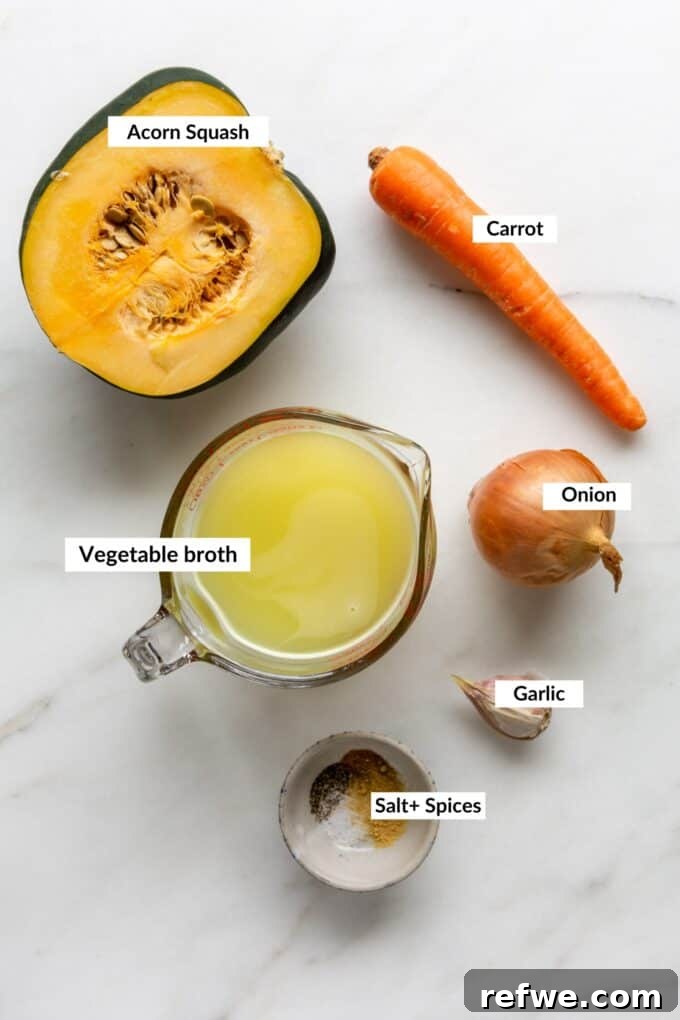
Crafting this delicious roasted acorn squash soup requires just a handful of fresh, wholesome ingredients. Their quality and combination create the soup’s rich, nuanced flavor. While the recipe is fantastic as written, I’ve also included some handy substitution tips to ensure you can make this soup no matter what you have on hand.
-
Acorn Squash: This distinctive, ridged winter squash is the star of our soup. Known for its mild, slightly nutty, and naturally sweet flavor, acorn squash develops an incredible depth when roasted, making it an ideal base for a comforting soup. Its flesh becomes tender and easily mashable, contributing to a wonderfully creamy texture.
Substitution: If acorn squash isn’t available or you simply prefer another variety, butternut squash or delicata squash are excellent alternatives. Both offer a similar sweet and creamy profile when roasted. Kabocha squash is another fantastic option, providing a slightly drier, denser texture and a sweet, earthy flavor. -
Onion: A fundamental aromatic for almost any savory soup, onion provides a sweet and pungent base that deepens the overall flavor. When sautéed until translucent, it releases its natural sugars, adding complexity.
Substitution: Any type of cooking onion (yellow, white, or sweet) will work beautifully. For a milder, more delicate flavor, you can substitute with 2-3 medium-sized shallots. -
Garlic: Fresh garlic is an absolute must for this soup, infusing it with a pungent, aromatic warmth that elevates all the other flavors. I strongly recommend using fresh garlic for its superior taste and aroma.
Substitution: In a pinch, if fresh garlic isn’t an option, you can use garlic powder, but start with a smaller amount (about 1/2 teaspoon per clove) and adjust to taste, as its flavor is more concentrated. -
Carrot: One large carrot contributes both a subtle sweetness and a beautiful vibrant color to the soup. Its natural sugars caramelize slightly during sautéing, enhancing the overall depth of flavor.
Substitution: While carrots add a lovely touch, if you don’t have them on hand, you can confidently omit them without significantly compromising the soup’s core flavor. -
Avocado Oil (or Vegetable Oil): Used for roasting the squash and sautéing the aromatics. Avocado oil has a high smoke point and neutral flavor, while vegetable oil is a versatile and common alternative.
Substitution: Olive oil, grapeseed oil, or canola oil can also be used. - Vegetable Broth: The liquid base for our soup, vegetable broth adds essential moisture and savory depth. Opt for a good quality, low-sodium vegetable broth to control the overall saltiness of your soup.
-
Spices: A simple yet powerful combination of ground nutmeg and ground ginger provides that classic warm, inviting autumn flavor. These spices complement the natural sweetness of the squash perfectly.
Substitution: Feel free to use fresh ginger if you prefer; grate about 1 teaspoon for a more vibrant, zesty kick. You can also experiment with a pinch of cinnamon, allspice, or a tiny dash of cayenne pepper for a hint of warmth. - Salt and Pepper: Essential for seasoning the soup to perfection. Always taste and adjust as you go.
*Please find the full recipe measurements and detailed instructions conveniently located in the recipe card below.
How to Make Roasted Acorn Squash Soup: A Step-by-Step Guide
Making this rich and creamy roasted acorn squash soup is surprisingly simple. The key to its exceptional flavor lies in roasting the squash first, which caramelizes its natural sugars and deepens its taste. Follow these easy steps to create a soul-warming bowl of autumn goodness.
Step 1: Prepare and Roast the Acorn Squash
Begin by preheating your oven to a robust 400 degrees Fahrenheit (200°C). While the oven heats, line a large baking tray with parchment paper for easy cleanup. Carefully cut your acorn squash in half lengthwise. A sharp, sturdy knife is crucial here, and it helps to stabilize the squash by cutting a thin slice off the bottom so it sits flat. Scoop out the seeds and stringy bits from the center of each half and discard them. Place the squash halves cut-side down on the prepared baking tray. Roasting them face down helps to steam the squash, making it incredibly tender, while also allowing the natural sugars to caramelize beautifully. Bake for approximately 25-35 minutes, or until the flesh is fork-tender. Once roasted, remove the squash from the oven and let it cool completely to room temperature. This cooling step makes it much easier to handle.
(For illustrative purposes, the squash pictured below is shown face up to reveal its roasted appearance, but remember to roast it face down for optimal tenderness.)


Step 2: Sauté Aromatics and Add Squash
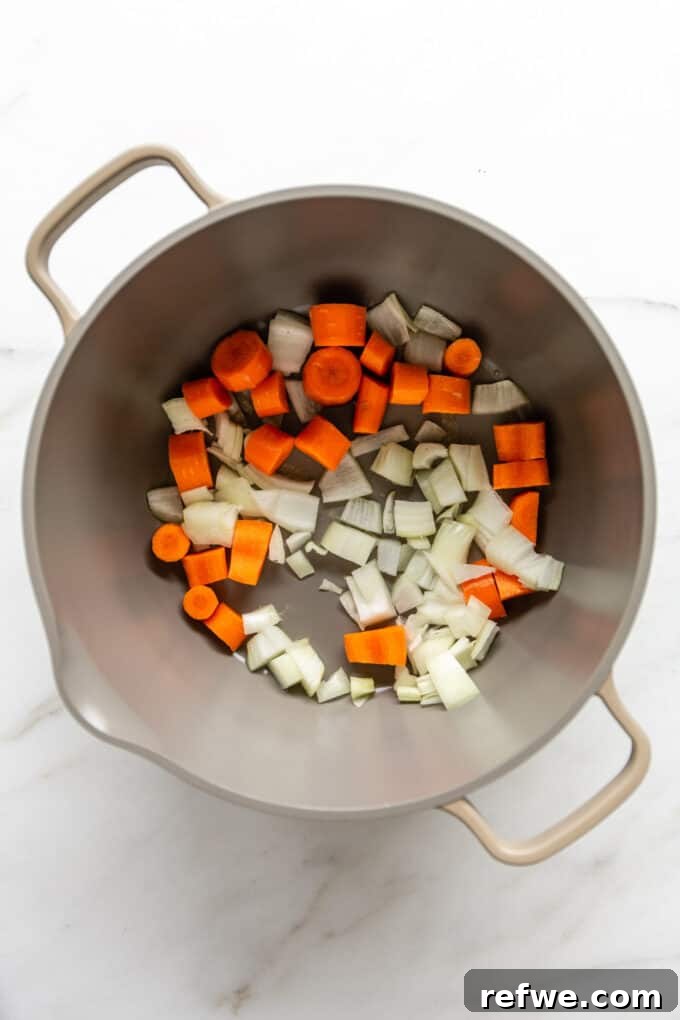
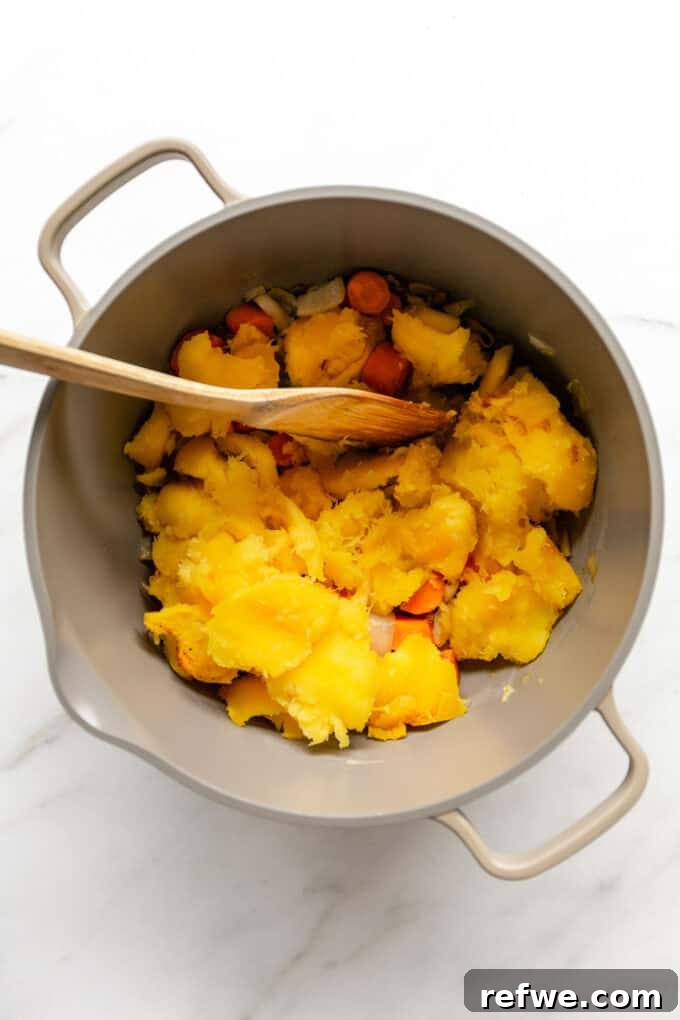
While the squash is cooling, heat about 2 tablespoons of avocado oil (or your preferred vegetable oil) in a large, heavy-bottomed pot or Dutch oven over medium-high heat. Once the oil shimmers, add the chopped onions, diced carrot, and minced garlic to the pot. Sauté these aromatics for 2-3 minutes, stirring occasionally, until the onions become translucent and fragrant, and the carrots begin to soften slightly. Avoid browning them too much. Once the roasted squash is cool enough to handle, use a spoon to scoop out all of its tender flesh, leaving the skin behind. Add the scooped squash flesh directly into the pot with the sautéed vegetables.
Step 3: Simmer for Flavor Perfection
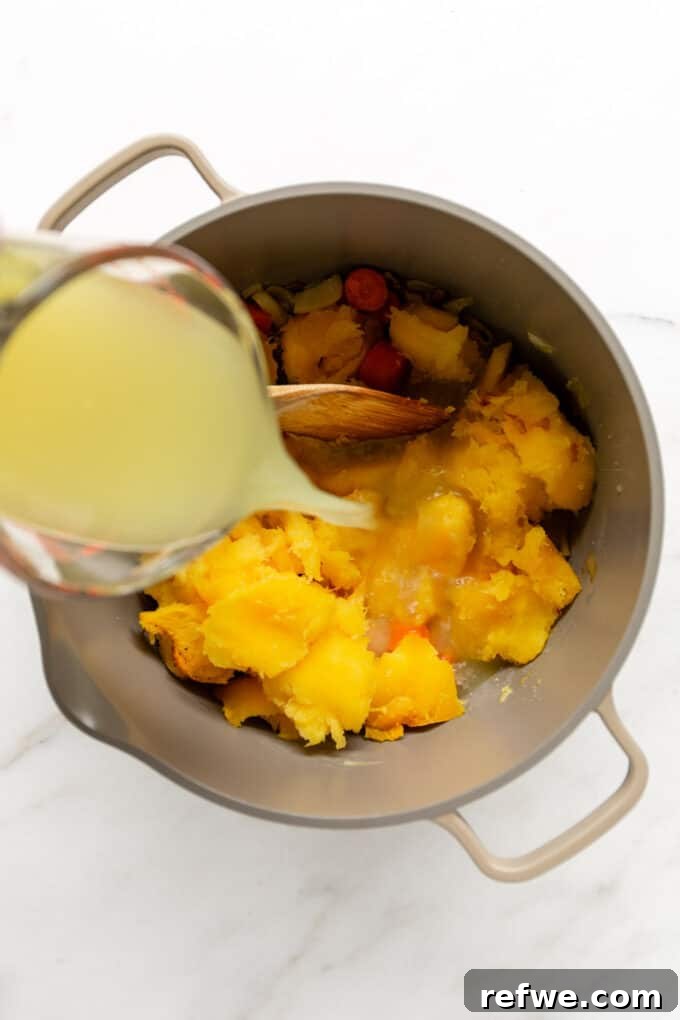
Pour the vegetable broth into the pot with the squash and vegetables. Stir in the ground nutmeg, ground ginger, and a generous pinch of salt and black pepper. Bring the soup mixture to a gentle boil over medium-high heat, allowing it to bubble lightly for about a minute. This initial boil helps to meld the flavors. Then, reduce the heat to low, cover the pot with a lid, and let the soup simmer peacefully for at least 15 minutes. Simmering is a crucial step that allows all the ingredients to fully combine, deepening the flavors and ensuring the squash and vegetables become incredibly tender, making for a smoother blend later.

Step 4: Blend to Creamy Perfection and Serve
Once the soup has simmered and all the flavors have developed beautifully, it’s time to achieve that irresistible creamy texture. You have two main options for blending:
- Using an Immersion Blender: If you have an immersion blender (also known as a stick blender), this is the easiest method. Simply immerse the blender directly into the pot, ensuring the head is fully submerged. Blend until the soup is completely smooth and velvety, moving the blender around to ensure no chunks remain.
- Using a Regular Blender: If you’re using a standard countertop blender, carefully transfer the hot soup in batches to the blender. Make sure not to overfill the blender, as hot liquids can expand and create pressure. Blend on high until each batch is smooth and creamy, then transfer to a separate bowl. Repeat until all the soup is blended. Always exercise caution when blending hot liquids, leaving the lid slightly ajar or removing the center cap (if your blender has one) and covering with a kitchen towel to allow steam to escape.
Taste the blended soup and adjust seasoning with additional salt, pepper, or a pinch more nutmeg or ginger if desired. Serve the roasted acorn squash soup hot, just as it is, or elevate it with your favorite garnishes. I highly recommend a swirl of creamy coconut milk, a sprinkle of crunchy pumpkin seeds, and a few crispy fried sage leaves for a truly gourmet touch. Other delicious topping ideas include a dollop of sour cream or Greek yogurt, a drizzle of maple syrup, or a scattering of fresh herbs like thyme or chives. Enjoy!


How to Store and Freeze This Delicious Soup
This roasted acorn squash soup is not only incredibly tasty but also fantastic for meal prep, as it stores and freezes beautifully. Making a larger batch means you can enjoy this comforting soup for days or have it ready for a quick meal whenever you need it.
Storing Leftovers in the Fridge
Once the soup has cooled completely to room temperature, transfer any leftovers into an airtight container. Properly sealed, the soup will keep fresh and delicious in the refrigerator for up to 7 days. When you’re ready to enjoy it again, reheat the soup gently on the stovetop over low to medium heat, stirring occasionally until warmed through. Alternatively, you can reheat individual portions in the microwave, stirring halfway through to ensure even heating. If the soup appears too thick after refrigeration, a splash of vegetable broth or water can help restore its desired consistency.
Freezing Acorn Squash Soup for Later
For longer storage, this soup freezes exceptionally well. Allow the soup to cool completely before portioning it into freezer-safe containers or heavy-duty freezer bags. Leave a little headspace in containers to account for expansion during freezing. Frozen, the soup will maintain its quality for up to 3 months. To defrost, you can either transfer the container to the refrigerator overnight to thaw gradually, or use the defrost setting on your microwave. Once thawed, reheat as described for refrigerated leftovers, adding a bit of broth if needed. Freezing is a great way to ensure you always have a comforting, homemade meal ready to go.
Our Favorite Pot
The perfect pot from Our Place is my go-to non-stick pot for soups, stews, roasting, and steaming! Its versatile design and superior non-stick surface make cooking a breeze.
What to Serve with This Hearty Roasted Acorn Squash Soup
Roasted acorn squash soup is wonderfully versatile and pairs beautifully with a variety of dishes, transforming it from a comforting starter into a complete and satisfying meal. Here are some of my favorite autumn-inspired recipes that would be absolutely delicious served alongside this rich and creamy soup:
- Apple Quinoa Salad: A vibrant and refreshing salad with crisp apples, chewy quinoa, and tart cranberries offers a fantastic textural and flavor contrast to the creamy soup. Its lightness balances the richness perfectly.
- Kale White Bean Salad: A hearty and nutritious salad, combining earthy kale with protein-rich white beans, provides a wholesome complement. The robust flavors stand up well to the soup.
- Vegan Lentil Moussaka: For a more substantial main course, this savory lentil moussaka offers layers of flavor and satisfying texture that would make for an incredibly hearty and comforting dinner alongside a bowl of the soup.
- Lentil Loaf: A wholesome and protein-packed lentil loaf makes an excellent vegetarian centerpiece, and its earthy flavors harmonize wonderfully with the sweet notes of the acorn squash soup.
- Vegetarian Baked Ziti: A bubbling, cheesy baked ziti offers a delightful Italian twist. Its robust tomato sauce and pasta create a contrasting texture and flavor profile that pairs surprisingly well with the smooth soup.
- Crusty Bread or Garlic Bread: A simple yet always satisfying choice, a slice of warm, crusty bread or flavorful garlic bread is perfect for dipping into the creamy soup.
- Grilled Cheese Sandwich: The ultimate comfort food pairing, a gooey grilled cheese sandwich offers a delightful contrast in texture and a familiar, comforting flavor that makes any autumn meal feel special.
Expert Tips for Making the Best Acorn Squash Soup
Transform your roasted acorn squash soup from good to extraordinary with these invaluable expert tips. These insights will help you maximize flavor, ensure perfect texture, and customize your soup to your exact preferences.
- Always Select a Ripe Squash: As highlighted earlier, the quality of your acorn squash directly impacts the flavor of your soup. Remember to choose a squash that feels dense and heavy for its size, has a deep green color with some orange, and produces a hollow sound when tapped. A ripe squash will be naturally sweeter and more flavorful, requiring less additional seasoning.
- The Roasting Step is Non-Negotiable: While you *could* boil the squash directly in the soup, I strongly advise against it. Roasting the squash beforehand is the secret to unlocking its deepest, richest flavors. The high heat of the oven caramelizes the natural sugars in the squash, creating complex, nutty notes that boiling simply cannot achieve. This step adds an incredible depth and sweetness that forms the backbone of a truly outstanding soup. Don’t skip it!
-
Customize This Soup to Your Heart’s Content: This recipe serves as an excellent base, but don’t hesitate to make it your own!
- Add more vegetables: Enhance the nutritional content and flavor by incorporating other seasonal vegetables. Sweet potato, bell peppers (especially red or yellow for sweetness), or even a handful of spinach or kale stirred in at the end would be delicious.
- Try different squashes: As mentioned, butternut, delicata, or kabocha squash can be used interchangeably.
- Experiment with herbs and spices: While nutmeg and ginger are classic, consider adding a sprig of fresh thyme or rosemary to the roasting tray for added aroma. A pinch of curry powder or cumin can introduce an exotic warmth, transforming the soup’s profile.
- Boost protein: For a heartier meal, stir in some cooked red lentils or a can of drained cannellini beans during the simmering phase.
- Taste and Adjust Seasoning as Needed: This is arguably the most crucial tip for any recipe. The exact taste of your squash, the saltiness of your vegetable broth, and even the freshness of your spices can vary. Always taste your soup before serving and be prepared to adjust the seasoning. You might find it needs a bit more salt or pepper, a touch more of those warming spices, or even a squeeze of lemon juice or a drizzle of maple syrup to balance the flavors perfectly. Trust your palate!
- Ensure Proper Blending Technique: For a truly silky-smooth soup, take your time during the blending step. If using a regular blender, work in small batches and ensure the lid is slightly vented to allow steam to escape safely. If using an immersion blender, move it around the pot to catch all solid pieces. Over-blending isn’t an issue here; the smoother, the better for this creamy soup.
- Invest in Quality Broth: Since vegetable broth forms a significant part of the soup’s volume, using a high-quality, flavorful broth can make a noticeable difference in the final taste. Look for organic or homemade broths if possible.
Frequently Asked Questions About Acorn Squash Soup
Absolutely! Butternut squash is an excellent substitute for acorn squash in this recipe. Both squashes offer a similar sweet, creamy texture when roasted, making the swap seamless. If you choose butternut squash, you might notice a slightly sweeter and nuttier flavor. You can use any extra butternut squash to make a delightful Roasted Butternut Squash Kale Salad.
Technically, the skin of acorn squash is edible after cooking, especially if roasted until very tender. However, for this particular soup recipe, which aims for a silky-smooth and creamy consistency, it is highly recommended to remove the peel. The skin, even when cooked, can add a slightly fibrous texture that would detract from the desired smoothness of the soup. Roasting the squash in halves and then scooping out the flesh makes this process incredibly easy.
There are two primary methods for preparing acorn squash for soup. The easiest and most recommended method for this recipe is to simply cut the squash in half lengthwise, scoop out the seeds, and then roast the halves (often cut-side down). Once roasted and tender, you can effortlessly scoop out the soft flesh from the skin. Alternatively, you can peel the raw squash, discard the skins, and then cut the flesh into cubes before roasting. I find the first method (roasting halves) much simpler and less time-consuming, as peeling a raw acorn squash can be quite challenging due to its hard skin.
Acorn squash is indeed notoriously hard to cut! To make the process safer and easier, always use a very sharp, sturdy chef’s knife and a stable cutting board. Begin by carefully piercing the squash with the tip of the knife, then gently rock the knife back and forth, applying steady pressure, to cut through it. If it still proves too difficult or unsafe, a helpful trick is to either microwave the whole squash for 2-3 minutes to slightly soften the skin, or roast the squash whole in the oven until it’s softer (this will take longer, around 45-60 minutes). Once it’s softened, it will be much easier and safer to cut in half and proceed with scooping out the flesh.
Yes, this roasted acorn squash soup is already naturally vegan and dairy-free! The recipe uses vegetable broth and no animal products. For garnishes, opt for coconut milk, pumpkin seeds, or fried sage leaves to keep it plant-based.
Try These Other Tasty Soup Recipes Next!
If you loved the warmth and comfort of this roasted acorn squash soup, you’ll be delighted to explore more of our soul-satisfying soup creations. Perfect for any season, these recipes promise delicious flavors and easy preparation. Expand your soup repertoire with these fantastic options:
- Vegan Black Bean Soup
- Broccoli Potato Soup
- Curried Cauliflower Soup
- Butternut Squash Apple Soup
- 30-Minute Chickpea Soup
- Red Lentil Soup

Recipe Video
If you tried this Roasted Acorn Squash Soup or any other delightful recipe on the blog, I would be absolutely thrilled to hear how you liked it! Please take a moment to leave a comment and rating below to share your experience. Your feedback is incredibly valuable! Be sure to follow along on Pinterest, Instagram, TikTok, and Facebook for even more delicious and healthy recipe inspiration, behind-the-scenes content, and culinary adventures!
Print Recipe

Roasted Acorn Squash Soup
Author: Jessica Hoffman
Prep Time: 15 minutes
Cook Time: 30 minutes
Total Time: 45 minutes
Yield: 4 servings
Category: Appetizer/Side
Method: Boil
Cuisine: American
Diet: Gluten Free
Description
This soul-warming Roasted Acorn Squash Soup is perfect for a cozy Autumn evening or weekend lunch. It’s savory, subtly sweet, and incredibly comforting, making it an ideal fall favorite.
Ingredients
- 1 medium acorn squash
- 1 medium onion, chopped
- 2 garlic cloves, minced
- 1 large carrot, peeled and chopped
- 2 tbsp avocado oil (can sub vegetable oil)
- 1 litre vegetable broth
- 1/8 tsp ground nutmeg
- 1/4 tsp ground ginger
- salt and pepper to taste
Instructions
- Preheat your oven to 400 degrees F (200°C). Line a baking pan with parchment paper.
- Carefully cut the acorn squash in half lengthwise and scoop out the seeds. Place the squash halves cut-side down on the prepared baking pan. Roast for 25-40 minutes, or until the squash is completely tender when pierced with a fork. Let it cool until easy to handle.
- Once cool, use a spoon to carefully scoop out all the tender flesh from the roasted squash halves into a bowl. Discard the squash skins and any remaining seeds.
- In a large, heavy-bottomed pot, heat the 2 tablespoons of avocado oil over medium-high heat. Add the chopped onions, minced garlic, and diced carrot. Sauté for 2-3 minutes, stirring frequently, until the onions are translucent and fragrant.
- Add the scooped roasted squash flesh, vegetable broth, ground nutmeg, ground ginger, and a pinch of salt and pepper to the pot. Stir well to combine, then bring the mixture to a light boil for 1 minute.
- Reduce the heat to low, cover the pot, and let the soup simmer gently for 15 minutes. This allows the flavors to meld and deepen.
- Carefully blend the soup until completely smooth and creamy. You can use an immersion blender directly in the pot, or carefully transfer the soup in batches to a regular blender. (Remember to vent the lid when blending hot liquids in a regular blender.)
- Taste the soup and adjust seasoning if necessary. Serve hot, garnished with your favorite toppings. I suggest a swirl of creamy coconut milk, a sprinkle of pumpkin seeds, and some crispy fried sage leaves for an extra special touch.
Notes
Store any leftover roasted acorn squash soup in an airtight container in the fridge for up to 7 days, or freeze it for up to 3 months. Reheat gently on the stovetop or in the microwave.
To make delicious fried sage leaves for topping, heat a small amount of vegetable oil in a pan over medium heat. Add fresh sage leaves and fry for about 1 minute per side until crispy and fragrant. Drain on a paper towel before sprinkling on the soup.
Nutrition
- Serving Size: 1/4 of the recipe
- Calories: 163
- Sugar: 2.7g
- Fat: 8.5g
- Carbohydrates: 16g
- Fiber: 2.6g
- Protein: 6.5g