
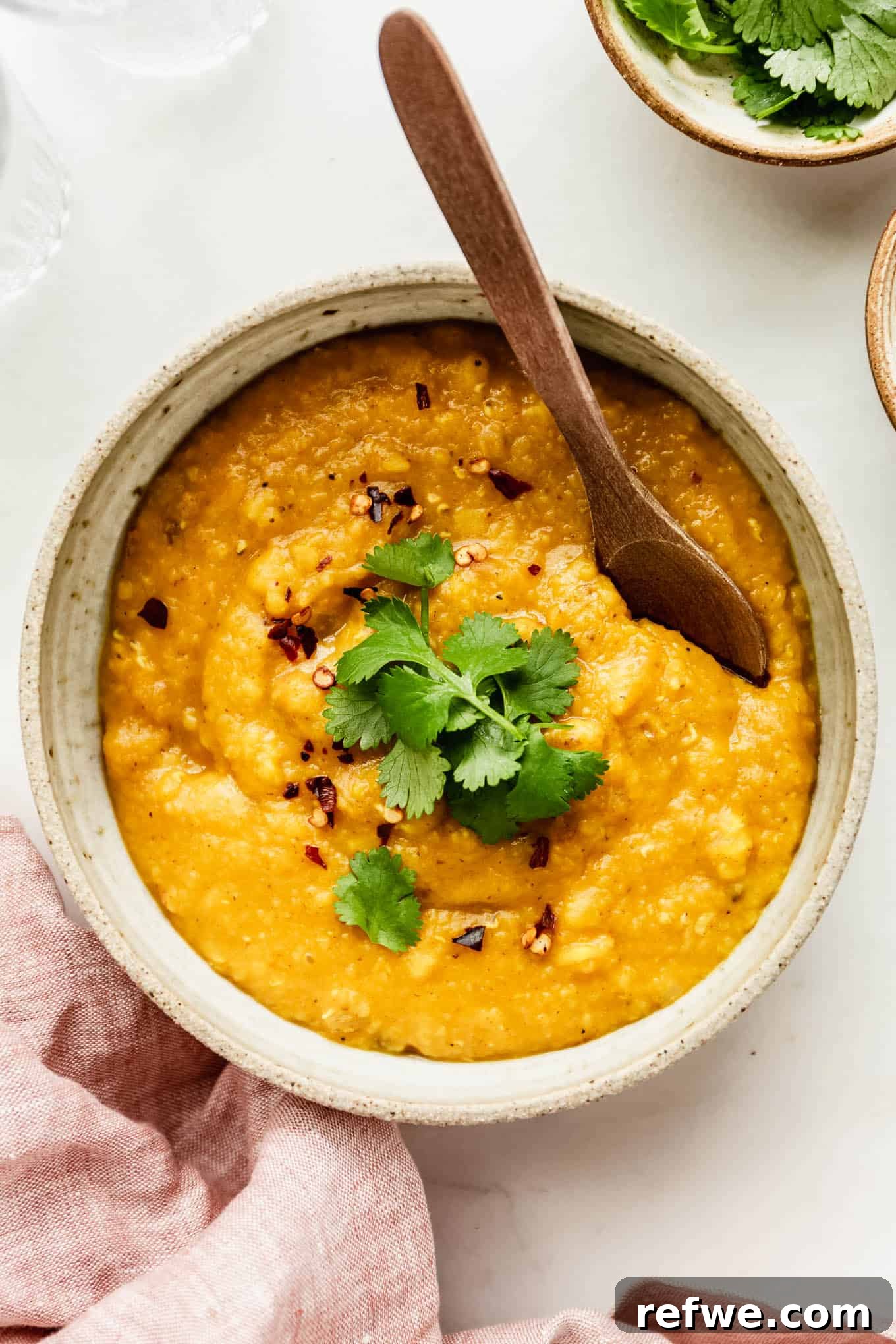
Easy Red Lentil Dahl, or Masoor Dal, is more than just a simple lentil dish; it’s a comforting, Indian-inspired staple that brings vibrant flavors and nourishment to your table. Perfect for a cozy weeknight dinner, this versatile recipe can shine as a main course, a hearty side, or paired with fluffy rice or warm naan bread. Prepare to embark on a culinary journey that’s surprisingly simple yet incredibly rewarding, transforming humble red lentils into an aromatic, spice-infused curry that will delight your senses.
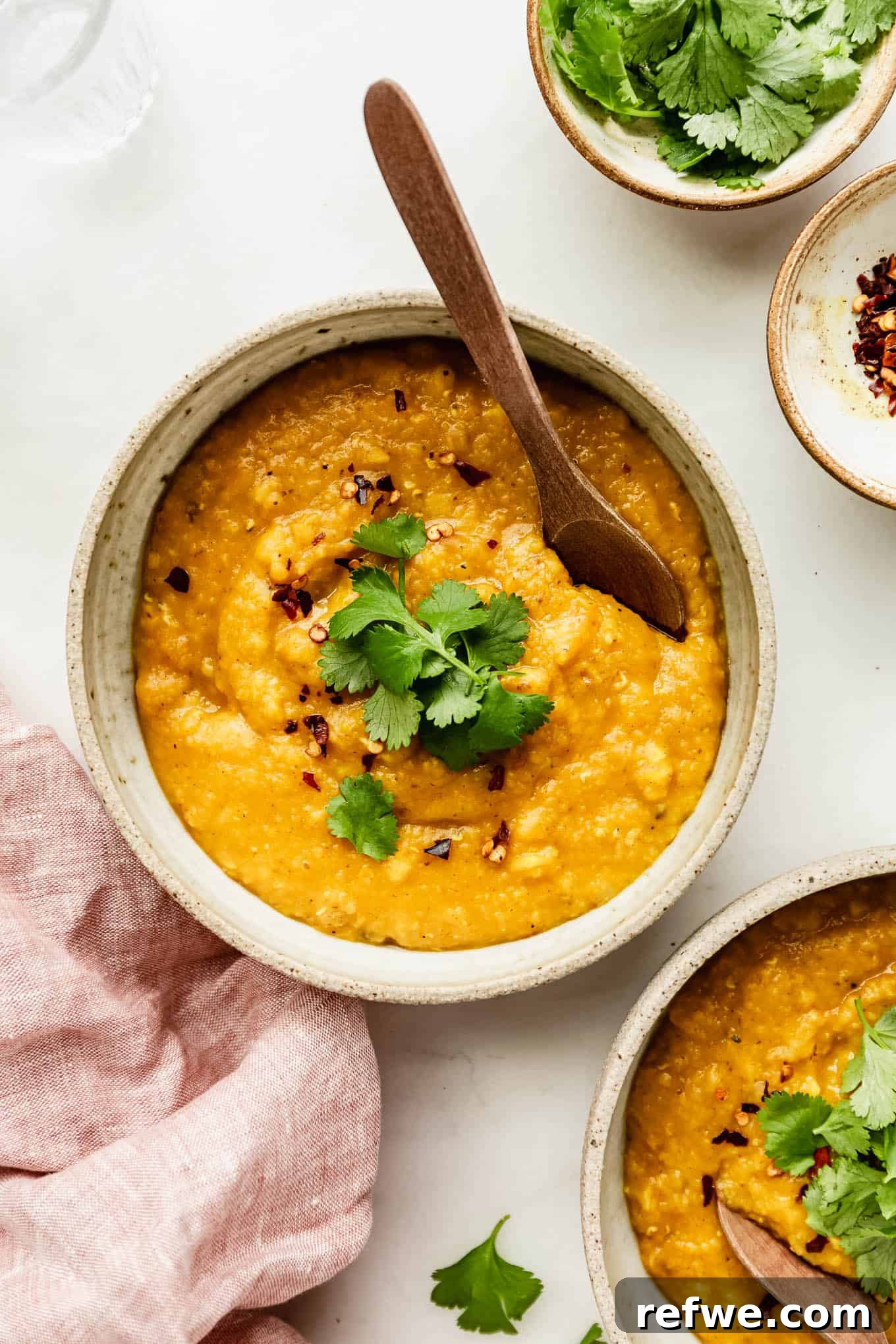
Mastering Easy Vegan Dahl at Home
Lentil dahl holds a special place in the hearts of many, and once you try this recipe, you’ll understand why. You might initially ponder, “It’s just a bowl of red lentils… what’s all the fuss about?” But don’t let its simplicity deceive you. These aren’t merely boiled legumes; these are tender red lentils meticulously simmered with a symphony of fragrant spices and aromatic ingredients, culminating in a deeply satisfying, flavor-packed lentil curry that transcends expectations. It’s a testament to how a few basic ingredients, when combined thoughtfully, can create an extraordinary culinary experience.
This particular recipe for Red Lentil Dahl, often referred to as Masoor Dal, is designed to be accessible for home cooks of all skill levels, making it an ideal choice for both seasoned chefs and those new to Indian cuisine. Here are compelling reasons why this particular Red Lentil Dal recipe is poised to become a beloved addition to your weekly meal rotation:
Why You’ll Fall in Love with This Red Lentil Dal Recipe
- A Perfect Introduction to Indian Cooking. The world of Indian cuisine, with its rich tapestry of flavors and diverse techniques, can sometimes appear daunting to newcomers. Many traditional dishes feature a multitude of components, intricate steps, and a vast array of spices. This Easy Red Lentil Dahl recipe, however, offers a welcoming entry point. It simplifies the process without compromising on authentic taste, providing a fantastic foundation for anyone eager to explore the vibrant flavors of Indian cooking. You’ll build confidence while creating a truly delicious meal.
- Effortlessly Simple to Prepare. Convenience is key for modern kitchens, and this recipe delivers. You won’t need a sprawling collection of kitchen gadgets or a complex setup. All that’s required is a single pot for cooking the lentils and a small pan to temper the spices, alongside a handful of readily available, simple ingredients. This minimalist approach ensures a quick and easy preparation, perfect for those busy weeknights when time is of the essence but you still crave a homemade, wholesome meal.
- Naturally Vegan and Gluten-Free. In today’s diverse culinary landscape, accommodating various dietary preferences is more important than ever. Dahl, by its very nature, is a wonderfully vegetarian and vegan-friendly dish, requiring no animal products. Furthermore, red lentils are naturally gluten-free, making this recipe an excellent and inclusive option for individuals following a gluten-free diet or those with gluten sensitivities. It’s a dish everyone at the table can enjoy without worry.
- Power-Packed with Protein and Fiber. Beyond its incredible taste and ease of preparation, this Red Lentil Dahl is a nutritional powerhouse. Lentils are renowned for being an excellent source of plant-based protein, crucial for muscle repair and overall bodily functions. They are also abundantly rich in dietary fiber, which aids digestion, promotes satiety, and helps regulate blood sugar levels. Incorporating this dahl into your diet is a delicious way to boost your intake of essential nutrients and support a healthy lifestyle.
Understanding Red Lentil Dahl (Masoor Dal)
Dahl, often spelled Dal or Daal, is far more than just a dish; it’s a foundational staple in the culinary traditions of India, Sri Lanka, and other South Asian countries. At its core, dahl refers to dried, split pulses – which include various types of lentils, peas, and beans – but it also denotes the stew-like preparation made from these pulses. While the term “dal” broadly encompasses all these legumes, when we speak of “Red Lentil Dahl,” we are specifically referring to the vibrant orange-red split lentils and the comforting curry made from them.
Masoor Dal is the Hindi term for red lentils, and consequently, for the dish prepared from them. These particular lentils are prized for their quick cooking time and their ability to break down easily, creating a creamy, thick consistency that is characteristic of a good dahl. Unlike some other lentils that hold their shape, masoor dal becomes beautifully mushy, absorbing all the rich flavors of the spices and aromatics it’s cooked with. While there are countless regional variations, with some recipes incorporating ingredients like coconut milk (as seen in Sri Lankan dahl) or tomatoes, the essence of Masoor Dal lies in its simplicity and the masterful blend of spices that elevate these humble lentils into an extraordinary culinary experience.
Essential Ingredients for Your Indian Red Lentil Dahl
Crafting a truly authentic and flavorful Red Lentil Dahl begins with selecting the right ingredients. Each component plays a vital role in building the depth and complexity of this beloved Indian dish. Here’s a closer look at what you’ll need and why each element is important:
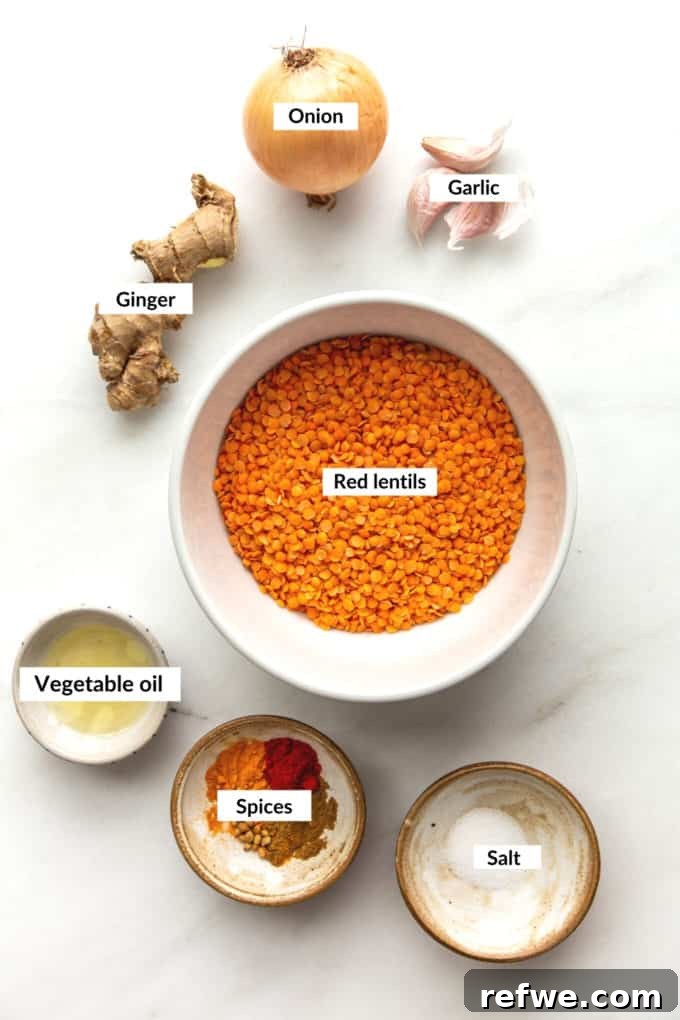
- Red Lentils (Masoor Dal): This is the star of our dish, and it’s crucial to use red lentils specifically for Masoor Dal. Their delicate texture and quick cooking time allow them to break down beautifully, creating the creamy consistency that is the hallmark of this dish. Green or brown lentils are much firmer and will not achieve the desired creaminess, so avoid substituting them. If you develop a love for red lentils, consider exploring other recipes like a Red Lentil Sweet Potato Curry.
- Aromatic Seasoning (Onions, Garlic, Ginger): These three powerhouses form the aromatic base, or “tadka,” of many Indian dishes. Onions provide a sweet foundation, garlic adds a pungent depth, and fresh ginger introduces a warm, slightly spicy kick. Together, they create a robust flavor profile that is indispensable for a truly authentic and delicious dahl. Finely chopping them ensures their flavors are evenly distributed.
- Vegetable Oil: A neutral-tasting vegetable oil is ideal for sautéing the aromatics and toasting the spices. It allows the natural flavors of the other ingredients to shine without imparting any strong taste of its own. You can use canola, sunflower, or any other preferred neutral cooking oil.
- Traditional Spices (Coriander Seeds, Smoked Paprika, Turmeric, Cumin, Salt, Black Pepper): This carefully selected blend of spices is what transforms plain lentils into a traditional, fragrant dahl.
- Coriander Seeds: Offer a warm, citrusy, and slightly sweet flavor.
- Smoked Paprika: Adds a subtle smoky depth and a beautiful red hue (regular paprika can be used, but smoked adds an extra layer of flavor).
- Turmeric: Provides a gorgeous golden color and an earthy, slightly bitter undertone, along with its known health benefits.
- Cumin: Delivers a warm, earthy, and slightly peppery aroma.
- Salt and Black Pepper: Essential for seasoning and balancing all the flavors, bringing them into harmony. This combination ensures a traditional and wonderfully balanced flavor in your finished dahl.
Step-by-Step Guide: How to Make Masoor Dal
Creating this flavorful Red Lentil Dahl is a straightforward process that yields incredibly satisfying results. Follow these steps for a perfect batch of homemade Masoor Dal:
Step 1: Preparing the Lentils
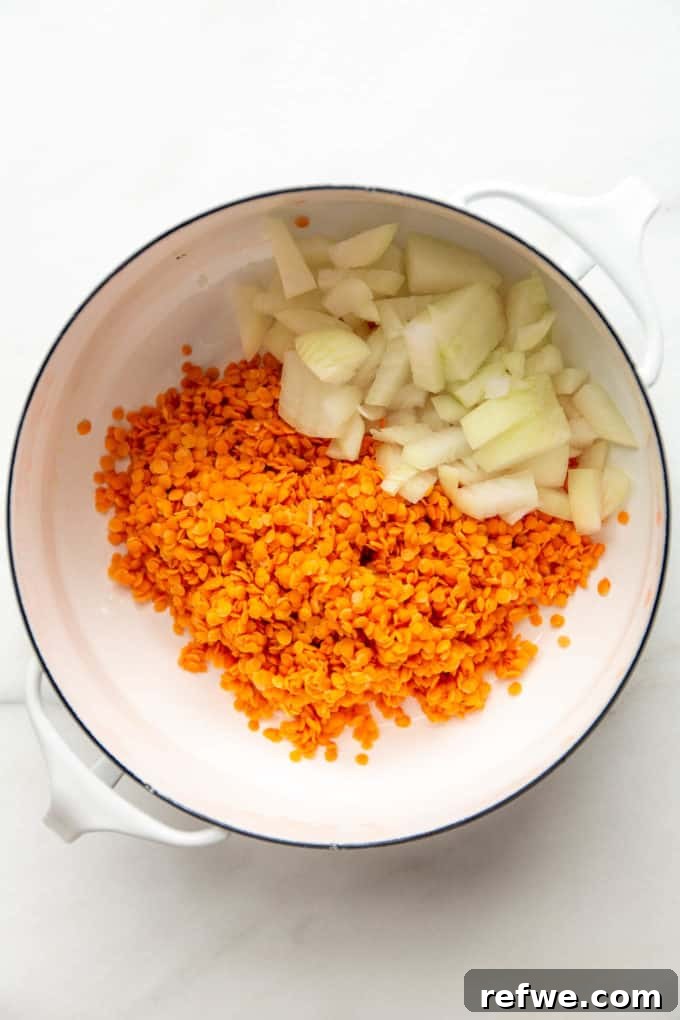
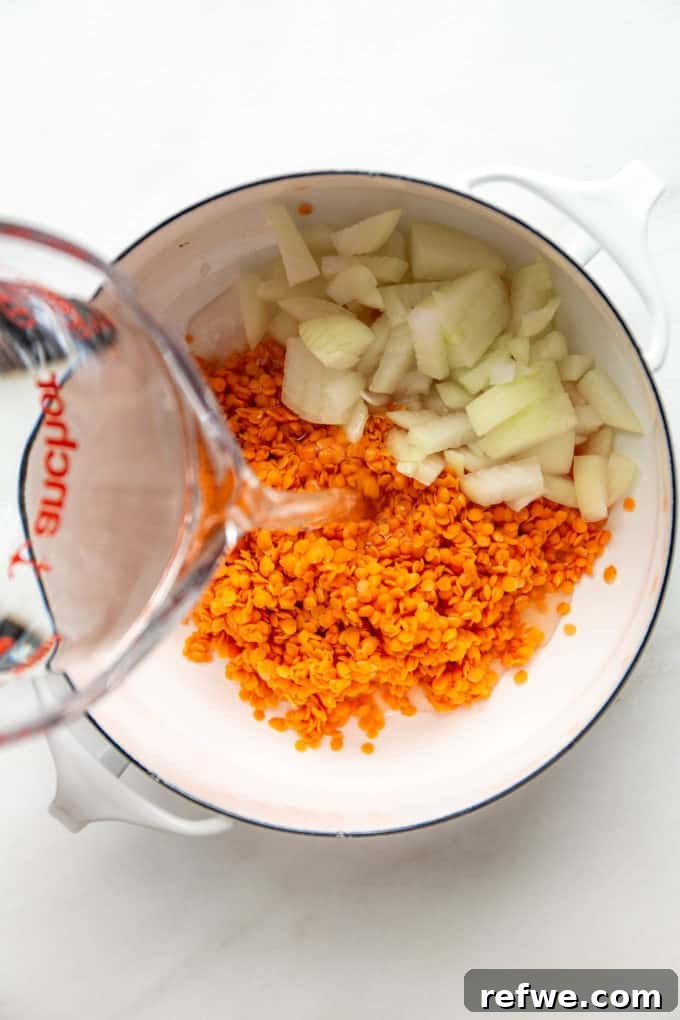
Begin by thoroughly rinsing your red lentils in a fine-mesh strainer under cold running water until the water runs completely clear. This crucial step removes any residual dust or impurities and, importantly, helps to wash away any bitterness that red lentils can sometimes carry. Once rinsed, transfer the clean lentils to a large pot. Add half of your finely chopped onion to the pot, followed by the specified amount of water. Bring the mixture to a rolling boil over high heat, then immediately reduce the heat to low, cover the pot with a lid, and let it simmer gently for 20-30 minutes. During this time, the lentils will soften and break down, achieving that characteristic creamy texture.
Step 2: Preparing the Aromatic Spice Base (Tadka)
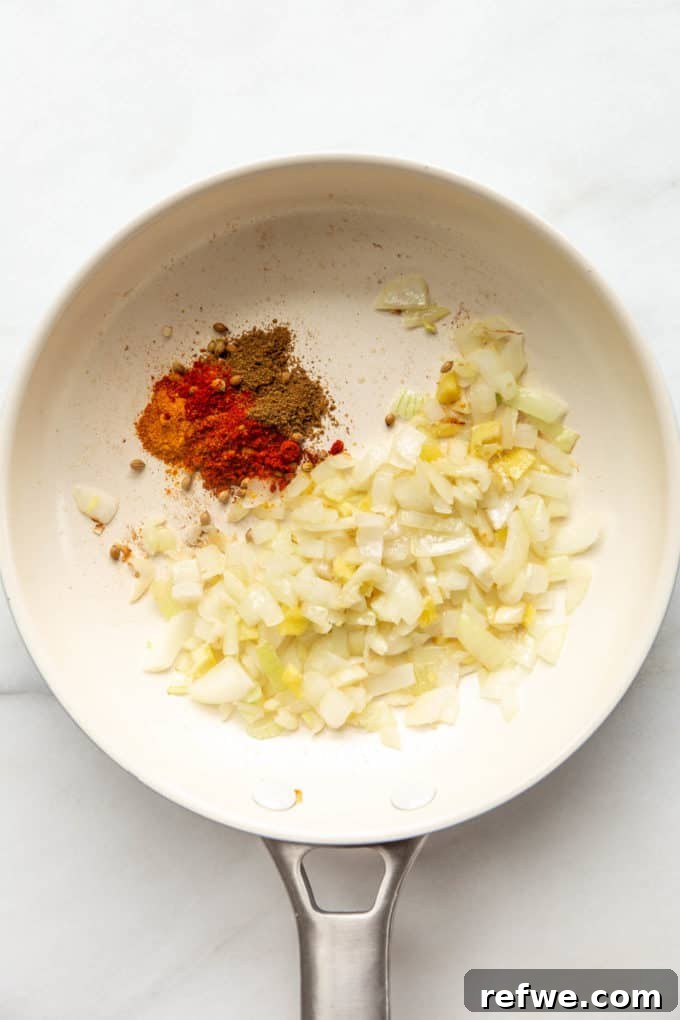
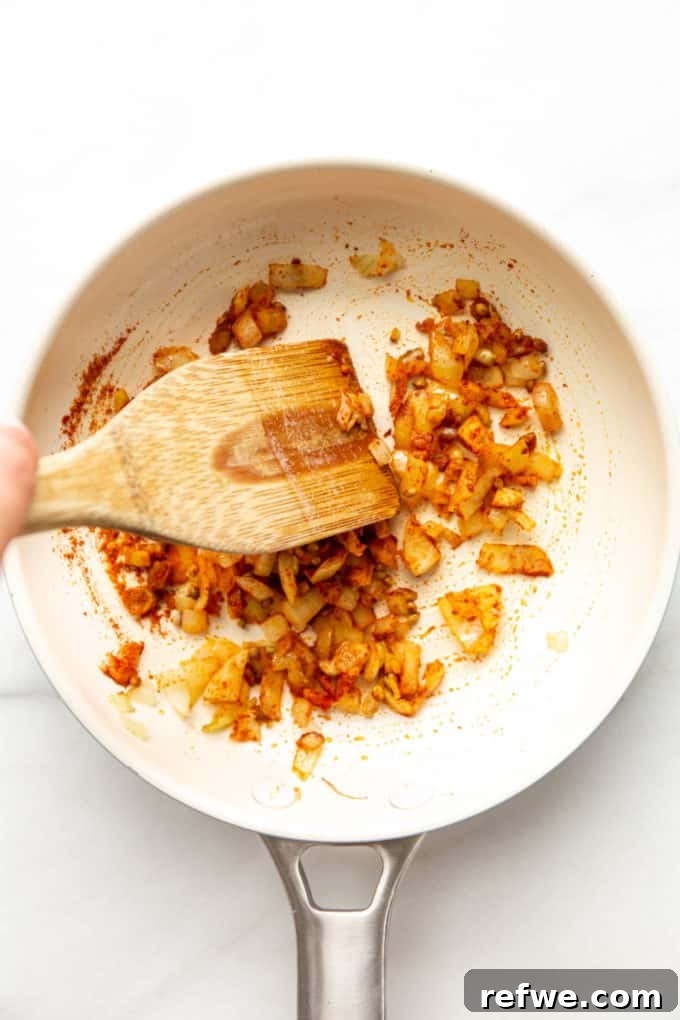
While your lentils are simmering, prepare the flavorful tadka. Heat the vegetable oil in a small pan over medium-high heat. Once the oil is shimmering, add the remaining half of the chopped onion, along with the minced garlic and grated ginger. Sauté these aromatics for about 1 minute, stirring continuously until they become fragrant and slightly softened, but not browned. Next, reduce the heat to medium and add your dry spices: turmeric, smoked paprika, cumin, black pepper, and coriander seeds. Mix everything together thoroughly, allowing the spices to toast gently for about 1 minute. This crucial step “blooms” the spices, releasing their full aromatic potential and deepening their flavors. You’ll notice an incredibly fragrant aroma filling your kitchen. Remove the pan from the heat and set this aromatic spice mixture aside.
Step 3: Combining the Flavors
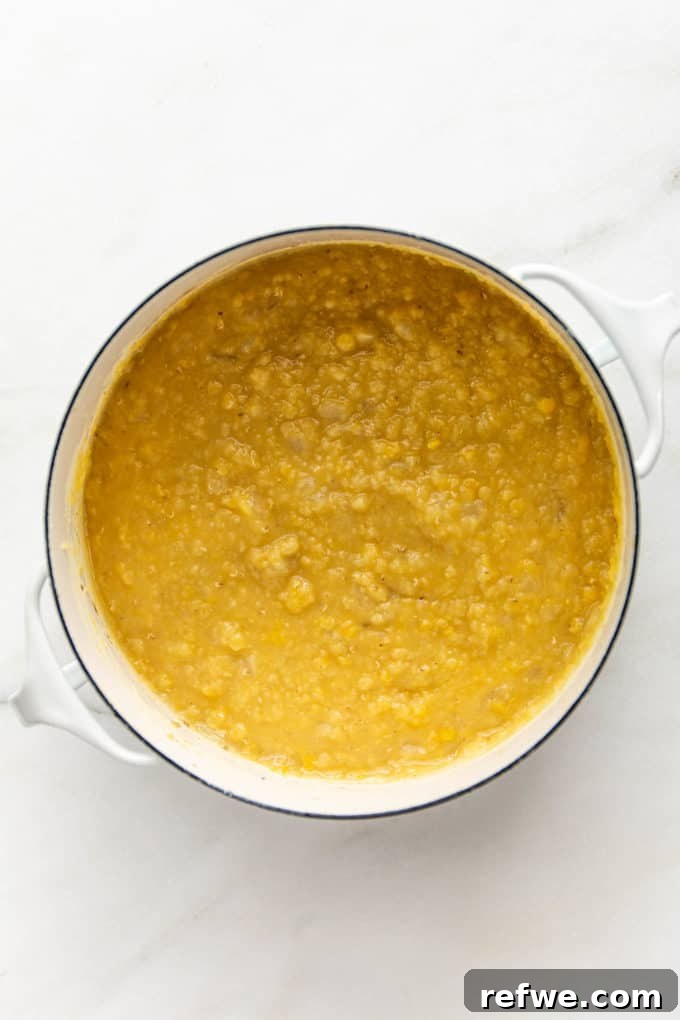
Once the lentils are tender and soft after simmering, remove the lid from their pot. Give them a good stir to ensure they are evenly cooked and have achieved a smooth consistency. Now, carefully add the fragrant spice mixture you prepared in Step 2 directly into the pot of cooked lentils. This is where the magic truly happens, as the spices infuse into the creamy lentils.
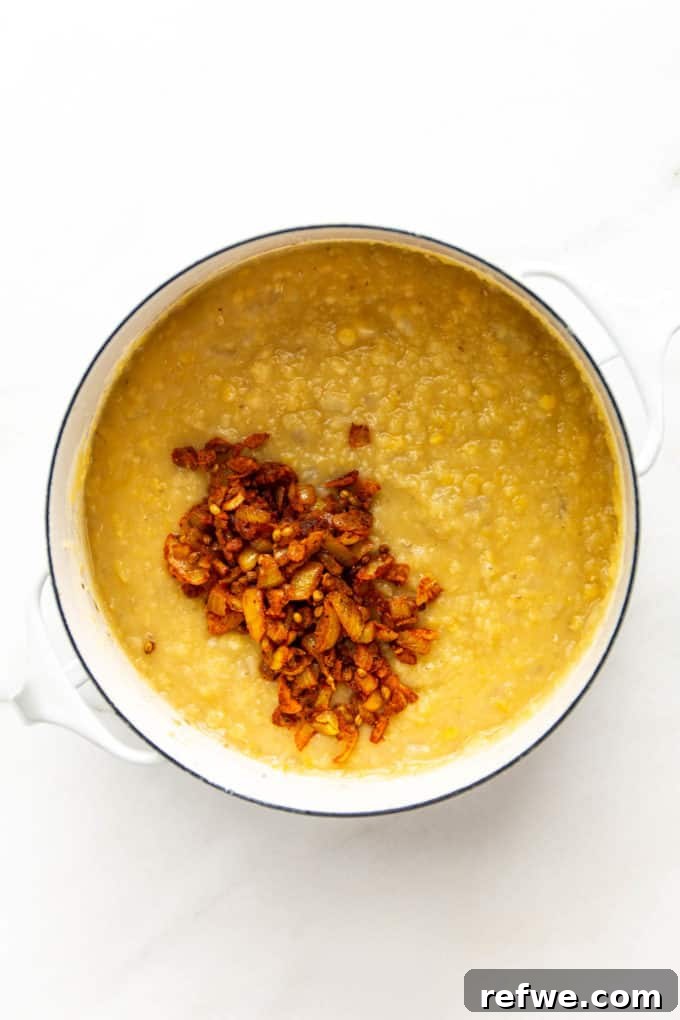
Step 4: Final Touches and Seasoning
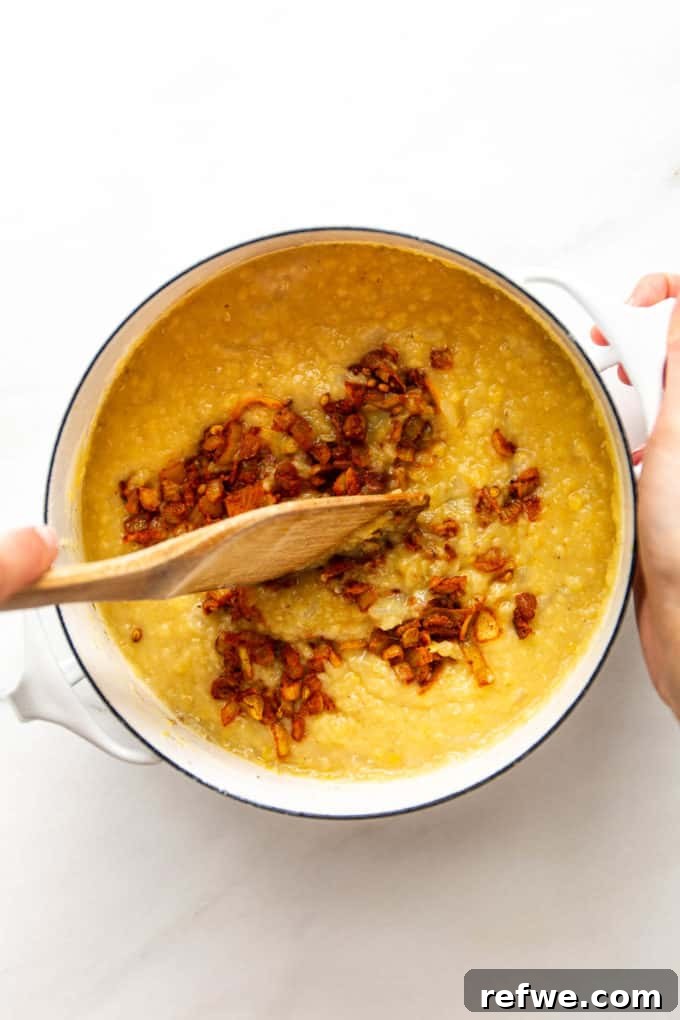
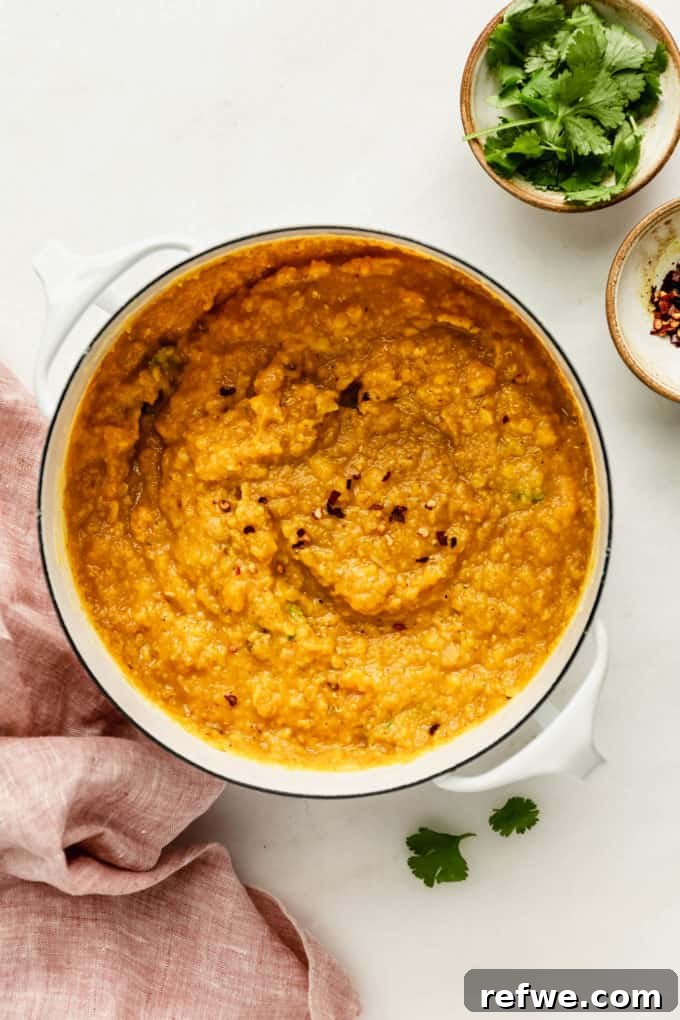
Stir the spices thoroughly into the pot of lentils until they are completely combined and the dahl has an even, vibrant color. Next, add the salt and mix it in well. Now is the time to taste your Red Lentil Dahl and adjust the seasoning as needed. You might find it benefits from a pinch more salt, or perhaps a squeeze of fresh lemon juice to brighten the flavors. If you enjoy a bit of heat, feel free to stir in some red chili flakes or a dash of cayenne pepper for an extra kick. Continue to mix until you achieve the perfect balance of flavors for your palate. Serve warm and enjoy!
Delightful Ways to Serve Red Lentil Dal
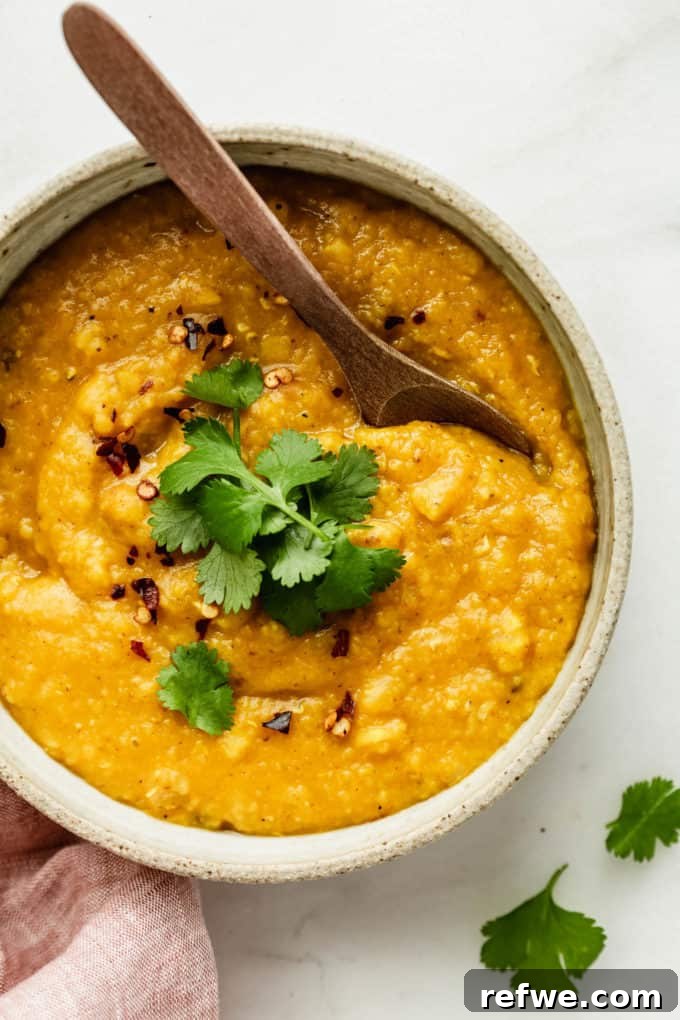
The beauty of Red Lentil Dahl lies not only in its rich flavor but also in its incredible versatility. While it’s certainly satisfying enough to be enjoyed on its own as a light meal, it truly shines when paired with traditional Indian accompaniments. The most classic way to savor Masoor Dal is alongside fluffy basmati rice, allowing the rice to soak up every drop of the flavorful lentil curry. Alternatively, warm, soft naan bread or roti provides the perfect vehicle for scooping up the dahl, making each bite a delightful experience. If you prefer a thinner consistency, perhaps for a more soup-like dish, simply add a little more water or vegetable broth during the final steps of cooking. For an added touch of freshness, garnish with chopped fresh cilantro, a squeeze of lime juice, or a dollop of plain yogurt (dairy or non-dairy). Other excellent pairings include mango chutney, spicy pickles, or a simple side salad to complete your Indian-inspired feast.
Storing, Freezing, and Reheating Your Masoor Dal
This Red Lentil Dahl recipe is fantastic for meal prepping, as it stores and reheats beautifully. You can easily make a larger batch to enjoy throughout the week or freeze some for later convenience:
- Fridge Storage: Any leftover dahl can be transferred to an airtight container and stored in the refrigerator for up to 5 days. The flavors often meld and deepen overnight, making it even more delicious the next day.
- Freezer Storage: Masoor Dal is exceptionally freezer-friendly, making it a great option for future quick meals. Allow the dahl to cool completely to room temperature before transferring it to freezer-safe containers or bags. It can be stored in the freezer for up to 3 months. To defrost, simply place it in the refrigerator overnight or use the defrost setting on your microwave.
- Reheating: To reheat, gently warm the dahl on the stovetop over medium-low heat, stirring occasionally, until it is heated through. If it appears too thick, you can add a splash of water or vegetable broth to achieve your desired consistency. Alternatively, reheat individual portions in the microwave, stirring halfway through, until piping hot.
Expert Tips for Crafting the Perfect Lentil Dahl
- Always Rinse Your Red Lentils: This seemingly small step makes a significant difference. Red lentils can sometimes carry a faint bitter or earthy taste due to residual starches or saponins on their surface. Rinsing them under cold running water until the water runs completely clear is essential. This not only cleans the lentils but also helps to remove any bitterness, ensuring your dahl has a clean, smooth flavor.
- Embrace the Spices: The true soul of this Red Lentil Dahl comes from its aromatic spices. Don’t be shy when it comes to the seasoning! The combination of coriander, paprika, turmeric, and cumin is what builds the complex, traditional Indian flavor profile. Ensure your spices are fresh for the most vibrant taste. If you enjoy a fiery kick, feel free to increase the amount of black pepper or add a pinch of red chili flakes (like Kashmiri chili powder for color and moderate heat, or cayenne for more intensity) to the tadka for extra warmth.
- It Tastes Even Better the Next Day: Like many stews and curries, Red Lentil Dahl often improves with time. The flavors need a chance to meld and deepen. Consider making this recipe a day in advance. As the dahl rests in the refrigerator overnight, the spices will thoroughly infuse into the lentils, creating a more harmonious and intensely flavorful dish the following day. This also makes it a fantastic meal prep option for busy schedules.
Masoor Dal Frequently Asked Questions
Absolutely! Lentil dahl is an incredibly healthy and nutritious dish. It’s a fantastic source of plant-based protein, dietary fiber, and essential minerals, making it an excellent component of a balanced diet. It supports digestive health and provides sustained energy.
Yes, dahl can be very beneficial for weight loss. It is naturally low in fat and exceptionally high in fiber and protein, which are key nutrients for satiety. Eating dahl helps you feel full and satisfied for longer, reducing the likelihood of overeating and supporting healthy weight management.
Traditionally, dahl is almost always served hot, often steaming alongside rice or bread. However, some people do enjoy it cold, particularly as a leftover. While the flavors are most vibrant when warm, there’s no harm in enjoying it straight from the fridge if that’s your preference.
Dahl recipes are incredibly diverse, and many variations do incorporate tomatoes or even coconut milk for added flavor and texture. This particular recipe for Masoor Dal is a simpler, foundational version, but it can certainly be modified to include diced tomatoes, a spoonful of tomato paste, or a splash of coconut milk if you desire those additional elements.
Yes, they are! “Masoor Dal” is the Hindi term for red lentils. It refers both to the dried, split red lentils themselves and to the traditional Indian dish prepared from them, which is often a flavorful, stew-like curry.
While both are staple Indian dishes, dahl typically focuses on a single type of pulse (like lentils) stewed down to a creamy, often soup-like consistency, highlighting the legume itself. Curries, on the other hand, are generally heartier, featuring a wider variety of vegetables, meats, or paneer in a thicker, richer sauce, with a more complex spice blend. Dahl often serves as a comforting side to a main curry.
No, red lentils do not typically require soaking before cooking. They are relatively small and thin, allowing them to cook quickly without prior soaking. However, they absolutely need to be rinsed thoroughly under running water before cooking to remove any impurities or bitter compounds.
“Dal” is a broader term in Indian cuisine referring to any dried, split pulse, including various types of lentils, peas, and beans. So, while red lentils are a type of dal (Masoor Dal), not all lentils are specifically called “Dal” in English, and there are many other varieties of legumes that fall under the “dal” umbrella in Hindi.
Explore More Indian-Inspired Recipes
If you’ve enjoyed the comforting flavors of this Red Lentil Dahl, you’ll love exploring these other Indian-inspired recipes:
- Tofu Tikka Masala
- Turmeric Rice
- Ayurvedic Kitchari
- Vegetable Korma
- Chana Masala
If you tried this delicious Red Lentil Dahl (Masoor Dal) or any other recipe from our collection, we’d love to hear from you! Please let us know how you liked it by leaving a comment and rating below. Your feedback helps us grow and inspires other home cooks. For more delightful recipes and culinary inspiration, be sure to follow us on Pinterest, Instagram, and Facebook!
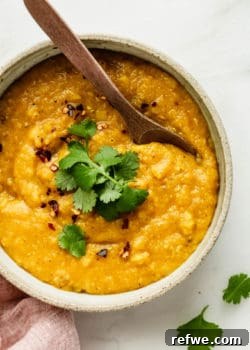
Red Lentil Dahl (Masoor Dal)
5 from 3 reviews
- Author: Jessica Hoffman
- Prep Time: 10 minutes
- Cook Time: 30 minutes
- Total Time: 40 minutes
- Yield: 6 servings
- Category: Main
- Method: Cook
- Cuisine: Indian
- Diet: Vegetarian
Description
This Easy Red Lentil Dahl (Masoor Dal) is a healthy, flavorful, and incredibly simple Indian-inspired dish, perfect for a comforting and satisfying meal that’s ready in under an hour!
Ingredients
- 1 cup (dry) red lentils
- 2 1/2 cups water
- 1 large onion, finely chopped (divided)
- 3 garlic cloves, finely chopped
- 2 tbsp ginger, grated
- 1 tbsp vegetable oil
- 1 tsp coriander seeds
- 1/2 tsp smoked paprika (can substitute regular paprika)
- 1/2 tsp turmeric
- 1/2 tsp cumin
- 1/2 tsp ground black pepper
- 3/4 tsp salt
Instructions
- Rinse the red lentils in a strainer under cold running water until the water runs completely clear. This step is crucial to remove any bitterness from the lentils and ensure a clean flavor.
- Add the rinsed lentils, half of the finely chopped onion, and 2 1/2 cups of water to a large pot. Bring the mixture to a boil over high heat. Once boiling, reduce the heat to low, cover the pot, and let it simmer for 20-30 minutes, or until the lentils are completely soft and have broken down into a creamy consistency.
- While the lentils are cooking, heat the vegetable oil in a small pan over medium-high heat. Add the remaining half of the chopped onion, along with the finely chopped garlic and grated ginger. Sauté for 1-2 minutes until fragrant and slightly softened. Then, reduce the heat to medium and add the coriander seeds, smoked paprika, turmeric, cumin, and black pepper. Stir constantly for about 1 minute, allowing the spices to toast and become aromatic. Remove the pan from the heat.
- Once the lentils are cooked and tender, remove the lid. Add the prepared spice mixture from the small pan to the pot of lentils, along with the salt. Stir thoroughly to combine all the ingredients and flavors. Taste the dahl and adjust the seasoning as needed; you might want more salt or a pinch of chili flakes for extra heat.
- Serve your warm Red Lentil Dahl on its own, over a bed of basmati rice, or with warm naan bread for a complete and satisfying meal. Garnish with fresh cilantro if desired.
Notes
- Store any leftover dahl in an airtight container in the fridge for up to 5 days, or freeze for up to 3 months.
- Remember to thoroughly rinse red lentils before cooking to remove any potential bitterness.
- Don’t hold back on the spices! They are the heart of this recipe’s flavor. Feel free to add chili flakes if you prefer a spicier dahl.
- This dahl often tastes even better the next day as the flavors deepen and meld. Consider making it ahead of time for optimal taste.
Nutrition
- Serving Size: 1/6th of recipe
- Calories: 143
- Sugar: 1g
- Sodium: 300mg
- Fat: 2.7g
- Carbohydrates: 21.6g
- Fiber: 10.2g
- Protein: 8.6g