
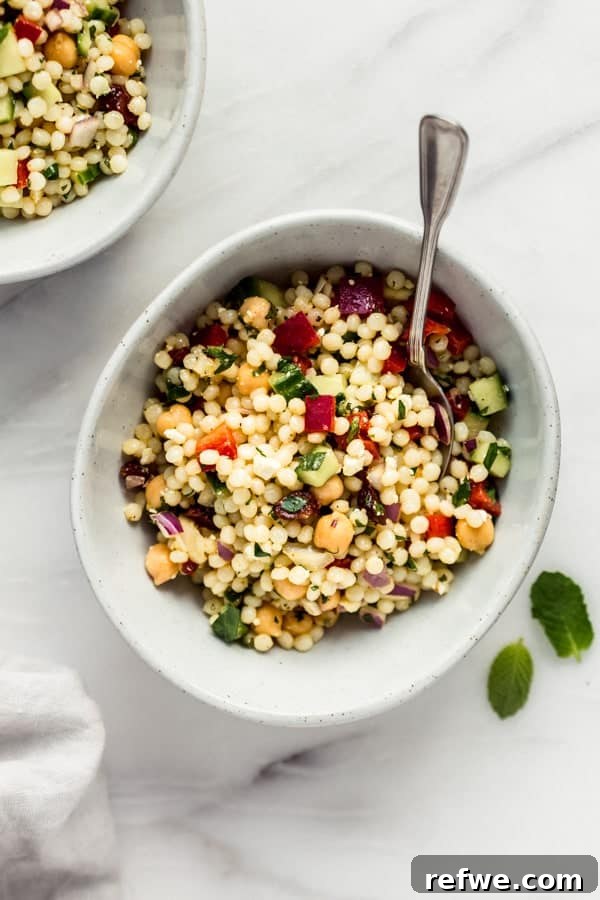
Embark on a culinary journey with this vibrant Israeli Couscous Salad, a delightful blend of chewy pearls, wholesome chickpeas, tart cranberries, and savory feta cheese. This recipe offers a refreshing, flavorful, and incredibly easy-to-prepare dish perfect for any occasion!
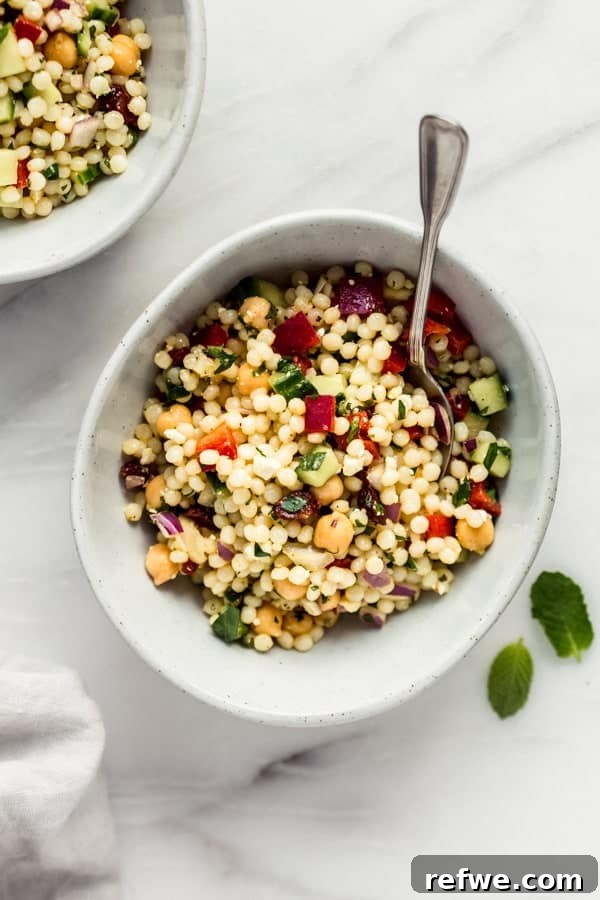
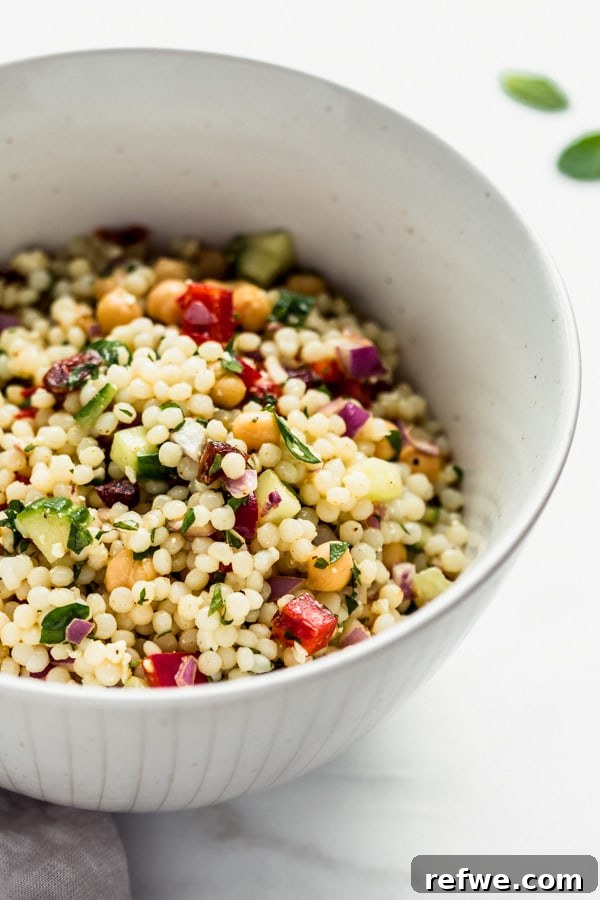
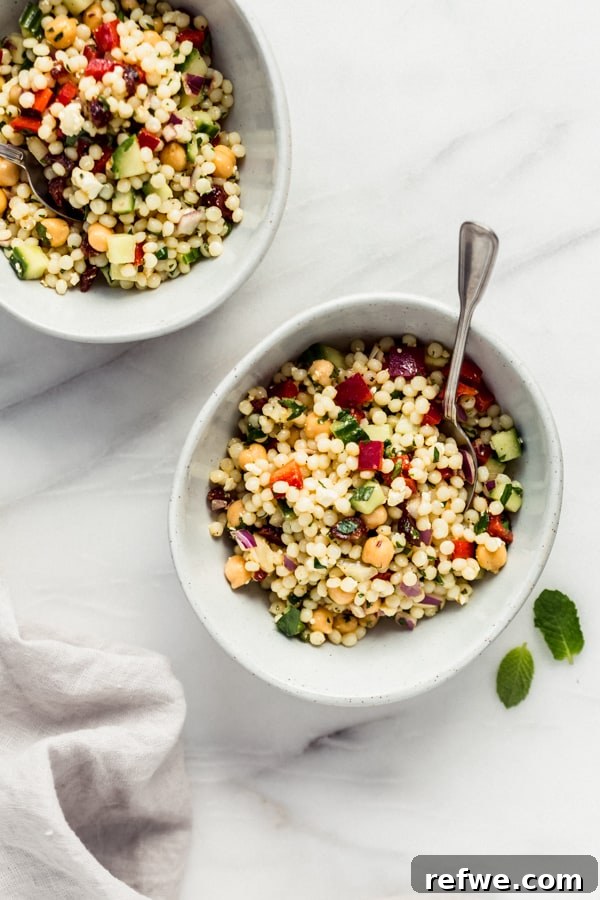
Introducing your new favorite obsession: a radiant Israeli couscous salad that promises a burst of fresh flavors and satisfying textures in every bite! This isn’t just another side dish; it’s a vibrant symphony of ingredients designed to tantalize your taste buds and impress your guests. We’re talking about plump, pearl-sized pasta mingling with crisp, freshly chopped vegetables, aromatic herbs, crumbled feta, chewy dried cranberries, and protein-packed chickpeas, all harmoniously tossed in a zesty, spiced vinaigrette. It’s a culinary masterpiece that delivers both nutrition and undeniable deliciousness, making it an ideal choice for healthy lunches, elegant potlucks, or a quick, satisfying weeknight meal. Get ready to elevate your salad game with this simple yet sophisticated recipe!
Discover the Delight of Israeli Couscous Salad
This Israeli Couscous Salad stands out for its unique combination of textures and flavors. Unlike traditional, finer couscous, the larger, pearl-like grains of Israeli couscous provide a satisfying chewiness that acts as a fantastic base for the myriad of fresh ingredients. Each spoonful is a delightful medley, from the juicy crunch of cucumber and bell pepper to the creamy tang of feta and the surprising sweetness of dried cranberries. The addition of chickpeas not only boosts the protein content, making it a more substantial meal, but also adds an earthy depth that complements the brighter notes of the dressing.
Beyond its incredible taste, this salad is a powerhouse of nutrition. It’s packed with fiber from the couscous and chickpeas, vitamins from the fresh vegetables, and healthy fats from the olive oil-based dressing. It’s a perfect example of how wholesome ingredients can come together to create something truly extraordinary. Whether you’re a seasoned chef or a beginner in the kitchen, you’ll appreciate how straightforward and quick this recipe is to prepare, proving that healthy eating doesn’t have to be complicated or time-consuming.
Israeli Couscous vs. Regular Couscous: The Pearl Difference
Before diving into the recipe, let’s demystify Israeli couscous. Often referred to as pearl couscous, this grain holds a distinct place in the culinary world, differing significantly from its more common, finer counterpart. Traditional couscous, originating from North Africa, is essentially a very tiny, ground pasta made from semolina wheat, similar in size and texture to sand grains. It’s typically steamed and used in recipes much like rice or quinoa, absorbing flavors beautifully and providing a light, fluffy base.
Israeli couscous, or “ptitim” as it’s known in Hebrew, was developed in Israel in the 1950s as a convenient and accessible rice substitute. It’s also made from semolina wheat, but its defining characteristic is its unique shape: larger, toasted, pearl-sized balls. This size and a slight toasting process give it an entirely different texture and mouthfeel compared to regular couscous. When cooked, Israeli couscous maintains a delightful al dente bite, making it an excellent candidate for salads where texture is key. Its robust structure prevents it from becoming mushy, even when dressed, ensuring a satisfying experience in every forkful.
A Brief History of Pearl Couscous
The creation of Israeli couscous was born out of necessity during Israel’s early years when rice was scarce. The first Prime Minister of Israel, David Ben-Gurion, asked a food company to develop a wheat-based substitute for rice. The result was “ptitim,” which quickly became a staple in Israeli kitchens and eventually found its way into global cuisine, cherished for its versatility and unique texture. Today, it’s a beloved ingredient in Mediterranean and Middle Eastern cooking, often featured in salads, pilafs, and as a hearty side dish.
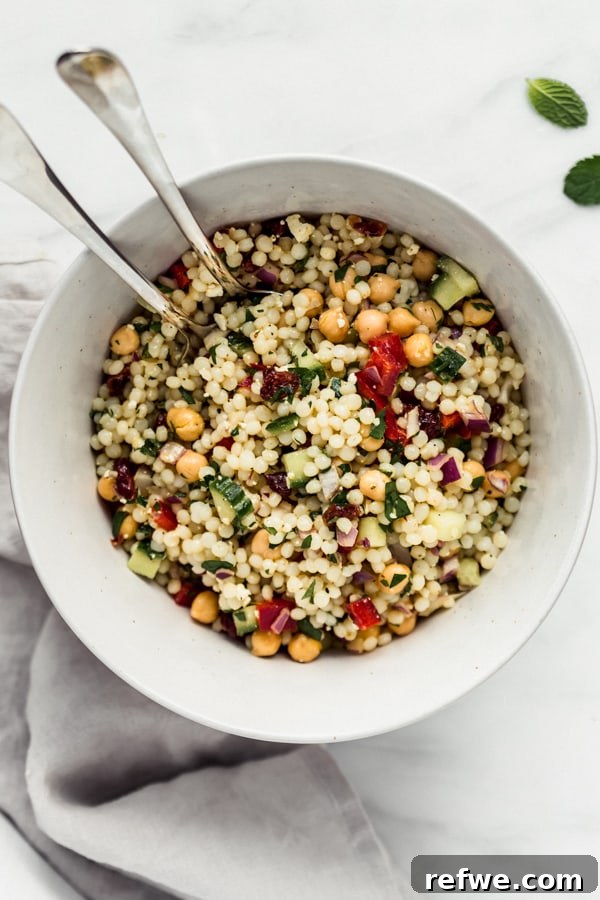
Mastering the Art of Cooking Israeli Couscous
One of the many reasons to adore Israeli couscous is its incredible ease and speed of preparation. It cooks significantly faster than a pot of rice or even quinoa, making it a fantastic option for busy weeknights or when you need a quick component for your meal. Achieving perfectly cooked, fluffy, and separate pearls is simple with the right technique.
To cook Israeli couscous, the standard ratio is 1 cup of dry couscous to 1 1/2 cups of liquid. While water works, using vegetable or chicken broth infuses the pearls with an extra layer of flavor, elevating your entire dish. Add 1/2 teaspoon of salt to the liquid to season the couscous from within. Begin by bringing your chosen liquid and salt to a rolling boil in a medium saucepan. Once boiling, stir in the dry Israeli couscous. Reduce the heat immediately to low, cover the pot tightly, and let it simmer gently for 10-12 minutes. The couscous will absorb all the liquid, becoming tender yet still maintaining its signature chewiness. Once cooked, remove from heat and let it sit, covered, for another 5 minutes to steam, then fluff with a fork.
Tips for Perfectly Cooked Pearl Couscous
- Toast for Flavor: For an even deeper, nuttier flavor, you can lightly toast the dry Israeli couscous in a dry pan with a drizzle of olive oil for 1-2 minutes before adding the broth. This enhances its inherent deliciousness.
- Avoid Overcooking: Keep a close eye on the cooking time. Overcooked couscous can become mushy, losing its desirable texture.
- Cool Completely: For salads, it’s crucial to let the cooked couscous cool down to room temperature before mixing with other ingredients. This prevents the salad from wilting and ensures a fresh, crisp result. You can spread it on a baking sheet to speed up the cooling process, or even pop it in the fridge for a few minutes.
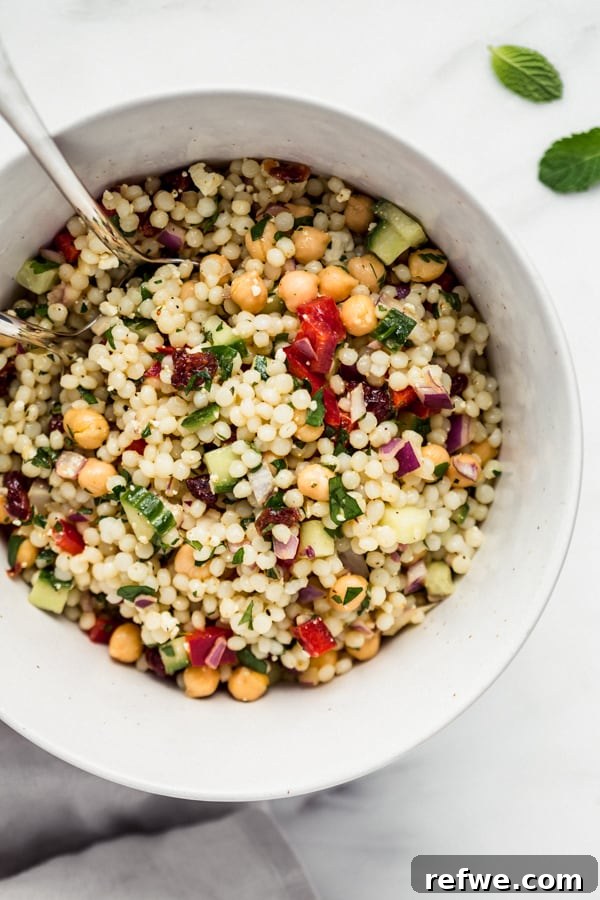
Crafting Your Perfect Israeli Couscous Salad
Once your Israeli couscous is perfectly cooked and cooled, the real fun begins: assembling your vibrant salad. This recipe is designed for maximum flavor with minimal effort, making it a fantastic choice for both novice and experienced cooks. The key is in the preparation and thoughtful combination of fresh, high-quality ingredients.
While your couscous cools to room temperature (you can expedite this by placing it in the refrigerator for a short period), it’s the ideal time to prepare the rest of your components. Begin by finely chopping your fresh vegetables—cucumber, red pepper, and thinly slicing red onions. Rinse and drain your chickpeas thoroughly. Roughly chop your fresh parsley and mint; these herbs are crucial for adding a burst of freshness and aroma to the salad. Crumble your feta cheese and measure out your dried cranberries.
Next, whisk together the ingredients for the zesty dressing. In a small bowl or jar, combine good quality olive oil, fresh lemon juice, minced garlic, Dijon mustard, cumin powder, and coriander powder. Season with salt and pepper to taste. Whisk vigorously until all ingredients are well combined and the dressing is slightly emulsified. The combination of lemon, garlic, and the warm spices of cumin and coriander creates a dressing that is both bright and subtly exotic, perfectly complementing the other salad components.
Finally, bring everything together in a large mixing bowl. Add the cooled Israeli couscous, all your chopped vegetables, chickpeas, dried cranberries, fresh herbs, and crumbled feta. Pour the prepared dressing over the salad and toss gently until all ingredients are evenly coated. Serve immediately for the freshest experience.
The Harmony of Flavors and Textures
- Chickpeas: Provide a hearty, protein-rich element and a creamy texture that contrasts beautifully with the couscous.
- Cranberries: Offer a delightful sweet-tart chewiness, adding a surprising burst of fruitiness that brightens the entire dish.
- Feta Cheese: Introduces a salty, tangy, and slightly creamy counterpoint, bringing an authentic Mediterranean essence.
- Fresh Vegetables (Cucumber, Red Pepper, Red Onion): Deliver refreshing crunch, vibrant color, and essential nutrients.
- Herbs (Parsley, Mint): Infuse the salad with unparalleled freshness and aromatic lift, making it incredibly invigorating.
Versatility and Customization: Make It Your Own
This Israeli Couscous Salad recipe is wonderfully versatile, offering endless possibilities for customization based on your preferences or what you have on hand. It’s a fantastic recipe to adapt, ensuring it never gets boring and always fits your dietary needs.
If Israeli couscous isn’t available, don’t fret! You can absolutely make this vibrant salad with regular fine couscous, though the texture will be softer. For those seeking a gluten-free option, simply substitute the couscous with an equal amount of cooked quinoa. Quinoa offers a similar nutrient profile and a lovely, slightly chewy texture that works perfectly in this salad.
Gluten-Free and Vegan Options
To make this recipe entirely vegan, simply omit the feta cheese. You can substitute it with a sprinkle of nutritional yeast for a cheesy flavor, or use a plant-based feta alternative if desired. The rest of the ingredients are naturally vegan-friendly.
Smart Prep-Ahead Tips
While this salad tastes best when freshly dressed, it can be prepared in advance. The key to maintaining its freshness and preventing sogginess is to keep the dressing separate until just before serving. Store the cooked and cooled couscous, chopped vegetables, chickpeas, cranberries, and feta (if using) in an airtight container in the refrigerator. Store the dressing separately in a small jar. When you’re ready to serve, simply combine everything and toss. This method ensures your salad remains crisp and flavorful, making it perfect for meal prep or entertaining.
Feel free to experiment with other vegetables like cherry tomatoes, chopped bell peppers of different colors, or even some baby spinach or kale for added greens. To boost the protein further, consider adding grilled chicken, shrimp, or more types of beans. A sprinkle of toasted almonds or sunflower seeds can also add an extra layer of crunch and nutty flavor. Don’t be afraid to try different fresh herbs like dill or oregano for a varied aromatic profile. This salad is a canvas for your culinary creativity!
More Inspiring Salad Creations to Explore
- Mediterranean Quinoa Salad
- Quinoa Tabbouleh Salad
- Forbidden Rice Salad with Turmeric & Kale
Print
Israeli Couscous Salad
Author: Jess
Prep Time: 10 minutes
Cook Time: 8 minutes
Total Time: 18 mins
Yield: 4-6 servings
Category: Appetizer, side, salad
Method: Cook
Cuisine: Mediterranean, Middle Eastern,
Description
A fresh and vibrant salad made with Israeli couscous, hearty chickpeas, and sweet-tart dried cranberries, perfect as a delicious appetizer or satisfying side dish!
Ingredients
Salad
- 1 cup Israeli couscous
- 1/2 cup cucumber, chopped
- 1/2 cup red pepper, chopped
- 1/2 cup red onions, thinly sliced
- 1/2 cup chickpeas
- a handful of parsley, chopped
- a handful of mint, chopped
- 1/4 cup dried cranberries
- 1/4 cup crumbled feta
Dressing
- 1/4 cup olive oil
- 2 tbsp lemon juice
- 1 small garlic clove, chopped
- 2 tsp dijon mustard
- 1/2 tsp cumin powder
- 1/2 tsp coriander powder
- salt & pepper to taste
Instructions
- Cook the couscous: Prepare the Israeli couscous according to package directions using broth for extra flavor, then set aside to cool completely to room temperature.
- Prep the salad ingredients: In a large bowl, combine the cooled couscous with the chopped cucumber, red pepper, thinly sliced red onions, rinsed chickpeas, chopped parsley, chopped mint, dried cranberries, and crumbled feta cheese.
- Make the dressing: In a small bowl, whisk together the olive oil, lemon juice, minced garlic clove, Dijon mustard, cumin powder, and coriander powder until well combined. Season with salt and pepper to taste.
- Combine and serve: Pour the prepared dressing over the salad mixture. Toss gently to ensure all ingredients are evenly coated. Serve immediately for best flavor and texture. If preparing in advance, keep the dressing separate and add just before serving.
Notes
Israeli couscous is also sometimes referred to as pearl couscous.
You can use any type of couscous for this recipe, or substitute with cooked quinoa for a gluten-free option.
For best results when preparing ahead, store the dressing separately and mix just before serving.
Nutrition
- Serving Size: 1/6 of recipe
- Calories: 265
- Sugar: 3g
- Sodium: 200mg
- Fat: 11g
- Saturated Fat: 2g
- Carbohydrates: 35g
- Fiber: 5g
- Protein: 8g
If you tried this Israeli Couscous Salad or any other delightful recipe on the blog, please let us know how you liked it by leaving a comment and rating below! Your feedback helps us create even more delicious content. Be sure to follow along on Pinterest, Instagram and Facebook for daily inspiration, new recipes, and a community of food lovers!