
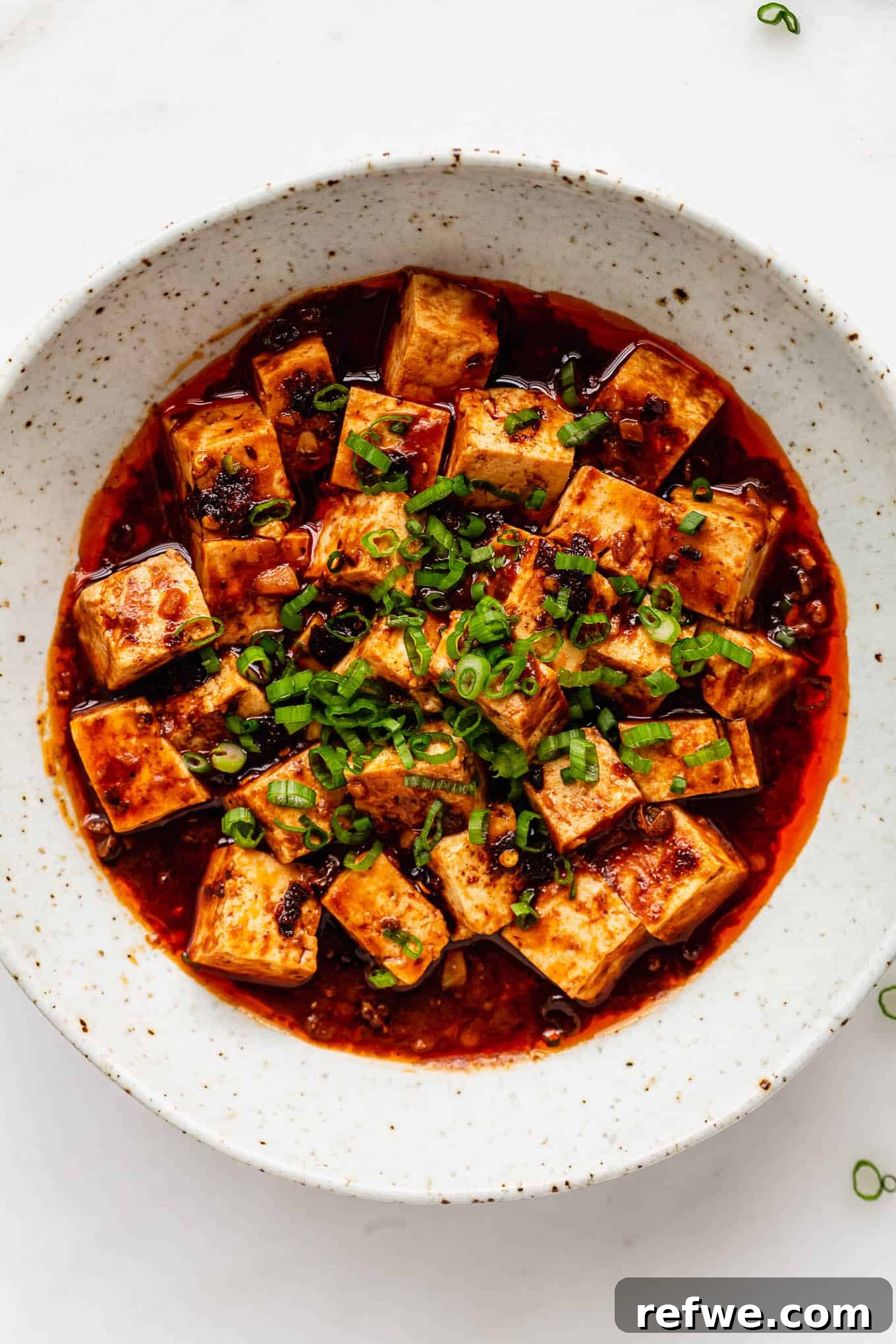
For all vegetarians and those looking to explore incredible plant-based cuisine, rejoice! This exceptional recipe for Vegetarian Mapo Tofu is a culinary delight that transcends expectations. It’s a completely meatless meal that miraculously comes together in just 20 minutes, making it a perfect weeknight dinner solution without compromising on taste. Bursting with the distinct, vibrant flavors of Sichuan cuisine, this dish is not only incredibly easy to prepare but is also guaranteed to win over even the most ardent tofu skeptics, transforming them into enthusiastic tofu lovers. Prepare your palate for an unforgettable journey into spicy, savory, and subtly numbing sensations that define this classic Chinese dish.
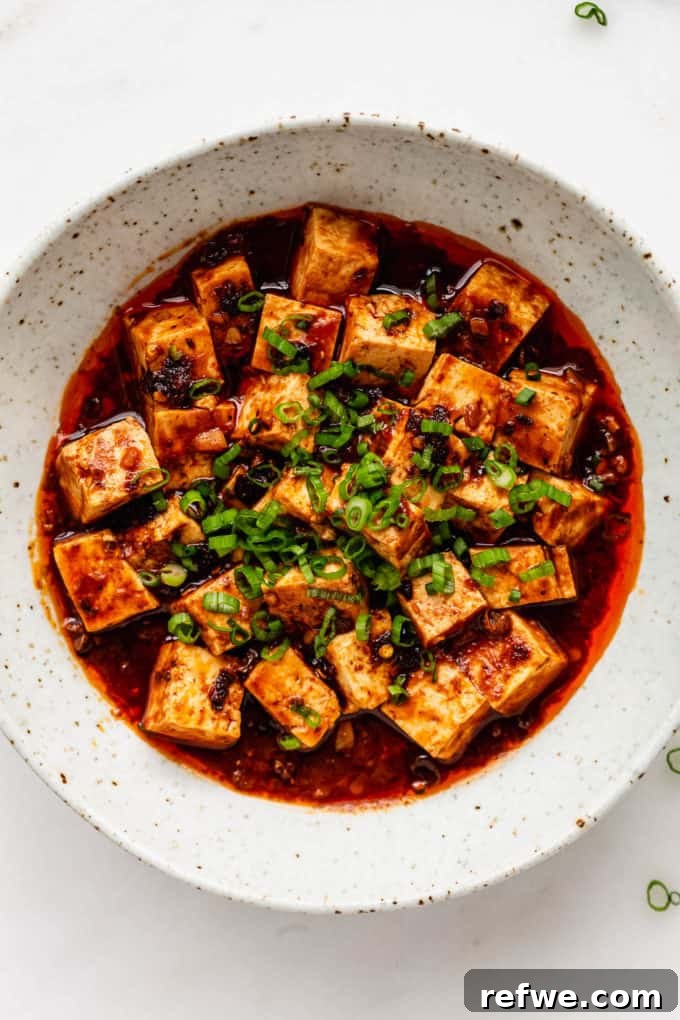
What is Mapo Tofu? Unveiling a Sichuan Culinary Gem
Mapo Tofu (麻婆豆腐, mápó dòufu) is arguably one of the most iconic and beloved dishes from Sichuan province in China. It’s a culinary masterpiece renowned for its bold and complex flavor profile, often described as “mala” – a unique combination of numbing (má) and spicy (là). Traditionally, this dish features tender soft tofu set in a fiery, rich red sauce, often accompanied by minced beef or pork. However, our recipe brilliantly adapts the classic to create a truly satisfying and authentic-tasting Vegetarian Mapo Tofu that is also easily made vegan-friendly. This version maintains all the depth and character of the original, proving that meat is not necessary for an explosion of flavor.
Many people approach tofu with hesitation, often citing its perceived lack of flavor or undesirable texture. But Mapo Tofu stands as a powerful testament to tofu’s versatility and its incredible ability to absorb and carry robust flavors. Forget bland blocks; when prepared correctly, as in this recipe, soft tofu transforms into silky, tender morsels that soak up every nuance of the savory, piquant sauce. If you’re looking for a dish to convert a “tofu hater” in your family, this flavor-packed Mapo Tofu is your secret weapon. Its irresistible combination of saltiness, savoriness, and a delightful spicy kick will change perceptions with every bite, making them question why they ever doubted tofu in the first place.
The true magic of Mapo Tofu, and indeed much of authentic Sichuan cuisine, lies in its distinctive ingredients. Central to this experience are Sichuan Peppercorns. These unique “peppercorns” are not actually related to black pepper or chili peppers. Instead, they are the dried husks of seeds from the prickly ash shrub (Zanthoxylum). What makes them extraordinary is their characteristic ability to produce a tingling, buzzing, and slightly numbing sensation on the tongue, often followed by a subtle citrusy aroma. This “má” sensation is crucial for an authentic Mapo Tofu experience, creating a multi-dimensional mouthfeel that perfectly complements the “là” (spiciness) from the chili. Without genuine Sichuan peppercorns, you simply won’t achieve that true, complex flavor signature that defines this unforgettable dish.
Beyond the peppercorns, the sauce is a symphony of umami and heat, designed to awaken the senses and provide a truly comforting meal. It’s an incredibly addictive and warming dish, particularly when served piping hot with a side of steamed rice. This vegetarian version ensures that everyone can enjoy this classic, making it a fantastic and accessible addition to any plant-based repertoire, proving that traditional dishes can be wonderfully adapted without losing their soul.
The Heart of the Dish: Understanding Mapo Tofu Sauce
The soul of any great Mapo Tofu lies in its intensely flavorful sauce. This rich, spicy, and profoundly savory concoction is what coats the delicate tofu, infusing it with layers of irresistible taste and creating the dish’s signature character. Crafting the perfect Mapo Tofu sauce involves a careful balance of key ingredients, each playing a vital role in achieving the dish’s distinct “mala” profile and glossy texture.
At its foundation, the sauce typically starts with a neutral-tasting vegetable oil, heated to gently toast the aromatics and, most importantly, the Sichuan peppercorns. This initial step is critical as it helps to release their unique numbing and fragrant qualities, which are essential for the authentic taste. Following this, finely chopped fresh ginger and garlic are added, building a pungent and warm base for the subsequent layers of flavor. These fresh aromatics are indispensable, providing a foundational depth that beautifully complements the complex spices.
The true character of the sauce emerges with the addition of fermented chili bean paste, widely known as Doubanjiang (豆瓣酱). This thick, reddish-brown paste is made from broad beans, chili peppers, and various spices, fermented over time to develop an incredibly complex, savory, and spicy flavor. It’s the primary source of the “là” (spiciness) and a significant contributor to the deep umami and vibrant red color of the sauce. Alongside Doubanjiang, soy sauce adds further saltiness and umami, while a touch of brown sugar is essential to balance the intense heat and savory notes, preventing the sauce from becoming overwhelmingly spicy or salty, and adding a subtle sweetness that rounds out the flavor profile. Finally, vegetable broth forms the liquid base, allowing the flavors to meld and deepen as it simmers down, creating that characteristic thick, luxurious texture that clings perfectly to the tofu. A cornstarch slurry is introduced at the end to further thicken the sauce to its ideal consistency, ensuring every piece of tofu is beautifully enveloped in this extraordinary flavor bomb.
The resulting sauce is a harmonious blend: deeply savory, intensely spicy, with a lingering numbing sensation from the Sichuan peppercorns, and just a hint of sweetness to round it all out. It’s truly a sauce that will tantalize your taste buds and keep you coming back for more, making this vegetarian version an absolute favorite.
Essential Ingredients for Your Vegetarian Mapo Tofu
Creating an authentic and delicious Vegetarian Mapo Tofu starts with sourcing the right ingredients. While some may seem less common in a standard pantry, they are absolutely crucial for achieving the distinctive Sichuan flavor profile and the proper texture. Here’s a breakdown of what you’ll need and why each component plays a vital role in this mouthwatering dish:
- Vegetable oil: Any neutral-tasting oil, such as canola, sunflower, or grapeseed oil, is best for this recipe. Its mild flavor allows the other powerful, aromatic flavors of the dish to shine without interference.
- Sichuan peppercorns: This is a non-negotiable ingredient for authentic Mapo Tofu. Look for red Sichuan peppercorns for their characteristic numbing and citrusy notes. Do NOT substitute with regular black peppercorns; they offer a completely different flavor and lack the unique “má” sensation that defines the dish.
- Ginger: Freshly minced ginger adds a warm, pungent aroma and a foundational layer of flavor that complements the garlic and spices. It provides an essential zest and warmth to the overall profile.
- Garlic: Finely chopped fresh garlic is another aromatic cornerstone, providing a sharp and savory depth essential to nearly all Chinese cooking. Freshness here makes a big difference.
- Fermented chili bean paste (Doubanjiang): This is the heart of the Mapo Tofu sauce. It delivers the signature heat, umami, and vibrant reddish hue. You can find both spicy (typically a darker red) and less spicy versions. Choose a high-quality brand, preferably Pixian Doubanjiang, from an Asian grocery store for the most authentic and deep flavor.
- Soy sauce: Adds crucial savory depth and saltiness to the sauce. Opt for a low-sodium variety if you prefer to control the overall salt content. For a gluten-free version, always use tamari or a certified gluten-free soy sauce.
- Brown sugar: A small amount of brown sugar helps to beautifully balance the intense spicy and savory flavors, adding a subtle sweetness that rounds out the sauce and prevents it from being too harsh. White sugar can also be used if brown sugar is unavailable.
- Vegetable broth: This forms the liquid base of the sauce, infusing it with umami and allowing all the complex flavors to meld and deepen as it simmers. Using a low-sodium broth gives you greater control over the final saltiness of the dish.
- Cornstarch: Absolutely crucial for thickening the sauce to the perfect glossy, clingy consistency that coats the tofu cubes beautifully. It must always be mixed with cold water to form a “slurry” before being added to prevent lumps.
- Tofu: For Mapo Tofu, soft tofu is absolutely essential. Its delicate, silky, custard-like texture absorbs the rich sauce wonderfully and breaks apart gently, rather than crumbling. This creates the melt-in-your-mouth experience characteristic of the dish. Avoid silken tofu, which is too fragile and will likely disintegrate, and save firm or extra-firm tofu for recipes like Honey Garlic Tofu where a chewier texture is desired.
- Sesame oil: Drizzled in at the very end, a touch of toasted sesame oil adds a rich, nutty aroma and deepens the overall flavor profile, making the dish more aromatic and appealing, a common finishing touch in Asian cuisine.
- Scallions: Freshly sliced scallions are added as a garnish just before serving, providing a fresh, mild oniony crunch and a vibrant green color contrast to the rich red sauce. They are optional but highly recommended for both flavor and presentation, adding a burst of freshness.
Having these key ingredients on hand ensures you can create an authentic and truly memorable Vegetarian Mapo Tofu experience in your own kitchen, a dish that will impress and delight anyone who tries it.
Crafting Your Own Vegetarian Mapo Tofu: A Step-by-Step Guide to Perfection
Making this flavorful Vegetarian Mapo Tofu is surprisingly straightforward and incredibly quick, making it perfect for those busy evenings when you crave something truly delicious and satisfying. Don’t let the authentic flavors intimidate you; by following these simple, detailed steps, you can bring this Sichuan classic to life in your own kitchen with confidence and ease:
Step 1: Infuse the Aromatics
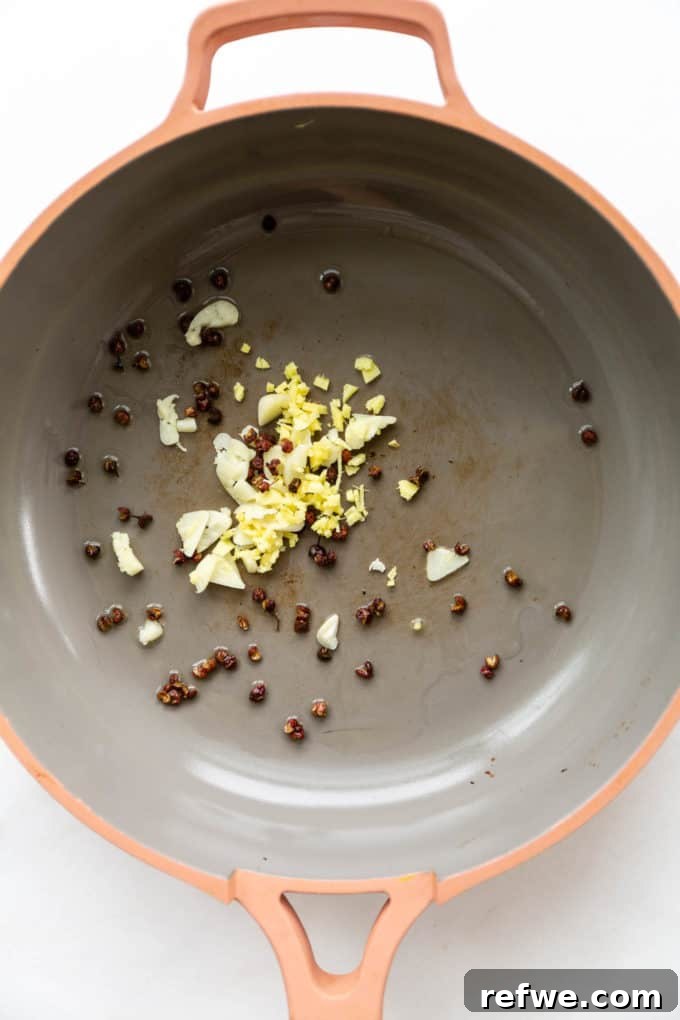
Begin by heating the vegetable oil in a large wok or a deep pan over medium heat. This ensures an even cooking temperature that prevents scorching. While the oil is heating, lightly grind the Sichuan peppercorns using a mortar and pestle. This releases their potent aromas and distinctive numbing qualities, which are crucial for the dish. Once the oil is hot and shimmering, add the ground Sichuan peppercorns, along with the finely minced garlic and ginger. Sauté these aromatics gently for about 30-60 seconds, stirring constantly. The goal is to toast them lightly and release their fragrance, not to burn them, as this can impart a bitter taste. You’ll notice a wonderfully fragrant, slightly pungent aroma filling your kitchen – this is the aromatic foundation of your incredible sauce.
Step 2: Build the Deep Flavor Base
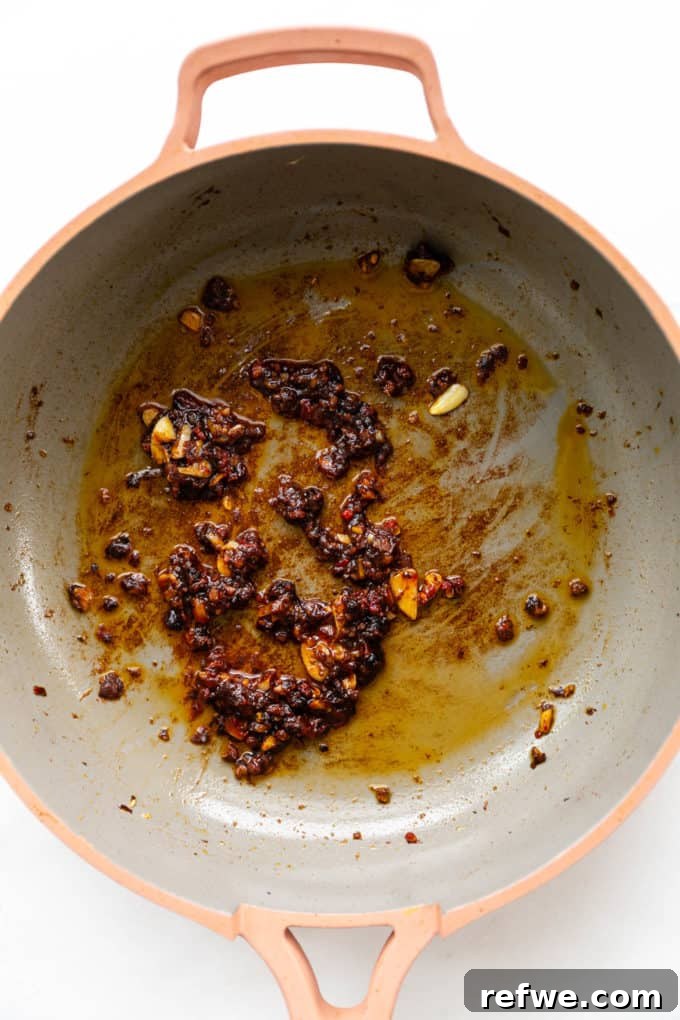
Next, add the essential fermented chili bean paste (Doubanjiang) to the pan with the sautéed aromatics. Stir everything together well, allowing the rich, spicy paste to cook for another minute. This step is crucial for “frying” the Doubanjiang, which deepens its flavor, releases its aromatic oils, and intensifies the umami and heat. Continue stirring to prevent it from sticking to the bottom of the pan and ensure an even distribution of its vibrant color and taste.
Step 3: Simmer the Sauce to Perfection
Pour in the soy sauce, sprinkle in the brown sugar, and then add the vegetable broth to the pan. Stir all the ingredients thoroughly to combine, ensuring the sugar dissolves completely. Bring this mixture to a gentle simmer over medium heat. Allow the sauce to cook for a few minutes, specifically 2-3 minutes, stirring occasionally. During this simmering time, the broth will reduce slightly, and all the complex flavors will deepen and meld together beautifully, creating a more cohesive and robust sauce. Once it begins to visibly thicken, add the cornstarch slurry (which is cornstarch mixed with an equal amount of cold water). Stir continuously as you add it to prevent any lumps from forming, and watch as the sauce rapidly thickens to a glossy, luxurious consistency that perfectly coats the back of a spoon.
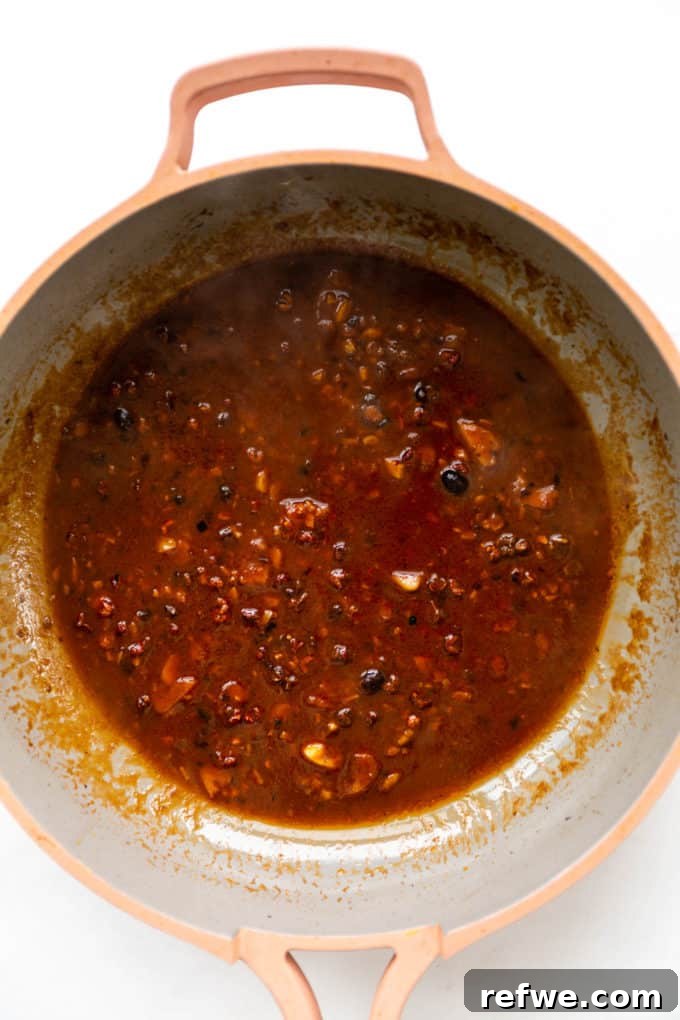
Step 4: Gently Incorporate the Tofu
Reduce the heat to medium-low. Carefully add the soft tofu cubes to the pan, ensuring not to break them up due to their delicate nature. Gently toss or fold the tofu with the rich sauce until each cube is evenly coated and thoroughly warmed through. The goal here is to infuse the tofu with the incredible flavors of the sauce without destroying its delicate, silky texture. Cook for another 2-3 minutes on this low heat, allowing the tofu to gently absorb the sauce’s essence and become infused with the “mala” goodness.
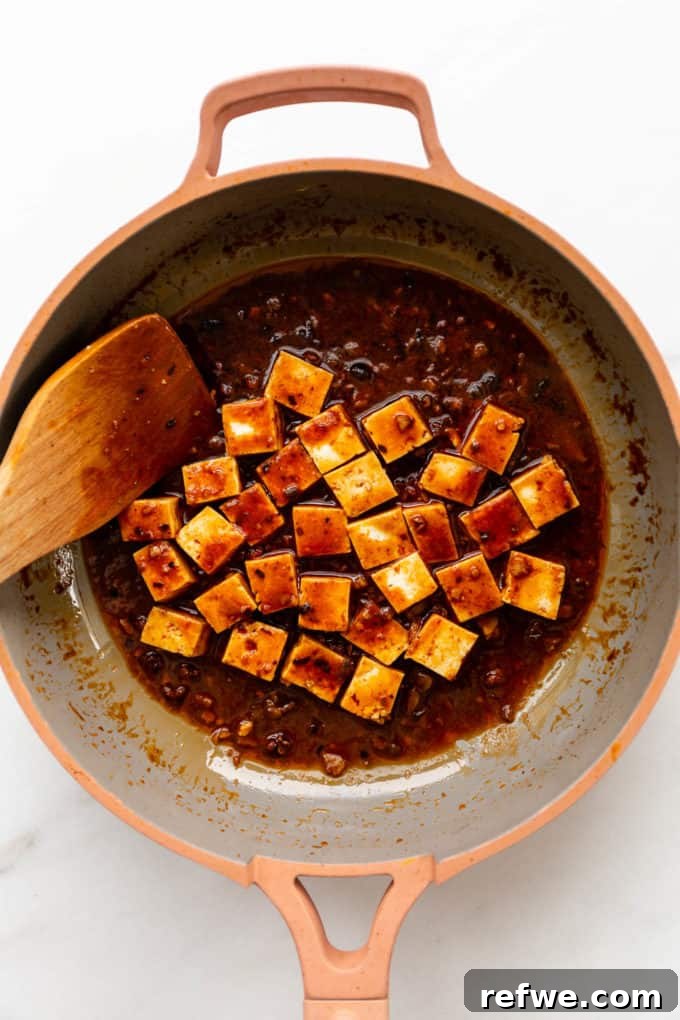
Step 5: Finish and Serve with Flair
Finally, remove the pan from the heat and stir in the toasted sesame oil. This crucial step adds a beautiful aromatic finish and deepens the overall nutty flavor profile, making the dish even more appealing. Pour your freshly made Vegetarian Mapo Tofu into a large serving bowl. Garnish generously with freshly sliced scallions, which provide a delightful pop of color, a fresh, mild oniony crunch, and a welcome contrast to the rich red sauce. Serve immediately while the sauce is still piping hot to fully enjoy its complex, invigorating, and comforting flavors. It’s truly best enjoyed straight from the wok, perhaps alongside a bowl of steaming jasmine rice!
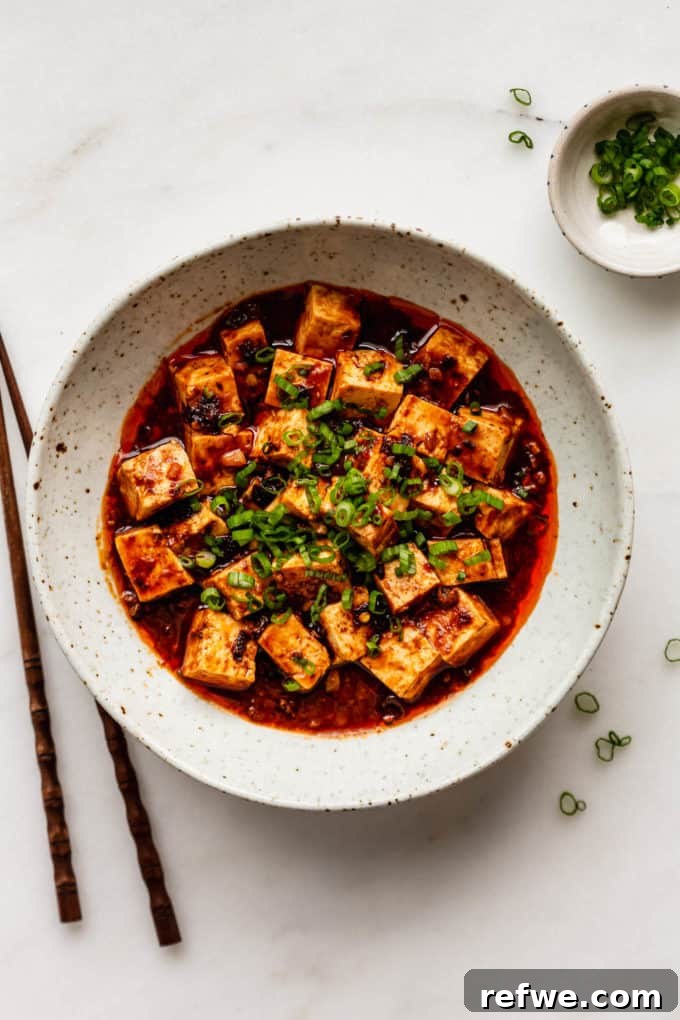
Perfect Pairings: What to Serve with Your Vegan Mapo Tofu
This fiery and flavorful Vegan Mapo Tofu is incredibly versatile and pairs wonderfully with a variety of accompaniments. While it’s certainly substantial enough to be a standalone meal, serving it alongside other dishes can create a more balanced and authentic Chinese dining experience. The most classic and recommended pairing is simple, fluffy white rice, which acts as a perfect canvas to absorb the rich, spicy, and numbing sauce, and helps to temper the heat between bites. Jasmine rice is particularly excellent for its fragrant aroma.
For a complete and wholesome meal, consider adding a side of steamed or lightly stir-fried green vegetables such as bok choy, gai lan (Chinese broccoli), or spinach. Their mild flavor and crisp texture offer a refreshing contrast to the intensity of the Mapo Tofu, providing balance and additional nutrients. If you’re hosting a family-style Chinese dinner, this dish would be an excellent centerpiece alongside other plant-based delights. Consider serving it with other popular vegan Chinese dishes like Orange Cauliflower, which offers a sweet and tangy counterpoint; Vegetarian Chow Mein or Vegetable Lo Mein for a comforting noodle dish; or even a side of Peanut Butter Tofu for another exciting tofu preparation. A light cucumber salad dressed with a touch of vinegar and sesame oil can also provide a wonderfully cooling and refreshing element, enhancing the overall dining experience and offering a palate cleanser from the rich flavors.
Storing and Reheating Your Delicious Leftovers
One of the great things about many rich, saucy dishes like Mapo Tofu is that the flavors often taste even better the next day, as they have more time to meld and deepen. If you find yourself with leftovers of this delectable Vegan Mapo Tofu, proper storage and reheating will ensure you can enjoy it again without compromising on its incredible taste or texture.
To store leftovers: Allow the Vegetarian Mapo Tofu to cool completely to room temperature before transferring it to an airtight container. This prevents condensation and keeps the dish fresh. Store it promptly in the refrigerator, where it will remain delicious for up to 3 days. It’s important to consume it within this timeframe for the best quality and food safety.
To reheat: For the best results, reheat the Mapo Tofu in a pan on the stovetop over medium-low heat, stirring occasionally until it is thoroughly warmed through. You may find that the sauce has thickened more overnight, so don’t hesitate to add a splash of water or vegetable broth to reach your desired consistency while reheating. Alternatively, you can reheat it in the microwave in a microwave-safe bowl. Cover it loosely to prevent splattering and heat in 30-second intervals, stirring in between, until it reaches your desired piping hot temperature. Be careful not to overheat the tofu, as it can alter its delicate texture.
Freezing is not recommended: Unfortunately, tofu, especially soft tofu, does not freeze and thaw well. The texture tends to become rubbery, porous, and grainy after freezing, which would significantly detract from the dish’s appeal and the authentic Mapo Tofu experience. For this reason, it’s best to enjoy this recipe fresh or within the refrigerated timeframe.
Sourcing Specialty Ingredients: Sichuan Peppercorns and Fermented Chili Bean Paste
While many of the ingredients for Mapo Tofu are readily available in most standard supermarkets, two key components—Sichuan peppercorns and fermented chili bean paste (Doubanjiang)—are specialty items that might require a little more searching. However, the effort is truly worth it for the authentic and unparalleled flavor they impart to this iconic Sichuan dish.
You may get lucky and find these in the international or Asian foods aisle of larger, well-stocked grocery stores, but it’s not a guarantee in every location. The absolute best place to find a high-quality selection of these essential ingredients is your local Asian grocery store or Asian market. These stores specialize in Asian culinary products and will offer a wider variety of brands and types of Sichuan peppercorns and chili bean paste. Don’t hesitate to ask store staff for recommendations if you’re unsure which to choose; they are usually very knowledgeable. For Sichuan peppercorns, look for vibrant, reddish-brown husks; for Doubanjiang, you’ll find different varieties, with Pixian Doubanjiang being particularly prized for its deep, complex, and savory flavor derived from a longer fermentation process.
If you don’t have an Asian market conveniently located nearby, online retailers are an excellent and reliable resource. You can often find these specialty ingredients on platforms like Amazon or dedicated Asian food websites. When purchasing online, it’s always a good idea to check product reviews and ensure you’re buying from a reputable seller to guarantee freshness and quality. These ingredients have a significant impact on the final taste, so investing in good quality ones is key:
- High-Quality Sichuan Peppercorns
- Authentic Fermented Chili Bean Paste (Doubanjiang)
Investing a little time in sourcing these authentic ingredients will truly elevate your Mapo Tofu, bringing the vibrant, complex, and unforgettable flavors of Sichuan cuisine right into your home kitchen, making it taste just like it came from a specialty restaurant.
Expert Tips for Mastering Your Vegetarian Mapo Tofu
Achieving a restaurant-quality Vegetarian Mapo Tofu at home is easier than you think, especially with a few insider tips and tricks. Keep these pointers in mind throughout the cooking process to ensure your dish is nothing short of spectacular and authentically delicious:
- Maintain Medium Heat: When toasting the Sichuan peppercorns, garlic, and ginger, always use medium heat. If the heat is too high, these delicate aromatics can burn quickly, resulting in a bitter or acrid taste that will unfortunately permeate and ruin the entire dish. A gentle sizzle and fragrant aroma are what you’re aiming for, allowing their flavors to infuse the oil properly without scorching.
- Choose Soft Tofu, Not Silken: The type of tofu you use is paramount for a traditional Mapo Tofu experience. While both soft and silken tofu are delicate, they are not interchangeable. Soft tofu has a firmer, custard-like texture that holds its shape well when gently tossed, yet remains incredibly tender and absorbent of the sauce. Silken tofu, on the other hand, is too delicate; it will likely disintegrate into a mush when stirred into the hot sauce, ruining the desired texture of the dish. Always double-check the packaging to ensure you have “soft” tofu for the best results.
- Pre-Mix Cornstarch with Cold Water: Never add cornstarch directly to a hot liquid in the pan. Doing so will cause it to clump instantly, creating an unevenly thickened sauce and an undesirable gritty texture. Instead, always dissolve the cornstarch in an equal amount of cold water (creating a smooth “slurry”) before incorporating it into the simmering sauce. This ensures it disperses smoothly and thickens the sauce evenly and beautifully, giving it that characteristic glossy finish.
- Handle Tofu Gently: Soft tofu, as its name suggests, is inherently delicate. Once added to the sauce, stir very gently, using a folding motion rather than vigorous stirring. Use a spoon or spatula to carefully push the sauce over the tofu cubes. This prevents the tofu from breaking apart, maintaining its appealing shape and tender texture throughout the dish.
- Adjust Spice Levels to Your Preference: The heat level of Mapo Tofu can be easily customized. If you prefer a milder dish, you can slightly reduce the amount of Doubanjiang. For those who crave more heat, feel free to add a pinch of dried chili flakes or a dash of chili oil at the very end. Remember, the Sichuan peppercorns provide the unique numbing (má), while the Doubanjiang contributes the spicy (là) heat.
- Don’t Skip the Scallions (or other garnishes): Freshly chopped scallions add a crucial element of freshness, a mild oniony bite, and a vibrant green color that beautifully cuts through the richness and deep red hue of the sauce. Other optional garnishes like a drizzle of homemade chili oil or a sprinkle of toasted sesame seeds can further enhance both the presentation and flavor.
By diligently following these expert tips, you’ll be well on your way to creating a truly spectacular Vegetarian Mapo Tofu that rivals your favorite restaurant version, and perhaps even surpasses it!
Frequently Asked Questions About Vegetarian Mapo Tofu
While truly authentic Mapo Tofu relies on the unique numbing and citrusy sensation of Sichuan peppercorns, if you absolutely cannot find them, you could try using a very small amount of freshly ground black pepper for a hint of warmth, and perhaps a tiny pinch of finely grated lemon zest to mimic a citrusy note. However, please be aware that this will significantly alter the characteristic “má” flavor and the overall authentic taste and mouthfeel of the final dish. Sichuan peppercorns are highly recommended for the genuine experience, so it’s worth seeking them out!
Fermented chili bean paste (Doubanjiang) is quite unique in its complex savory and spicy profile, but if you’re in a pinch, a good substitution would be Gochujang, a Korean chili paste. Gochujang offers a similar deep, fermented chili flavor and a pleasant spiciness, though it tends to be a bit sweeter and less savory than traditional Doubanjiang. Adjust the amount of sugar in the recipe accordingly if using Gochujang, potentially reducing it. Another option, though less ideal, would be to combine chili garlic sauce with a tiny bit of miso paste for depth, but this will change the flavor profile noticeably.
You can indeed use firm tofu, but it won’t yield the same silky, melt-in-your-mouth texture as soft tofu, which is traditional and highly recommended for authentic Mapo Tofu. If you opt for firm tofu, I highly recommend pressing it first to remove excess water. Then, cut it into cubes and pan-fry or bake the tofu until it’s golden brown and slightly crispy on each side before adding it to the sauce. This extra step will significantly enhance its texture and allow it to absorb the sauce better, preventing it from tasting bland, which can sometimes happen with un-fried firm tofu in this particular dish.
This Vegetarian Mapo Tofu recipe can easily be made completely gluten-free with a couple of simple, yet crucial, adjustments. The primary ingredients to carefully check are soy sauce and fermented chili bean paste. Ensure you substitute regular soy sauce with a certified gluten-free soy sauce (such as tamari). Additionally, always check the label of your fermented chili bean paste (Doubanjiang), as while most brands are naturally gluten-free, some may unfortunately contain wheat or other gluten-containing ingredients as fillers or thickeners. With these careful substitutions, you can confidently enjoy a delicious and safely gluten-free Mapo Tofu!
This particular recipe is already designed to be vegetarian and vegan-friendly by simply omitting the traditional minced meat found in classic Mapo Tofu. However, if you want to add a “meaty” texture and an extra layer of umami depth to your plant-based version, there are excellent alternatives. Finely chopped shiitake mushrooms are a fantastic choice; sauté them in the pan with the garlic and ginger until they are browned and fragrant, which brings out their rich, earthy flavor. Other great options include crumbled firm or extra-firm tofu (pre-pressed and lightly browned), or even a high-quality plant-based ground meat substitute, cooked according to package directions before incorporating into the sauce. These additions will give your Mapo Tofu an even heartier and more substantial feel.
Expand Your Tofu Repertoire: Discover More Delicious Tofu Recipes!
If this incredibly flavorful and satisfying Vegetarian Mapo Tofu has convinced you of tofu’s immense potential and versatility, you’ll love exploring these other fantastic tofu-centric dishes from our collection. Each recipe offers a unique flavor profile and beautifully showcases tofu’s ability to transform into a star ingredient, proving it’s much more than just a meat substitute:
- Crispy Pan-Fried Sesame Tofu: A simple yet addictive dish with a delightful crunch.
- Baked Peanut Butter Tofu: A unique and flavorful take on tofu, perfect for those who love nutty and spicy combinations.
- Thai Green Curry Tofu: Dive into aromatic Thai flavors with tender tofu in a creamy, spicy green curry.
- General Tso’s Tofu: A popular takeout classic, made vegetarian and packed with savory-sweet goodness.
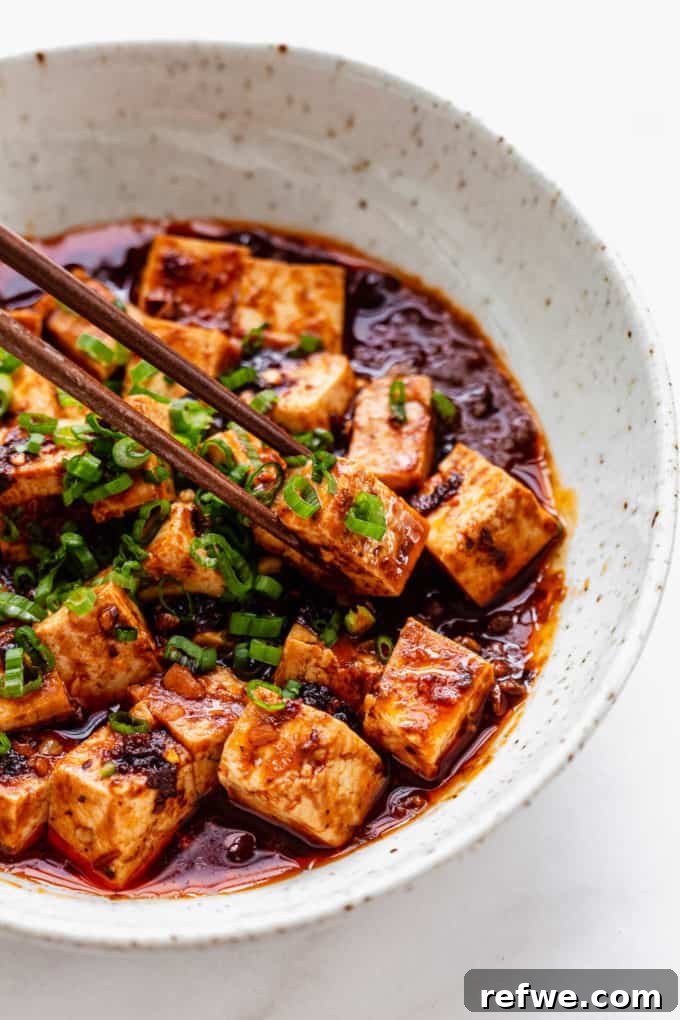
We absolutely love seeing your culinary creations and hearing about your cooking adventures! If you tried this delicious Vegetarian Mapo Tofu or any other recipe from our blog, please let us know how you liked it by leaving a comment and rating below. Your valuable feedback not only helps us grow but also inspires other home cooks to try these amazing dishes! For even more deliciousness, daily recipe inspiration, cooking tips, and updates, be sure to follow along on Pinterest, Instagram, and Facebook. Happy cooking, and enjoy your flavorful plant-based journey!
Print
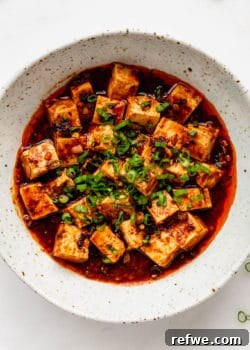
Vegetarian Mapo Tofu
Author: Jessica Hoffman
Prep Time: 10 minutes
Cook Time: 10 minutes
Total Time: 20 minutes
Yield: 4 servings
Category: main
Method: cook
Cuisine: Chinese
Diet: Vegetarian, Vegan
Description
This Vegetarian Mapo Tofu is a savory, spicy, and wonderfully aromatic dish from Sichuan cuisine. Featuring tender soft tofu coated in a rich, flavorful sauce made with authentic Sichuan peppercorns and fermented chili bean paste, it offers a delightful “mala” (numbing and spicy) sensation that will captivate your taste buds. Quick to prepare and naturally vegan-friendly, it’s the ultimate comfort food for a quick weeknight meal or a special occasion, bringing authentic Chinese flavors right to your table.
Ingredients
Units
- 2 tbsp neutral vegetable oil
- 1 tbsp Sichuan peppercorns, lightly crushed
- 1-inch cube fresh ginger, finely minced
- 2 garlic cloves, finely minced
- 2 tbsp fermented chili bean paste (Doubanjiang)
- 1–2 tbsp low-sodium soy sauce (use tamari for GF)
- 1/2 tbsp brown sugar (or white sugar)
- 3/4 cup low-sodium vegetable broth
- 1/2 tbsp cornstarch mixed with 1/2 tbsp cold water (for slurry)
- 1 pack (approx. 14-16 oz) soft tofu, drained and cut into 1-inch cubes
- 1 tsp toasted sesame oil
- Sliced scallions for serving (optional, but highly recommended)
Cook Mode (Interactive features removed)
This feature typically prevents your screen from dimming while cooking, but its interactive functionality is not available here.
Instructions
- Heat 2 tbsp of neutral vegetable oil in a large wok or a deep pan over medium heat until it begins to shimmer.
- Lightly grind the Sichuan peppercorns in a mortar and pestle to maximize their aroma and numbing effect. Add the crushed Sichuan peppercorns, finely minced ginger, and finely minced garlic to the hot oil. Sauté for about 30 seconds to 1 minute, stirring constantly, until the aromatics are fragrant and lightly toasted. Ensure they do not burn. (For a milder numbing effect, you can leave the peppercorns whole or remove them before serving.)
- Stir in the 2 tbsp of fermented chili bean paste (Doubanjiang). Cook for another minute, continuously stirring, to deepen its rich flavor and intensify its vibrant color, allowing its oils to release.
- Pour in 1-2 tbsp of low-sodium soy sauce, 1/2 tbsp brown sugar, and 3/4 cup vegetable broth. Stir all ingredients thoroughly to combine and bring the mixture to a gentle simmer. Let it cook for 2-3 minutes, stirring occasionally, allowing the sauce to reduce slightly and the complex flavors to fully meld together.
- Reduce the heat to medium-low. Add the prepared cornstarch slurry (1/2 tbsp cornstarch mixed with 1/2 tbsp cold water) to the simmering sauce, stirring continuously as you pour. The sauce will rapidly thicken to a glossy, luxurious consistency that will cling beautifully to the tofu.
- Gently add the drained 1-inch soft tofu cubes to the pan. Carefully toss or fold them with the sauce until the tofu is evenly coated and thoroughly warmed through. Cook for another 2-3 minutes on low heat, allowing the tofu to delicately absorb the rich and spicy flavors without breaking apart.
- Remove the pan from heat and stir in 1 tsp of toasted sesame oil for an aromatic finish. Transfer the Vegetarian Mapo Tofu to a large serving bowl and garnish generously with freshly sliced scallions before serving immediately with steamed rice.
Notes
Store any leftover Mapo Tofu in an airtight container in the fridge for up to 3 days. Reheat gently on the stovetop over medium-low heat or in the microwave, adding a splash of water or vegetable broth if the sauce has become too thick overnight.
Always cook the aromatics (Sichuan peppercorns, garlic, ginger) on medium heat. High heat can burn them quickly, leading to a bitter taste that will negatively impact your entire dish.
For the best and most authentic texture in Mapo Tofu, use soft tofu, not silken tofu. Silken tofu is too delicate and will likely fall apart when stirred into the sauce. Firm tofu can be used if pan-fried first until golden brown, but soft tofu provides the traditional melt-in-your-mouth feel.
To avoid lumps and ensure a smooth, glossy sauce, always mix cornstarch with an equal amount of cold water to create a smooth slurry before adding it to the hot pan. This allows for even thickening of the sauce.
Nutrition
- Serving Size: 1/4 of the recipe
- Calories: 245
- Sugar: 4g
- Fat: 16g
- Saturated Fat: 2.5g
- Carbohydrates: 12g
- Fiber: 2g
- Protein: 10.5g