
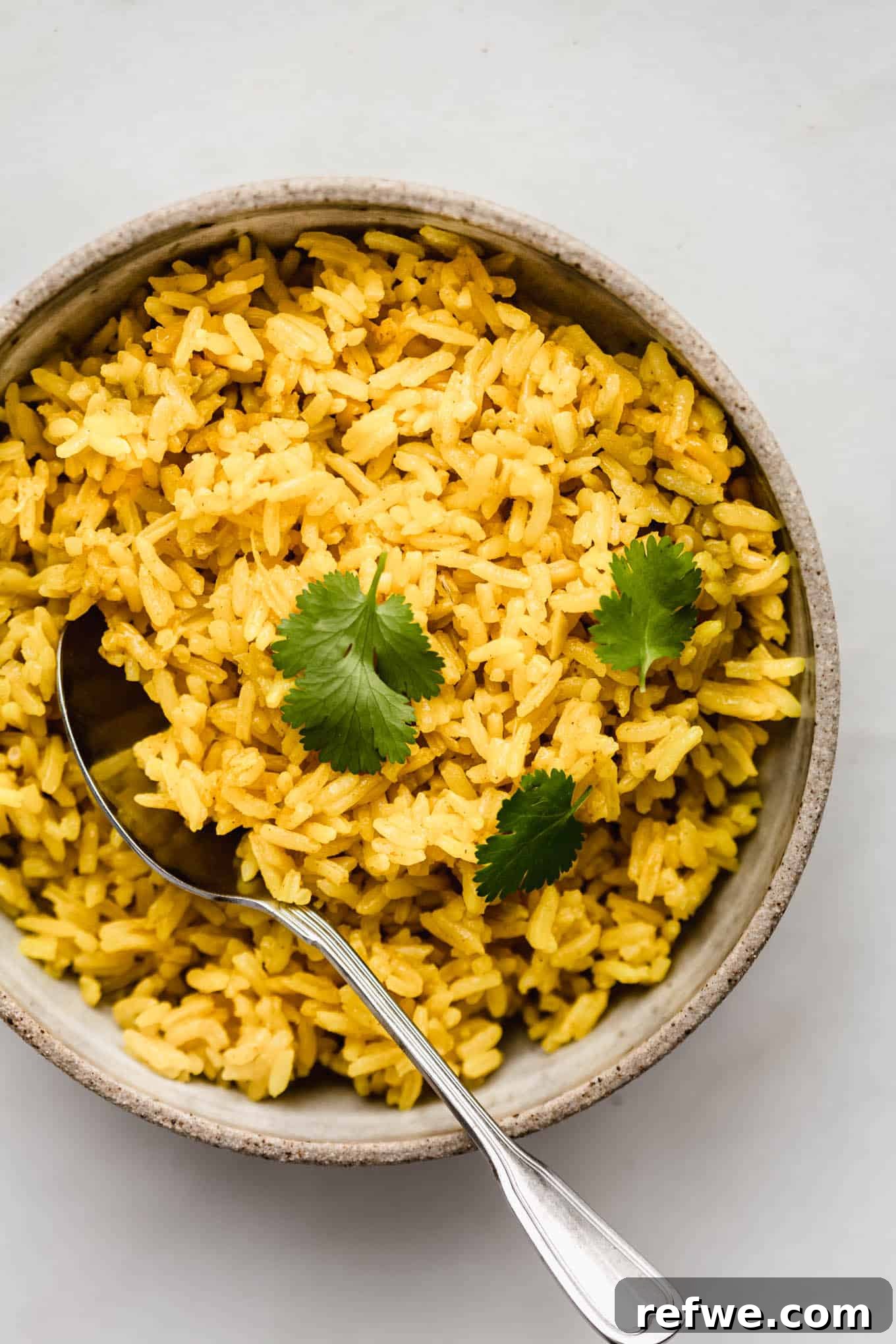
Elevate your mealtime with this incredibly vibrant and healthy Turmeric Rice Recipe. Coming together in under 30 minutes, this golden grain dish is not only visually appealing but also packed with flavor and beneficial nutrients. Enjoy it on its own, as a dynamic side dish, or as a wholesome base for your favorite culinary creations!
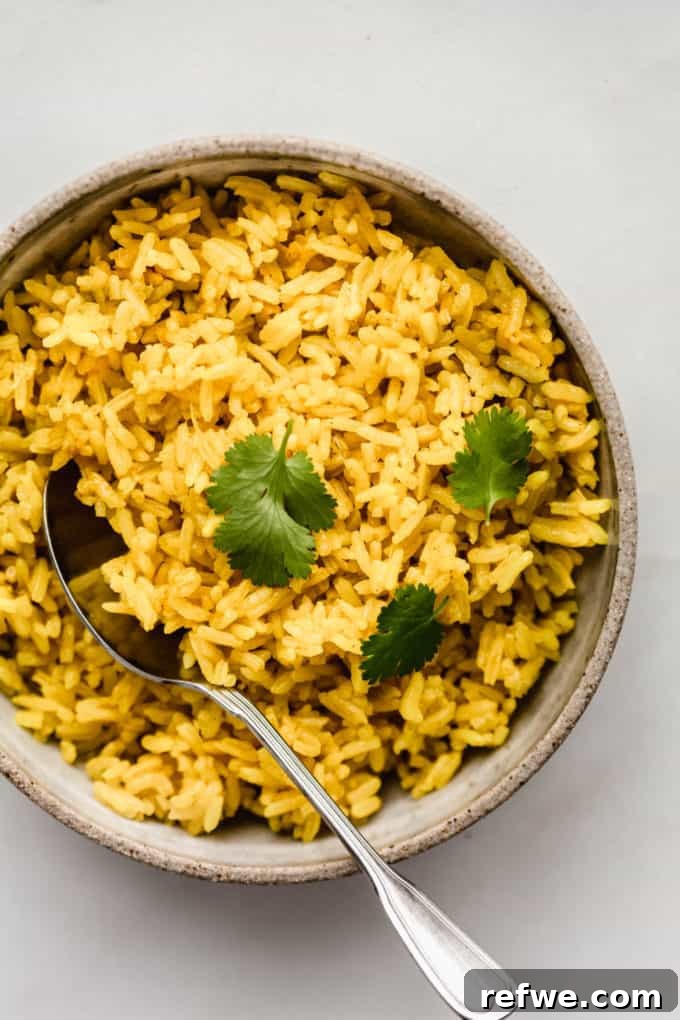
Easy Yellow Turmeric Rice: Your Go-To Healthy Side Dish
There’s something inherently delightful about a bowl of beautifully colored yellow rice. Beyond its stunning appearance, Turmeric Rice offers a depth of flavor that can transform any meal. This simple yet elegant dish is incredibly versatile, making it a perfect accompaniment to a wide array of cuisines. Imagine serving it alongside a rich Tofu Tikka Masala, using it as the flavorful foundation for a vibrant Vegan Burrito Bowl, or simply enjoying it as a delightful side dish with grilled vegetables or protein.
For this recipe, we typically opt for Jasmine rice due to its fragrant aroma and tender texture, which makes it a personal favorite. However, feel free to experiment with other rice varieties like fluffy Basmati rice, or even a long-grain white rice. The key is to choose a rice that you love and that complements your meal.
What Exactly Is Turmeric? Unveiling the Golden Spice
Turmeric, often hailed as “the golden spice,” is much more than just a coloring agent. It originates from the root of a flowering plant, Curcuma longa, which is native to India and Southeast Asia. For centuries, this vibrant yellow-orange spice has been a cornerstone in traditional Indian and Middle Eastern cooking, imparting not only its signature color but also a unique earthy, slightly peppery, and subtly bitter flavor profile.
Beyond the culinary world, turmeric has a long history in traditional medicine, particularly Ayurveda, where it’s valued for its potent medicinal properties. The active compound in turmeric, curcumin, is responsible for most of these benefits. Modern science has begun to explore and validate many of these traditional uses, solidifying turmeric’s reputation as a powerful superfood.
Why Choose Turmeric Rice? A Deep Dive into Its Health Benefits
Incorporating turmeric rice into your diet is a delicious way to enjoy several health advantages. Turmeric is renowned for being naturally rich in antioxidants and possessing significant anti-inflammatory properties. Curcumin, the primary active component, has been extensively studied for its ability to combat inflammation at a molecular level, potentially aiding in the management of various chronic conditions.
Furthermore, turmeric has been linked to improved digestion, promoting a healthy gut environment, and even enhancing skin health by contributing to a natural glow. While a single serving of turmeric rice may contain a relatively small amount of turmeric (typically around 1/2 teaspoon for four servings), it still contributes to your overall dietary intake of this beneficial spice. When combined with the inherent nutritional value of rice—providing complex carbohydrates for energy, fiber (especially in brown rice), and some protein—turmeric rice becomes a wholesome and nourishing meal component. It’s a simple yet effective way to infuse your daily meals with a touch of wellness.
Mastering the Golden Hue: How Much Turmeric to Use for Perfect Rice
Achieving the perfect balance of color and flavor in turmeric rice is key. While you want that beautiful golden yellow, too much turmeric can lead to an overpowering, almost medicinal taste. Here’s a simple guideline to ensure your rice is just right:
- For Turmeric Powder: Use 1/2 teaspoon of powdered turmeric per 1 cup of uncooked rice. This ratio delivers a vibrant color without overwhelming the subtle flavors of the dish.
- For Fresh Turmeric: If you’re using fresh, grated turmeric root, opt for approximately 1 teaspoon per 1 cup of uncooked rice. Fresh turmeric has a milder flavor and a slightly different intensity compared to its powdered form.
It’s generally recommended not to exceed 1/2 teaspoon of powdered turmeric per cup of rice. Remember, a little goes a long way when it comes to imparting color. Both powdered and fresh turmeric work wonderfully in this recipe, so choose what’s most convenient for you. Fresh turmeric might add a slightly brighter, more pungent aroma, while powdered turmeric offers consistent results and is readily available.
The Art of Making Turmeric Rice: A Simple Step-by-Step Guide
Crafting perfect turmeric rice is surprisingly straightforward and requires minimal effort. Follow these steps for a fluffy, flavorful, and beautifully golden result:
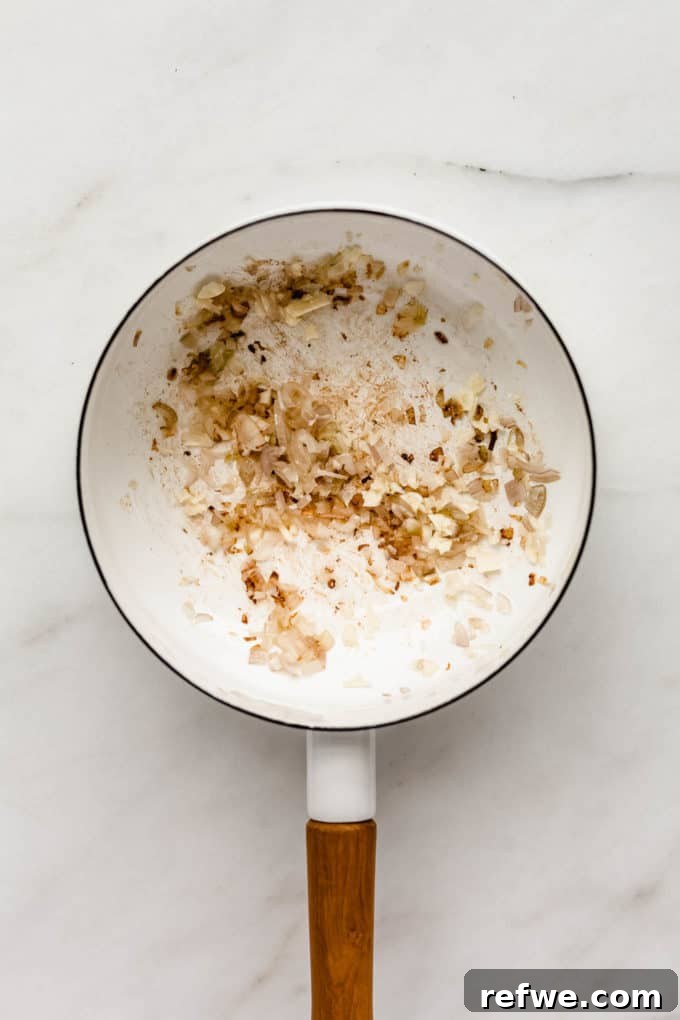
- Aromatic Foundation: Begin by heating a tablespoon of avocado oil (or your preferred cooking oil) in a medium-sized pot or saucepan over medium-high heat. Once shimmering, add the finely chopped shallots and garlic. Sauté them gently for about 2 minutes, until they become fragrant and translucent. This step builds a foundational layer of aromatic flavor for your rice.
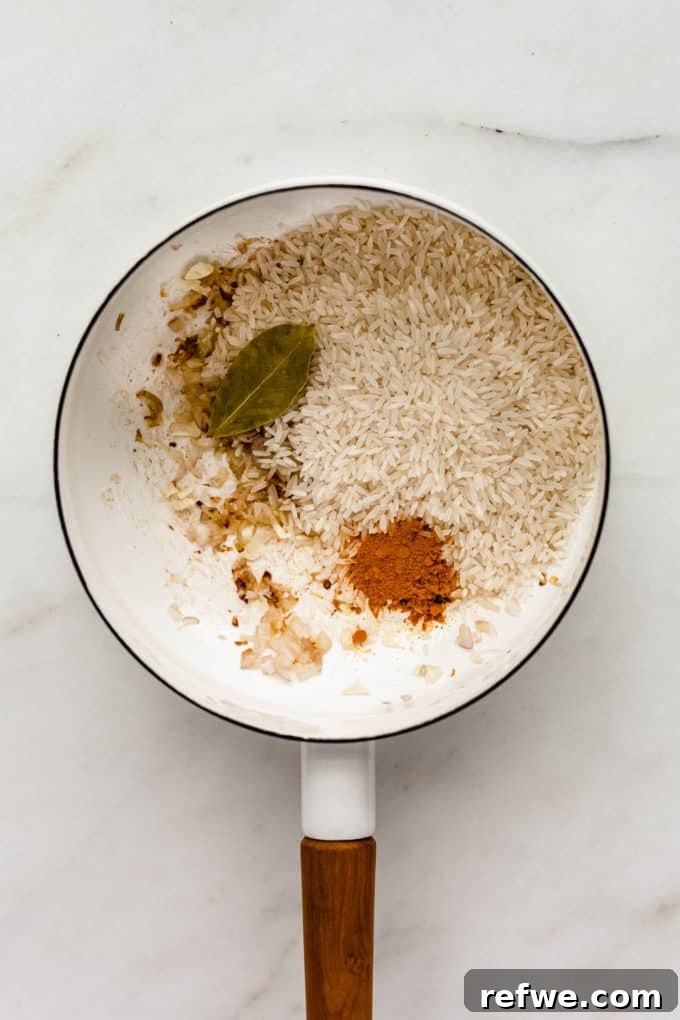
- Infuse the Flavors: Add the uncooked rice to the pot, followed by the turmeric powder, a generous pinch of ground black pepper (which helps in the absorption of curcumin), and a bay leaf. Stir everything together thoroughly, ensuring each grain of rice is coated with the aromatic oil and spices. Continue to stir for another minute or so, allowing the rice to toast slightly and absorb the flavors.
- Simmer to Perfection: Carefully pour in the vegetable stock. Bring the liquid to a rolling boil over high heat. Once boiling, immediately reduce the heat to low, cover the pot tightly with a lid, and let it simmer undisturbed for 20 minutes. Avoid lifting the lid during this time to prevent steam from escaping, which is crucial for even cooking.
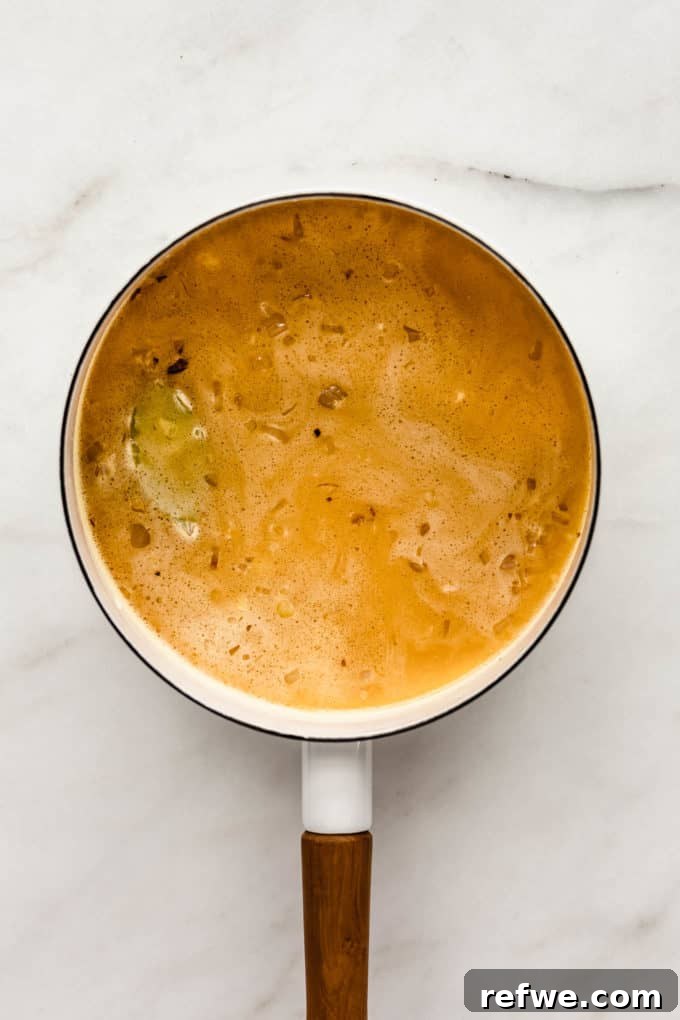
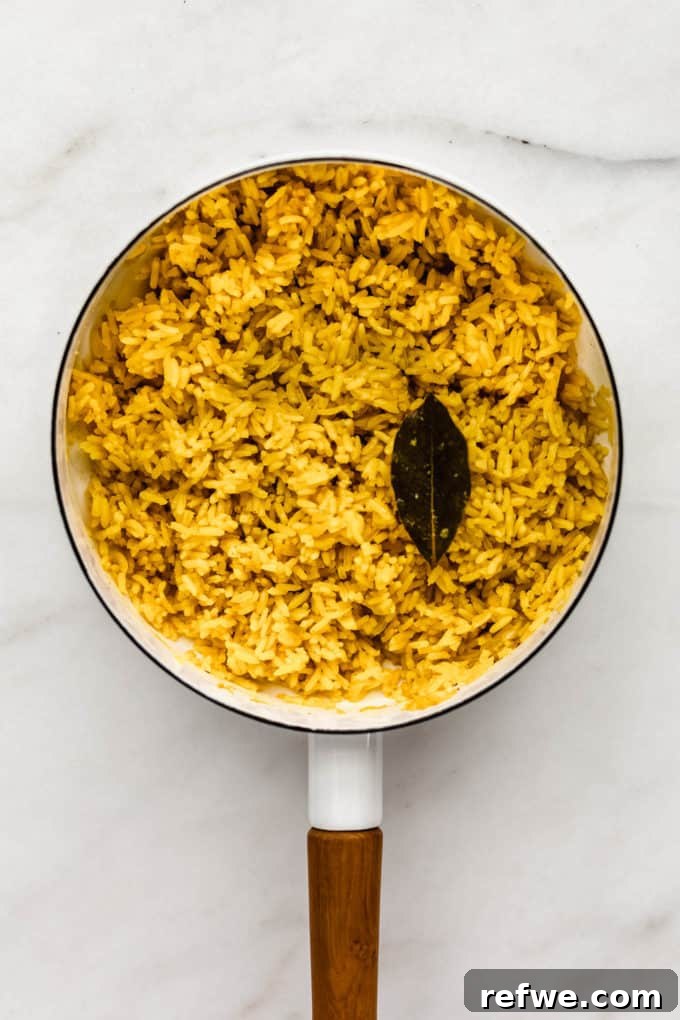
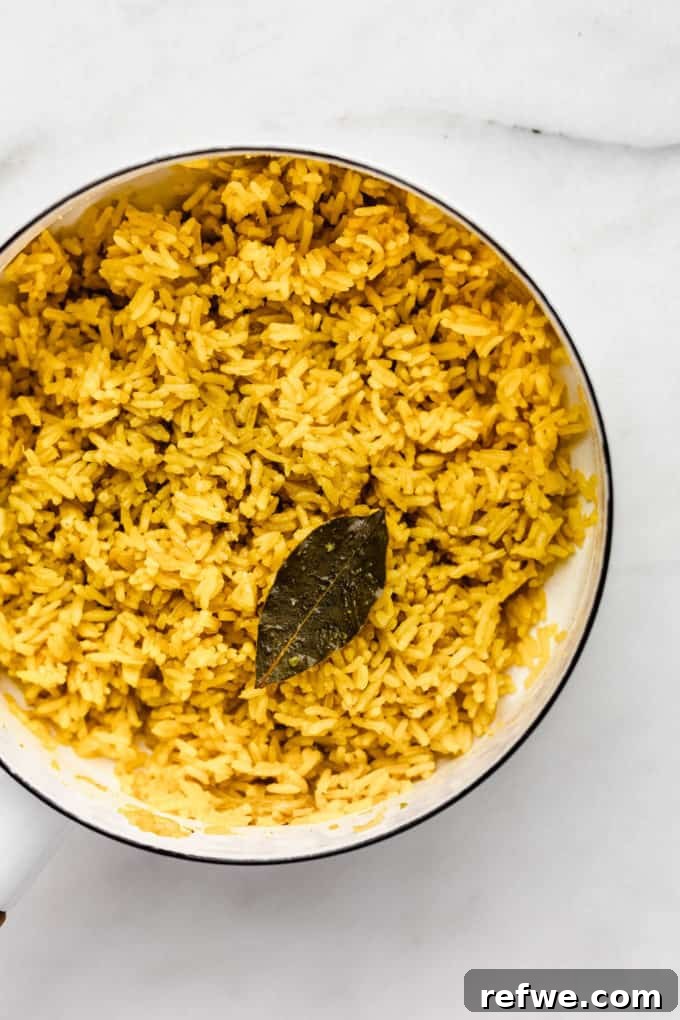
- Fluff and Serve: Once the 20 minutes are up, remove the pot from the heat and let it rest, still covered, for another 5-10 minutes. This allows the steam to redistribute and ensures perfectly tender grains. Finally, remove the lid and gently fluff the rice with a fork. This separates the grains and releases any remaining steam, preventing mushiness. Your golden, aromatic turmeric rice is now ready to be served!
Exciting Turmeric Rice Variations to Explore
While classic turmeric rice is delightful on its own, it also serves as a fantastic canvas for creative culinary experimentation. Here are a few popular variations to inspire your next meal:
1. Creamy Coconut Turmeric Rice:
- For a wonderfully rich and slightly sweet twist, substitute 1 cup of the vegetable stock with 1 cup of full-fat coconut milk. This creates a luxurious, aromatic rice perfect for pairing with Southeast Asian curries or grilled fish. Adjust the total liquid to maintain the 2:1 ratio for rice to liquid.
2. Light & Healthy Cauliflower Turmeric Rice:
- If you’re looking for a lower-carb alternative, cauliflower rice is an excellent choice. Instead of regular rice, pulse fresh cauliflower florets in a food processor until they resemble rice grains. Sauté the shallots, garlic, and turmeric in a large pan, then add the cauliflower rice. Sauté until the cauliflower is tender-crisp, seasoning generously with salt and pepper to taste. This version is fantastic with stir-fries or as a light base.
3. Hearty Turmeric Rice with Brown Rice:
- For a more robust and fiber-rich option, use brown rice. Keep in mind that brown rice typically requires more liquid and a longer cooking time than white rice. Always consult the package instructions for your specific type of brown rice to determine the correct liquid-to-rice ratio and cooking duration. Generally, brown rice might need 2.5 to 3 cups of liquid per 1 cup of rice and can cook for 30-45 minutes.
4. Lemon Herb Turmeric Rice:
- After fluffing the cooked turmeric rice, stir in the zest and juice of half a lemon, along with a handful of fresh chopped parsley or cilantro. This adds a bright, zesty, and refreshing dimension to the dish, making it a great accompaniment to Mediterranean or grilled dishes.
Frequently Asked Questions About Turmeric Rice
While exact figures can vary based on ingredients and portion size, one cup of cooked turmeric rice made with white rice typically contains approximately 200-220 calories. This includes the added oil and turmeric, making it a relatively moderate calorie side dish.
Yes, absolutely! Pilau rice, often spelled Pulao, is a popular Indian rice dish that is characterized by its aromatic spices and beautiful yellow color. Turmeric is indeed a key ingredient in most traditional pilau recipes, giving it that characteristic golden hue and a subtle earthy flavor. It’s often served alongside rich curries and gravies.
The vibrant yellow color of turmeric rice comes directly from the turmeric itself! Turmeric contains a natural pigment called curcumin, which is a powerful coloring agent. Just a small amount of turmeric powder or fresh grated turmeric is enough to transform plain white rice into a striking golden dish, without the need for artificial dyes.
When used in the right proportion, turmeric imparts a mild, earthy, and slightly peppery flavor to rice. It’s not overwhelming, but rather adds a warm, subtly exotic undertone that enhances the natural taste of the rice. Think of it as elevating plain rice with a hint of something extra and wonderfully aromatic. It’s a flavor that beautifully complements a wide range of savory dishes.
Turmeric is incredibly versatile and pairs well with numerous foods. It’s a staple in Indian and Southeast Asian cuisine, so it’s excellent with various curries (lentil, chickpea, vegetable, tofu), stews, and roasted vegetables. It also complements chicken, fish, and legumes beautifully. Beyond savory dishes, turmeric is increasingly found in health-focused drinks like golden lattes, smoothies, and even some baked goods for its flavor and health benefits.
Pro Tips for Making Perfect Turmeric Rice Every Time
Even though turmeric rice is simple, a few expert tips can ensure your dish is consistently flawless:
- Measure Turmeric Accurately: As highlighted earlier, precision is key with turmeric. Stick to the 1/2 tsp powdered turmeric per 1 cup of rice ratio. Too much can result in an overpowering, sometimes bitter, flavor.
- Know Your Rice: Different types of rice have varying cooking requirements. If you’re using anything other than Jasmine or Basmati (like brown rice, wild rice, or parboiled rice), always check the packaging for specific liquid ratios and cooking times. Adjust accordingly to prevent undercooked or mushy rice.
- Adjust Salt to Taste: If you’re using a low-sodium vegetable stock, you might find the rice needs a little extra seasoning. Consider adding about 1/4 teaspoon of salt to the liquid before cooking, or simply season the cooked rice to taste after fluffing.
- Rinse Your Rice (Optional but Recommended): For fluffier, less sticky rice, especially with Jasmine or Basmati, rinse the uncooked grains under cold water until the water runs clear. This removes excess starch. Drain well before adding to the pot.
- Don’t Peek or Stir During Simmering: Once the lid is on and the rice is simmering, resist the urge to peek or stir. This traps the steam necessary for even cooking and prevents the rice from becoming gluey.
- Allow Resting Time: After cooking, let the rice rest, covered, for 5-10 minutes off the heat. This crucial step allows the residual steam to finish cooking the grains and firm them up, resulting in perfectly separated, fluffy rice.
- Storage and Reheating: Store leftover turmeric rice in an airtight container in the refrigerator for up to a week. To reheat, you can use a microwave (add a splash of water and cover to re-steam) or gently warm it in a pan on the stovetop with a little water or broth.
Delicious Serving Suggestions for Your Golden Rice
Turmeric rice is an incredibly versatile side dish that pairs wonderfully with a wide range of meals. Its earthy flavor and vibrant color make it a perfect complement to both simple and elaborate dishes. Here are some inspiring serving suggestions to get you started:
- Classic Indian Pairings: Serve with any rich and aromatic Indian curry, such as a creamy Vegetable Korma, a hearty Red Lentil Curry, or a comforting Chickpea Pumpkin Curry.
- Asian-Inspired Dishes: It’s a fantastic base for stir-fries or alongside dishes like flavorful Sticky Tofu, a spicy Thai Green Curry, or crispy Kung Pao Cauliflower.
- Hearty Stews & Chilis: Turmeric rice can soak up the delicious flavors of a robust stew or chili, like a warming Instant Pot Vegan Chili.
- Grilled Proteins & Vegetables: Pair it with grilled chicken, fish, or plant-based skewers. The subtle spice of the rice balances beautifully with smoky flavors.
- Bowl Meals: Use it as the nutritious foundation for any power bowl, topped with roasted vegetables, legumes, fresh greens, and a drizzle of your favorite sauce.
- As a Simple Side: Enjoy it simply on its own with a squeeze of lime juice and fresh herbs for a light, satisfying meal.
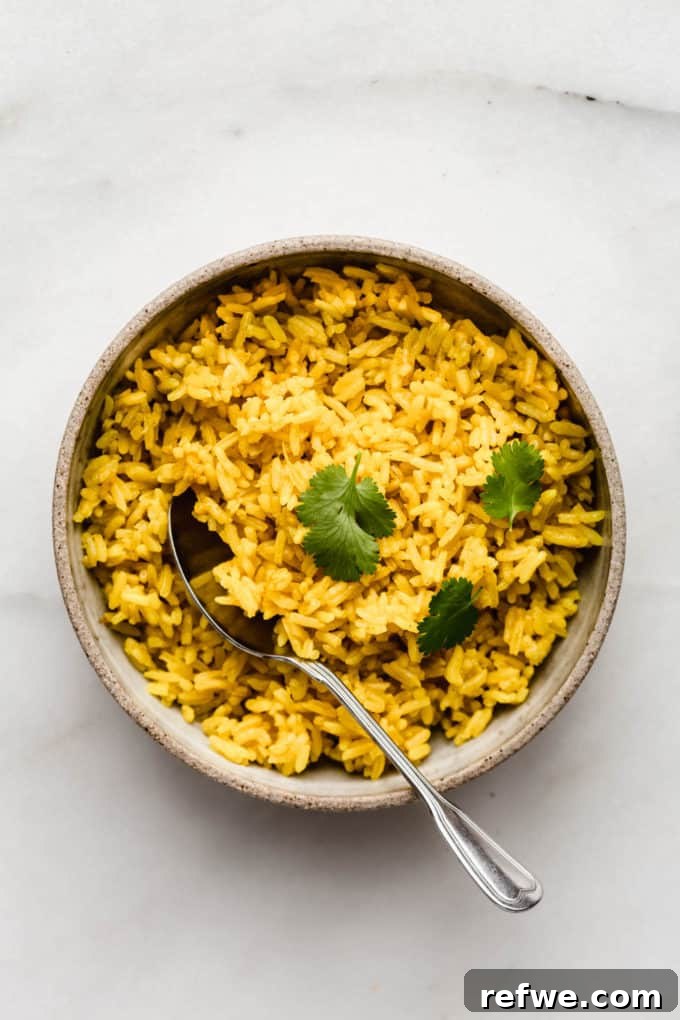
We hope you love this easy and healthy Turmeric Rice recipe as much as we do! It’s a wonderful way to add color, flavor, and beneficial nutrients to your daily meals. If you tried this Turmeric Rice or any other recipe on our blog, we’d love to hear from you! Please let us know how you liked it by leaving a comment and rating below. Don’t forget to follow along on Pinterest, Instagram, and Facebook for even more delicious and healthy recipe inspirations!
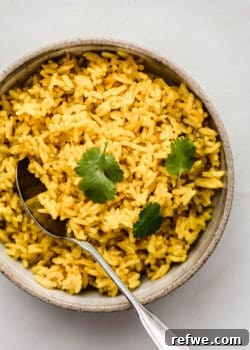
Turmeric Rice
- Author: Jessica Hoffman
- Prep Time: 5 minutes
- Cook Time: 20 minutes
- Total Time: 25 minutes
- Yield: 4 servings
- Category: Side
- Method: Cook
- Cuisine: Indian
- Diet: Gluten Free
Description
This Turmeric Rice is SO tasty and great served as a side or a base for any dish you love!
Ingredients
- 1 tbsp avocado oil (or vegetable oil)
- 2 shallots, finely chopped
- 2 garlic cloves, finely chopped
- 1 cup jasmine rice
- 1/2 tsp turmeric
- 1/2 tsp ground black pepper
- 1 bay leaf
- 2 cups vegetable stock
Instructions
- Heat the avocado oil in a pot on medium-high heat, then add the shallots and garlic and saute for 2 minutes.
- Next add the rice, turmeric, pepper and bay leaf and mix together.
- Pour in the broth and bring everything to a boil, then reduce and let simmer for 20 minutes. Remove the lid and fluff up the rice.
- Serve with whatever you like!
Notes
Do not add too much Turmeric! It can have quite a strong taste if there is too much. Measure out 1/2 tsp for 1 cup of rice.
If you are using a different type of rice than used in the recipe, be sure to consult the packaging of rice to check the cooking time. Different types of rice can have slightly different cooking times.
If using a low sodium vegetable stock, you may want to add in some salt to season the rice. You can add 1/4 tsp to the liquid, or just season it at the end.
Store this rice in an air-tight container in the fridge for up to a week. Reheat in a pan on the stove or in the microwave.
Nutrition
- Serving Size: 1/4 of recipe
- Calories: 200
- Fat: 3.5g
- Carbohydrates: 38g
- Fiber: 2g
- Protein: 3.5g