
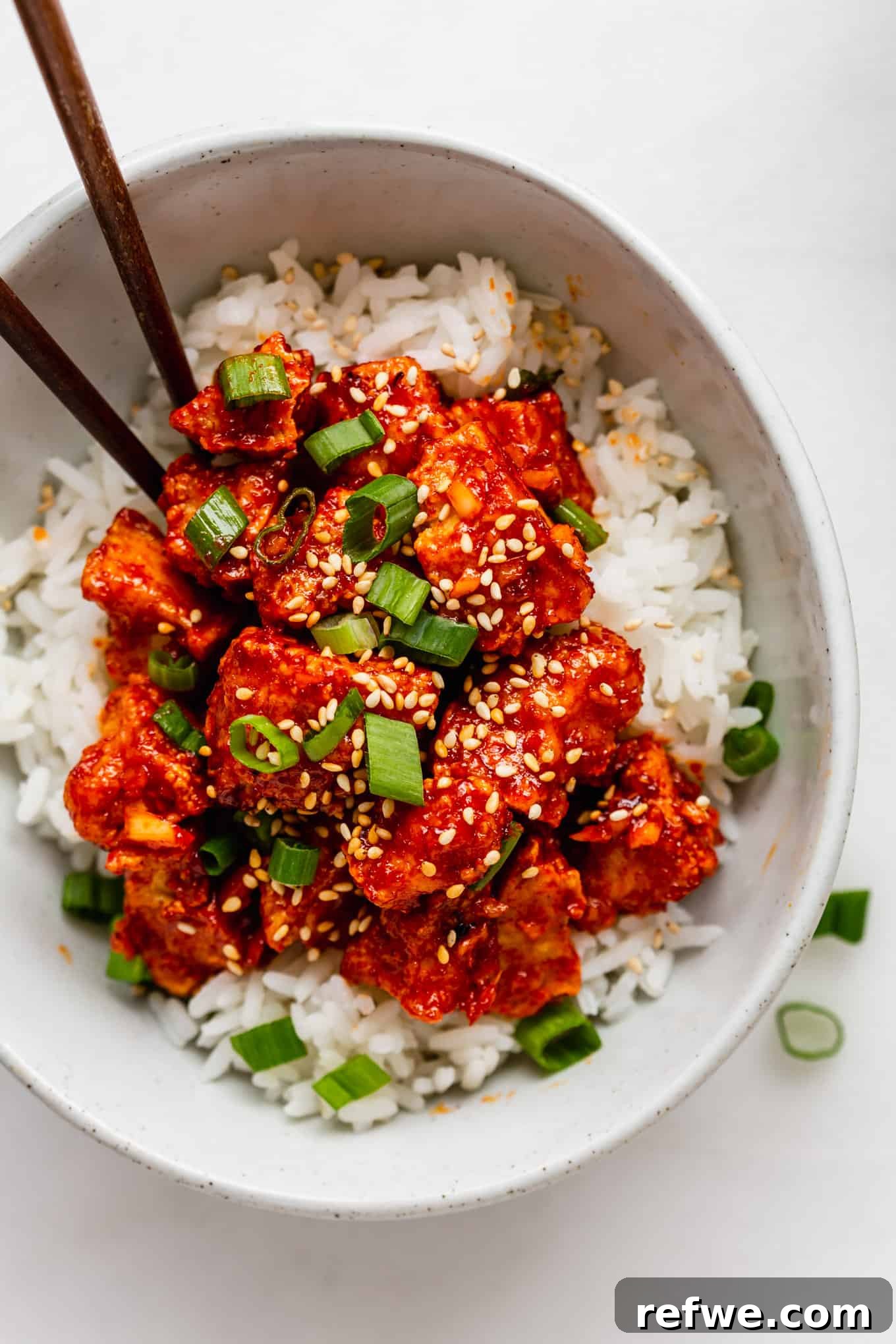
Gochujang Tofu: Your New Favorite Spicy, Crispy, High-Protein Vegan Meal
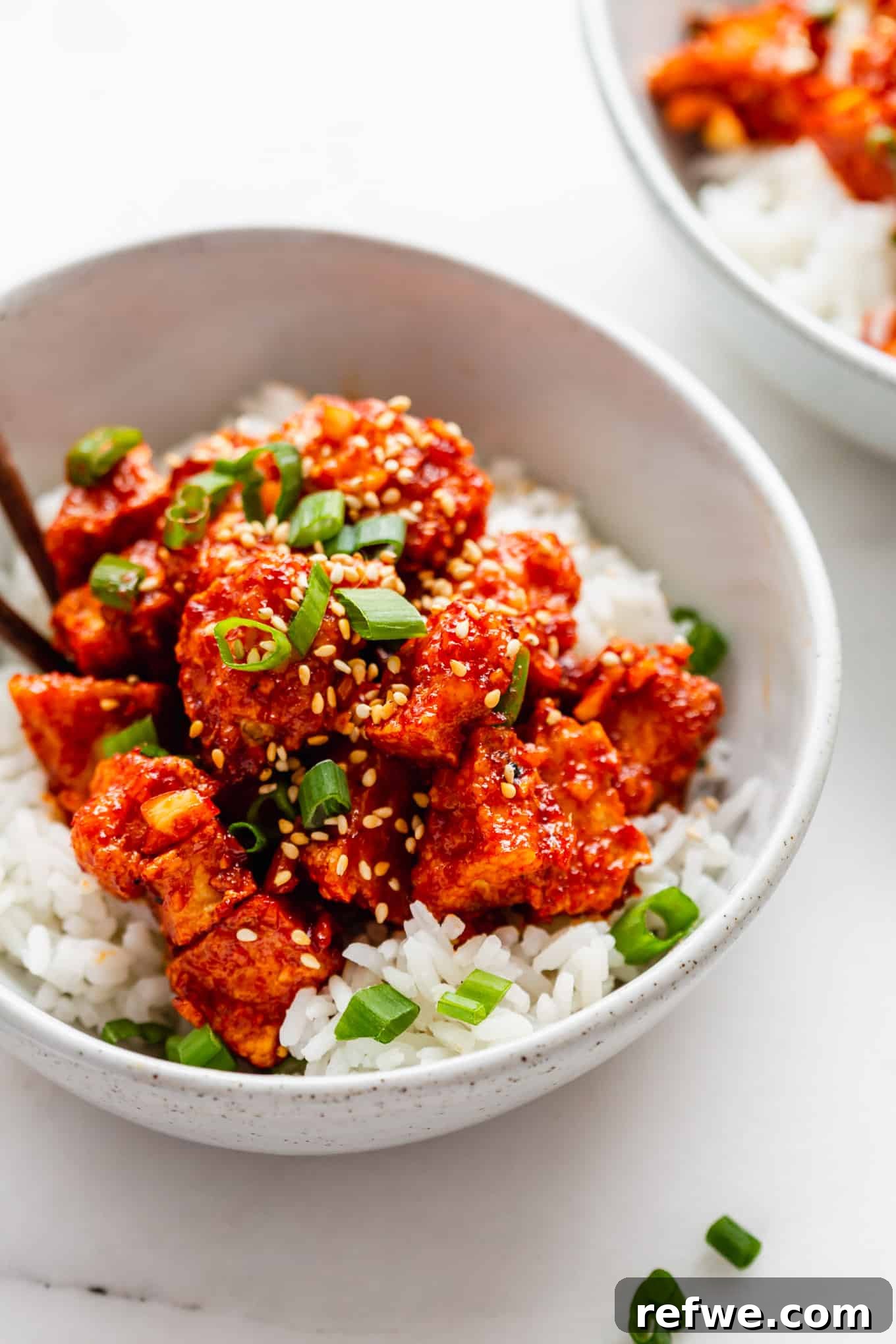
Prepare your taste buds for an explosion of flavor with this incredible Gochujang Tofu recipe! If you’re searching for a dish that’s bold, spicy, and deeply satisfying, look no further. This recipe transforms humble tofu into perfectly crispy, golden nuggets, then generously coats them in a luscious, sticky Korean-inspired Gochujang sauce. It’s a culinary masterpiece that comes together in just 30 minutes, delivering a remarkable 24 grams of plant-based protein per serving. Whether served over fluffy rice, tossed with slurpable noodles, or alongside your favorite veggies, this Gochujang Tofu promises an unforgettable dining experience.
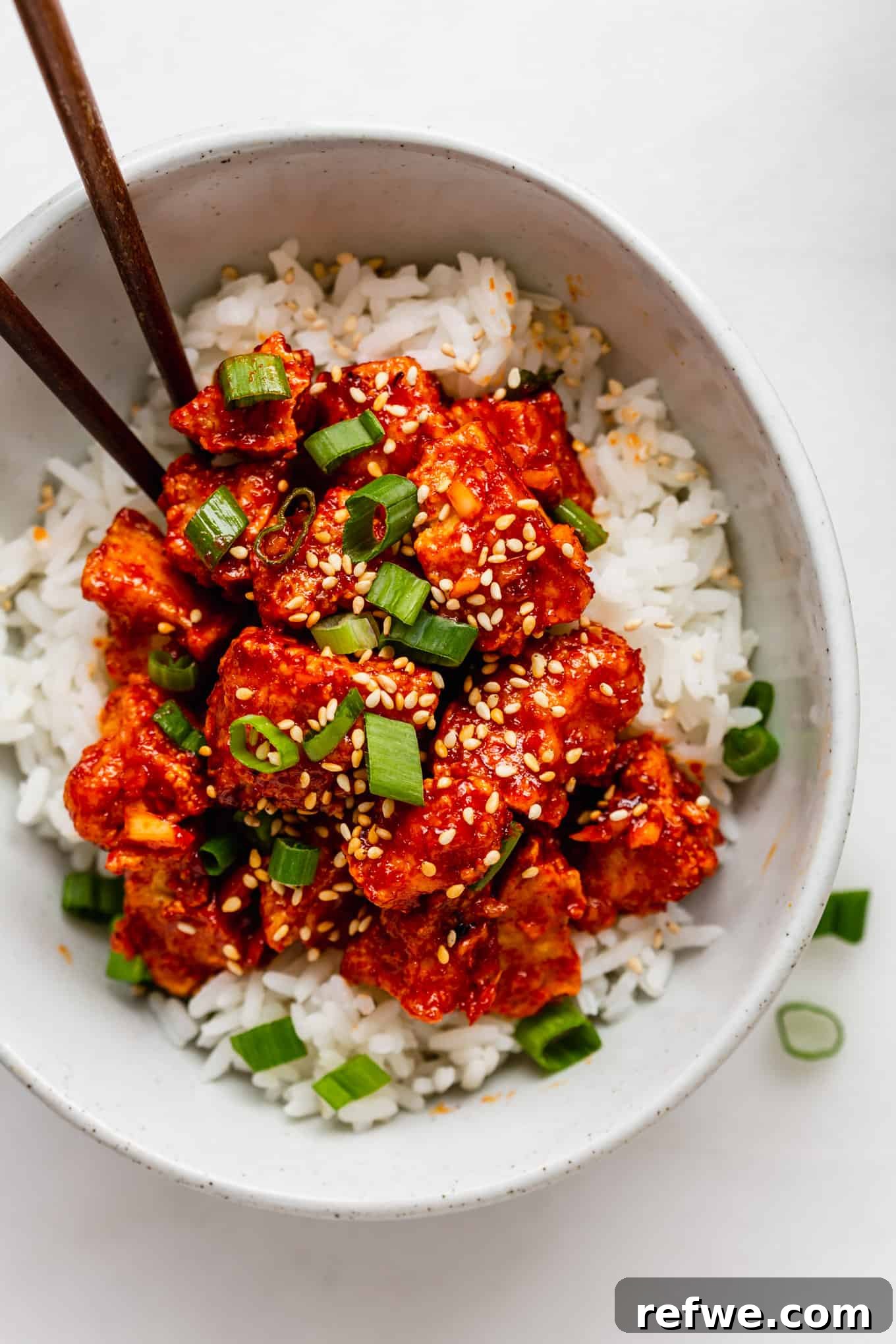
Table of Contents
- Recipe Overview
- Why You’ll Love This Gochujang Tofu
- Essential Ingredients
- Customize Your Gochujang Tofu
- How To Make Gochujang Tofu: A Step-by-Step Guide
- Delicious Ways To Serve
- Storage and Expert Tips
- Frequently Asked Questions
- Explore More Tofu Recipes!
- Printable Gochujang Tofu Recipe Card
Introduction to Korean Gochujang Tofu
If you’ve been on the hunt for a tofu recipe that truly delivers on flavor and excitement, this Gochujang Tofu is about to become your culinary obsession. While classic recipes like Crispy Sesame Tofu, a quick Tofu Stir Fry, or sweet and sour Sticky Tofu are regulars in many households, this Korean-inspired Gochujang Tofu brings a unique and irresistible twist. It’s quickly ascended the ranks to become a new family favorite, appreciated even by those who typically shy away from plant-based proteins.
Having crafted countless viral tofu dishes over the years, shared across platforms like the Choosing Chia Instagram with millions of views, I understand exactly what makes a tofu recipe truly outstanding. This Gochujang Tofu is designed to impress, offering a perfect balance of texture and a rich, complex flavor profile that will convert even the most skeptical eaters – my tofu-averse husband included!
This versatile dish pairs beautifully with a variety of sides. Spoon it over fluffy Quinoa Fried Rice for a complete meal, toss it with savory sesame noodles, or serve it alongside a vibrant assortment of steamed or stir-fried vegetables. It’s a guaranteed crowd-pleaser that is both satisfying and incredibly nutritious.
Why You’ll Love This Gochujang Tofu: Recipe Highlights
This Gochujang Tofu isn’t just another weeknight meal; it’s a culinary experience packed with benefits. Here’s why this recipe deserves a permanent spot in your rotation:
- Explosion of Flavor: The star of this dish, Gochujang paste, creates a sauce that is robust, subtly sweet, and wonderfully spicy. Its unique umami depth combined with savory and tangy notes ensures every bite of tofu is bursting with flavor, delivering a truly addictive kick. For an extra spicy adventure, consider pairing it with some zesty Spicy Chili Oil Noodles.
- Impressively High in Protein: Each generous serving provides approximately 24 grams of complete plant-based protein. This makes it an excellent choice for vegans, vegetarians, or anyone looking to incorporate more wholesome protein into their diet without sacrificing taste. It’s perfect for fueling your body and keeping you feeling full and satisfied.
- Effortless Weeknight Meal: Designed for convenience, this entire dish is ready from start to finish in about 30-35 minutes. It relies on readily available pantry staples, meaning you can whip up a gourmet-tasting meal even on your busiest evenings without a fuss. Minimal prep, maximum flavor!
- Naturally Vegan and Gluten-Free (with a simple swap): Crafted entirely from simple, whole-food ingredients, this Gochujang Tofu is naturally vegan. For our gluten-sensitive friends, simply ensure you select a certified gluten-free Gochujang paste and use tamari instead of traditional soy sauce. It’s a deliciously inclusive recipe that caters to various dietary needs without compromise.
Essential Ingredients for Perfect Gochujang Tofu
Crafting this flavorful Gochujang Tofu relies on a few key ingredients. Here’s a closer look at what you’ll need and why each component is vital:
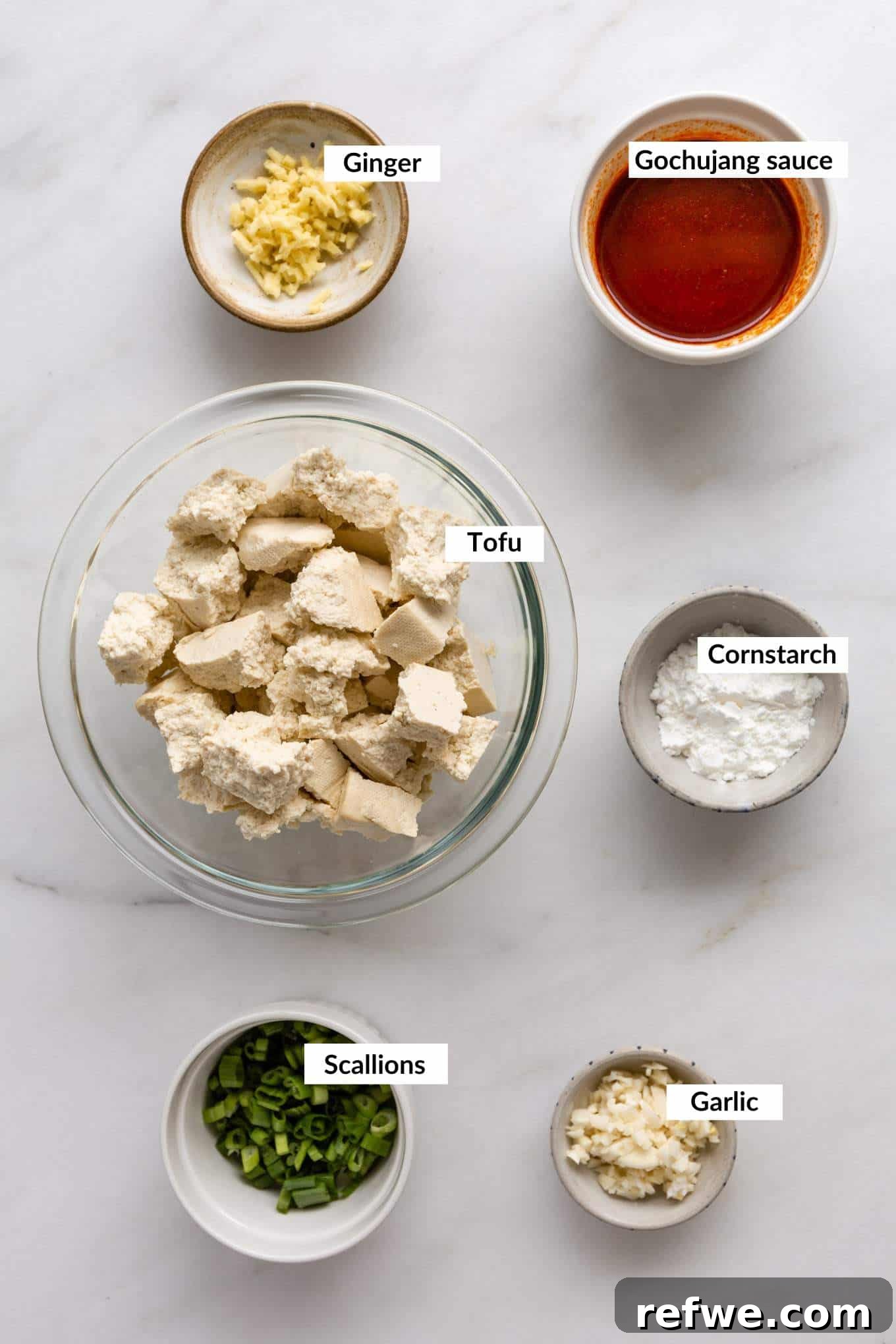
- Extra Firm Tofu: This is the backbone of our crispy Gochujang Tofu. Extra-firm or firm tofu is crucial because its lower water content allows it to achieve that coveted crispy exterior when baked or air-fried. While you *can* use softer tofu, like in this rich Vegetarian Mapo Tofu recipe, be aware that the final texture will be significantly different – more delicate and less toothsome. Always remember to press your tofu thoroughly to remove excess moisture for the best results!
- Authentic Gochujang Paste: The true heart and soul of this Korean-inspired dish. Gochujang is a savory, sweet, and spicy fermented chili paste that offers an incredible depth of flavor. You’ll typically find it in the Asian foods aisle of larger grocery stores or, for an even wider selection, at your local Asian market. For those following a gluten-free diet, always double-check the label, as some brands may contain wheat.
- Avocado Oil & Cornstarch: These are the secret weapons for achieving perfectly crispy tofu without deep-frying. Avocado oil has a high smoke point, ideal for baking at higher temperatures, while cornstarch creates a thin, crisp coating that locks in moisture and helps brown the tofu beautifully.
- Aromatics: Freshly minced ginger and garlic cloves provide a foundational layer of aromatic flavor that elevates the entire dish. These ingredients are essential for creating the savory base of the Gochujang sauce.
- Soy Sauce (or Tamari): Adds umami and a salty depth to the sauce. For a gluten-free version, simply substitute tamari, which offers a similar flavor profile.
- Brown Sugar (or Honey): Balances the heat of the gochujang and the tang of the vinegar, contributing to the sauce’s irresistible sticky-sweet glaze. Honey is an excellent alternative if you prefer.
- Rice Vinegar: Introduces a subtle tang and brightness to the sauce, cutting through the richness and balancing the other flavors.
- Scallions and Sesame Seeds (Optional Garnishes): Freshly sliced scallions add a mild oniony bite and a pop of color, while toasted sesame seeds contribute a nutty crunch and visual appeal. These simple garnishes truly complete the dish.
*For precise ingredient measurements and detailed cooking instructions, please refer to the comprehensive recipe card located further below on this page.
Gochujang Tofu: Recipe Variations to Suit Your Taste
One of the best aspects of this Gochujang Tofu recipe is its adaptability. Feel free to experiment with these variations to tailor the dish to your personal preferences and pantry:
- Air Fry for Extra Speed and Crispness: If you own an air fryer, you can achieve incredibly crispy tofu even faster than baking. Simply air-fry your seasoned tofu pieces at 400 degrees F (200°C) for 10-12 minutes, shaking the basket halfway through, until golden brown and perfectly crisp. This method often results in a slightly crispier texture with less oil.
- Adjust the Spice Level: Gochujang inherently carries a mild to moderate heat. If you’re sensitive to spice, begin with a smaller amount of Gochujang (e.g., 2 tablespoons) and taste as you go, adding more if desired. Alternatively, if you prefer a dish with less heat overall, you might enjoy my Honey Garlic Tofu recipe. For spice enthusiasts, don’t hesitate to increase the Gochujang to 4 tablespoons or even add a pinch of red chili flakes for an extra fiery kick!
- Boost with Additional Veggies: Transform this Gochujang Tofu into a more substantial one-pan meal by adding your favorite vegetables. Bell peppers (red, yellow, or green), broccoli florets, sliced mushrooms, snap peas, or even baby bok choy are excellent additions. Stir-fry them with the garlic and ginger, or steam them separately and toss them in with the sauced tofu for a vibrant and nutritious boost. This is a fantastic way to incorporate more nutrients and texture.
- Sweetener Alternatives: While brown sugar provides a classic sticky-sweetness, you can substitute it with maple syrup or agave nectar for a refined sugar-free option. Adjust to taste, as these alternatives may vary slightly in sweetness.
- Nut-Free Option: If you typically add a sprinkle of peanuts or cashews, ensure you omit them for a nut-free dish. Sesame seeds are generally safe for most nut allergies, but verify if necessary.
How To Make Gochujang Tofu: A Visual Guide
Creating this delicious Gochujang Tofu is straightforward with these easy-to-follow steps. Pay close attention to the details for the crispiest tofu and the most flavorful sauce!
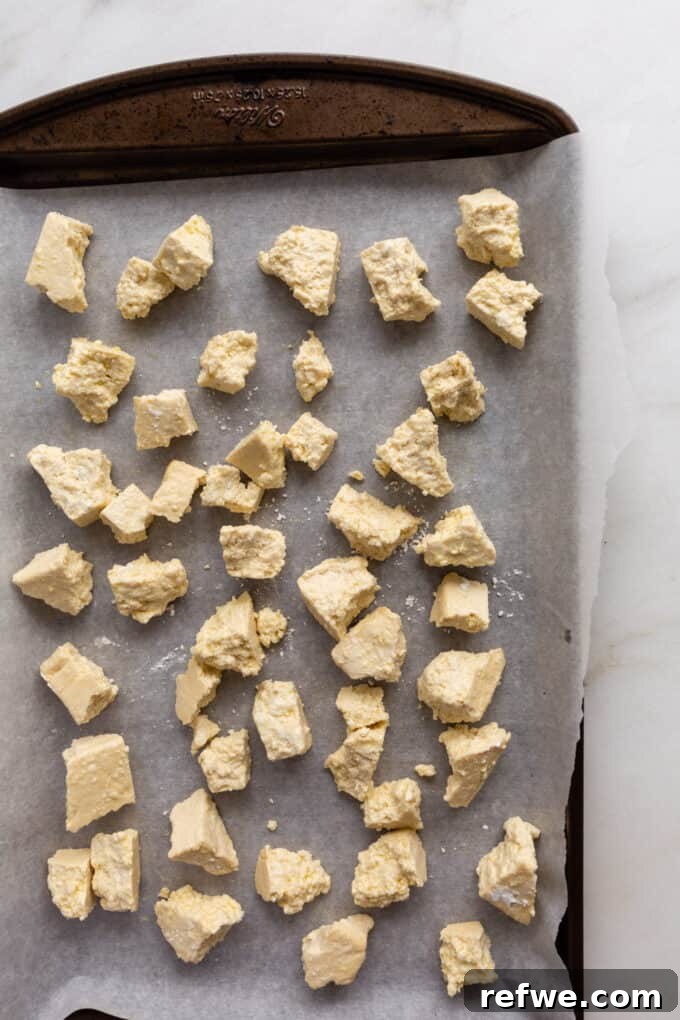
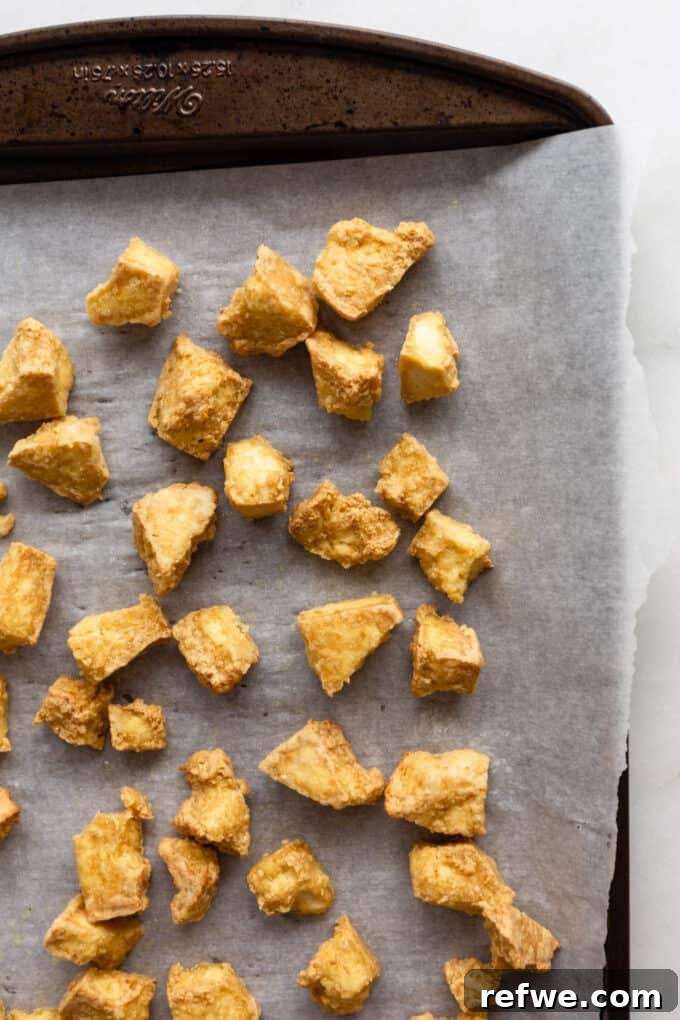
Chef’s Tip: For an even faster and often crispier result, consider air-frying your tofu! Simply follow my detailed recipe for Air-Fryer Tofu, then proceed with adding the Gochujang sauce as described in the following steps.
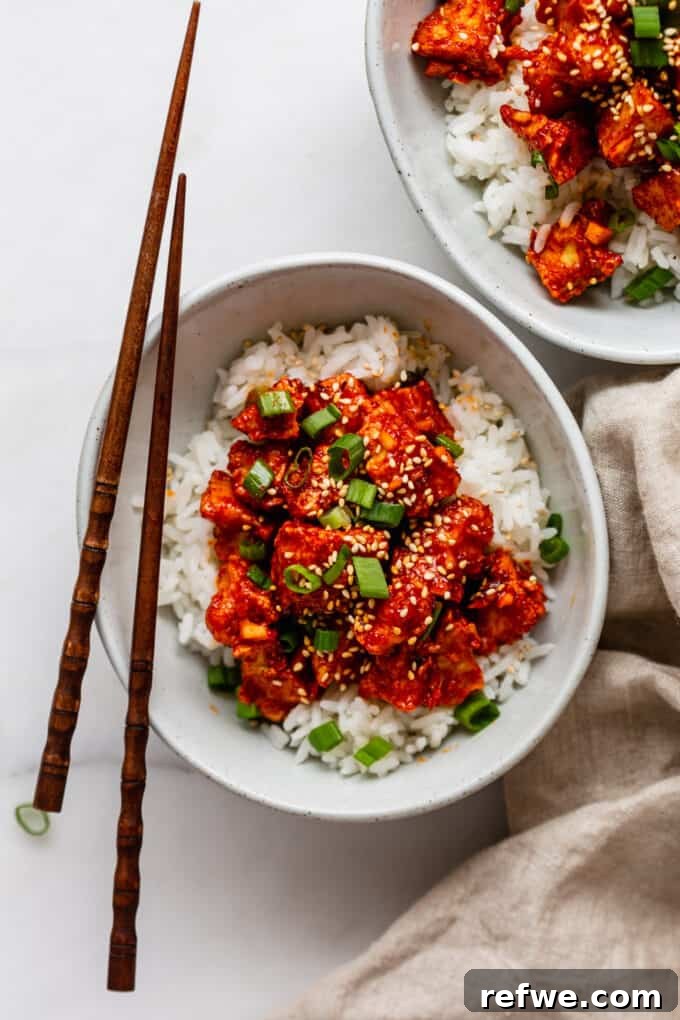
Delicious Ways To Serve Your Gochujang Tofu
The versatility of this Gochujang Tofu means it pairs wonderfully with a range of dishes, transforming it into a complete and satisfying meal. Here are some of my favorite ways to serve and enjoy this flavorful tofu:
- With Fluffy Rice or Quinoa: A classic pairing! The sticky, spicy sauce is perfect for soaking into a bed of steamed jasmine rice, brown rice, or even a nutrient-rich quinoa for a hearty and balanced meal.
- Alongside Korean Tofu Soup: For a truly immersive Korean dining experience, serve your Gochujang Tofu as a side dish to a warming bowl of Korean Tofu Soup (Sundubu Jjigae). The contrast in textures and complementary flavors are divine.
- Mixed into a Fresh Salad: Add a vibrant twist by incorporating the crispy tofu into a fresh Edamame Quinoa Salad or a tangy Thai Mango Salad. The warm, spicy tofu provides an exciting contrast to cool, crisp greens.
- Tossed with Noodles: This Gochujang Tofu is sensational when tossed with various noodle dishes. Try it with savory Yaki Udon Noodles or quick Asian Garlic Noodles for a satisfying and slurp-worthy meal.
- As Part of a Buddha Bowl: Build a nourishing Buddha bowl with grains, roasted vegetables, fresh greens, and a generous portion of Gochujang Tofu as the star protein. Drizzle with a light dressing for a healthy and customizable meal.
- In Wraps or Lettuce Cups: For a lighter, handheld option, serve the Gochujang Tofu in crisp lettuce cups or warm tortilla wraps with some shredded carrots and cucumber for added crunch.
Storage & Expert Tips for the Best Gochujang Tofu
To ensure your Gochujang Tofu remains delicious and enjoyable, here are some storage guidelines and valuable tips:
How To Store Leftovers
Store any leftover Gochujang Tofu in an airtight container in the refrigerator for up to 3 days. While the tofu may lose some of its initial crispiness, the flavor will remain robust. To reheat, you can use the microwave for convenience, or for a crispier texture, gently reheat the tofu in a pan on the stovetop over medium heat until warmed through. I generally do not recommend freezing this recipe, as tofu’s texture can become rubbery after thawing, especially when cooked in a sauce.
Top Recipe Tips for Success
- Press Your Tofu Thoroughly: This is perhaps the most critical step for achieving truly crispy tofu. Removing excess moisture beforehand prevents the tofu from steaming in the oven or air fryer and allows it to crisp up beautifully. Use a dedicated tofu press or simply wrap the block in a clean kitchen towel and place something heavy on top for at least 20-30 minutes.
- Always Opt for Extra Firm Tofu: Its dense texture holds up best to pressing, baking, and tossing in sauce, giving you that ideal chewy-crisp bite that soft or medium tofu simply cannot match.
- Avoid Overcrowding the Baking Sheet: Give your tofu pieces plenty of space to breathe on the baking sheet. If they’re too close together, they will steam instead of crisp, resulting in soft, rather than crunchy, tofu. Bake in batches if necessary.
- Tear Your Tofu for Irregular Edges: Instead of neatly cutting the tofu, try ripping it into jagged, nugget-like pieces. These uneven surfaces create more nooks and crannies, allowing the rich Gochujang sauce to cling better and absorb more flavor.
- Mix the Sauce Separately: Whisk all the Gochujang sauce ingredients together in a bowl *before* adding them to the pan. This ensures all flavors are perfectly blended and allows for quick, even coating of the tofu once it’s introduced to the sauce.
- Serve Immediately for Peak Crispness: While delicious reheated, the tofu is at its absolute crispiest and most flavorful when enjoyed straight from the pan after being coated in the warm sauce. Don’t delay!
Frequently Asked Questions About Gochujang Tofu
Yes, authentic Gochujang paste inherently has a mild to moderate heat level, providing a pleasant warmth rather than an overpowering burn for most palates. The spice intensity can be easily adjusted by using more or less Gochujang to suit your personal preference. For a milder dish, start with two tablespoons; for a bolder kick, increase to four.
Absolutely! Pan-frying is a fantastic alternative for achieving crispy tofu. To do so, heat 2-3 tablespoons of vegetable oil (or avocado oil) in a large non-stick pan over medium-high heat. Add the cornstarch-coated tofu in a single layer, making sure not to overcrowd the pan. Pan-fry for 2-3 minutes per side, turning occasionally, until all sides are beautifully golden and crispy. You can also refer to my comprehensive guide on how to cook tofu for more detailed pan-frying techniques.
Gochujang has become widely available due to its popularity! You can typically find it in the international or Asian section of most well-stocked conventional grocery stores. For a wider selection of brands and sizes, your best bet is an Asian supermarket or Korean grocery store. It’s also readily available for purchase online through retailers like Amazon or specialty food websites.
No problem! You can easily press tofu using items you already have at home. Simply wrap the block of tofu in several layers of paper towels or a clean kitchen towel. Place it on a plate, then put something heavy on top, like a cutting board with a few cans or books. Let it press for at least 20-30 minutes to remove excess water. The more water removed, the crispier your tofu will be!
Certainly. The brown sugar (or honey) in the recipe balances the spice and tang of the Gochujang and rice vinegar. If you prefer a less sweet sauce, you can reduce the amount of brown sugar by half or omit it entirely. Taste the sauce as you mix it to achieve your desired level of sweetness.
Explore More Tofu Recipes!
If you loved the bold flavors and satisfying texture of this Gochujang Tofu, you’re in for a treat! Here are more delicious and creative tofu recipes to inspire your next plant-based meal:
Main Dishes
Easy Kung Pao Tofu
Experience the classic Szechuan flavors with this easy and flavorful Kung Pao Tofu, packed with spice, peanuts, and vibrant vegetables.
Main Dishes
Baked Peanut Butter Tofu
Creamy, spicy, and perfectly baked, this Peanut Butter Tofu is a comforting dish that’s incredibly satisfying and pairs wonderfully with rice or noodles.
Vegan
General Tso Tofu Recipe
Enjoy a healthier, vegan take on a takeout classic with this irresistible General Tso’s Tofu, featuring a sweet, spicy, and tangy sauce.
Vegan
One-Pan Crispy Orange Tofu
Bright, zesty, and incredibly easy to make in a single pan, this Crispy Orange Tofu is a delightful and refreshing vegan option.
If you’ve tried this fantastic Gochujang Tofu or any other recipe on the blog, I’d love to hear from you! Please let me know how you liked it by leaving a comment and rating below. Your feedback truly helps others discover and enjoy these recipes. Be sure to follow along on Pinterest, Instagram, Tiktok, and Facebook for even more delicious plant-based inspiration and healthy recipes!
Print Recipe
Gochujang Tofu
5 from 2 reviews
- Author: Jessica Hoffman
Prep Time:
Cook Time:
Total Time:
Yield: 2 servings
Category: Main
Method: Bake
Cuisine: Korean
Diet: Vegan
Description
This Gochujang Tofu recipe is a flavor-packed, high-protein vegetarian meal that cooks up in just 35 minutes, featuring perfectly crispy tofu coated in a sweet and spicy Korean chili sauce.
Ingredients
For the Crispy Tofu:
- 1 pack extra-firm tofu (12-14oz), pressed and torn or cubed
- 2 tbsp avocado oil (or any high-heat vegetable oil), divided
- 2 tbsp cornstarch
- 1 tbsp fresh minced ginger
- 2 garlic cloves, minced
- 2 scallions, sliced (for garnish, optional)
For the Gochujang Sauce:
- 3 tbsp Gochujang paste (adjust to taste for desired spice level)
- 1 tbsp soy sauce (use tamari for gluten-free)
- 1 tbsp brown sugar (or maple syrup, or honey for a non-vegan option)
- 2 tsp rice vinegar
Instructions
- Preheat your oven to 425 degrees F (220°C). Line a large baking sheet with parchment paper for easy cleanup and to prevent sticking.
- Begin by thoroughly pressing as much liquid out of the extra-firm tofu as possible. You can use a dedicated tofu press, or simply wrap the tofu block in a clean kitchen towel or several layers of paper towels and place a heavy object (like a cutting board with cans) on top for at least 20-30 minutes. This step is crucial for achieving crispy tofu.
- Once pressed, either rip the tofu into irregular, bite-sized nuggets for more textured edges, or cut it into uniform 1-inch cubes. Transfer the tofu to a large mixing bowl, then add 1 tablespoon of avocado oil and the cornstarch. Toss gently until all the tofu pieces are evenly coated.
- Spread the coated tofu onto your prepared baking sheet in a single layer, ensuring there’s enough space between each piece to allow for even crisping. Bake for 20-25 minutes, flipping the tofu halfway through, until it’s golden brown and beautifully crispy.
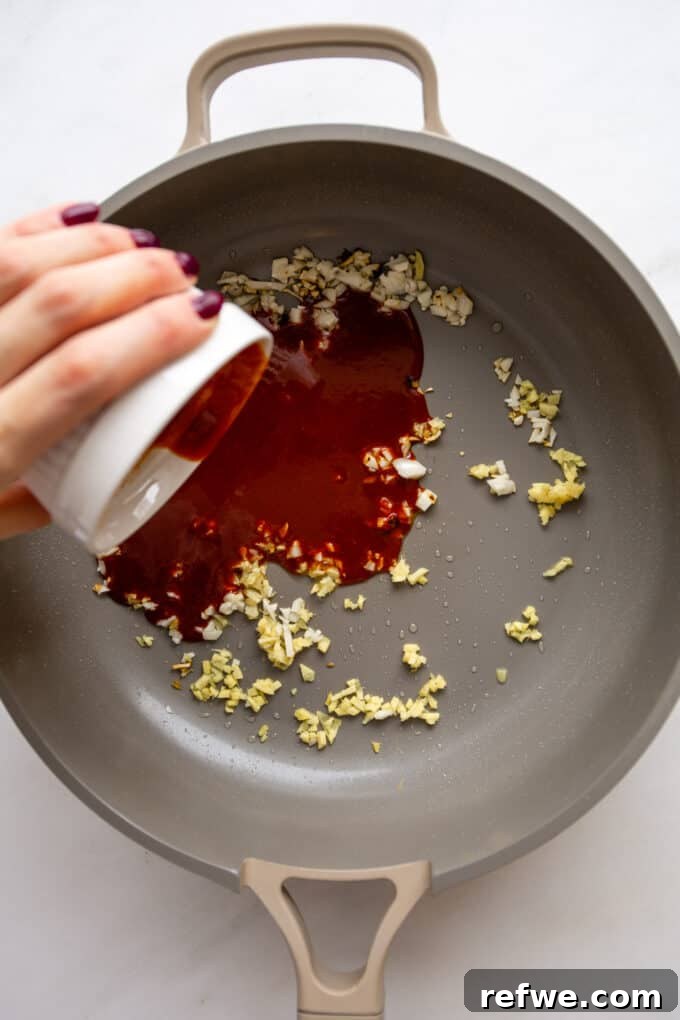
- While the tofu bakes, prepare the Gochujang sauce. In a small bowl, whisk together the Gochujang paste, soy sauce (or tamari), brown sugar (or honey), and rice vinegar until smooth and well combined. Set this flavorful sauce aside.
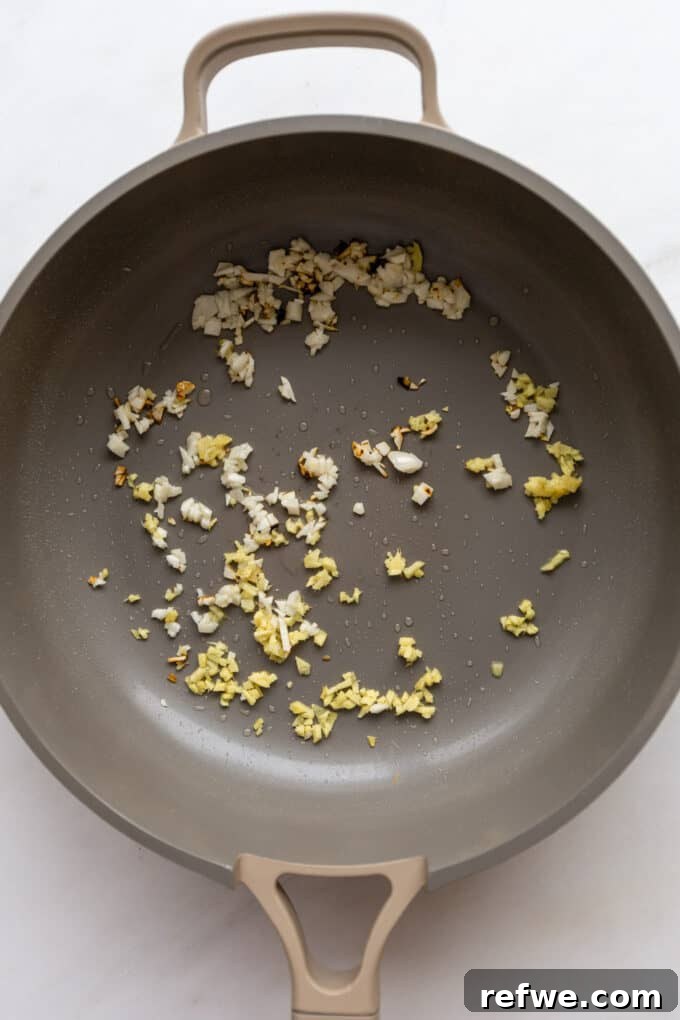
- In a large pan or skillet, heat the remaining 1 tablespoon of avocado oil over medium-high heat. Add the minced garlic and ginger, and sauté for 1-2 minutes until they become fragrant. Be careful not to burn the garlic, as it can turn bitter quickly.
- Reduce the heat to medium. Pour the pre-mixed Gochujang sauce into the pan with the aromatics and stir constantly for about 1 minute until it thickens slightly and becomes glossy.
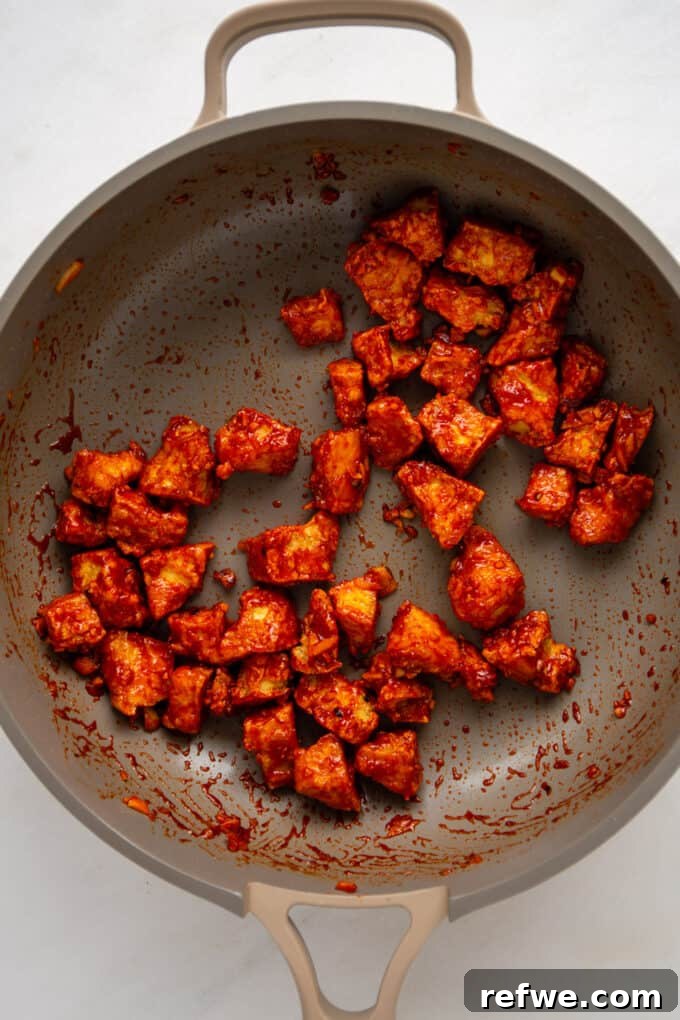
- Add the freshly baked, crispy tofu to the pan with the sauce. Toss and stir gently until every piece of tofu is thoroughly coated in the rich, sticky Gochujang sauce.
- Serve your Gochujang Tofu immediately over your choice of rice or noodles. Optionally, garnish with fresh sliced scallions and a sprinkle of sesame seeds for an extra burst of flavor and visual appeal. Enjoy!
Recipe Notes
- For the best possible texture, always use extra-firm tofu and press it thoroughly before cooking.
- Ensure you do not overcrowd the baking sheet when baking the tofu; giving the pieces space is key to achieving maximum crispiness.
- Tearing the tofu into irregular pieces creates more surface area, allowing the delicious sauce to cling better and impart more flavor.
- Always mix the Gochujang sauce ingredients separately in a bowl before adding them to the pan for even flavor distribution.
- For optimal crispiness and flavor, serve the Gochujang Tofu immediately after it has been coated in the sauce.
- To make this recipe gluten-free, remember to use tamari instead of soy sauce and verify that your Gochujang paste is certified gluten-free.
Nutrition
- Serving Size: 1/2 of the recipe
- Calories: 350
- Sugar: 10g
- Fat: 9g
- Carbohydrates: 28g
- Fiber: 4g
- Protein: 24g