

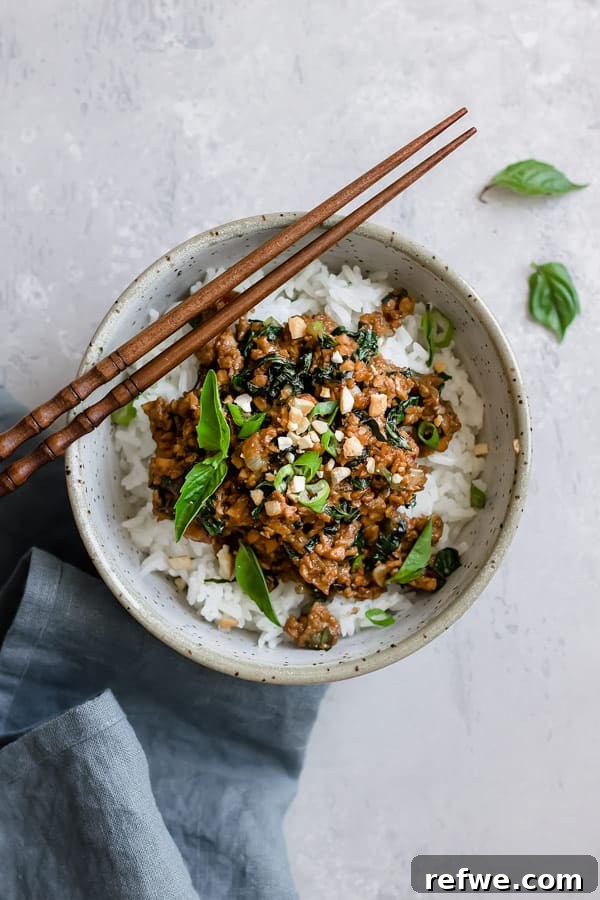
Experience the vibrant flavors of Thailand with this incredible Thai Basil Tempeh Stir Fry, right in your own kitchen! This recipe offers a healthy, plant-based reimagining of the beloved traditional Thai dish, “Pad Krapow Gai,” or Thai Basil Chicken. It’s a deliciously wholesome and entirely vegan option that doesn’t compromise on authentic taste.

Get ready to elevate your weeknight dinners with this fantastic recipe for Thai Basil Tempeh Stir Fry! This dish has quickly become my ultimate go-to for those bustling days when I crave something quick, satisfying, and bursting with flavor. What truly sets this recipe apart is its ingenious transformation of the classic Thai basil chicken into a fully vegan, gluten-free, and remarkably healthy meal. While tofu often makes an appearance in my stir-fry creations, I was eager to introduce the unique qualities of tempeh into this particular rendition, and the results were simply phenomenal.
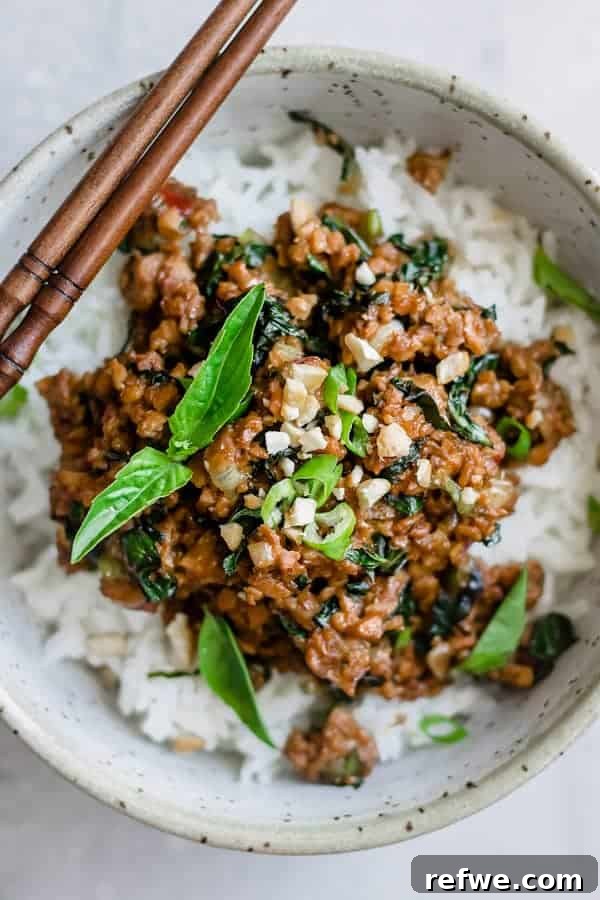
Tempeh proves to be an exceptional choice for this stir fry, and for several compelling reasons. Firstly, its inherent texture allows it to crumble beautifully, mimicking the appearance and mouthfeel of ground chicken, which is traditionally used in Pad Krapow. This textural similarity provides a familiar and comforting experience for those accustomed to the original dish. Beyond its texture, tempeh brings a distinctively meatier and nutty flavor profile to the table. This robust taste acts as a perfect canvas, absorbing and complementing the rich, aromatic sauce and the star ingredient – fresh Thai basil – in a way that truly enhances the overall culinary experience.
Once considered a niche ingredient, tempeh is rapidly gaining recognition as a powerhouse superfood, and its presence in mainstream grocery stores is becoming increasingly common. This surge in popularity is well-deserved, given its remarkable nutritional benefits and versatility in plant-based cooking. If you haven’t yet explored the wonders of tempeh, now is the perfect time to introduce this fermented soy product into your culinary repertoire.
Understanding Tempeh: A Fermented Superfood
You might be wondering about this “superfood” tempeh and how it compares to its more famous cousin, tofu. While both are plant-based proteins derived from soybeans, their production methods and nutritional profiles are distinctly different. Tofu is traditionally made by coagulating fresh, hot soy milk and pressing the resulting curds into blocks. Tempeh, on the other hand, undergoes a fascinating fermentation process where whole, cooked soybeans are bound together into a firm, dense cake by a beneficial mold culture. This fermentation not only creates its unique texture and nutty flavor but also imparts several health advantages.
The key takeaway is that tempeh is a **fermented** food utilizing the **whole** soybean, making it generally less processed than many forms of tofu. This fermentation process contributes to its higher fiber content, improved digestibility, and the presence of probiotics, which are beneficial for gut health. Moreover, tempeh boasts a higher protein content per serving compared to many tofu varieties, making it an excellent choice for those seeking a robust plant-based protein source. Its firm, chewy texture also holds up exceptionally well in stir-fries, absorbing flavors beautifully without becoming mushy. This structural integrity is what makes tempeh such a fantastic stand-in for ground meat in dishes like our Thai Basil Tempeh Stir Fry.
The Irresistible Aroma of Thai Basil
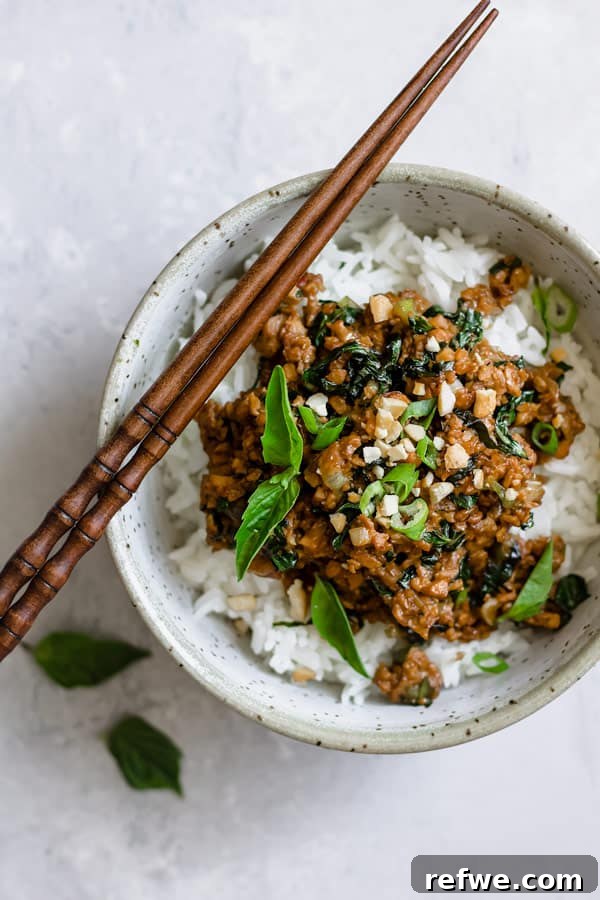
The next indispensable ingredient in mastering this recipe is, of course, Thai basil. If you’re new to this herb, prepare for a delightful culinary discovery. Thai basil is a distinct variety of basil, celebrated for its slightly spicy, peppery notes, often accompanied by a hint of anise or licorice flavor that sets it apart from common sweet basil. For many, including myself, it is an all-time favorite herb, capable of transforming a simple dish into an aromatic masterpiece.
The signature flavor of Pad Krapow truly hinges on the presence of Thai basil. Its unique aromatic compounds are what give the dish its characteristic fragrance and taste, making it irreplaceable for an authentic experience. You can typically find fresh Thai basil at most Asian grocery stores, which often stock a wide array of specialized herbs and produce. During warmer months, you might even discover it at local farmer’s markets, sometimes sold as plants you can grow in your own garden for a continuous supply. While regular sweet basil can be used as a last resort and will still yield a tasty result, I emphatically recommend seeking out authentic Thai basil. Its distinctive flavor is the true star of this dish, providing that unmistakable, fragrant essence that elevates this stir fry from good to extraordinary.
Crafting the Perfect Thai Stir-Fry Sauce
The sauce is the heart and soul of any stir fry, and for our vegan Thai Basil Tempeh Stir Fry, we’ve carefully selected ingredients to deliver a rich, authentic Thai flavor profile without any animal products. Traditionally, Pad Krapow Gai sauce includes oyster sauce, which, as its name suggests, contains oysters. However, modern culinary innovations offer fantastic plant-based alternatives.
I’ve discovered an excellent **vegetarian oyster sauce** made primarily from mushrooms. This substitution is a game-changer for vegan and vegetarian diets, providing that crucial savory, umami depth without compromising your dietary choices. It imparts the same complex richness that oyster sauce is known for. If vegetarian oyster sauce is hard to find locally, you can usually order it online (I’ve linked one in the recipe card that’s available on Amazon). Alternatively, hoisin sauce can serve as a decent substitute, though it will impart a slightly sweeter and different flavor profile.
Another pivotal component in our sauce is **dark soy sauce**. If you haven’t yet ventured into cooking with dark soy sauce, now is the time to add a bottle to your pantry! Unlike regular light soy sauce, dark soy sauce is sweeter, significantly less salty, and possesses a beautiful deep, rich, almost caramel-like color. Its primary function in many Thai recipes, such as Vegan Pad See Ew, is to add a gorgeous hue and a subtle, mellow sweetness that balances the other savory elements. Should you be unable to locate dark soy sauce, you can simply increase the amount of regular light soy sauce and perhaps add a tiny pinch of sugar or a touch more maple syrup to compensate for the sweetness and depth, though the color will not be as intense. For those adhering to a gluten-free diet, always ensure you select a certified gluten-free soy sauce or tamari for both light and dark varieties.
Why You’ll Love This Thai Basil Tempeh Stir Fry:
- Completely Vegan: Made with plant-based ingredients, perfect for a compassionate diet.
- Gluten-Free: (*Ensure you use gluten-free soy sauce or tamari) – suitable for those with sensitivities.
- High in Protein: Thanks to the tempeh, this dish is wonderfully filling and nutritious.
- Packed with Flavor: An authentic taste of Thailand in every bite.
- Quick & Easy: Ideal for busy weeknights, ready in under 30 minutes.
- Healthy & Wholesome: A guilt-free meal that tastes indulgent.
I find this Thai basil tempeh stir fry is best served atop a bed of fluffy jasmine rice, which is the traditional accompaniment in Thailand. The fragrant, slightly sticky rice perfectly complements the savory, spicy, and aromatic tempeh mixture, soaking up all the delicious sauce. However, feel free to serve it with any type of rice you prefer – brown rice, basmati, or even cauliflower rice for a low-carb option. It also pairs wonderfully with rice noodles for a different textural experience.
One of the many benefits of this recipe is its excellent suitability for meal prepping. The ingredients can be prepared in advance, allowing for a lightning-fast cooking process when dinner time rolls around. In my own food prep routine, I often cook larger batches of grains like quinoa or rice at the beginning of the week. Having these staples readily available drastically cuts down on last-minute cooking, making it incredibly easy to whip up a nutritious and delicious meal even on the busiest of evenings.
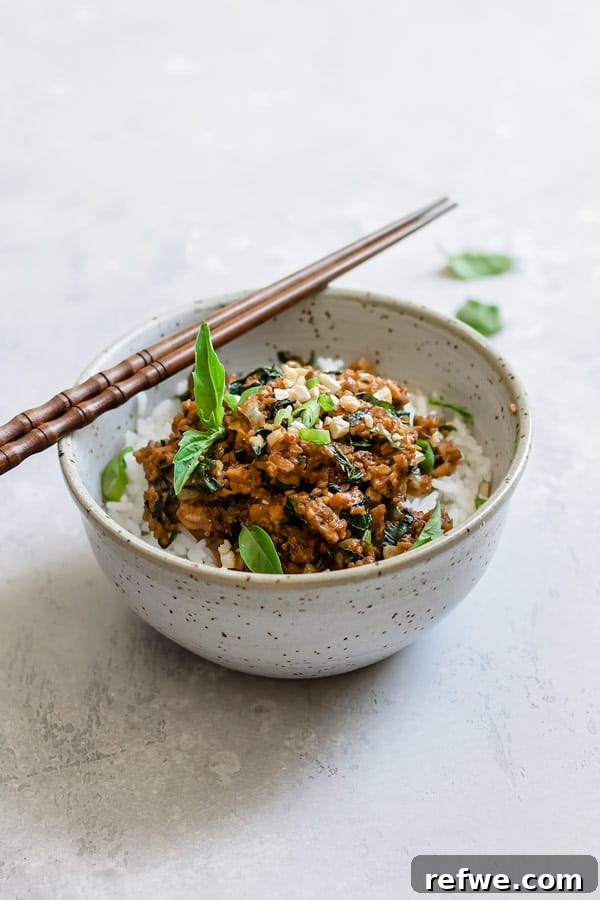
To further streamline your cooking process and save precious time, consider preparing your jasmine rice ahead of time. Once cooked, store it in an airtight container in the refrigerator. You can also mix all the sauce ingredients in advance and keep them in a jar in the fridge. Then, when you’re ready to eat, all that’s left to do is quickly stir-fry the tempeh and aromatics, pour in the pre-mixed sauce, and serve it hot over your already cooked rice! This simple time-saving hack is a lifesaver for those exceptionally busy days when cooking from scratch feels like an impossible task.
Print Recipe

Thai Basil Tempeh Stir Fry
Author: Jess
Prep Time: 15 minutes
Cook Time: 10 minutes
Total Time: 25 minutes
Yield: 3-4 servings
Category: Dinner
Method: Cook
Cuisine: Thai
Description
Bring the vibrant flavors of Thailand right into your home kitchen! This Thai basil tempeh stir fry is a healthy, vegan dish loaded with bold Thai flavors, perfect for a quick and satisfying meal.
Ingredients
- 1 block of tempeh (approx 200g)
- 2 tbsp vegetable oil
- 2 green onions, chopped
- 3 garlic cloves, chopped
- 1/2 cup Thai basil, finely chopped
- Crushed cashews for topping
- 1 cup of jasmine rice, cooked according to package directions
For the Sauce:
- 2 tbsp vegetarian oyster sauce
- 1 tbsp light soy sauce (use gluten-free tamari for GF option)
- 1 tbsp dark soy sauce (use gluten-free tamari with a touch of molasses for GF option)
- 1 tbsp maple syrup
- 1 tsp sambal oelek (or sriracha for a milder heat)
Instructions
- Place the block of tempeh in a saucepan and cover it completely with water. Bring the water to a boil, then reduce the heat to a simmer, cover the saucepan, and let it gently simmer for 10 minutes. This crucial step helps to eliminate any potential bitter flavor that tempeh can sometimes have and also softens it, making it more receptive to absorbing the delicious sauce. After simmering, carefully remove the tempeh from the pan and set aside to cool slightly.
- Once cooled, transfer the tempeh to a food processor. Pulse it a few times until the tempeh is chopped into small, irregular bits, resembling ground meat. Be careful not to over-process it into a paste.
- Heat the vegetable oil in a large non-stick pan or wok over medium-high heat. Add the crumbled tempeh and sauté for 2-3 minutes, stirring occasionally with a wooden spoon to prevent sticking and ensure even browning.
- Reduce the heat to medium. Add the chopped green onions, minced garlic, and fresh Thai basil to the pan. Stir everything together and cook for another 1-2 minutes until the aromatics are fragrant and the basil has slightly wilted, releasing its incredible aroma.
- In a small bowl, whisk together all the sauce ingredients: vegetarian oyster sauce, light soy sauce, dark soy sauce, maple syrup, and sambal oelek (or sriracha). Pour the prepared sauce mixture into the pan with the tempeh and vegetables. Stir continuously to ensure the tempeh is thoroughly coated with the sauce. Cook for an additional 2-3 minutes, allowing the sauce to thicken slightly and the flavors to meld beautifully.
- Serve the piping hot Thai Basil Tempeh Stir Fry immediately over a generous portion of cooked jasmine rice. Garnish with a sprinkle of crushed cashews for added texture and a delightful crunch. Enjoy!
Notes
Always remember to taste the tempeh after adding the sauce and adjust seasonings as needed! Depending on the brand of tempeh and your personal preference, you might desire a little more soy sauce for saltiness, a dash more maple syrup for sweetness, or extra chili paste for an added kick of spice.
Some varieties of tempeh can possess a slightly bitter flavor. Steaming it as the first step (Instruction 1) is a highly recommended technique to effectively remove this bitterness, resulting in a cleaner, more enjoyable taste. Furthermore, this steaming process also softens the tempeh, allowing it to more readily absorb the rich flavors of the stir-fry sauce.
If you’re unable to find vegetarian oyster sauce, a suitable alternative is hoisin sauce. Please note that while hoisin sauce offers a wonderful savory-sweet profile, it will impart a slightly different flavor to the dish. If you are not vegan or vegetarian, you can, of course, use traditional oyster sauce.
Nutrition
- Serving Size: 1 bowl
- Calories: 463
- Sugar: 5g
- Fat: 19g
- Saturated Fat: 4g
- Carbohydrates: 54g
- Fiber: 2g
- Protein: 23g