
Have you ever found yourself scratching your head, wondering how to perfectly cook eggplant? You’re certainly not alone! This unique and versatile vegetable can sometimes present a culinary challenge, but once you master its preparation, it transforms into a truly delicious and satisfying ingredient. This comprehensive guide is designed to demystify eggplant cooking, offering you a deep dive into mastering this incredible produce. We’ll share my favorite tips and tricks, explore various cooking methods, and even suggest some easy, mouth-watering recipes to inspire your next meal!
Mastering Eggplant: Your Ultimate Cooking Guide
Often misunderstood and sometimes given a bad rap, eggplant is a truly remarkable and incredibly versatile vegetable that deserves a prime spot in your culinary repertoire. Also known as aubergine in many parts of the world, this oblong piece of produce holds a fascinating secret: botanically, it’s classified as a berry! Europeans first encountered it in the 18th century, and its initial size, shape, and pale white color reminded them of a goose egg, thus giving rise to its common name.
While most of us are familiar with the standard deep purple variety commonly found in grocery stores today, the world of eggplant is far more diverse than you might imagine. There are numerous types, each offering unique characteristics and best suited for different culinary applications. Exploring these varieties can open up a whole new realm of flavors and textures in your cooking.
Eggplant Varieties: A World of Flavor and Texture
Beyond the common purple globe, a fascinating array of eggplant varieties exists, each with its own charm and culinary potential. Understanding these differences can help you choose the perfect eggplant for your next dish:
- Globe Eggplant: This is the most common type you’ll encounter in North American grocery stores. Large, pear-shaped, and with a glossy, dark purple skin, it’s the go-to for many classic eggplant recipes like parmigiana or baking. Its firm flesh holds up well to various cooking methods.
- Chinese Eggplant: Distinctively long and slender with a beautiful lavender-to-light purple hue, Chinese eggplants have delicate skin and fewer seeds than their globe counterparts. Their mild flavor and quick cooking time make them exceptionally well-suited for stir-fries, Asian-inspired dishes, and quick sautés.
- Japanese Eggplant: Similar in shape to Chinese eggplant but with a darker, almost black-purple skin, Japanese eggplants are also long and skinny. They possess a slightly more robust flavor than Chinese varieties and absorb marinades and sauces beautifully, making them ideal for grilling, stir-fries, or rice-based dishes where flavor infusion is key.
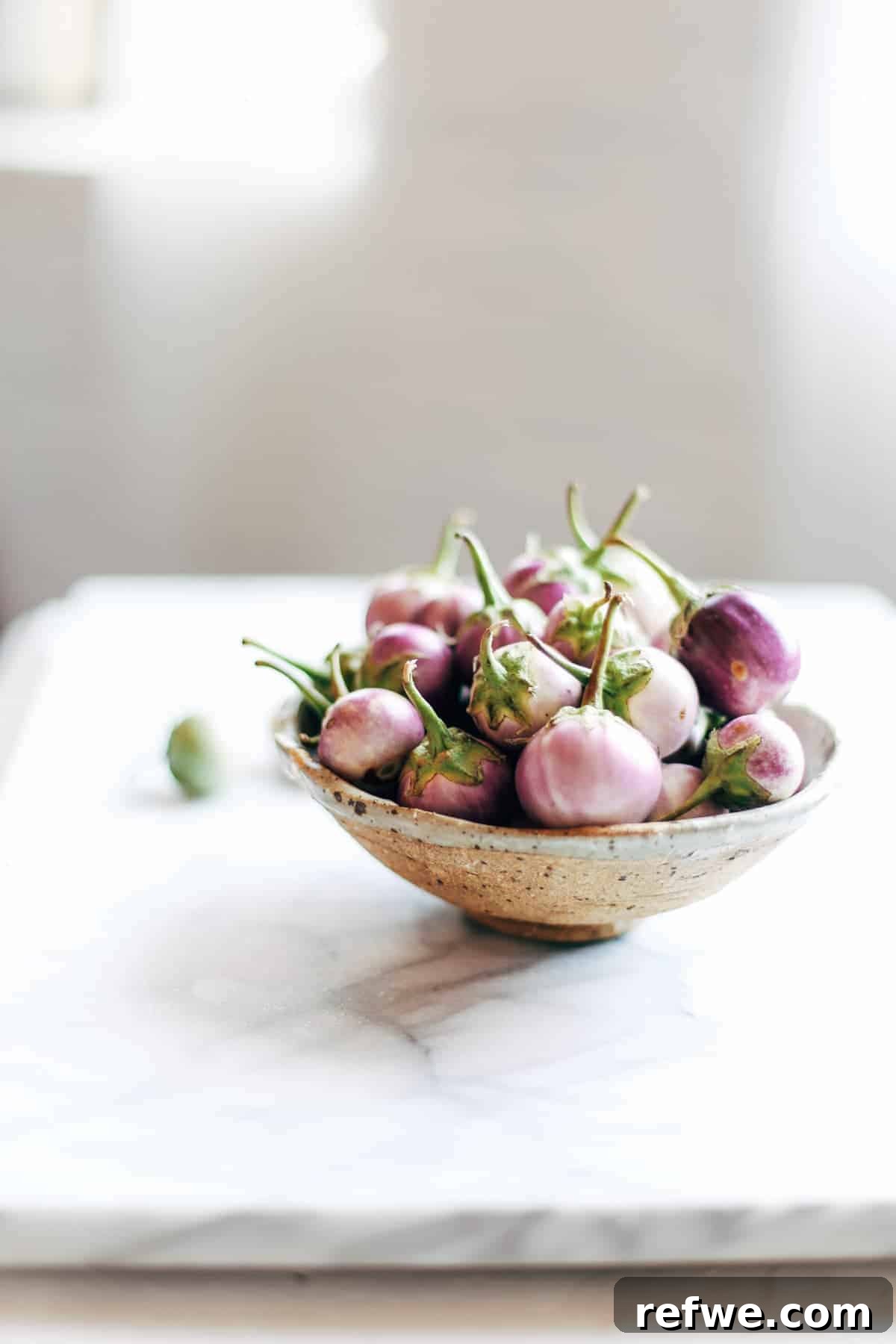
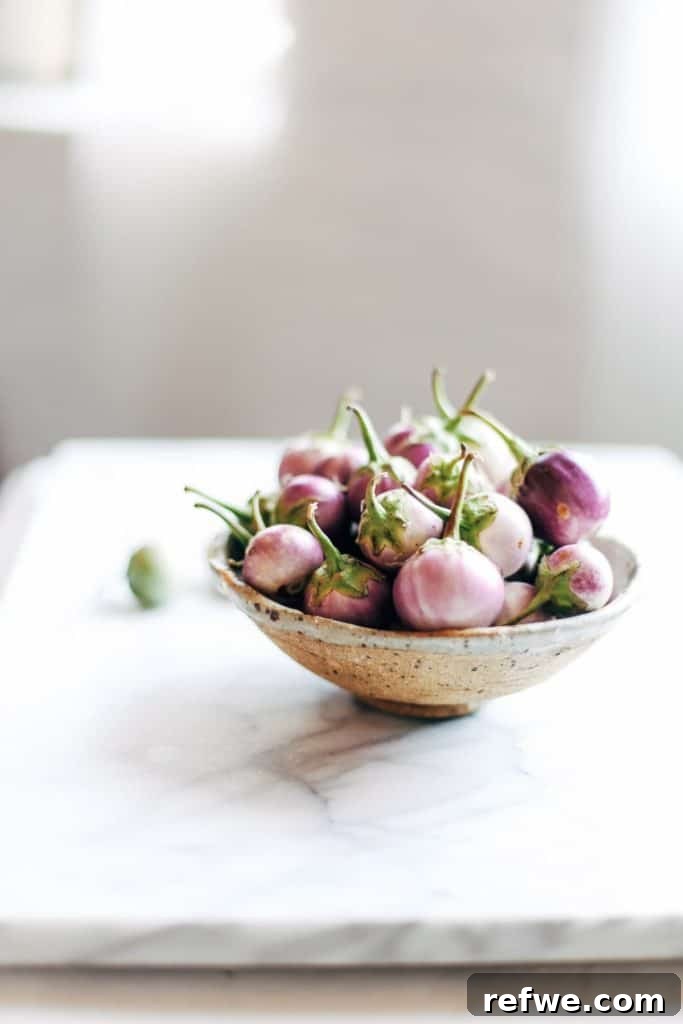
- Indian Eggplant (Baby Eggplant): Also known as baby eggplant, these small, round, or tear-drop shaped eggplants boast a dark maroon to deep purple color. They are perfect for stuffing, as their compact size makes individual portions easy to manage. They also shine in rich, aromatic curry-inspired dishes where they can soak up spices.
- Thai Eggplant: Less common but incredibly rewarding to find, Thai eggplants are small, round, and typically light green or white with green streaks. They have a slightly firmer texture and a more bitter flavor when raw, which mellows beautifully when cooked. They are a fantastic authentic addition to Thai curries and stir-fries, adding a unique texture and subtle bitterness that balances rich flavors.
- Italian Eggplant: While resembling a traditional globe eggplant, the Italian variety is generally smaller and often has a slightly more elongated shape. Its flesh tends to become tender more easily and has a rich, creamy texture when cooked. It’s, of course, a star in classic Italian cuisine, perfect for dishes like ratatouille, caponata, or sliced and grilled.
- White Eggplant: As its name suggests, this variety stands out with its pure white exterior. It can be prepared in much the same way as any other eggplant type, offering a mild flavor and creamy texture. Its unique appearance can add a striking visual element to your culinary creations.
How to Choose the Perfect Eggplant Every Time
Selecting a good eggplant is the first step to a delicious dish. Here’s what to look for when you’re at the market:
- Smooth and Shiny Skin: Always opt for an eggplant with taut, smooth, and glossy skin. Dull or wrinkled skin indicates an older eggplant that may be less fresh and more bitter.
- Heavy for Its Size: A perfectly ripe eggplant should feel substantial and heavy in your hand relative to its size. This indicates a good moisture content and juicy flesh, ensuring it won’t be dry when cooked.
- Slightly Firm to the Touch: Gently press on the eggplant’s skin. It should feel firm but yield slightly to your pressure, then bounce back. If the skin breaks or feels mushy, it’s overripe. If it’s rock-hard and doesn’t yield at all, it might be underripe.
- Healthy Stem and Cap: Examine the stem and cap. They should be vibrant green, fresh-looking, and free from any brown spots, mold, or softness. A withered or discolored stem is a sign of age.
- Choose Smaller to Avoid Bitterness: Generally, smaller eggplants tend to have fewer seeds and less bitterness than their larger counterparts. If you’re sensitive to bitterness, or making a dish where a delicate flavor is desired, reach for the smaller ones. However, for smoky dips like baba ganoush, the slight bitterness of a larger grilled eggplant can actually enhance the flavor profile.
Essential Eggplant Preparation Tips
Raw eggplant typically doesn’t taste great due to its firm texture and slight bitterness. The magic happens when it’s cooked properly, transforming its flesh into a wonderfully soft, creamy, and melt-in-your-mouth delight. Here’s how to prepare it for cooking:
To Peel or Not to Peel?
Eggplant skin is entirely edible and packed with nutrients and antioxidants. For younger, smaller, or thin-skinned varieties (like Chinese or Japanese eggplant), leaving the skin on is often preferred as it adds texture and color. For larger, older globe eggplants, the skin can sometimes be a bit tough or fibrous. In these cases, peeling is a personal preference and can lead to a more uniformly tender result, especially if you’re aiming for a very creamy texture.
The Art of Salting Eggplant
Salting eggplant before cooking is a classic technique, often employed for two primary reasons:
- Reducing Bitterness: Eggplant contains compounds that can sometimes impart a slightly bitter taste. Salting helps draw out these bitter juices.
- Improving Texture: Eggplant is highly porous and can absorb a lot of oil, becoming greasy. Salting draws out excess moisture, which helps the eggplant become crispier when fried or grilled and prevents it from becoming soggy.
To salt, simply slice or cube your eggplant, sprinkle generously with salt, and let it sit in a colander for 30-60 minutes. You’ll see beads of moisture form. Rinse thoroughly under cold water to remove the salt and bitter liquid, then pat it very dry with paper towels before cooking. For younger, smaller, or less bitter varieties, salting isn’t always essential, but it can still enhance texture.
Diverse Cooking Methods for Eggplant
Eggplant truly shines when cooked using various methods. Each technique brings out different aspects of its flavor and texture:
Roast It / Bake It
Roasting or baking eggplant is arguably one of the simplest and most delicious ways to enjoy it. This method brings out its natural sweetness and creates a wonderfully tender interior.
- Method: Cut your eggplant into halves, thick slices, or cubes. Drizzle generously with olive oil, season with salt, pepper, and herbs like oregano or thyme. Spread in a single layer on a baking sheet.
- Temperature & Time: Roast at 400°F (200°C) for 20-35 minutes, depending on the size and cut, or until fork-tender and slightly caramelized. Smaller pieces will cook faster.
- Pro Tip: Roasted eggplant is incredibly versatile. Use it as a base for Moussaka, blend it into dips, add it to pasta sauces, or simply enjoy it as a healthy side dish. For a richer flavor, consider roasting it with garlic cloves and cherry tomatoes.
Grill It / BBQ It
Grilling imparts a fantastic smoky flavor and beautiful char marks to eggplant, making it perfect for summer meals.
- Method: Slice eggplant into 1/2-inch thick rounds or planks. Brush generously with olive oil and season. Grill directly over medium-high heat until tender and charred, about 3-5 minutes per side. You can also grill whole eggplants, or cut them into cubes and thread them onto skewers.
- For Smoky Dips: Grilling is superb if you’re making an eggplant dip like baba ganoush and desire that distinct smoky flavor.
- Pro Tip: For the ultimate smoky dip, opt for a charcoal BBQ. Grill whole eggplants until their skin is completely charred and the inside is very soft. Scoop out the tender flesh and use it to make an incredibly flavorful, smoky dip. Ensure to oil the eggplant well before grilling to prevent sticking.
Fry It: For Crispy Perfection
If you’ve ever had authentic Greek or Italian cuisine, you’ve likely enjoyed the crispy delight of fried eggplant. This method yields a wonderfully golden, crunchy exterior and a soft interior.
- Method: After salting and drying your eggplant slices, you can simply pan-fry them in olive oil until golden, or go for a breaded, deep-fried version. For deep-frying, coat the eggplant in flour, then an egg wash (or plant-based alternative), and finally in breadcrumbs or a light batter. Deep fry in hot oil (around 350-375°F / 175-190°C) until golden brown and crispy.
- Pro Tip: Cut the eggplant into thin rounds or planks (about 1/4 inch thick) for best frying results. Always remember to salt and thoroughly pat dry your eggplant before frying. This crucial step not only removes excess moisture but also helps prevent it from soaking up too much oil, ensuring a perfectly crispy, non-greasy result.
Stir-Fry It: For Asian-Inspired Dishes
Stir-frying eggplant is a fantastic way to incorporate it into quick, flavorful meals, especially with varieties like Chinese or Japanese eggplant that cook quickly and absorb flavors beautifully.
- Method: Cut your eggplant into bite-sized cubes or wedges. You can make an eggplant stir-fry on its own, or add it to a mixed veggie and tofu or meat stir-fry with your favorite Asian sauces. Cook in a hot wok or large skillet with a small amount of high-heat oil until tender.
- Pro Tip: To achieve tender, non-bitter eggplant in your stir-fry, cut the eggplant and soak it in a large bowl of water with about 1 teaspoon of salt for an hour. Drain the eggplant thoroughly and pat it very dry before cooking. This helps draw out any bitterness and primes the eggplant to cook up nicely without becoming watery or mushy in the stir-fry.
Creative Culinary Uses for Eggplant
Eggplant’s mild flavor and versatile texture make it a fantastic addition to a wide array of dishes:
- Savory Dips: Transform roasted or grilled eggplant into a creamy, smoky dip like Baba Ganoush. This Middle Eastern classic, a cousin of hummus, is a perfect appetizer or side for any gathering, offering a delightful smoky note that complements crudités or pita bread.
- Hearty Ratatouille: Celebrate the bounty of summer produce with Ratatouille. This classic French Provençal stew combines eggplant with zucchini, bell peppers, tomatoes, and herbs, creating a rich and flavorful vegetable medley that’s perfect as a side or a light main course.
- Pasta Salads & Sauces: Add roasted eggplant to pasta salads, such as Roasted Eggplant and Tomato Orzo Pasta. Roasting truly brings out the eggplant’s sweet, caramelized flavors, which beautifully complement the pasta. It’s also an excellent addition to marinara sauces or baked ziti for added texture and depth.
- Stuffed Delights: Eggplant’s boat-like shape is perfect for stuffing! Try dishes like Quinoa Stuffed Eggplant with Tahini Sauce from Simply Quinoa, or fill it with rice, lentils, or ground meat for a satisfying and complete meal.
- Savory Fillings: Utilize cooked eggplant as a flavorful filling in other dishes. It works wonderfully in things like Moroccan stuffed sweet potatoes, tacos, wraps, or even as a layered component in vegetarian lasagna.
- Curries and Stews: Small Indian or Thai eggplants are particularly excellent in richly spiced curries and stews, where they absorb the aromatic flavors and soften to a creamy consistency.
- Eggplant Parmesan: A timeless classic, thinly sliced and fried eggplant layered with rich tomato sauce and melted cheese creates an irresistible comfort food dish.
Eggplant FAQ: Answers to Your Burning Questions
- What does eggplant taste like? Eggplant has a relatively mild, earthy flavor that’s often described as subtle and slightly sweet, especially when properly cooked. Its taste is somewhat comparable to zucchini, though it possesses a distinctly spongy texture that becomes incredibly creamy and tender upon cooking. It readily absorbs the flavors of accompanying ingredients and spices, making it a fantastic culinary canvas.
- Is eggplant healthy? Absolutely! Eggplant is a nutritional powerhouse, packed with a wealth of vitamins, minerals, and dietary fiber. It’s particularly rich in antioxidants, notably nasunin, which is found in its vibrant purple skin and is known for its protective effects on brain cells. It’s also a good source of manganese, folate, potassium, and vitamins K and C, making it a valuable addition to a balanced diet.
- What about nightshades? Is eggplant bad for me? Eggplant belongs to the nightshade family of plants, which also includes potatoes, tomatoes, and bell peppers. While nightshades are perfectly healthy for the vast majority of people, some individuals with specific autoimmune disorders report that consuming nightshades can sometimes trigger or exacerbate flare-ups. However, for most people, there is no scientific evidence to suggest that eggplants or other nightshades are unhealthy. If you have concerns, it’s always best to consult with a healthcare professional or registered dietitian.
Storing Eggplant to Maintain Freshness
Proper storage is key to keeping your eggplant fresh and delicious:
- Uncooked Eggplant: Store whole, unwashed eggplant in a cool, dry place, ideally in the crisper drawer of your refrigerator. Avoid refrigerating it for too long (more than 5-7 days) as it can become soggy and develop brown spots. Do not store it near fruits that emit ethylene gas (like apples or bananas), as this can accelerate ripening and spoilage.
- Cooked Eggplant: Once cooked, store eggplant in an airtight container in the refrigerator for 3-5 days. Cooked eggplant can also be frozen for up to 3 months, though its texture might become slightly softer upon thawing.
Conclusion: Embrace the Versatility of Eggplant
Eggplant is a truly remarkable and incredibly versatile vegetable, offering a delightful array of textures and flavors when cooked correctly. From the satisfying crunch of fried slices to the creamy tenderness of roasted chunks, and the smoky depth of grilled planks, there are endless ways to enjoy this culinary gem. By understanding its varieties, mastering basic preparation techniques like salting, and experimenting with different cooking methods, you can unlock the full potential of eggplant in your kitchen.
Don’t let past struggles deter you; with a little knowledge and practice, you’ll be creating delicious, restaurant-quality eggplant dishes in no time. So go ahead, pick up an aubergine, and embark on your culinary adventure!