
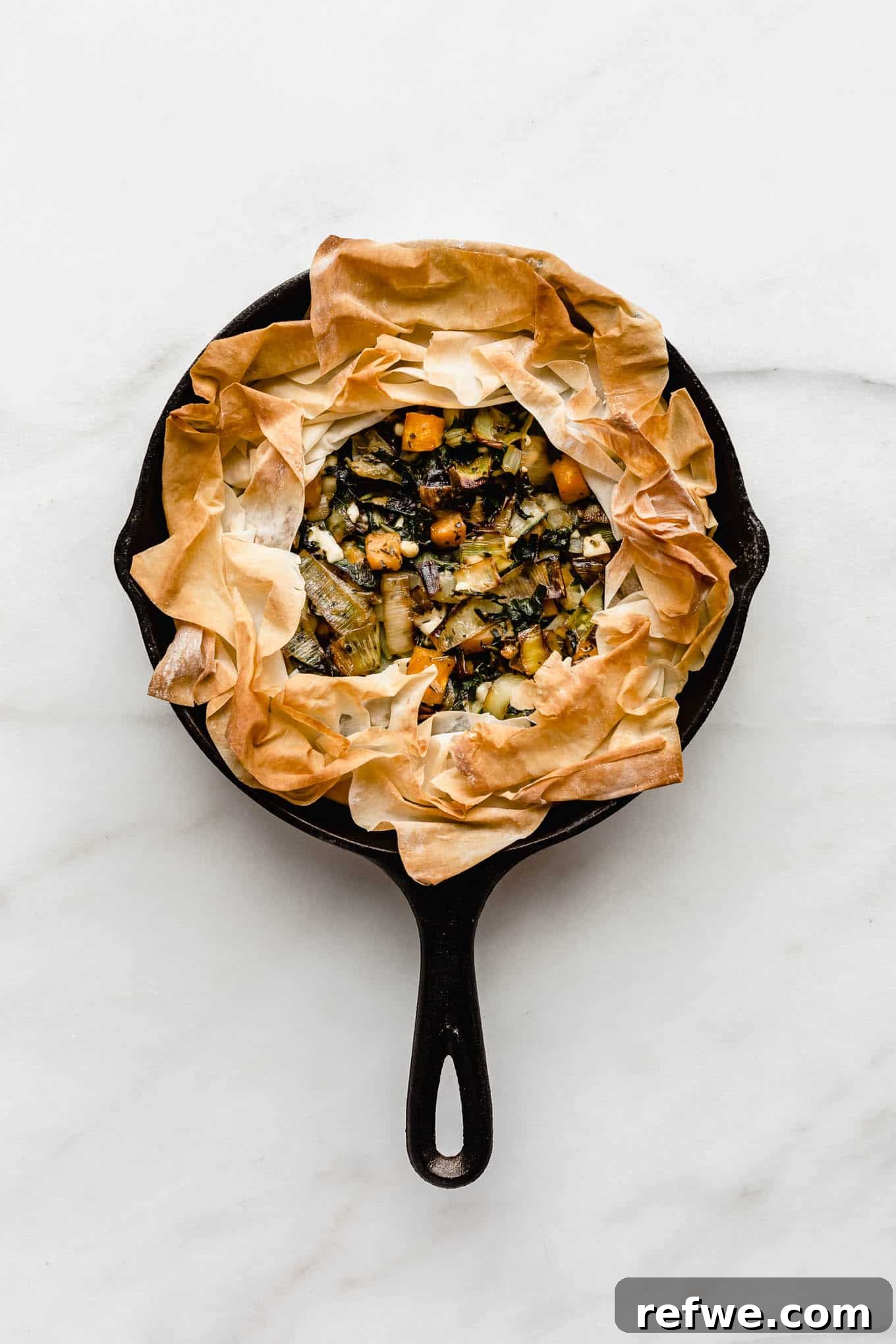
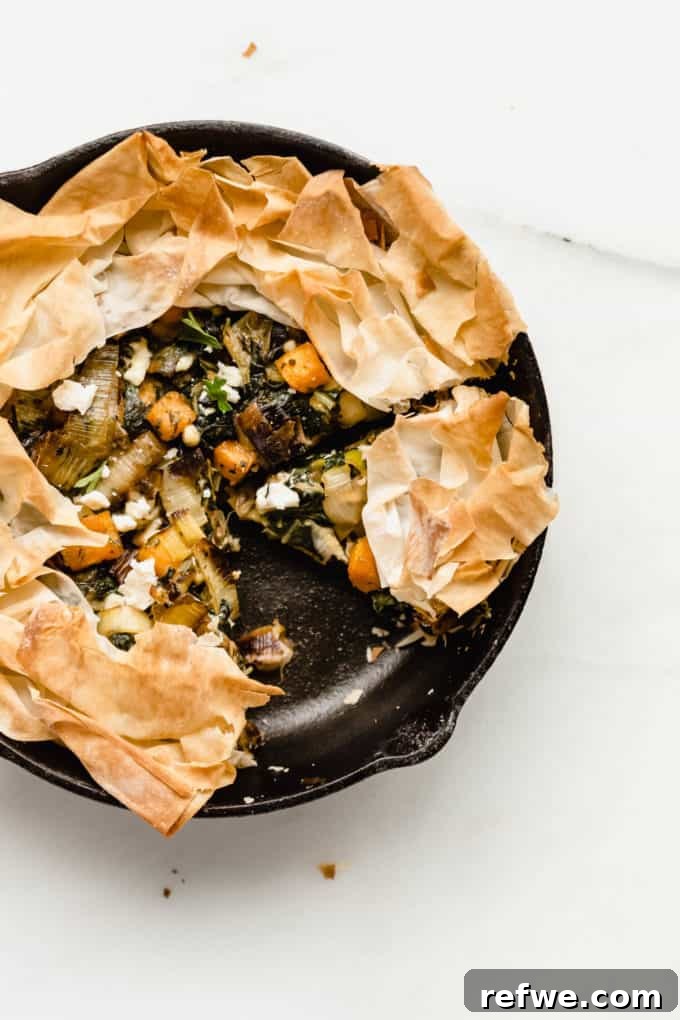
This Veggie Skillet Phyllo Pie is packed with hearty vegetables like leeks, Swiss chard, and butternut squash, offering a delightful culinary experience that can be savored as both a versatile side dish or a satisfying main course.
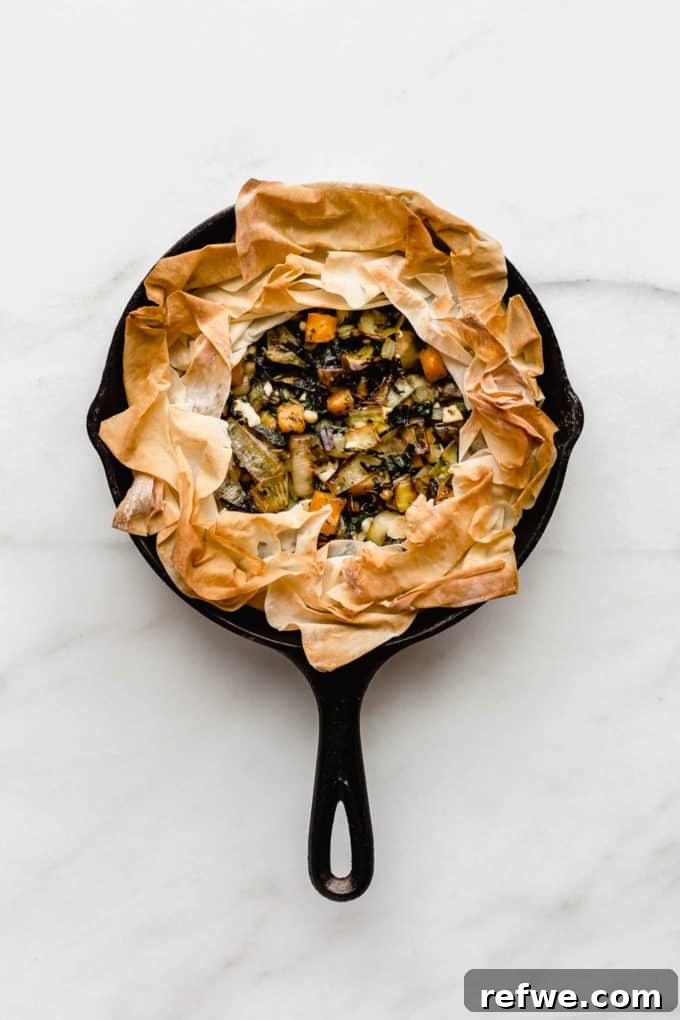
Hearty Veggie Skillet Phyllo Pie: Caramelized Leeks, Swiss Chard & Butternut Squash
Are you searching for an impressive vegetarian recipe that not only tastes incredible but is also surprisingly simple to prepare? Look no further! This Veggie Skillet Phyllo Pie is a culinary masterpiece that will dazzle your guests and delight your taste buds, all without requiring hours in the kitchen.
Our recipe for Veggie Skillet Phyllo Pie is a true showstopper, boasting a beautiful presentation and a flavor profile that is rich and deeply satisfying. It features a harmonious blend of sweet caramelized leeks, earthy Swiss chard, and tender butternut squash, all encased in a wonderfully flaky phyllo crust. While these specific vegetables create a fantastic combination, this recipe is incredibly adaptable, allowing you to easily incorporate any of your favorite seasonal vegetables or whatever you have on hand.
Customize Your Pie: Delicious Vegetable Substitutions and Add-ins
The beauty of this Veggie Skillet Phyllo Pie lies in its versatility. While our chosen trio of leeks, Swiss chard, and butternut squash provides a perfect balance of flavors and textures, feel free to experiment with other vegetables to suit your preferences or what’s in season. Here are some fantastic options to consider adding or substituting:
- Asparagus: For a touch of spring freshness, add chopped asparagus spears. They lend a slightly bitter note that complements the other sweet and savory elements beautifully. Lightly blanch them before adding to the skillet for best results.
- Spinach or Kale: If Swiss chard isn’t available or you prefer other leafy greens, spinach or kale are excellent alternatives. Spinach wilts down quickly, adding a mild flavor, while kale offers a heartier texture and a slightly more robust, earthy taste. Ensure you massage kale with a little oil before cooking to tenderize it.
- Shallots or Sweet Onion: Enhance the aromatic base by substituting or adding finely chopped shallots or sweet onions alongside the leeks. They caramelize beautifully, deepening the overall flavor.
- Sweet Potato, Pumpkin, Zucchini, or Other Squash Varieties: Beyond butternut squash, feel free to use other root vegetables or squash. Sweet potatoes add a similar sweetness and creamy texture, while pumpkin offers an autumnal flair. Zucchini is a lighter option for summer, just be sure to pat out excess moisture after cooking.
- Parmesan Cheese or Crumbled Goat Cheese: Elevate the cheesy goodness! While feta is classic, grated Parmesan can add a sharp, salty punch, or crumbled goat cheese can introduce a creamy tanginess that pairs wonderfully with the vegetables.
- Fresh Herbs: Don’t limit yourself to dried thyme. Fresh herbs like rosemary, sage, oregano, or dill can transform the pie’s aromatic profile. Add them in the final stages of cooking the vegetables to preserve their vibrant flavors.
- Mushrooms: Sliced mushrooms (cremini, button, or even a mix of wild mushrooms) sautéed until golden can add a wonderful umami depth to the filling.
- Bell Peppers: Diced bell peppers of any color can provide a sweet crunch and vibrant color.
Phyllo Dough vs. Puff Pastry: Understanding the Difference
For those new to baking with specialty doughs, it’s common to wonder about the distinction between phyllo dough and puff pastry. While both are used to create flaky crusts, they are fundamentally different in their texture, composition, and how they behave when baked, leading to distinct culinary results.
Phyllo dough (also spelled filo) is renowned for its paper-thin, delicate sheets. It’s incredibly light and, when brushed with oil or butter and baked, transforms into a shatteringly crispy texture. Unlike puff pastry, phyllo dough does not contain fat inherently within its layers; the flakiness is achieved by layering multiple sheets, each brushed with fat. This results in a much lighter, crispier crust. You’ll typically find phyllo dough in the freezer section of your local grocery store, requiring thawing before use.
Puff pastry, on the other hand, is a laminated dough, meaning butter is folded into the dough repeatedly to create hundreds of ultra-thin layers of fat and dough. When baked, the water in the butter turns to steam, causing these layers to puff up dramatically. This results in a dough that is much flakier, richer, and denser than phyllo. Puff pastry has a more substantial, buttery chew and is often rolled out before use. It creates a more robust, bread-like crust compared to the delicate crispness of phyllo.
The Simple Steps to Creating Your Skillet Phyllo Pie
Despite its elegant appearance, this Veggie Skillet Phyllo Pie is remarkably straightforward to assemble. The process can be broken down into a few key stages: preparing the savory vegetable filling, mixing it with the egg and feta binder, and then artfully assembling the phyllo crust in your skillet before baking to golden perfection.
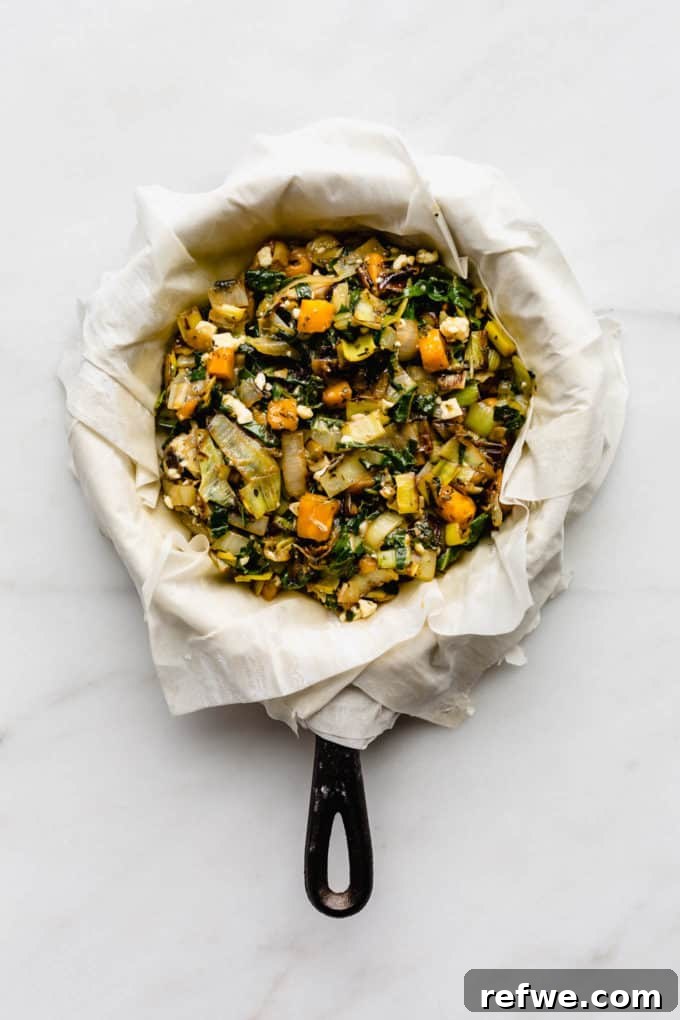
First, you’ll cook all your chosen vegetables in a skillet on the stovetop until they are tender and flavorful, with the leeks beautifully caramelized. Once the veggies have cooled slightly, they are mixed with eggs and crumbled feta cheese, which acts as a delicious binder for the filling. With your filling ready, the exciting part begins: carefully layering the delicate sheets of phyllo dough into your pan, creating the foundation for your pie.
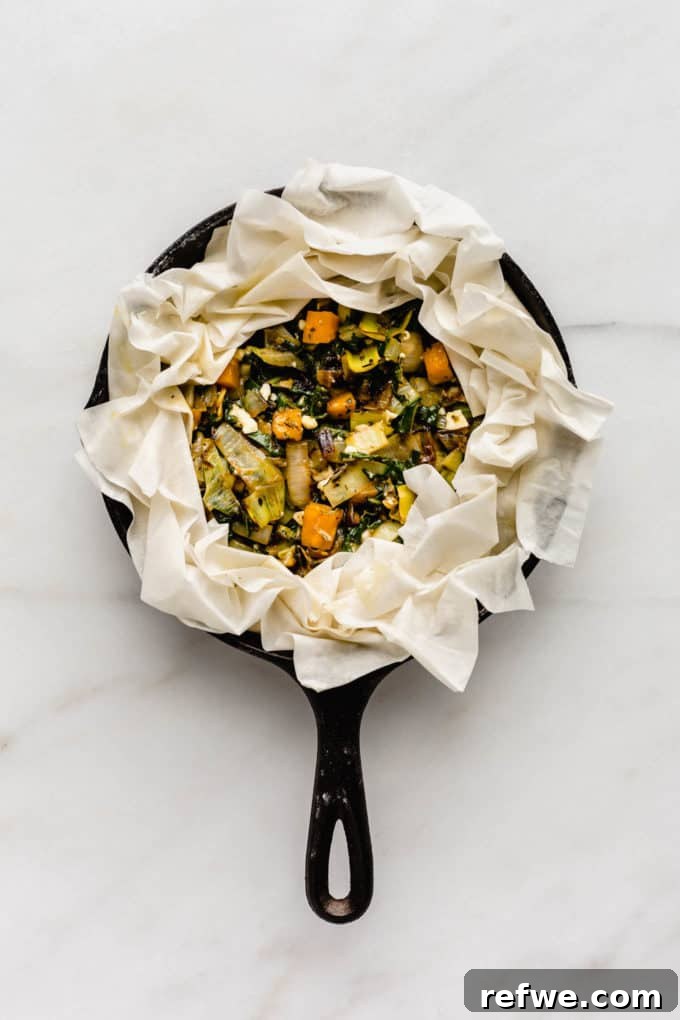
Next, to achieve that rustic, beautiful presentation, you’ll gently fold the overhanging edges of the phyllo dough sheets inward, creating a charming, somewhat crinkled border around the vegetable filling. This not only looks appealing but also helps to secure the filling. The final touch before baking is to brush the folded phyllo with a little more olive oil to ensure it bakes up perfectly golden and crisp.
Finally, the pie is baked in the oven for approximately 20-25 minutes, or until the phyllo dough turns a magnificent golden brown and becomes wonderfully crispy. Once it’s out of the oven, allow it to cool slightly, then slice and serve this truly impressive and delicious dish!
Adapting the Recipe: Baking in a Traditional Pan
Prefer not to bake your phyllo pie in a skillet? No problem at all! This recipe is incredibly adaptable and can be easily prepared in an 8×8 inch (or similar sized) baking pan. The method remains largely the same, offering the same delicious results with a slightly different presentation.
Simply follow all the instructions for cooking the vegetable filling. Then, instead of layering the phyllo dough directly into a skillet, carefully arrange the sheets into your prepared baking pan, ensuring each layer is brushed with olive oil. You can choose to leave the top open with just the folded edges, or for a more enclosed pie, you can create a top “crust” by layering a few additional phyllo sheets over the filling before folding and brushing with oil. This method is great for potlucks or when you need a more uniform slice.
Expert Tips for a Perfectly Crispy and Flavorful Phyllo Pie
Achieving a truly outstanding Veggie Skillet Phyllo Pie is easy when you keep a few key tips in mind. These small adjustments can make a big difference in both the texture and flavor of your finished dish:
- Manage Oil for Leeks: Leeks have a tendency to absorb a lot of oil during cooking. If you’re not using a non-stick pan, be prepared to add a little extra avocado or vegetable oil to the skillet as you continue to sauté the vegetables. This prevents sticking and ensures proper caramelization without burning.
- Season to Taste: Before you combine the cooked vegetable mixture with the eggs and feta, take a moment to taste it. This is your opportunity to adjust any seasonings, adding a pinch more salt, pepper, or herbs if needed. Getting the seasoning right at this stage ensures a perfectly balanced flavor in the final pie.
- Cool Down Your Veggies: This is a crucial step! It’s important to allow your sautéed vegetables to cool down to room temperature before mixing them with the whisked eggs. Adding hot vegetables to eggs can cause them to scramble or partially cook prematurely, which is something we want to avoid for a smooth, cohesive filling.
- Brush Phyllo Generously: Phyllo dough is extremely delicate and can dry out quickly, becoming brittle and hard to work with. To ensure a beautifully golden, crispy, and pliable crust, generously brush each layer of phyllo dough with olive oil (or melted butter). This fat creates the distinct flaky layers that are characteristic of phylly recipes.
- Thaw Phyllo Properly: Always thaw frozen phyllo dough slowly in the refrigerator overnight. If you’re short on time, you can thaw it at room temperature for about 3-4 hours, but avoid microwaving as it can make the dough rubbery and difficult to separate.
- Keep Phyllo Covered: Once thawed and unwrapped, phyllo dough can dry out in minutes. Keep the unused sheets covered with a damp (but not wet) kitchen towel or plastic wrap while you work on layering the pie.
- Don’t Overfill: While it’s tempting to cram in as many veggies as possible, ensure you don’t overfill the pie. Leave a little space for the phyllo to fold over and create a proper crust.
- Pre-cook Harder Vegetables: For vegetables like butternut squash, sweet potatoes, or carrots, ensure they are cooked until tender before adding them to the skillet with the other ingredients. This guarantees an even cooking time for all components within the pie.
Explore More Delicious Vegetarian Recipes
If you loved this Veggie Skillet Phyllo Pie, you’re sure to enjoy some of our other favorite vegetable-focused dishes. Perfect for weekly meals or special occasions, these recipes are designed to be both healthy and satisfying:
- Hearty Veggie Enchiladas
- Comforting Veggie Pot Pies
- Flavorful Chickpea Veggie Burgers
Veggie Skillet Phyllo Pie Recipe
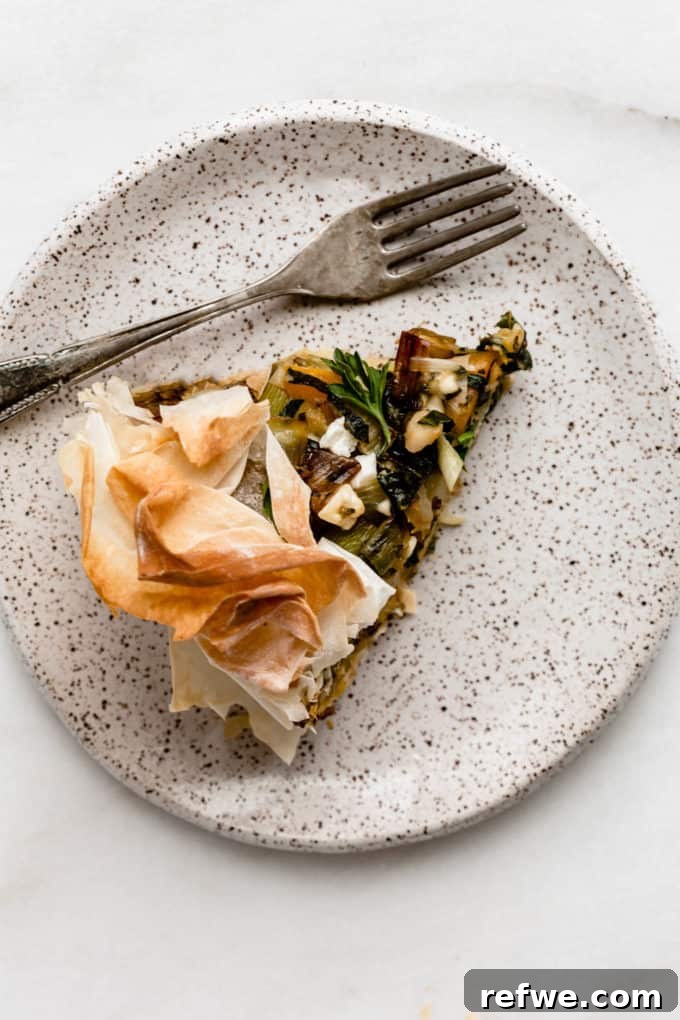
This Veggie Skillet Phyllo Pie is packed with hearty and comforting vegetables and creamy feta cheese, all nestled under a delicious, flaky phyllo crust!
Author: Jessica Hoffman
- Prep Time: 20 minutes
- Cook Time: 25 minutes
- Total Time: 45 minutes
- Yield: 6 servings
- Category: Side Dish / Main Course
- Method: Bake
- Cuisine: American
- Diet: Vegetarian
Ingredients
Vegetable Filling
- 2 tbsp avocado oil (or other vegetable oil)
- 3 cups leeks, chopped (about 1 large leek)
- 4 garlic cloves, peeled and chopped
- 1 cup cubed butternut squash, cooked* (see notes below)
- 4 cups Swiss chard, chopped (can substitute kale or spinach)
- 1/2 tsp salt
- 1/2 tsp pepper
- 1 tsp dried thyme
- 2 eggs, whisked
- 1 cup crumbled feta cheese
Other Ingredients
- 6 sheets phyllo dough, thawed
- Olive oil, for brushing
Instructions
- Heat the avocado oil in a 10-inch oven-safe skillet (like cast iron) over medium-high heat. Add the chopped leeks and cook for about 2 minutes. Reduce the heat to medium and continue cooking for 5-8 minutes, stirring occasionally, until the leeks begin to caramelize and soften.
- Next, add the minced garlic, cooked butternut squash cubes, chopped Swiss chard, salt, pepper, and dried thyme to the skillet. Cook for another 5 minutes, stirring everything together until the chard has wilted and the vegetables are tender. Remove the skillet from the heat and allow the vegetable mixture to cool completely to room temperature.
- While the vegetables cool, in a large mixing bowl, whisk together the eggs and crumbled feta cheese until well combined. Once the vegetable mixture is cool, pour it into the bowl with the egg and feta mixture. Stir everything gently until the vegetables are evenly coated. Set this filling aside.
- Clean your 10-inch skillet (if using the same one) or prepare another oven-safe pan. Brush the inside generously with olive oil to prevent sticking and ensure a crispy crust.
- Begin layering the phyllo dough into the pan. Take one sheet of phyllo and lay it vertically, letting the ends drape over the edges of the pan. Brush it lightly but thoroughly with olive oil. Take the next sheet and lay it horizontally, also letting the ends drape over, and brush with olive oil. Continue this alternating pattern (vertical, horizontal, diagonal if needed) with all 6 sheets, brushing each layer with olive oil and gently pressing each sheet into the contours of the pan.
- Once all the phyllo dough sheets are layered and brushed, carefully pour the prepared vegetable and feta mixture into the center of the phyllo-lined pan, spreading it evenly.
- Gently gather the overhanging edges of each phyllo sheet and fold them inward over the filling, creating a rustic, pleated border around the edges of the pan. Brush these folded phyllo edges generously with olive oil one last time to ensure they crisp up beautifully.
- Bake the phyllo pie in a preheated oven at 350 degrees F (175 degrees C) for approximately 20-25 minutes, or until the phyllo dough is golden brown and deliciously crispy.
- Remove from the oven, let it cool for a few minutes, then slice into wedges and serve warm.
Notes
- *The butternut squash must be cooked beforehand. You can roast it in the oven (toss cubes with olive oil, salt, and pepper, then roast at 400°F/200°C for 20-25 minutes) or cook it in the microwave until tender. Using store-bought pre-cut squash can significantly speed up your prep time.
- Don’t discard the Swiss chard stems! After cutting off the very ends, you can chop the stems into small pieces and add them to the skillet with the leeks. They provide extra texture and nutrients to the veggie pie.
- As mentioned, leeks are quite absorbent. If your skillet is not non-stick, or if the vegetables appear dry during cooking, don’t hesitate to add a little more olive oil to ensure they cook evenly and caramelize well.
- Always taste your vegetable mixture before adding the eggs. This allows you to make any final adjustments to the seasoning (salt, pepper, herbs) to ensure the filling is perfectly flavored.
- It is crucial to let the cooked vegetable mixture cool completely to room temperature before combining it with the whisked eggs. If the vegetables are still hot, they will partially cook the eggs, leading to a lumpy or rubbery texture in your filling.
- Brushing each layer of phyllo dough thoroughly with olive oil is paramount. Phyllo is very thin and delicate; the oil not only adds flavor but also prevents it from drying out, helping to create those wonderful, crisp, individual layers when baked.
Nutrition Information
- Serving Size: 1/6th of the recipe
- Calories: 227
- Fat: 12g
- Carbohydrates: 22g
- Fiber: 2g
- Protein: 8g
If you tried this Veggie Skillet Phyllo Pie or any other recipe on the blog, please let us know how you liked it by leaving a comment and rating below! We love hearing from you. Be sure to follow along on Pinterest, Instagram, and Facebook for even more delicious and healthy recipe inspiration!