
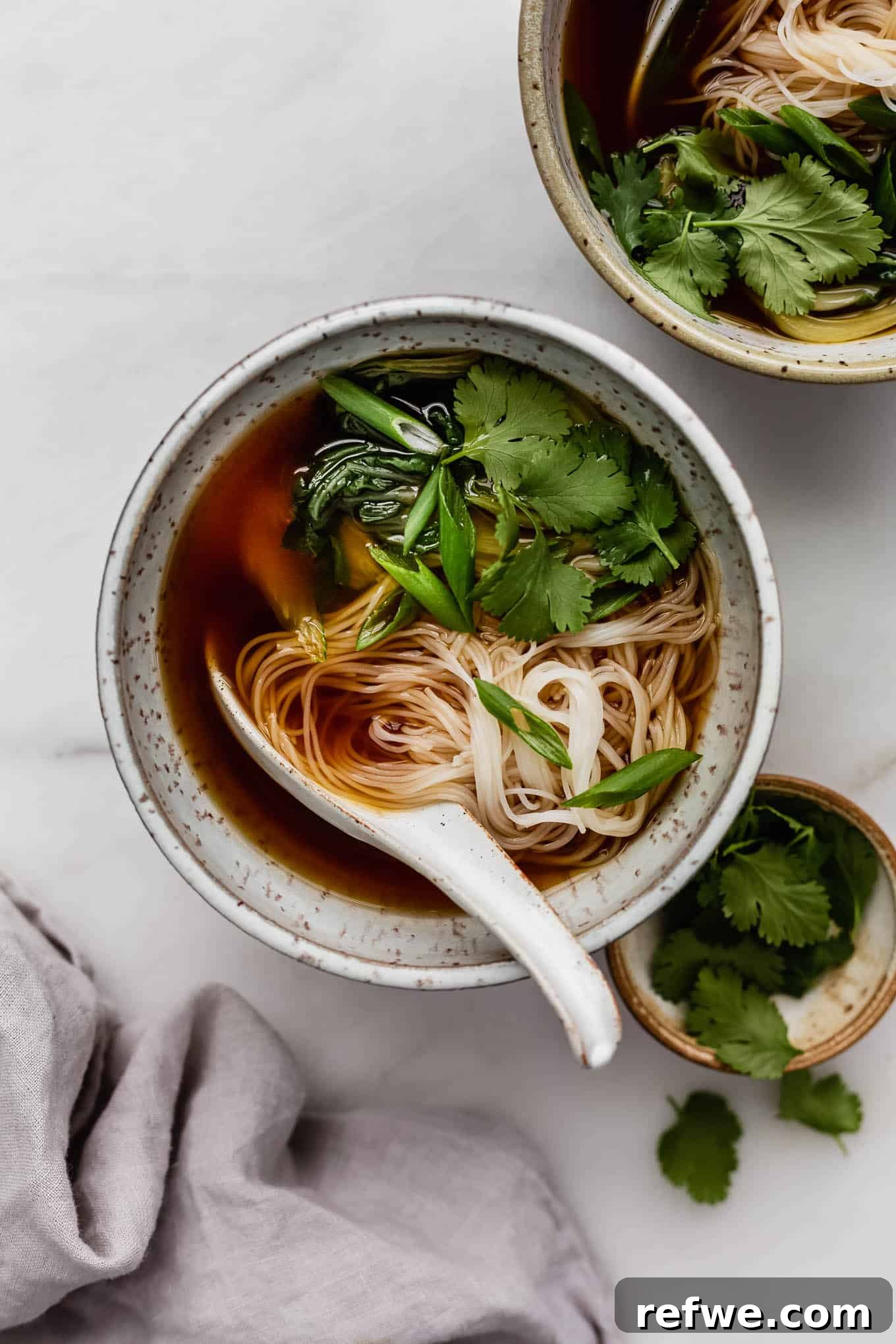
Easy & Flavorful Vegan Pho: Your Go-To 30-Minute Noodle Soup
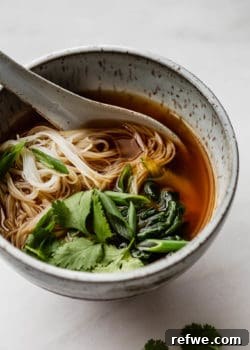
Embark on a culinary journey with this incredibly easy and remarkably flavorful Vegan Pho recipe. Infused with traditional warming spices like cinnamon, star anise, and cloves, this plant-based Vietnamese noodle soup is designed for comfort and convenience. Whether you’re craving a light appetizer or a hearty, satisfying meal, this recipe delivers an authentic taste experience in just 30 minutes.
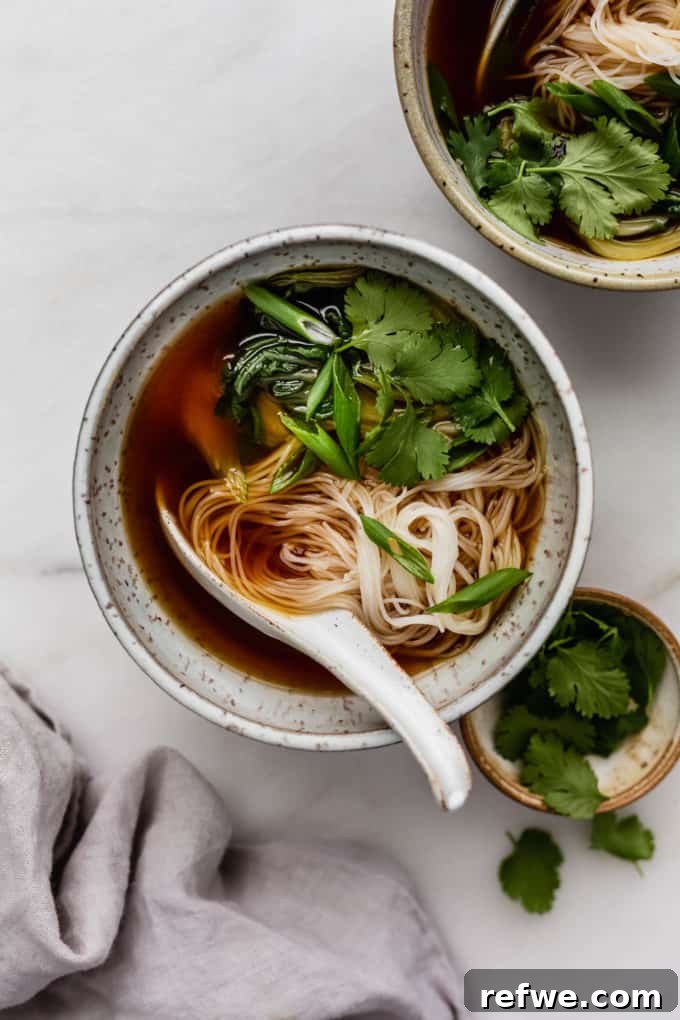
Why You’ll Fall in Love with This Vegan Pho Recipe
This isn’t just another soup recipe; it’s a culinary hug in a bowl, crafted for modern kitchens and busy lives. Here’s why this vegan pho will quickly become a cherished favorite:
- Unbeatable Comfort for Colder Seasons: As the temperatures drop, there’s nothing quite like a steaming bowl of fragrant pho to warm you from the inside out. The rich, spiced broth of this recipe is meticulously designed to provide ultimate comfort and coziness, making it ideal for chilly evenings.
- Effortless & Time-Saving Prep: Forget spending hours simmering broth from scratch! This ingenious pho soup comes together in approximately 30 minutes thanks to a clever shortcut: using quality store-bought vegetable stock and infusing it deeply with a symphony of spices. This means you can enjoy an incredibly flavorful homemade pho without the extensive kitchen fuss.
- Versatile Dining Experience: This soup is wonderfully adaptable to any occasion. Serve smaller portions as a sophisticated and aromatic appetizer to delight your guests, or fill a larger bowl for a truly satisfying and wholesome main course. Being entirely vegan and gluten-free, it caters to a wide range of dietary preferences without compromising on taste.
- Rich, Authentic Flavors: Despite its quick preparation, this vegan pho doesn’t skimp on authentic flavor. By charring key aromatics and carefully selecting a blend of traditional Vietnamese spices, we recreate the complex, savory depth typically found in slow-simmered pho.
- Healthy & Wholesome: Loaded with fresh vegetables, herbs, and plant-based protein (if you choose to add tofu), this pho is not only delicious but also incredibly nourishing. It’s a light yet fulfilling meal that supports a healthy lifestyle.
What is Pho? A Vietnamese Culinary Staple
Pho (pronounced “fuh”) is a renowned Vietnamese noodle soup, celebrated worldwide for its incredibly aromatic broth, tender rice noodles, and fresh herbaceous toppings. Traditionally, pho broth is simmered for many hours, often made with beef (phở bò) or chicken (phở gà), and deeply flavored with a distinctive blend of spices like star anise, cinnamon, cloves, and black cardamom, along with charred onion and ginger. Its origins can be traced back to the early 20th century in Northern Vietnam and has since evolved into a national dish, enjoyed at all times of the day.
While classic pho relies heavily on animal-based broths, this recipe offers a thoughtful and flavorful plant-based interpretation. Our Vegan Pho captures the essence of traditional pho by focusing on those essential spices and charring techniques, ensuring a rich, umami-packed broth that stands proudly alongside its conventional counterparts. It’s an homage to the intricate flavors of Vietnam, re-imagined for the vegan palate.
Instead of the laborious process of making vegetable stock from scratch, we leverage the convenience of high-quality store-bought vegetable stock. This “hack” significantly cuts down on preparation time without sacrificing depth of flavor, allowing us to infuse it quickly with the signature pho aromatics. This approach is a fantastic time-saver I frequently use for many Asian-inspired soups, much like my quick and easy Vegan Ramen Recipe.
Is Pho Vegan? Understanding Traditional vs. Plant-Based Pho
By traditional standards, a typical pho broth is generally not vegan. It is almost always made with beef or chicken bones, simmered for many hours to extract rich flavors and collagen, often seasoned with fish sauce. However, the beauty of pho lies in its incredible versatility and the possibility of adaptation.
This recipe proudly demonstrates that you absolutely can create an exceptionally delicious and authentic-tasting Vegan Pho broth right in your own kitchen! By meticulously selecting and combining a few key plant-based ingredients and spices, we achieve a depth of flavor that is both satisfying and true to the spirit of this Vietnamese classic. We replace animal-based ingredients with powerful vegan alternatives to ensure a savory, umami-rich experience that even traditional pho lovers will appreciate.
The Heart of the Dish: Perfecting Vegan Pho Broth
The broth is undeniably the soul of any pho. In this vegan rendition, we dedicate special attention to crafting a broth that is both quick to prepare and bursting with the complex, aromatic profile that defines authentic pho.
What defines the flavor of pho broth?
The hallmark flavors that give pho broth its distinctive character are a harmonious blend of charred onion and ginger, coupled with exotic warming spices. Specifically, the stars of the show are star anise, cinnamon, and cloves, often complemented by cardamom. These ingredients create a broth that is incredibly fragrant, subtly sweet, savory, and deeply flavorful, with a warmth that lingers beautifully on the palate. The charring of the onion and ginger is a crucial step, as it adds a smoky depth and sweetness that cannot be achieved otherwise.
Is pho broth synonymous with beef broth?
While many people associate pho broth primarily with beef broth due to the popularity of phở bò, it’s important to recognize that the unique identity of pho comes from its specific aromatic spices and seasoning, rather than just the base stock. Pho can indeed be made with chicken broth or, as in this recipe, a rich vegetable broth. Regardless of the base, the consistent inclusion of signature spices like star anise, cinnamon, and charred aromatics ensures that the broth retains that unmistakable “pho flavor.” Our vegan pho broth is so intensely packed with these traditional flavors that you absolutely won’t miss the beef broth; its savory depth and aromatic complexity are truly outstanding.
Does this pho broth recipe include soy sauce?
Traditional pho recipes often rely on fish sauce or a combination of fish sauce and soy sauce to add salinity and umami depth. Since this recipe is crafted to be entirely vegan, we utilize soy sauce as a primary seasoning agent to replicate that essential salty and savory foundation. If you are following a gluten-free diet, simply ensure you opt for a high-quality gluten-free soy sauce or tamari to maintain the integrity of the broth’s flavor profile without introducing gluten.
What Are the Essential Ingredients for Vegan Pho?
Crafting a flavorful vegan pho requires a thoughtful selection of ingredients that build layers of umami and aromatic depth. Here’s a breakdown of what you’ll need and why each component is crucial:
- Onion: A fundamental ingredient. Charred onion provides a crucial smoky sweetness and depth to the broth. A regular white or yellow onion works perfectly here. The charring process brings out its natural sugars and adds a foundational savory note.
- Ginger: Fresh ginger, when charred, adds a spicy, pungent, and slightly sweet aroma that is indispensable to pho. It brightens the broth and contributes to its overall warming sensation.
- Spices: This recipe calls for a specific combination of whole spices:
- Star Anise: Essential for its distinct licorice-like aroma and sweetness.
- Cloves: Add a warm, intense, and slightly pungent flavor.
- Cardamom: Contributes a complex, slightly citrusy, and floral note.
- Cinnamon Stick: Provides a sweet, woody warmth.
I strongly advise against substituting any of these spices. Each one plays a unique and vital role in achieving the authentic, complex pho flavor profile. Toasting them briefly helps to release their full aromatic potential.
- Shiitake Mushrooms: Both dried or fresh shiitake mushrooms are excellent additions. They significantly enhance the broth with a rich, earthy umami flavor, providing a meatiness often missing in vegetarian broths and giving the soup a fuller body. If using dried, reconstitute them first.
- Vegetable Stock: The base of our quick broth. Use your favorite high-quality store-bought vegetable stock or broth. Look for one with a robust flavor but relatively low sodium, as we will adjust seasoning later.
- Miso Paste: I prefer white miso paste for its delicate, sweet, and mild umami flavor, but dark miso can also be used for a deeper, more intense savoriness. Miso is a game-changer for vegan broth, adding incredible umami, richness, and depth that mimics the mouthfeel of traditional meat-based broths. It’s vital for ensuring a truly satisfying flavor.
- Soy Sauce: Used for seasoning and adding essential saltiness and umami. For a gluten-free option, be sure to use tamari or a certified gluten-free soy sauce.
- Coconut Sugar: A small amount of coconut sugar introduces a hint of balanced sweetness, which is crucial for rounding out the salty and savory elements of the broth and achieving a classic pho balance. You can also use brown sugar.
How to Make Vegan Pho: A Step-by-Step Guide to Perfection
Creating this flavorful vegan pho is simpler than you might imagine, bringing the vibrant tastes of Vietnam into your home with ease. Follow these steps for a perfect bowl:
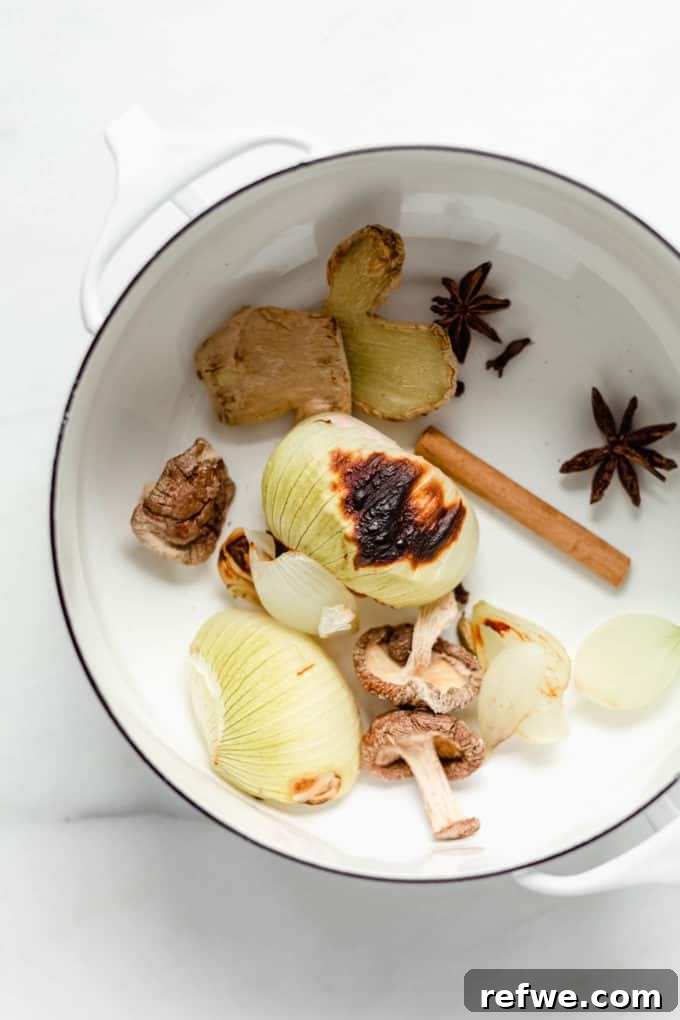
- Char the Aromatics: Begin by preparing your onion and fresh ginger. Peel and cut the onion in half, and slice the ginger into generous pieces. Place them face down on a baking sheet. Broil them in the oven for about 10-15 minutes, or until their surfaces are nicely blackened and fragrant. This crucial step brings out their natural sweetness and introduces a smoky depth that is fundamental to authentic pho flavor.
- Toast the Spices and Mushrooms: Transfer the charred onion and ginger to a large pot. Add your whole spices – star anise, cloves, cardamom pods, and cinnamon stick – along with the shiitake mushrooms. Toast these ingredients over medium-high heat for 1-2 minutes, stirring gently, until they become intensely fragrant. This brief toasting period awakens their essential oils, significantly amplifying their flavors for the broth.
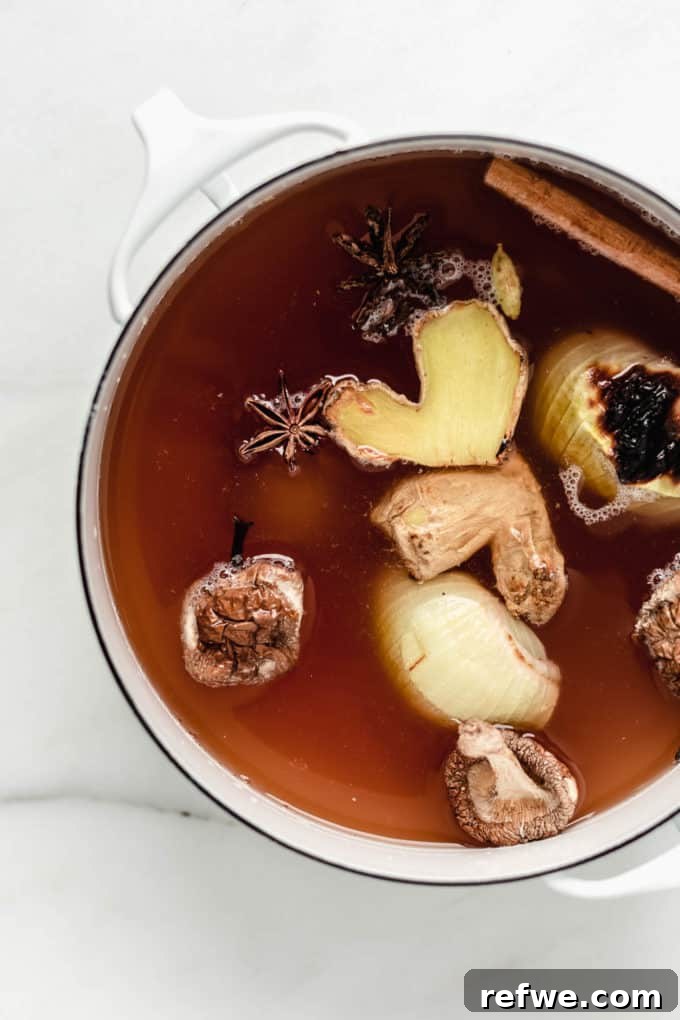
- Simmer the Broth: Pour the vegetable stock into the pot. Stir in the miso paste, soy sauce (or tamari), and coconut sugar. Bring the mixture to a rolling boil for about 1 minute, ensuring all the flavors begin to meld.
- Gentle Simmering for Flavor Infusion: Reduce the heat to low, cover the pot, and let the broth gently simmer for 15-20 minutes. This allows ample time for all the beautiful spice and aromatic flavors to fully infuse into the stock, creating a complex and deeply satisfying broth.
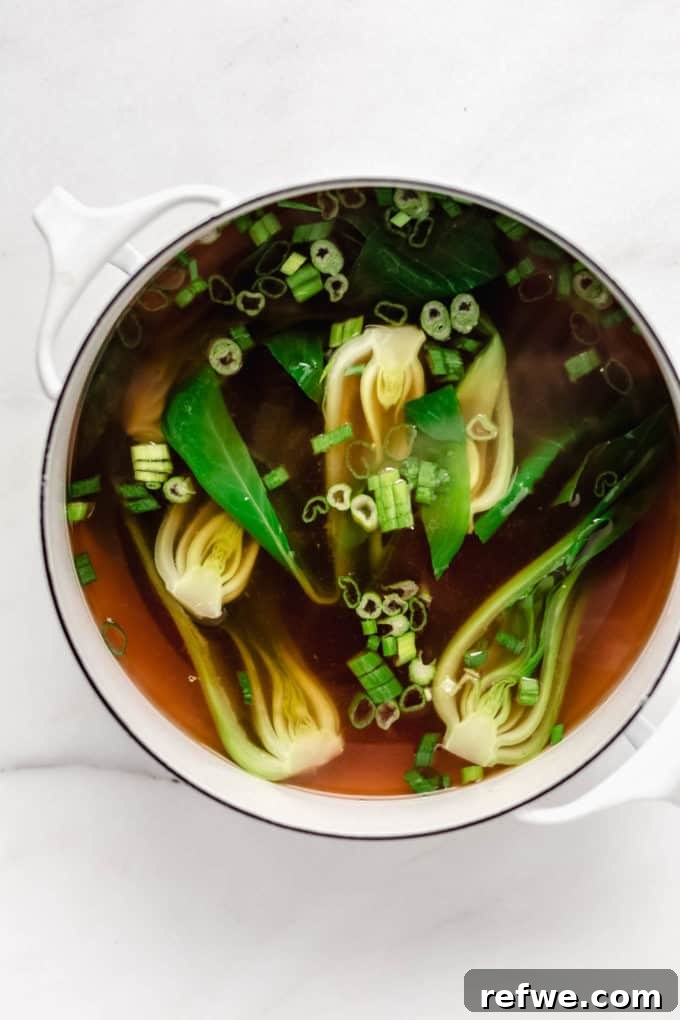
- Strain and Add Fresh Vegetables: Carefully strain the soup through a fine-mesh sieve to remove all the solid spices, onion, and ginger, leaving you with a clear, exquisitely flavored broth. Return the strained broth to the pot. Add your chosen fresh vegetables, such as baby bok choy and chopped green onions. Cook them in the simmering broth over medium heat for 2-3 minutes, just until they are tender-crisp. You want them cooked but still retaining some bite and vibrant color.
- Prepare Noodles and Assemble: While the broth simmers, cook your rice noodles separately according to package instructions. It’s important not to cook them directly in the broth, as they will absorb too much liquid and can make the broth cloudy. Once cooked, rinse them briefly under cold water to prevent sticking.
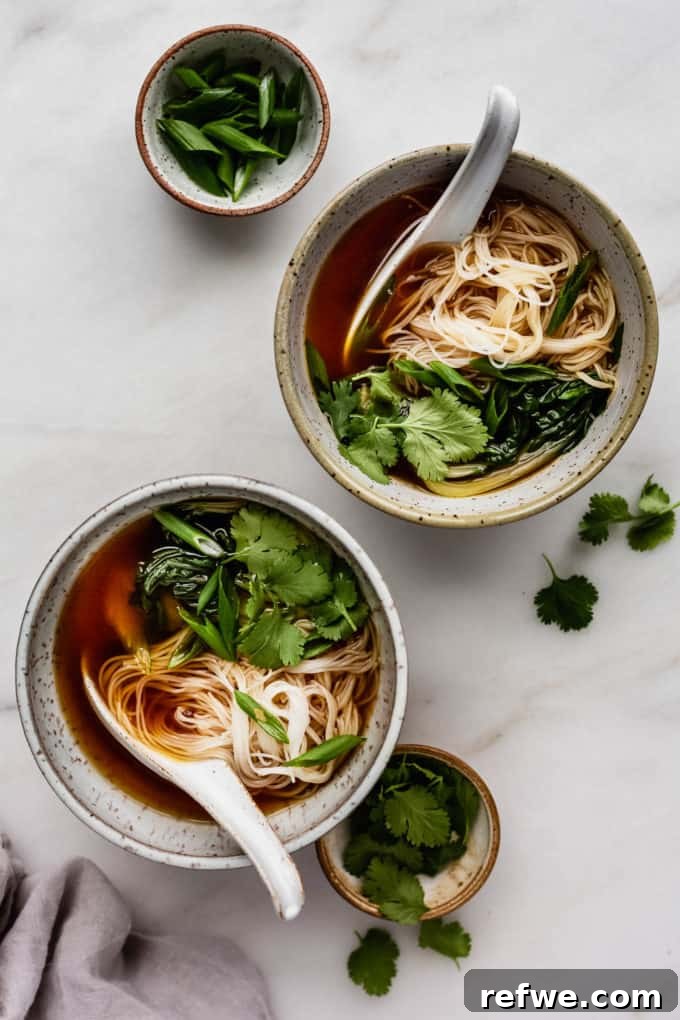
- Serve with Fresh Toppings: To serve, divide the cooked rice noodles among large bowls. Ladle the hot, aromatic broth over the noodles and tender vegetables. Garnish generously with fresh bean sprouts, cilantro, and additional green onions. Offer lime wedges, hoisin sauce, and sriracha on the side for diners to customize their bowls to taste. Enjoy immediately!

What Should I Put in My Pho? Essential and Optional Toppings
The beauty of pho lies not only in its rich broth but also in the vibrant array of fresh toppings that allow each diner to customize their bowl. While certain elements are traditionally served, feel free to get creative with your favorite plant-based additions.
Traditional Pho Toppings:
Traditionally, a pho recipe is served with a generous side platter of crisp bean sprouts, fragrant Thai basil leaves, and refreshing mint. These fresh herbs and sprouts add contrasting textures and bursts of flavor that elevate the soup.
Recommended Vegan Additions:
For this specific Vegan Pho recipe, I’ve incorporated tender baby bok choy and crunchy bean sprouts directly into the soup or as a garnish. However, the possibilities for customization are endless. Here are some other delicious vegan vegetables and plant-based proteins you could consider adding:
- Broccoli or Chinese Broccoli (Gai Lan): Adds a pleasant bite and nutritional boost.
- Snow Peas: Offer a sweet crunch and vibrant green color.
- Shredded Cabbage: Provides a subtle sweetness and texture.
- Steamed Carrots: Adds a touch of sweetness and softness.
- Mushrooms: Sliced fresh shiitake, cremini, or oyster mushrooms can add more umami.
- Spinach or Kale: Wilted into the hot broth at the last minute.
- Soft Tofu or Fried Tofu Puffs: For a significant protein boost and satisfying texture.
- Seitan or Tempeh: Thinly sliced and lightly pan-fried for a chewy protein element.
- Lime Wedges: A squeeze of fresh lime juice brightens the entire dish.
- Fresh Chilies: Sliced bird’s eye chilies for those who love extra heat.
Experiment with different combinations to find your perfect vegan pho bowl!
How to Serve Pho Soup: The Complete Experience
Serving pho is an art that enhances the dining experience, allowing each person to customize their bowl to perfection. To truly enjoy this Vegan Pho, follow these serving suggestions:
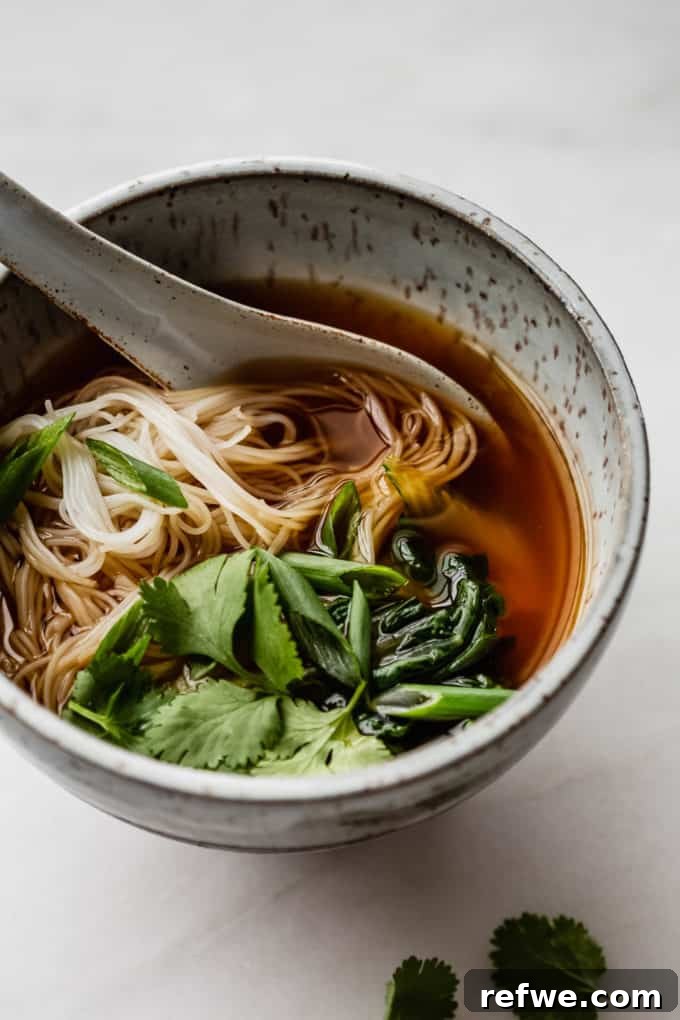
Pho soup is traditionally served with delicate rice noodles at the bottom, then generously ladled with the hot, aromatic broth, and topped with cooked vegetables (like the bok choy in this recipe). Alongside the bowl, a platter of fresh accompaniments is crucial. This typically includes crisp bean sprouts, aromatic mint leaves, fragrant Thai basil, and refreshing lime wedges. Additionally, small dishes of hoisin sauce and sriracha are provided, allowing you to add sweet, savory, or spicy notes to your soup as desired. For an extra touch of protein, consider adding some soft or silken tofu directly into your bowl.
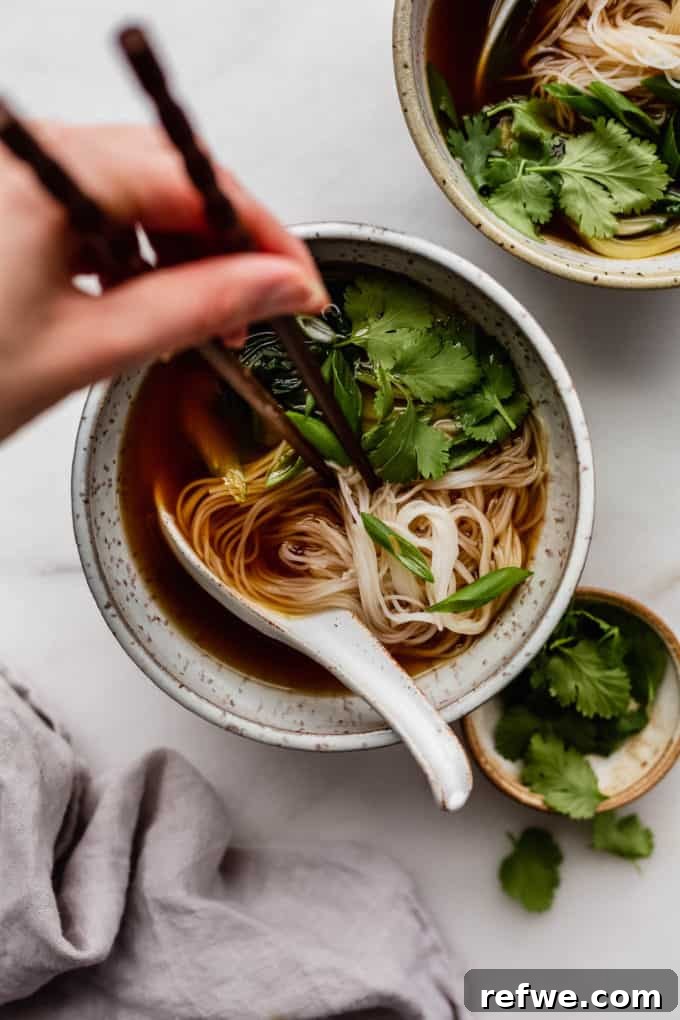
It’s best to serve this Vegan Pho in a large, deep bowl. This not only accommodates all the delicious ingredients but also helps prevent splashes as you enjoy your meal. Pho is traditionally eaten with chopsticks for picking up the noodles and vegetables, complemented by a large, flat soup spoon to savor every drop of the exquisite broth. Embrace the interactive nature of pho by adding your desired condiments and herbs bit by bit, tasting and adjusting until it’s just right for you.
Storing and Freezing Pho Soup for Future Enjoyment
This Vegan Pho is so delicious, you’ll likely want to make a big batch or save leftovers for another day. Proper storage is key to maintaining its incredible flavor and texture:
Refrigeration: To store any leftover Vegan Pho, transfer the broth to an airtight container and refrigerate it. It will keep beautifully in the fridge for up to a week. It’s crucial to store the cooked rice noodles separately from the broth. If the noodles sit in the broth for too long, they will absorb too much liquid, become soggy, and lose their desirable texture. When reheating, simply warm the broth gently on the stovetop, cook fresh noodles, and combine them just before serving.
Freezing: The Vegan Pho broth also freezes exceptionally well, making it perfect for meal prepping. Freeze just the broth without any of the cooked vegetables or noodles. Portion it into freezer-safe containers or bags. When you’re ready to enjoy it, thaw the broth on the countertop or in the refrigerator overnight, then gently reheat on the stove. You can then add fresh vegetables and freshly cooked noodles. Freezing the broth alone ensures that its aromatic qualities are preserved and that the accompanying fresh ingredients remain crisp and vibrant upon serving.
Expert Tips for Making This Pho Soup Recipe Perfectly
Achieving a truly exceptional bowl of vegan pho is easy with a few insider tips. These suggestions will help you maximize flavor and ensure a delightful dining experience:
- Don’t Skip Charring the Onion and Ginger: This step is non-negotiable for authentic pho flavor. Broiling or roasting the onion and ginger in the oven until nicely blackened on the outside helps to caramelize their natural sugars and imparts a wonderful smoky depth. This crucial process contributes immensely to a more flavorful, rich-tasting broth that forms the backbone of your pho.
- Cook Rice Noodles Separately: Always cook your rice noodles in a separate pot of boiling water, not directly in the pho broth. If you cook the noodles in the broth, they will absorb a significant amount of the precious liquid, leaving you with much less soup broth for serving. Furthermore, the starches released from the noodles can make your clear, aromatic broth cloudy. Cook them just until al dente, rinse quickly, and add to your serving bowls.
- Customize with Condiments: Enhance your pho experience by topping it off with a generous squeeze of sriracha for heat and a drizzle of hoisin sauce for a touch of sweetness and umami. This is a very traditional way to serve pho and allows each diner to tailor the flavors to their personal preference. Don’t forget fresh lime wedges for a burst of acidity!
- Consider Using Whole Spices: While ground spices might seem convenient, whole spices offer a more nuanced and vibrant flavor profile for the broth. Toasting them briefly before simmering further enhances their aromatic potency.
- Embrace Miso for Umami: Miso paste is a vegan pho’s best friend. It provides that deep, savory umami flavor that can often be missing in plant-based broths, effectively standing in for the richness of meat-based stocks.
- Patience with Simmering: Even with a quick broth, allowing it to simmer for the full 15-20 minutes is important. This ensures that the intense flavors from the charred aromatics and spices fully infuse the vegetable stock, creating a harmonious and well-rounded taste.
- Broth is Better the Next Day: Like many soups, the flavors in this pho broth tend to deepen and meld even further overnight. If you have the luxury, make the broth a day ahead and store it in the fridge. Reheating it the next day will reveal an even more intensely flavored and aromatic soup.
- Add Protein for a Heartier Meal: If you’re looking to boost the protein content, consider adding soft tofu, marinated and pan-fried tofu, or even seitan or tempeh slices to your bowl. They absorb the broth’s flavors beautifully and make the meal even more substantial.
Explore More Delicious Vegan Soup Recipes
If you’ve fallen in love with the comforting and flavorful experience of this Vegan Pho, you’ll be delighted to know there are many more plant-based soup adventures waiting for you. Dive into these other wholesome and delicious vegan soup recipes:
- Hearty One-Pot Vegan Minestrone Soup: A classic Italian favorite, packed with vegetables and pasta, all in one easy pot.
- Creamy Vegan Tomato Soup: Rich, velvety, and incredibly comforting, perfect for pairing with a grilled cheese sandwich.
- Northern-Style Thai Vegan Coconut Soup: An exotic and fragrant soup bursting with the flavors of lemongrass, ginger, and creamy coconut milk.
We hope you thoroughly enjoy creating and savoring this delightful Vegan Pho. If you tried this recipe or any other on our blog, we’d love to hear about your experience! Please share your thoughts by leaving a comment and rating below. Your feedback truly helps our community. For even more deliciousness and inspiration, be sure to follow along on Pinterest, Instagram, and Facebook!
Print Recipe
Vegan Pho
Author: Jessica Hoffman
Prep Time: 10 minutes
Cook Time: 20 minutes
Total Time: 30 minutes
Yield: 4 servings
Category: Main
Method: Cook
Cuisine: Vietnamese
Diet: Vegan
Description
This Vegan Pho recipe comes together in just 30 minutes for a quick and easy soup that’s packed with authentic Vietnamese flavor, perfect for a cozy and satisfying meal.
Ingredients
Units
- 1 large onion, peeled and cut in half
- 1 large piece of ginger, cut in half (about 3 inches)
- 2 star anise pods
- 5 whole cloves
- 2 green cardamom pods
- 1 cinnamon stick
- 4 dried shiitake mushrooms
- 1 liter vegetable stock
- 1 tbsp white miso paste (can substitute dark miso for a deeper flavor)
- 2 tsp soy sauce (use gluten-free tamari if needed)
- 2 tsp coconut sugar
- baby bok choy (or other vegetables of your choice, such as spinach, broccoli, or snow peas)
- green onions, chopped
For serving
- Rice noodles (vermicelli or flat rice noodles)
- Fresh bean sprouts
- Fresh cilantro, chopped
- Hoisin sauce (for drizzling)
- Sriracha (for a spicy kick)
- Lime wedges (for brightness)
- Fresh Thai basil and mint leaves
Instructions
- Place the onion and ginger, cut sides down, on a baking pan. Broil in the oven for approximately 10-15 minutes, or until the tops are visibly charred and fragrant. This step is crucial for developing deep flavor.
- Transfer the charred onion and ginger to a large pot. Add the star anise, cloves, cardamom pods, cinnamon stick, and dried shiitake mushrooms. Toast these ingredients over medium-high heat for 2-3 minutes, stirring constantly, until they release their rich, aromatic scents.
- Pour in the vegetable broth, then stir in the miso paste, soy sauce (or tamari), and coconut sugar. Bring the mixture to a rapid boil for 1 minute, allowing the flavors to begin infusing.
- Reduce the heat to low, cover the pot with a lid, and let the broth simmer gently for 20 minutes. This slow simmer ensures the spices and aromatics fully permeate the broth.
- Carefully strain the soup to remove all the solid spices, onion, and ginger, resulting in a clear and flavorful broth. Return the strained broth to the pot. Add the baby bok choy and chopped green onions (or your choice of vegetables) and cook in the simmering soup on medium heat for 2-3 minutes, until just tender-crisp.
- While the broth simmers, cook the rice noodles separately according to package directions. To serve, divide the cooked noodles among large bowls, ladle the hot broth over them, and garnish generously with fresh bean sprouts, cilantro, and additional green onions. Serve with lime wedges, hoisin sauce, and sriracha on the side for custom flavoring.
Notes
Charring is Key: Ensure you broil or roast the onion and ginger in the oven before adding them to the pot. This vital step helps to caramelize the sugars and build up a really nice, smoky flavor, which will give you a significantly more flavorful and rich-tasting broth.
Noodles Last: Always cook the rice noodles separately from the broth. If you cook them directly in the pho broth, they will absorb a lot of the liquid and you will end up with much less soup broth for serving. They also release starches that can make the broth cloudy.
Enhanced Flavor Overnight: This broth often tastes even better the next day! The flavors have more time to meld and deepen. Store the broth in an airtight container in your fridge and enjoy it the following day for an even more exquisite and flavorful soup experience.
Prevent Soggy Noodles: When storing leftovers, always keep the cooked noodles separately from the broth to prevent them from becoming soggy and clumpy.
Boost Your Protein: For an added nutritional boost and a heartier meal, consider incorporating some soft tofu, pan-fried tofu cubes, or even thinly sliced seitan into your recipe!
*Nutrition information provided below includes approximately 1/2 cup of cooked rice noodles per serving.
Nutrition
- Serving Size: 1/4 of the recipe
- Calories: 160
- Sugar: 4g
- Fat: 2g
- Carbohydrates: 28g
- Fiber: 1.5g
- Protein: 7g