
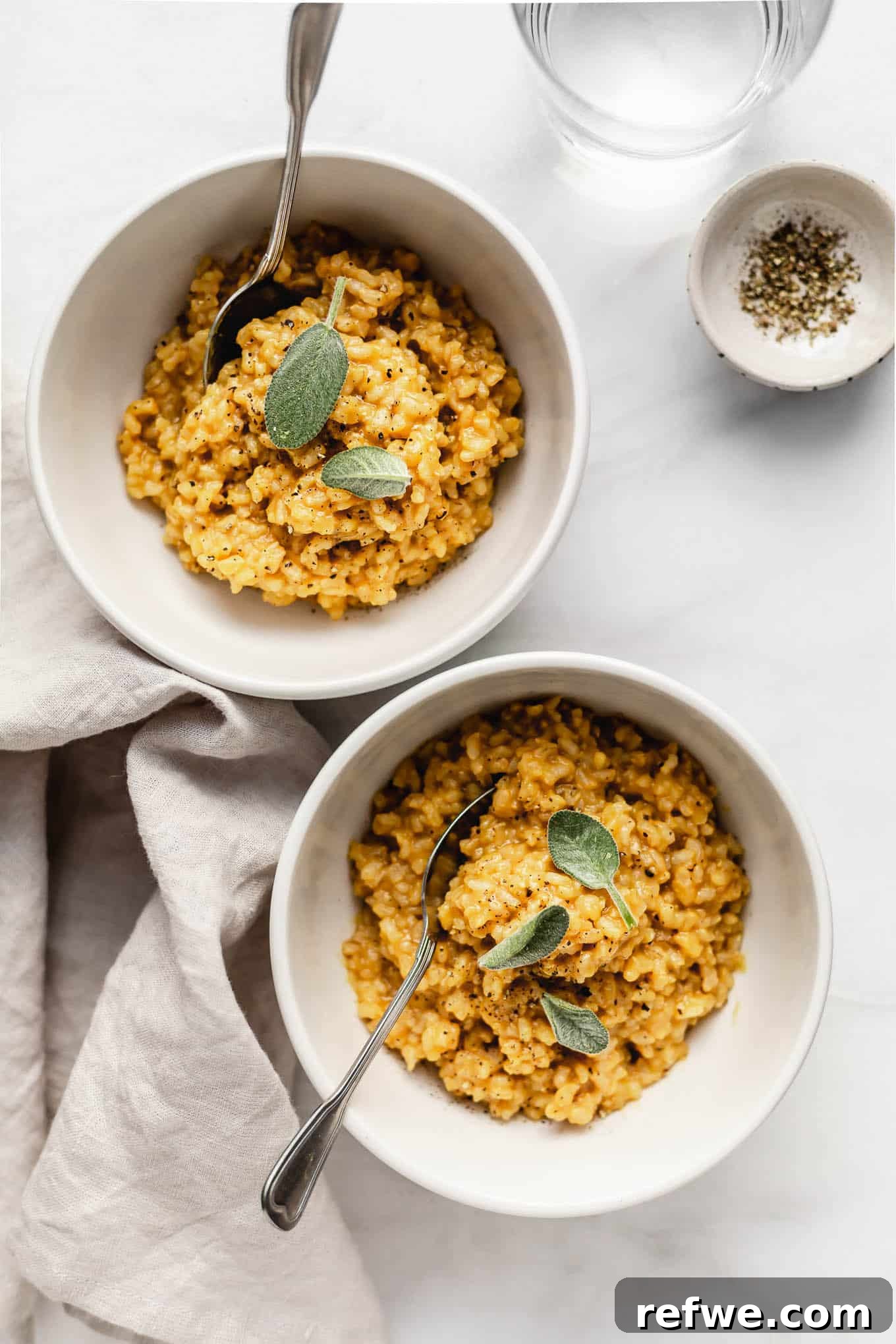
Indulge in the rich, comforting flavors of this **Roasted Butternut Squash Risotto**, a dish so exquisite it tastes like it emerged from the kitchen of a gourmet restaurant, yet is surprisingly simple to prepare in your own home. Ideal for elevating any special occasion or creating a memorable date night experience, this recipe is naturally **gluten-free** and can be effortlessly adapted to be **dairy-free**, ensuring everyone can enjoy its luxurious texture and vibrant taste. Prepare to impress your taste buds and guests with this elegant, hearty meal.
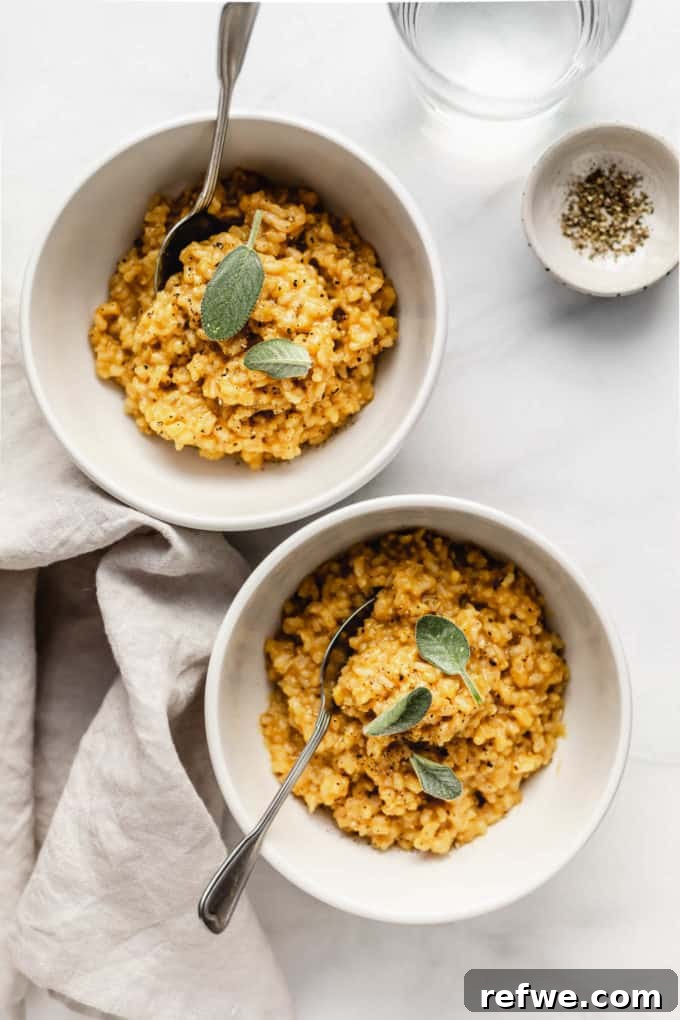
Easy Gourmet Butternut Squash Risotto: Mastering a Cozy Classic
Some evenings call for lightning-fast meals like a Slow Cooker Lentil Soup or a hearty Quinoa Chili. But then there are those special nights when you yearn for something more—a culinary project that allows you to slow down, savor the process, and reward yourself with a dish that feels undeniably luxurious. This **Roasted Butternut Squash Risotto** fits that description perfectly. It’s an invitation to elevate your weeknight dinner or make a weekend gathering truly special without the stress often associated with gourmet cooking.
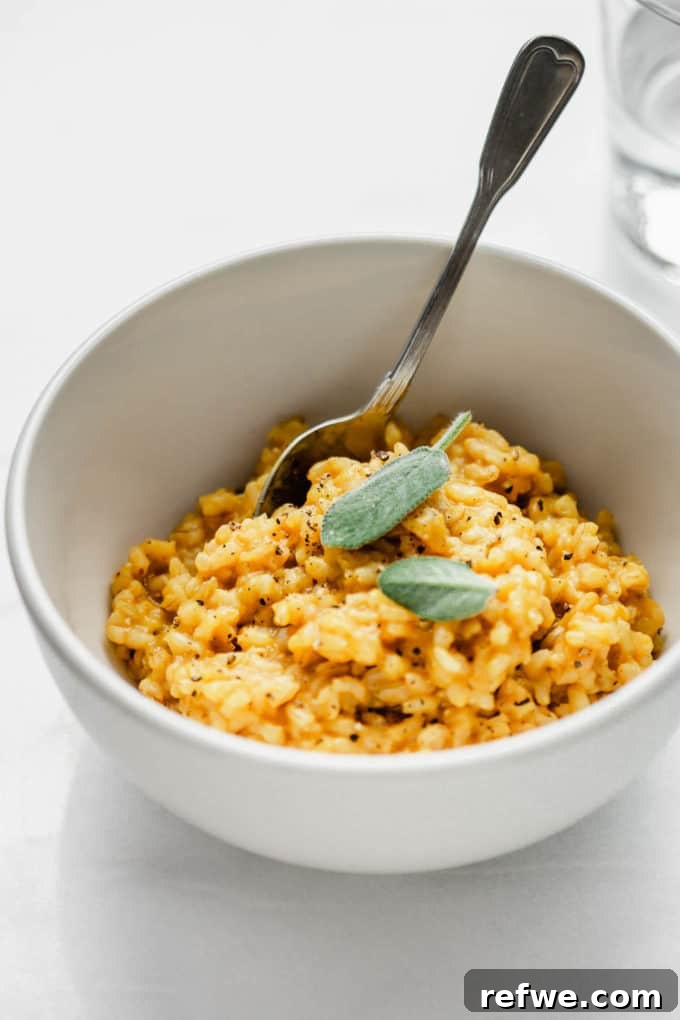
The magic of this risotto begins with sweet, earthy butternut squash, which is roasted to perfection, then pureed into a silky smooth base. This vibrant puree is then lovingly combined in a pan with tender Arborio rice, aromatic fresh sage, a splash of crisp white wine, and rich vegetable broth. The mixture is stirred patiently, transforming gradually into an impossibly creamy, deeply flavorful risotto that will tantalize your senses and leave a lasting impression. It’s a dish that embodies comfort, elegance, and the very essence of autumn.
Why You’ll Fall in Love with This Butternut Squash Risotto
This isn’t just another risotto recipe; it’s a culinary experience designed to delight. Here’s why this Butternut Squash Risotto is destined to become a cherished favorite in your recipe collection:
- A Symphony of Fall Flavors: If you adore the warmth and richness of autumn, this dish is your ideal companion. Bursting with the natural sweetness of butternut squash and the aromatic notes of fresh sage, this risotto captures the essence of cozy fall evenings. It’s the perfect dish to savor as the leaves turn and the air grows crisp, offering comfort in every spoonful. The roasting process intensifies the squash’s natural sugars, adding a depth of flavor that can’t be achieved any other way.
- Surprisingly Easy to Master: Many home cooks shy away from risotto, intimidated by its reputation for being difficult or requiring constant attention. However, this recipe breaks down the process into simple, manageable steps, proving that creating a restaurant-quality risotto is well within your reach. With a little patience and a clear guide, you’ll be amazed at how easily you can achieve its signature creamy texture and complex flavor profile. No culinary degree required!
- The Quintessential Date Night Dish: Looking to impress your significant other or simply create a romantic atmosphere at home? This risotto is your secret weapon. Its elegant presentation, luxurious texture, and gourmet taste make it an ideal choice for a special date night. It’s a fun dish to cook together, and the shared experience of creating something so delicious adds to the magic of the evening. Plus, its rich flavors feel incredibly indulgent and celebratory.
- Deliciously Convenient Leftovers: While risotto is often celebrated for being best enjoyed fresh, this butternut squash rendition holds up remarkably well. Any leftover risotto can be stored safely in the fridge for up to four days, providing you with a quick and delectable meal later in the week. With our reheating tips, you can revive its creamy texture, making your future self incredibly grateful for planning ahead.
- Naturally Gluten-Free & Easily Vegan: Catering to dietary needs is simple with this versatile recipe. It’s inherently gluten-free, making it accessible for those with sensitivities. For a completely plant-based option, easily swap out the butter for a high-quality vegan butter and substitute the Parmesan cheese with your favorite dairy-free alternative. This flexibility ensures everyone at your table can enjoy a hearty, flavorful meal.
Essential Ingredients for Your Butternut Squash Risotto
Crafting the perfect Butternut Squash Risotto starts with selecting fresh, high-quality ingredients. Each component plays a crucial role in building the layers of flavor and achieving that signature creamy consistency. Here’s a closer look at what you’ll need:
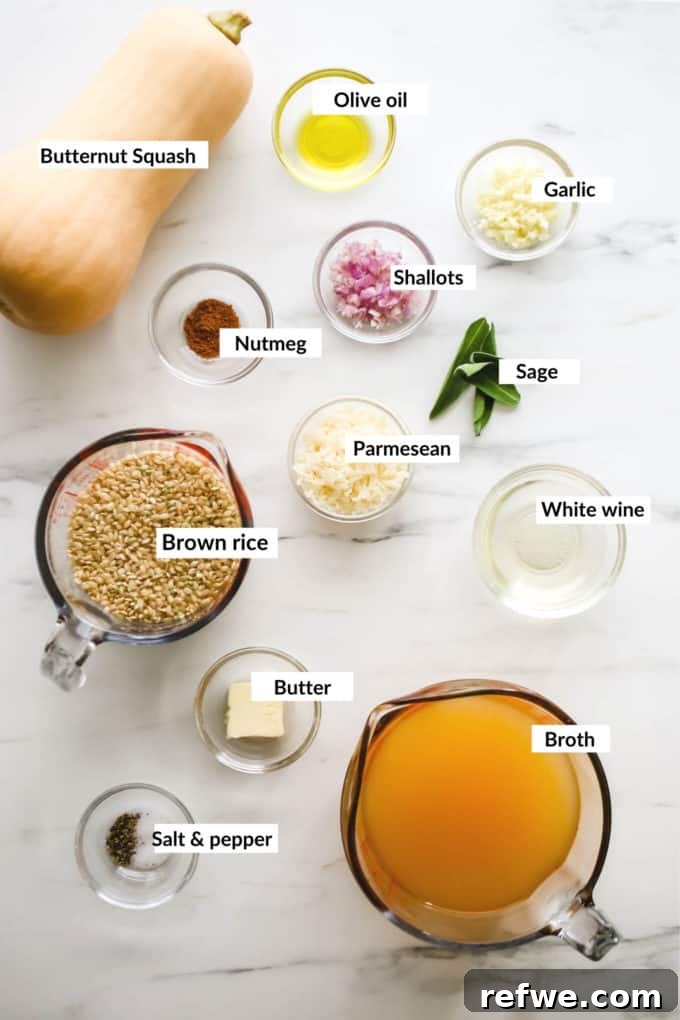
- Butternut Squash: The undisputed star of this dish, providing natural sweetness and a beautiful autumnal hue. Opt for a small to medium-sized fresh butternut squash. Its dense, sweet flesh becomes incredibly tender and flavorful when roasted. If you’re short on time, pre-cut butternut squash chunks can also work. Don’t let any extra go to waste; try it in a Kale Butternut Squash Salad!
- Olive Oil: A foundational ingredient that adds a subtle fruitiness and helps to sauté your aromatics. Choose a good quality extra virgin olive oil for the best flavor, as it forms the base for infusing the initial ingredients.
- Rice (Arborio or Short-Grain Brown): For an authentic, incredibly creamy risotto, **Arborio rice** is the traditional choice. Its high starch content is essential for creating that luxurious, velvety texture as it slowly releases starch during cooking. If you’re seeking a “healthier” twist with a slightly nuttier flavor and more fiber, **short-grain brown rice** is a fantastic alternative that still delivers a delightful texture. Both options promise a delicious result.
- Vegetable Broth: This liquid gold is the primary cooking medium for your rice, imparting a savory depth throughout the risotto. Use a high-quality vegetable broth, ideally low-sodium, to control the overall seasoning of your dish. Keeping it warm before adding to the rice is a crucial tip for a perfectly cooked risotto.
- White Wine: A key ingredient that adds a touch of acidity and complexity, helping to deglaze the pan and uplift the flavors of the risotto. A dry white wine like Sauvignon Blanc or Pinot Grigio works wonderfully. If you prefer to avoid alcohol, a splash of lemon juice can provide a similar brightness, and simply substitute the wine volume with more vegetable broth.
- Shallots: While onions could work, shallots offer a more delicate, sweeter, and nuanced flavor profile that truly elevates the risotto. Their mild oniony taste perfectly complements the butternut squash and sage.
- Garlic: Fresh garlic is non-negotiable! Minced fresh garlic cloves infuse the risotto with their pungent, savory aroma, creating an irresistible depth that is vital to Italian cooking.
- Sage: Fresh sage leaves are indispensable for this recipe. Their earthy, slightly peppery, and incredibly aromatic qualities are a classic pairing with butternut squash, providing that signature cozy, autumnal flavor. Do not substitute with dried sage if fresh is available.
- Spices: Simple seasonings of salt and freshly ground black pepper are essential for balancing and enhancing all the flavors. A subtle hint of **nutmeg** adds a warm, sweet, and slightly woody note that beautifully complements the squash.
- Butter: This is a crucial element for achieving that rich, silky finish characteristic of a great risotto. A generous knob of butter stirred in at the end (a process known as “mantecatura”) contributes significantly to the dish’s luscious texture and luxurious mouthfeel. For a dairy-free version, use high-quality vegan butter.
- Parmesan Cheese: For the ultimate umami and creamy texture, reach for freshly grated Parmesan cheese. Its salty, nutty notes melt beautifully into the risotto, making it truly irresistible. Avoid pre-grated varieties, as their anti-caking agents can affect the texture. For a dairy-free or vegan option, a good quality vegan Parmesan substitute works wonderfully.
How to Craft This Creamy Butternut Squash Risotto: Step-by-Step Guide
Making risotto is a meditative process, a culinary dance that rewards patience with unparalleled creaminess and flavor. Follow these detailed steps to create your perfect butternut squash risotto:
Step 1: Roast and Puree the Butternut Squash
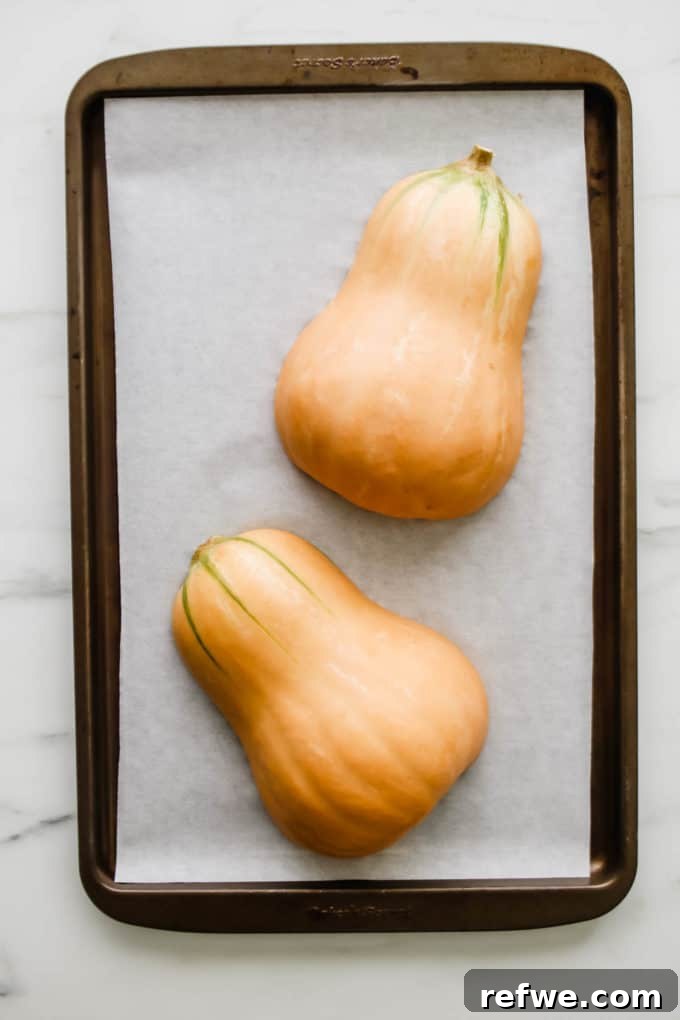
Begin by preheating your oven to 400°F (200°C) and lining a baking sheet with parchment paper. Carefully cut your butternut squash in half lengthwise, scoop out the seeds, and place the halves face-down on the prepared baking sheet. Roasting the squash caramelizes its natural sugars, deepening its flavor profile significantly. Bake for 30-45 minutes, or until the flesh is fork-tender. Once cooled slightly, scoop out the vibrant orange flesh and transfer approximately ¾ cup to a food processor or blender. Process until completely smooth and creamy, adding a tablespoon or two of water or broth if needed to achieve a silky consistency. This puree forms the heart of your risotto.
Chef’s Tip: If you’re new to cooking butternut squash and feel a bit daunted, our comprehensive guide on How To Cook Butternut Squash provides all the tips and tricks you need for effortless preparation.
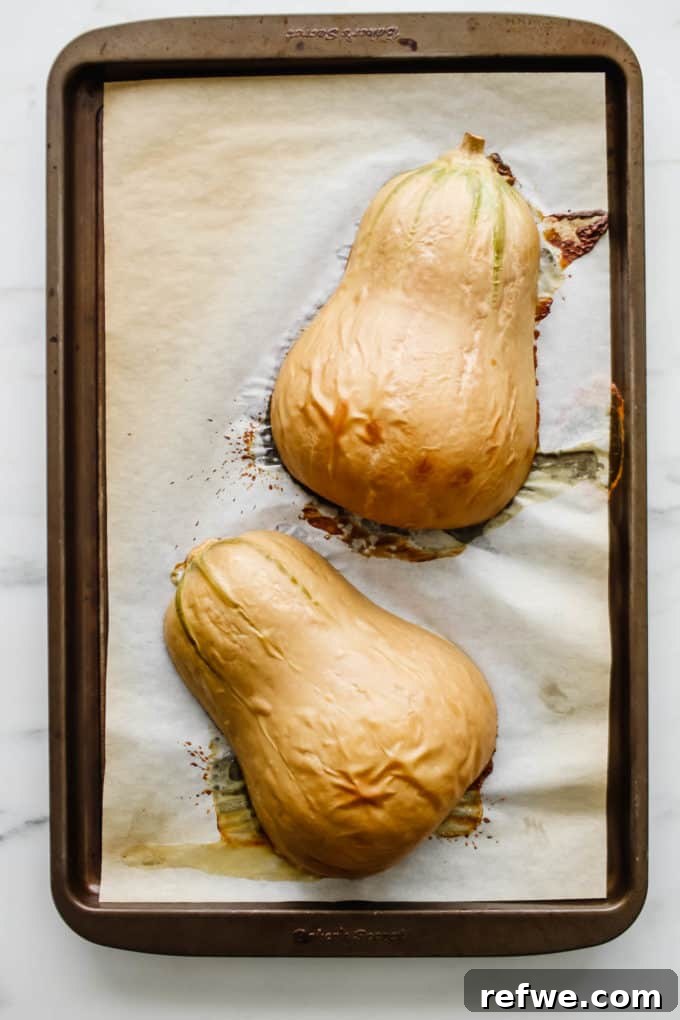
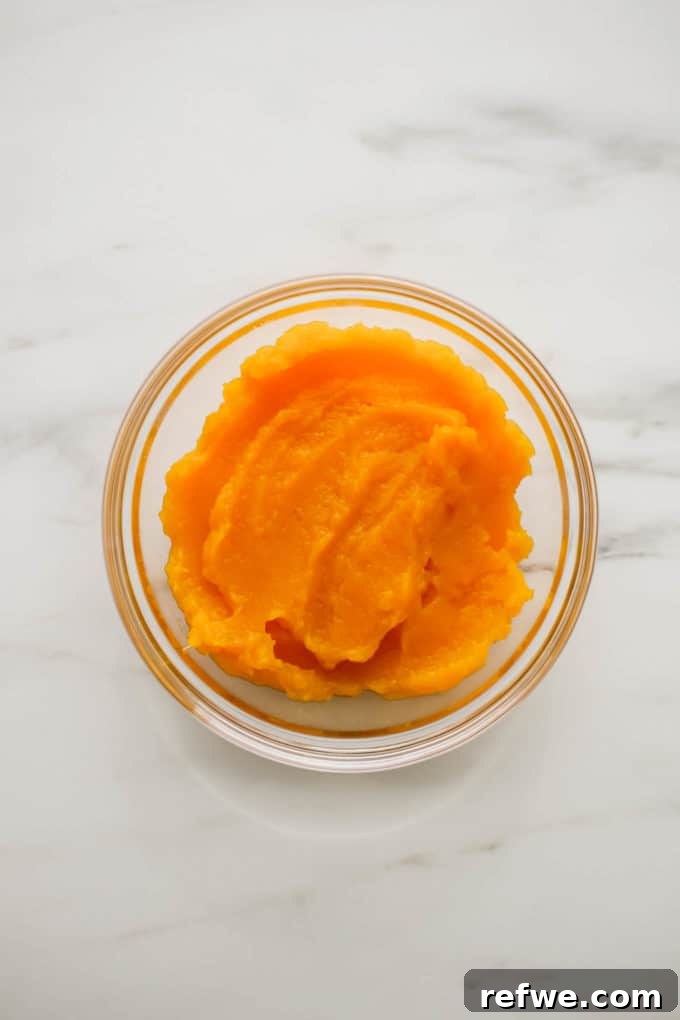
Step 2: Sauté Aromatics, Toast Rice, and Deglaze with Wine
In a large, heavy-bottomed pan or Dutch oven, heat one tablespoon of olive oil over medium-high heat. Add the finely chopped **shallots** and sauté for 3-4 minutes until they become translucent and fragrant, softening beautifully. Next, stir in the minced **garlic** and fresh **sage leaves**, cooking for another 2 minutes until their incredible aromas fill your kitchen—be careful not to burn the garlic. Now, add the **rice** (Arborio or short-grain brown) and a couple of teaspoons of **butter** to the pan. Stir continuously for about a minute, allowing the rice grains to toast slightly. This “tostatura” step is crucial for developing a nutty flavor and helping the rice absorb liquid evenly, preventing it from becoming mushy. Finally, pour in the **white wine** and stir until the liquid has completely evaporated and the alcohol has cooked off. This process, known as deglazing, lifts all the flavorful bits from the bottom of the pan and adds a wonderful layer of acidity to the dish.
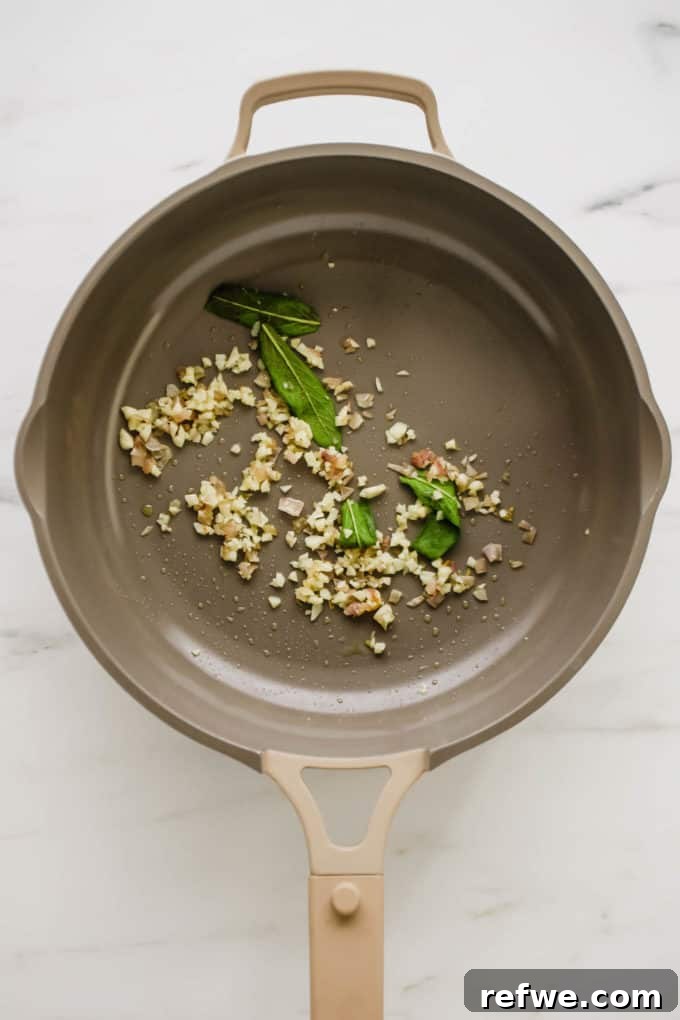
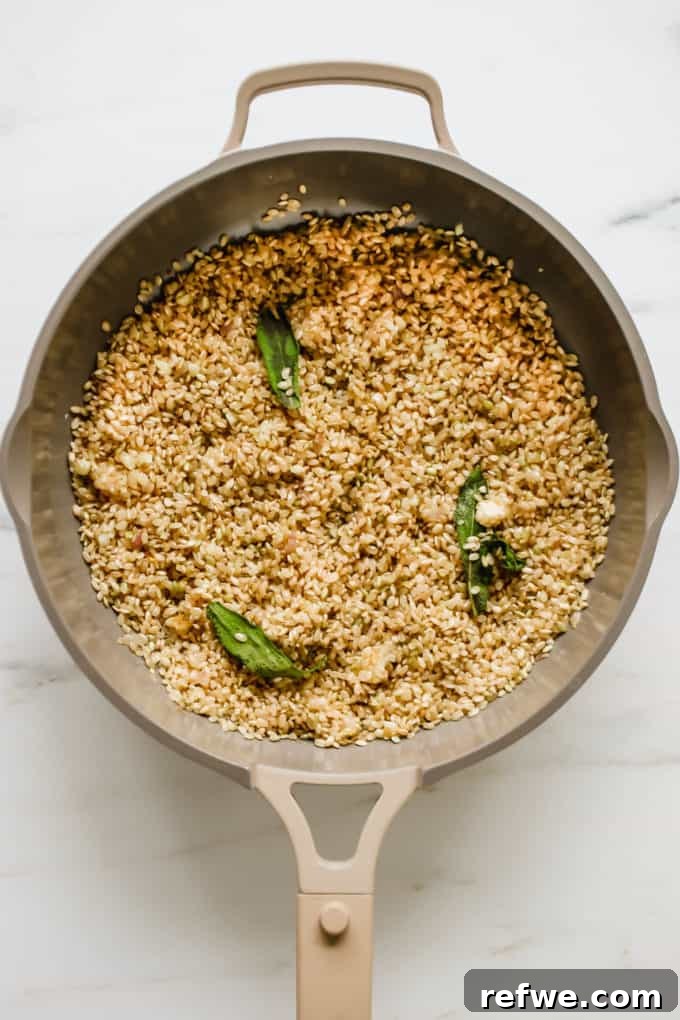
Step 3: Gradually Add Broth and Finish with Squash and Cheese
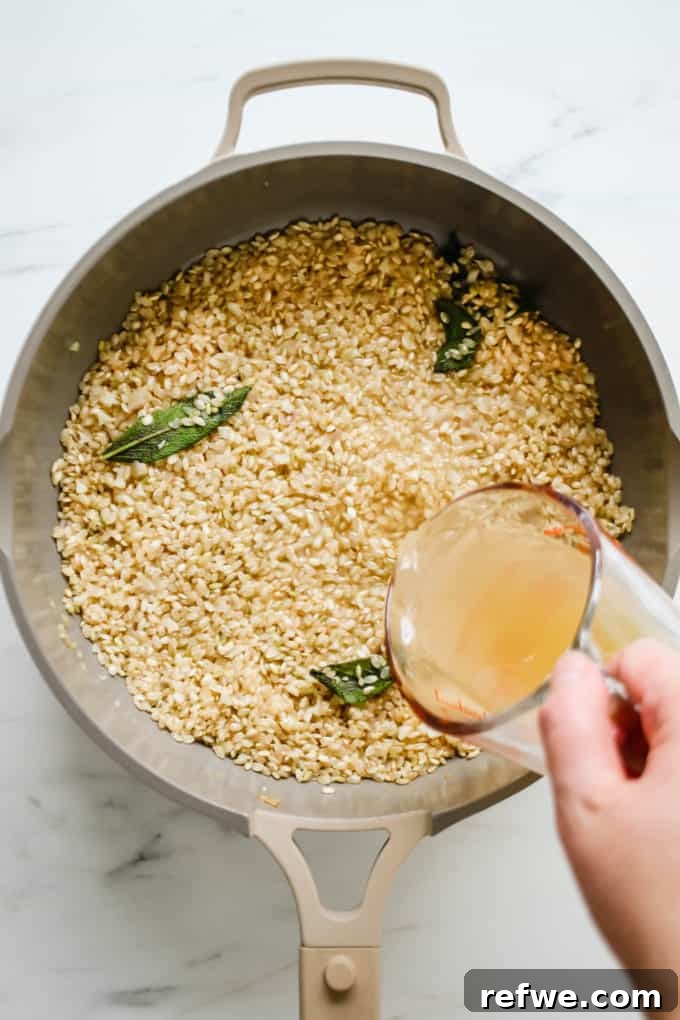
Now comes the rhythmic heart of risotto making: slowly adding the **vegetable broth**. Ensure your broth is warm (you can heat it in a separate pot or microwave) as cold broth can shock the rice and impede its creamy development. Begin by pouring in about ½ cup of warm broth at a time. Stir continuously but gently, allowing the rice to absorb the liquid completely before adding the next ladleful. This steady stirring motion encourages the rice grains to release their starches, which is key to achieving the characteristic creamy texture of risotto. Continue this process for approximately 20-30 minutes, or until the rice is perfectly al dente—meaning it’s tender with a slight, pleasant chew in the center. Avoid overcooking, which can result in mushy rice.
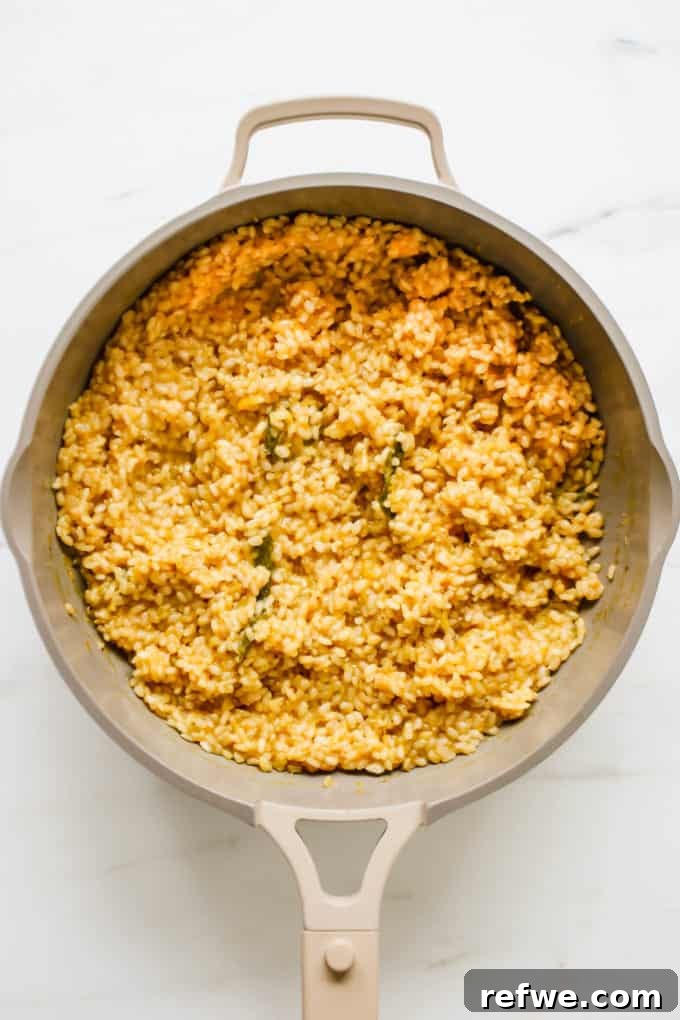
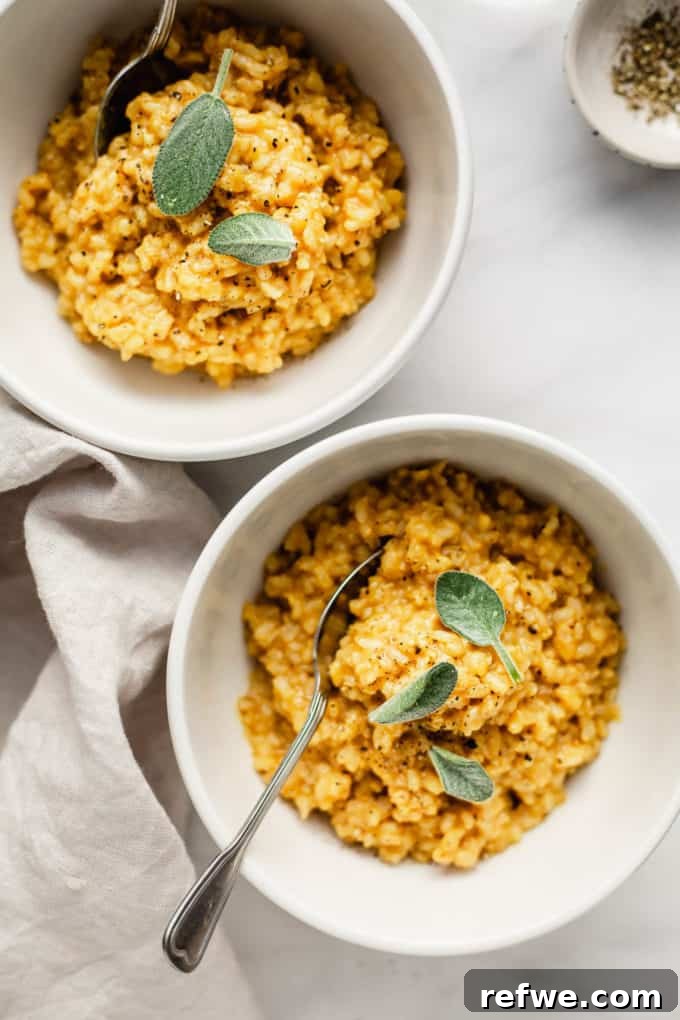
Once the risotto has reached its ideal consistency, remove it from the heat. Stir in the prepared **butternut squash puree**, along with the freshly grated **Parmesan cheese** (or dairy-free alternative), a hint of fresh **nutmeg**, and season generously with **salt and pepper** to taste. Stir vigorously for a minute to ensure everything is well combined and the cheese melts into a wonderfully creamy emulsion—this final stirring is called “mantecatura” and is essential for achieving the perfect consistency. Serve your magnificent Roasted Butternut Squash Risotto immediately, garnished with a few fresh sage leaves and an extra sprinkle of Parmesan, if desired. The warmth and creaminess are best enjoyed right off the stove.
Perfect Pairings: What to Serve with Butternut Squash Risotto
This Roasted Butternut Squash Risotto is incredibly versatile and can be enjoyed in various ways, whether as the star of your meal or a delightful accompaniment to a more extensive spread. Its rich and creamy nature calls for thoughtful pairings to create a balanced dining experience.
As a Main Dish: I often find that risotto, with its hearty and satisfying qualities, shines brightest as the centerpiece of a meal. To complement its richness, I highly recommend pairing it with lighter, fresh side dishes. Consider incorporating elements that offer a bright, acidic contrast to cut through the creamy texture of the risotto.
- Side Salads: A crisp green salad with a vibrant vinaigrette is an excellent choice. Look for ingredients that provide a refreshing counterpoint. For instance, a Tomato Corn Salad with its sweet and tangy notes, or a zesty Kale Caesar Salad with a lemon-based dressing would be superb. The peppery bite of arugula or the crispness of radicchio can also provide a wonderful textural and flavor contrast.
- Light Soups: If you desire a more substantial meal, a light soup can precede the risotto beautifully. The key is to keep the soup’s profile on the lighter side to avoid overwhelming the palate. Think delicate vegetable broths or creamy, yet subtle, pureed soups. A fragrant Vegan Asparagus Soup, a comforting Roasted Garlic Soup, or even an earthy Vegan Beet Soup would offer a lovely introduction to the rich risotto without being too heavy.
As a Traditional Italian Primo Piatto: For those looking to enjoy a more authentic, multi-course Italian dinner, this risotto would traditionally serve as the “primo piatto” or first course. In this context, it precedes the main protein course (secondo piatto). Its creamy texture and satisfying flavors prepare the palate for what’s to come without being overly filling.
- Secondo Piatto Suggestions: Following your risotto, consider serving a protein that provides a contrasting texture and flavor. For vegetarian guests, a rich eggplant Parmesan would be a magnificent follow-up. Meat-eaters might enjoy the savory depth of pan-seared scallops, tender grilled fish like cod or salmon, or a classic Italian Saltimbocca. The versatility of this butternut squash risotto makes it an exceptional foundation for a truly impressive Italian feast, allowing you to tailor the main course to your preferences. Either way, this dish is guaranteed to be delicious and impressive, whether it’s the star or a supporting player in your culinary production!
Can Butternut Squash Risotto Be Made Ahead of Time & How to Store It?
Risotto is a dish famously best enjoyed fresh, straight from the pan, when its texture is at its peak creaminess and the rice grains still retain that perfect al dente bite. While it can technically be made ahead of time and reheated, it’s important to manage expectations regarding its consistency. Upon reheating, the rice tends to absorb more of the remaining liquid, resulting in a softer texture that might lose some of its original al dente firmness and signature lusciousness. For the absolute best experience, I strongly recommend preparing and serving risotto immediately if at all possible.
How to Store and Reheat Leftover Risotto
Should you find yourself with the delightful problem of leftover butternut squash risotto, proper storage and reheating techniques can help preserve its quality:
- Storage: Allow the risotto to cool completely at room temperature before transferring it to an airtight container. This step is crucial; placing hot risotto directly into a sealed container can trap steam, leading to a mushier texture. Once cooled, seal the container and store it in the refrigerator for up to 4 days.
- Reheating for Best Results: While the microwave can technically reheat risotto, for a superior result that comes closer to its original glory, I highly recommend reheating it on the stovetop. Place the desired portion of risotto in a non-stick pan over medium-low heat. As it heats, you’ll notice it starts to clump and dry out. To restore its creamy consistency, add a splash of extra vegetable broth (or even a little water or milk/dairy-free milk) a tablespoon at a time, stirring constantly. Continue to stir and add liquid until the risotto loosens up and regains a smooth, creamy texture. Heat gently until warmed through, taking care not to overcook the rice. This method helps to re-emulsify the starches and liquid, bringing back a good deal of that fresh-made magic.
Pro Tips for Making Your Butternut Squash Risotto Perfectly
Achieving risotto perfection is a rewarding culinary journey. Here are some seasoned tips to guide you in creating the most luscious and flavorful butternut squash risotto:
- Choose the Right Rice: This is paramount for classic risotto. **Arborio rice** is the gold standard due to its high starch content, which is key to creating that signature creamy texture. While other short-grain rice types *can* work, they may not yield the same level of creaminess. For a slightly healthier, fiber-rich alternative, **short-grain brown rice** offers a wonderful texture and nutty flavor, though it might require a touch more liquid and cooking time. Stick to one of these two for optimal results.
- The Role of White Wine (or Lemon): Adding a splash of dry white wine to your risotto is not just for flavor; it provides a crucial acidic “kick” that brightens the dish and cuts through its richness. The alcohol cooks off, leaving behind a subtle complexity. If you prefer to omit alcohol, a tablespoon of fresh lemon juice is an excellent substitute, offering a similar refreshing acidity.
- Patience is Your Secret Ingredient: Risotto is a dish that demands attention and a gentle, rhythmic stirring. Resist the urge to rush the process by dumping all the broth in at once. Slowly adding broth, half a cup at a time, and allowing it to be fully absorbed before adding more, is the secret to coaxing out the starches from the rice grains, creating that velvety, creamy texture. Embrace the process—it’s part of the risotto’s charm and delicious outcome!
- Keep Your Broth Warm: An often-overlooked but vital tip: always keep your vegetable broth heated in a separate pot or microwave before adding it to the rice. Adding cold broth will drop the temperature of the risotto, stalling the cooking process and potentially toughening the rice grains, preventing them from releasing their starches effectively.
- Perfect Reheating Technique: While fresh is best, leftover risotto can be wonderfully revived. For the best reheating results, **always use a pan on the stovetop** rather than a microwave. Add a small splash of extra water or vegetable broth to the pan with your cold risotto. Stir gently over medium-low heat, gradually adding more liquid as needed, until the risotto loosens up and becomes creamy and smooth again. This method helps re-emulsify the starches and moisture, bringing it back to life.
- Don’t Be Intimidated – Watch and Learn!: If the concept of making risotto still feels a little intimidating, remember that cooking is a skill that improves with practice and visual guidance. There are many excellent resources available. For a great visual walkthrough, consider watching a step-by-step video (like this one on Tasty’s YouTube channel) to see the process in action and build your confidence.
Frequently Asked Questions About Butternut Squash Risotto
This recipe typically calls for about ¾ cup of butternut squash puree, so it’s highly likely you’ll have some squash left over from a medium-sized squash. Don’t let it go to waste! Roasted butternut squash is incredibly versatile. You can easily incorporate it into other delicious recipes like a warming Spicy Thai Butternut Squash Soup, or use it to create a creamy, comforting Butternut Squash Mac and Cheese. It’s also great in salads, curries, or simply mashed as a side dish.
Absolutely! This Butternut Squash Risotto is wonderfully adaptable for a vegan diet. Simply swap out the dairy butter for a high-quality vegan butter alternative. For the Parmesan cheese, you have two excellent options: either omit it entirely for a simpler flavor profile, or use your favorite brand of vegan Parmesan cheese, which can provide a similar savory, umami depth without any dairy.
While white wine contributes a unique depth of flavor and a subtle acidity that helps balance the richness of the risotto, it is not strictly mandatory. If you prefer not to use alcohol in your cooking, you can easily substitute the white wine with an equal amount of vegetable broth and add a generous squeeze (about 1 tablespoon) of fresh lemon juice. The lemon juice will provide the necessary brightness and acidity to uplift the dish’s flavors.
No, not just any type of rice will do for risotto. To achieve that signature creamy, yet al dente, texture, you need a specific type of short-grain, high-starch rice. **Arborio rice** is the most common and highly recommended choice due to its ability to absorb liquid and release starches slowly, creating the desired creamy emulsion. Alternatively, **short-grain brown rice** can also work, offering a slightly nuttier flavor and more fiber, while still maintaining a good texture suitable for risotto. Long-grain rice varieties like Basmati or Jasmine will not produce the correct consistency for risotto, so stick to Arborio or short-grain brown rice.
The term “al dente” means “to the tooth,” and it refers to rice that is cooked through but still firm to the bite, with a slight resistance in the center. To test for al dente, simply taste a grain of rice. It should be tender on the outside but have a pleasant chewiness in the middle, similar to perfectly cooked pasta. Avoid cooking until completely soft or mushy, as this is a sign of overcooked risotto.
Achieving ultimate creaminess in risotto involves a few key techniques. First, constant but gentle stirring during the broth addition encourages the rice grains to shed their starches. Second, ensuring your broth is warm (not cold!) helps maintain a consistent cooking temperature. Finally, the “mantecatura” step at the very end, where you vigorously stir in butter and Parmesan cheese off the heat, is crucial. This process creates a rich, emulsified sauce that coats every grain, delivering that sought-after luxurious creaminess.
More Delicious Squash Recipes to Explore
If you’ve fallen in love with the versatility and deliciousness of squash through this risotto, there’s a whole world of other incredible squash-based recipes to discover. From comforting soups to hearty main courses, squash offers endless culinary possibilities. Here are some more fantastic ideas to inspire your next meal:
- Butternut Squash Curry: A vibrant, aromatic, and warming curry perfect for a flavorful weeknight meal.
- Curried Chickpea Stuffed Acorn Squash: An impressive and wholesome dish, ideal for a hearty vegetarian or vegan option.
- Instant Pot Butternut Squash Soup: Creamy and comforting, this soup comes together quickly with the help of a pressure cooker.
- Butternut Squash Ravioli: Homemade or store-bought ravioli elevated with a simple yet elegant garlic-infused olive oil.
- Sundried Tomato Spaghetti Squash: A lighter, low-carb alternative to pasta, packed with savory Mediterranean flavors.
We hope you thoroughly enjoy preparing and savoring this **Roasted Butternut Squash Risotto** as much as we do. If you’ve tried this recipe or any other delightful creation from our blog, please let us know your thoughts by leaving a comment and rating below! Your feedback is invaluable to us. For more delicious inspiration and culinary adventures, be sure to follow along on Pinterest, Instagram, and Facebook. Happy cooking!
Print

Butternut Squash Risotto
- Author: Jessica Hoffman
Prep Time: 10 minutes
Cook Time: 35 minutes
Total Time: 45 minutes
Yield: 2-4 servings
Category: Main
Method: Cook
Cuisine: Italian
Diet: Vegetarian
Description
This Roasted Butternut Squash Risotto is the epitome of comfort and elegance, perfect for a “fancy” at-home dinner that is surprisingly easy to makes but tastes like you’re dining at a five-star restaurant! Its creamy texture and sweet, savory flavors make it an unforgettable meal.
Ingredients
Units
For the Roasted Butternut Squash Puree:
-
1 small to medium butternut squash (yields approx. 3/4 cup puree)
For the Risotto:
-
1 tbsp extra virgin olive oil -
2 shallots, finely chopped (about 1/2 cup) -
4 garlic cloves, minced -
5 fresh sage leaves, finely chopped -
1 1/2 cups Arborio rice or short-grain brown rice -
2 tsp unsalted butter (or dairy-free butter for vegan option) -
1/4 cup dry white wine (e.g., Sauvignon Blanc or Pinot Grigio, or 1 tbsp lemon juice + 1/4 cup broth) -
4–6 cups vegetable broth, heated (very important!) -
3/4 cup butternut squash puree (from Step 1) -
1/4 tsp freshly grated nutmeg -
A generous handful of freshly grated Parmesan cheese (or high-quality dairy-free cheese for vegan) -
Salt & freshly ground black pepper, to taste
Instructions
- Preheat your oven to 400°F (200°C) and line a baking sheet with parchment paper. This prepares your squash for roasting.
- Carefully cut the butternut squash in half lengthwise and remove the seeds. Place the halves face down on the prepared baking sheet. Bake for 30-45 minutes, or until the squash is perfectly tender when pierced with a fork. Remove from the oven and allow it to cool slightly.
- Once cool enough to handle, scoop out approximately 3/4 cup of the cooked squash flesh and transfer it to a blender or food processor. Blend until you achieve a completely smooth and creamy puree. Set aside.
- In a large, heavy-bottomed pan or Dutch oven, heat the olive oil over medium-high heat.
- Add the finely chopped shallots and cook, stirring occasionally, for 3-4 minutes until they become translucent and softened. Then, add the minced garlic and chopped fresh sage leaves, cooking for another 2 minutes until fragrant, ensuring not to burn the garlic.
- Stir in the rice and butter. Cook for about 1 minute, stirring continuously, to lightly toast the rice grains. Then, pour in the white wine (or lemon juice + broth substitute) and stir until all the liquid has evaporated, and the alcohol has cooked off.
- Begin adding the warm vegetable broth slowly, about 1/2 cup at a time. Stir frequently, allowing the rice to fully absorb each addition of broth before adding the next. This gradual process is essential for creating the creamy texture.
- Continue this process for 20 to 30 minutes, or until the rice is perfectly al dente—tender but with a slight bite in the center. You may not need all 6 cups of broth, or you might need a little more; adjust as necessary based on the rice’s absorption.
- Once the risotto is nearly done and has reached your desired al dente consistency, remove it from the heat. Stir in the reserved butternut squash puree, freshly grated nutmeg, a generous handful of Parmesan cheese (or vegan alternative), and season with salt and pepper to taste. Stir vigorously for about a minute to achieve maximum creaminess.
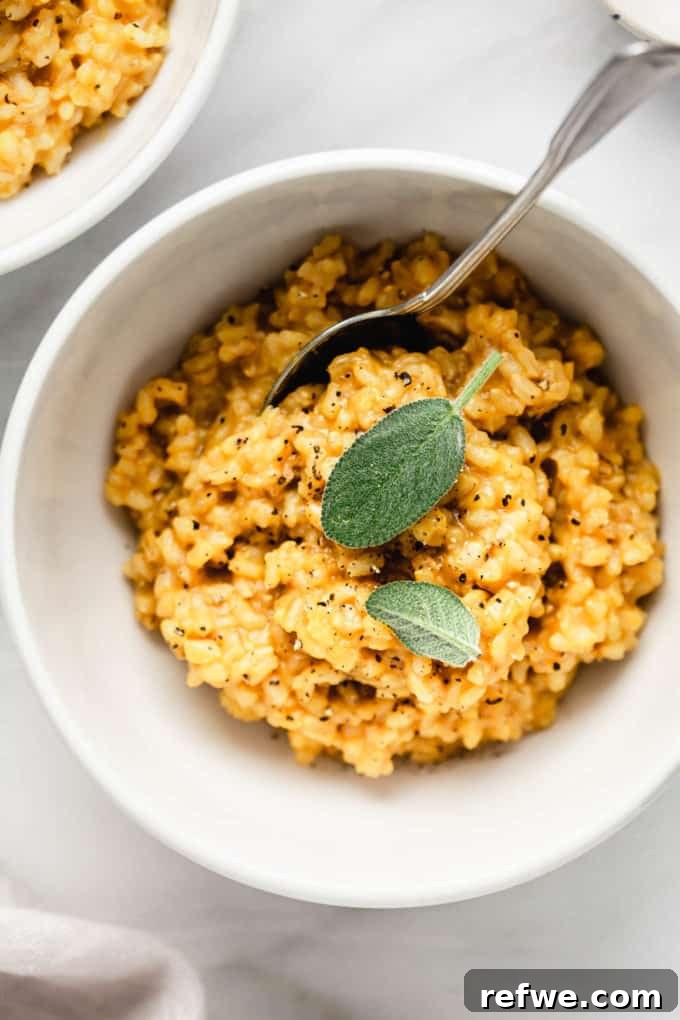
- Divide the rich, creamy risotto into warm bowls immediately. Garnish with a few fresh sage leaves and an extra sprinkle of Parmesan cheese, if desired, for a beautiful presentation and added flavor. Serve at once and enjoy!
Notes
Rice Selection: For the best results, always use Arborio rice or a good quality short-grain brown rice to achieve the characteristic creamy texture of risotto. Other rice types will not yield the same results.
Flavor Boost with Wine: A splash of dry white wine is a key ingredient, adding a wonderful acidic note that brightens the dish and enhances the overall flavor. If wine is not an option, simply substitute it with an equal amount of vegetable broth and a tablespoon of fresh lemon juice for a similar effect.
Testing Risotto Consistency: To check if your risotto has the perfect, fluid consistency, run a spoon through it in the pan. If it slowly spreads and seeps back together, you’ve achieved the ideal creamy, flowing texture. If it’s too stiff, add a little more warm broth and stir.
Achieving Al Dente Perfection: The rice is perfectly cooked when it’s soft and creamy on the outside, but retains a very slight, pleasant bite in the center—this is “al dente.” Continuously taste a grain of rice from the pan as you add the broth to ensure you don’t overcook it.
Storing Leftovers: Store any leftover risotto in an airtight container in the refrigerator for up to 4 days. When reheating, gently warm on the stovetop with a splash of extra broth or water to restore its creaminess.
Nutrition
(Nutritional information is an estimate based on standard ingredients and serving sizes. Actual values may vary.)
- Serving Size: 1 bowl (approx. 1/4 of recipe)
- Calories: ~291-350
- Sugar: ~8-12g
- Fat: ~10-15g
- Saturated Fat: ~3-5g
- Carbohydrates: ~40-50g
- Fiber: ~6-8g
- Protein: ~11-15g