
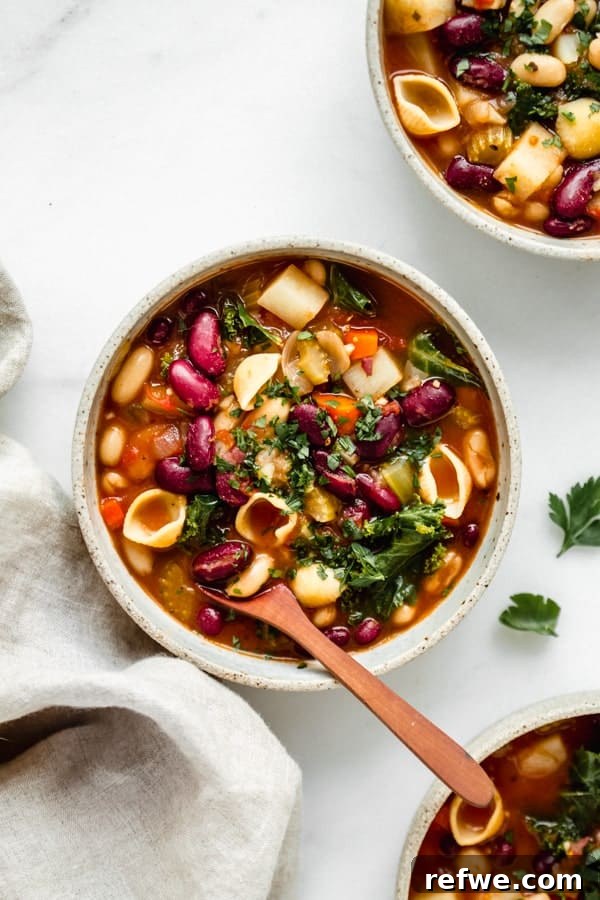
The Ultimate One-Pot Vegan Minestrone Soup: A Hearty & Healthy Meal
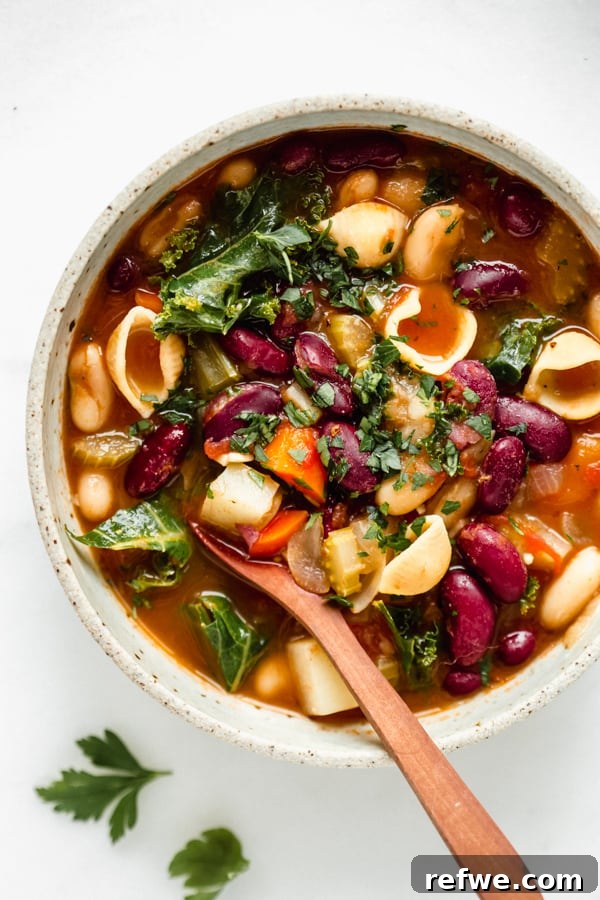
Embrace the cozy comfort of a steaming bowl of homemade Vegan Minestrone Soup. This incredibly easy-to-make recipe is a nutritional powerhouse, brimming with wholesome ingredients like protein-rich beans, tender potatoes, and satisfying noodles. It’s designed to be a substantial meal that will keep you feeling full and nourished, making it perfect for chilly evenings or a satisfying lunch. For those with dietary needs, simply opt for gluten-free pasta to enjoy this Italian classic without compromise.
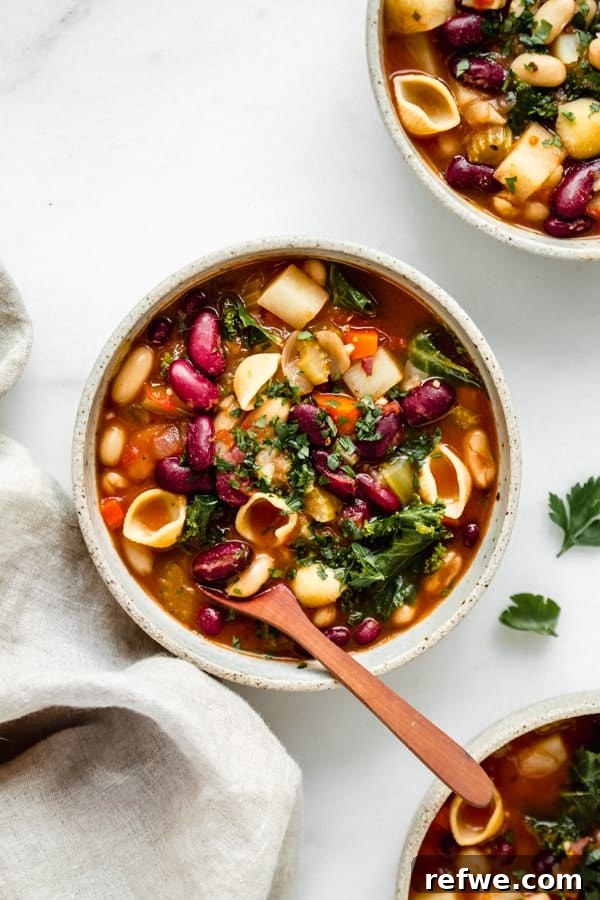
Few dishes rival the comforting embrace of a warm soup, especially as the cooler months arrive. Crafting a large batch of soup on a Sunday afternoon has become a cherished ritual in my kitchen. It’s not just about the joy of cooking; it’s about smart meal prep that transforms busy weeknights into effortless dining experiences. Imagine coming home after a long day to a delicious, healthy dinner that’s ready in minutes – that’s the magic of a good homemade soup.
Soups featuring robust ingredients like lentils or beans stand out as true “meal soups.” They are inherently hearty, packed with plant-based protein, and fiber, ensuring each serving leaves you feeling deeply satisfied and energized. This particular Vegan Minestrone Soup recipe captures that very essence. It offers a warmth and flavor profile reminiscent of your favorite Italian restaurant, but with the added convenience and health benefits of a home-cooked, plant-based meal. No need to venture out when such a delightful experience awaits in your own kitchen!
Why You’ll Love This Hearty Vegan Minestrone
This Vegan Minestrone Soup is more than just a recipe; it’s a culinary experience designed for convenience, nutrition, and pure comfort. Here’s why it’s destined to become a staple in your meal rotation:
- A Complete Meal in a Bowl: Forget side dishes! This minestrone is incredibly filling, brimming with a symphony of vegetables like tender potatoes, nutrient-dense beans, and soft pasta. Each spoonful is packed with goodness, ensuring it can be proudly served as your main course.
- Effortless One-Pot Preparation: Say goodbye to stacks of dirty dishes! This recipe celebrates the simplicity of one-pot cooking. All the delicious flavors come together seamlessly in a single pot on your stovetop, making both cooking and cleanup a breeze. It’s perfect for both novice cooks and seasoned chefs seeking convenience.
- Slow Cooker Adaptability: For ultimate hands-off cooking, this minestrone easily adapts to a slow cooker. A quick sauté of the aromatic vegetables to build a flavor base, then simply combine them with the remaining ingredients in your slow cooker. Let it simmer on high for about 4 hours, and you’ll return to a perfectly cooked, flavorful soup. (A pro tip: Cook and add the noodles separately just before serving to maintain their ideal texture and prevent them from becoming overly soft.)
- Rich in Protein and Fiber: Fuel your body with every spoonful! A single serving of this vegan minestrone delivers an impressive 9 grams of dietary fiber and 15 grams of plant-based protein. This powerful combination is key to promoting satiety, supporting digestive health, and keeping your energy levels stable throughout the day.
- Freezer-Friendly for Future Feasts: Planning ahead has never been easier. This soup freezes exceptionally well, making it an ideal candidate for batch cooking. Prepare a double portion and freeze half for those inevitable busy days when you need a quick, nutritious, and delicious meal without any fuss.
What is Minestrone Soup Made Of? The Classic Ingredients
Minestrone soup is a beloved Italian classic, renowned for its hearty nature and reliance on fresh, seasonal vegetables, pasta, and a rich tomato-based broth. While the specific vegetable medley can vary significantly from region to region and even family to family, the presence of beans is a consistent hallmark. Our vegan rendition celebrates these traditional elements with a vibrant selection of produce and pantry staples, ensuring every bowl is packed with flavor and texture. Here’s a closer look at the key components in this recipe:
- Aromatics: Onion and Garlic form the foundational flavor base, imparting a sweet and pungent depth.
- Root Vegetables: Celery, Carrots, and Potato add essential sweetness, earthy notes, and a satisfying heartiness.
- Herbs: A blend of dried herbs (like oregano and thyme) along with a bay leaf infuses the soup with aromatic Italian essence.
- Broth & Tomatoes: High-quality Vegetable Broth and Crushed Tomatoes create the rich, savory liquid base that defines minestrone.
- Pasta: Small pasta shapes (chickpea pasta is recommended for a gluten-free and protein boost) absorb the broth and add delightful texture.
- Legumes: Cannellini beans and Kidney beans provide substantial plant-based protein and fiber, making the soup incredibly filling.
- Leafy Greens: Fresh Kale is stirred in at the end, adding a pop of color, nutrients, and a slight peppery bite.
- Seasoning: Salt & Pepper are crucial for balancing and enhancing all the flavors.
- Fresh Garnish: A generous handful of fresh parsley brightens the soup with its herbaceous notes.
How to Make Vegan Minestrone Soup: A Step-by-Step Guide
Creating this delicious vegan minestrone is a straightforward and rewarding process. Follow these detailed instructions to bring this comforting soup to life in your kitchen:
Step 1: Sautéing the Aromatics for Flavor Foundation
Begin by heating a generous amount of avocado or vegetable oil in a large, heavy-bottomed pot over medium-high heat. Once shimmering, add the finely chopped onion, a pinch of salt, minced garlic, chopped celery, and diced carrot. This initial sauté is a critical step; it’s where the foundational flavors of your soup truly develop. Allow these vegetables to cook for 5-6 minutes, stirring occasionally, until they become tender and slightly translucent. This process sweetens the vegetables and builds a rich, aromatic base that will infuse the entire soup with incredible depth. Resist the urge to rush or skip this step, as it significantly contributes to the overall deliciousness of your minestrone.
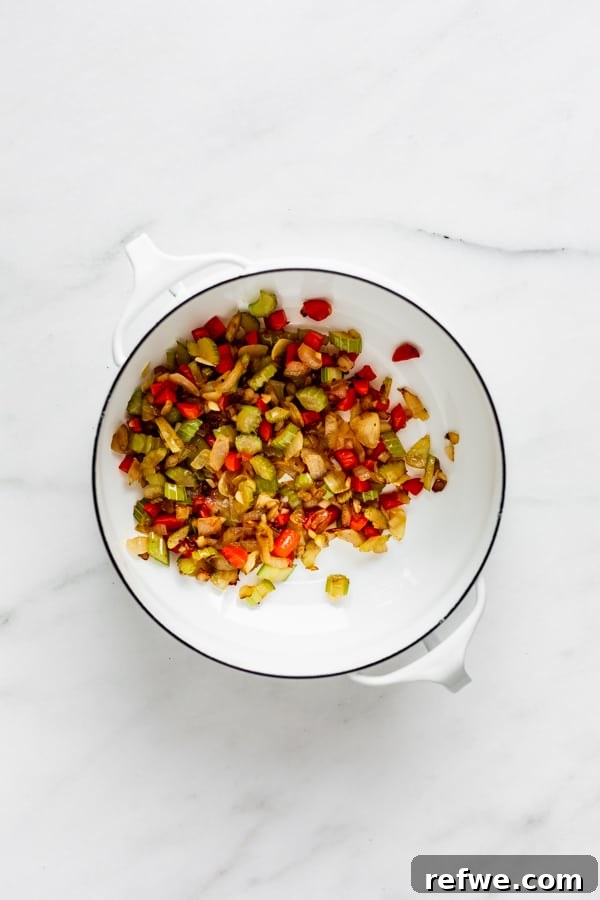
Step 2: Incorporating Potatoes and Fragrant Herbs
Once your aromatics are beautifully softened, it’s time to introduce the next layer of ingredients. Add the peeled and cubed potato, along with your chosen dried herbs – dried oregano and thyme work wonderfully here. Stir everything together to ensure the herbs are distributed and the potatoes are lightly coated in the sautéed goodness. Crucially, now is also the moment to add a bay leaf. This unassuming herb adds a subtle yet profound depth to the soup, contributing to that authentic Italian taste. Remember to make a mental note to remove the bay leaf before serving, as it’s meant for flavor infusion, not consumption.
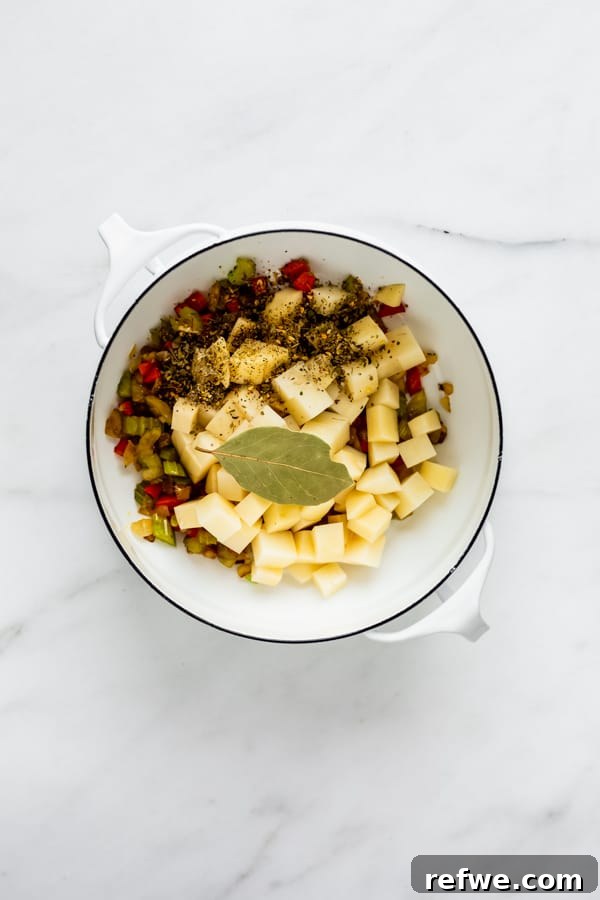
Step 3: Introducing the Liquid Base – Tomatoes and Broth
With the vegetables and herbs combined, it’s time to transform them into a soup. Pour in the crushed tomatoes and vegetable broth. The quality of your crushed tomatoes can significantly impact the final flavor, so I highly recommend using a good-quality Italian brand, such as San Marzano tomatoes, if possible. Their rich, sweet, and less acidic profile will elevate your minestrone to new heights. Stir all the ingredients thoroughly to combine the rich tomato base with the savory broth and aromatic vegetables.
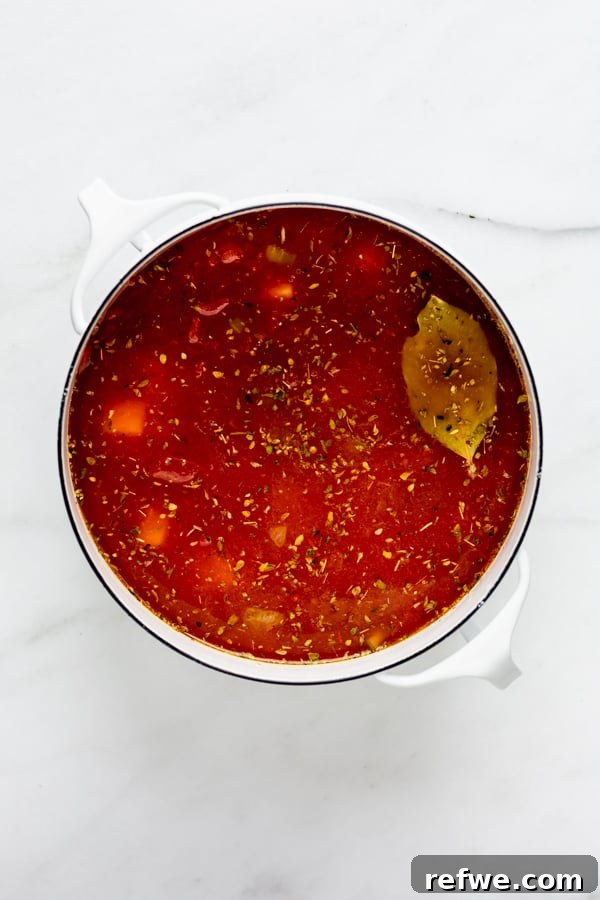
Step 4: Simmering and Finishing Touches with Beans and Greens
Bring the entire pot to a boil over medium-high heat. Once boiling, reduce the heat to low, cover the pot, and allow the soup to simmer gently for about 10 minutes. This simmering period allows the flavors to meld beautifully and ensures the potatoes become tender. After 10 minutes, your potatoes should be perfectly cooked. Now, it’s time to add the drained cannellini and kidney beans, along with the fresh shredded kale. Stir well and continue to simmer for another 10-15 minutes, or until the pasta (added in Step 4 of the recipe card below) is cooked to al dente. The kale will wilt and become tender, adding a vibrant green hue and a boost of nutrition. Remember this crucial tip: only add the pasta right before serving to prevent the noodles from becoming overly soggy and absorbing too much of that precious, flavorful broth.
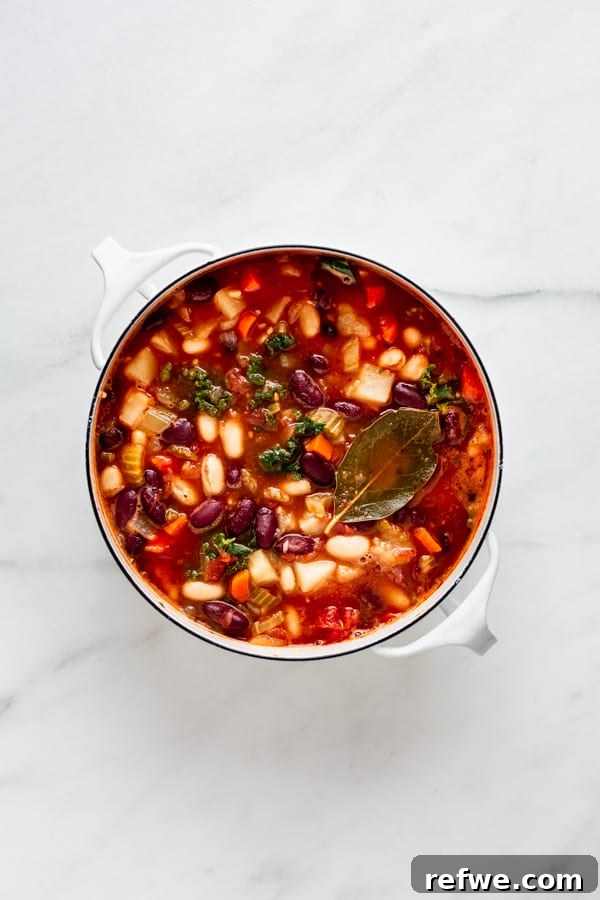
Chef’s Tip: To maintain the perfect texture of your pasta, it’s always best to cook and add it to individual bowls of soup just before serving, rather than cooking it directly in the main pot for long periods. This prevents it from getting mushy and soaking up excess broth.
How to Store and Freeze Minestrone Soup
Proper storage is key to enjoying your delicious Vegan Minestrone Soup for days or even months to come. Here’s how to keep it fresh and flavorful:
- In the Fridge: Allow any leftover soup to cool completely before transferring it to an airtight container. It will keep beautifully in the refrigerator for up to 7 days. For optimal texture, it is highly recommended to store any cooked pasta separately from the soup broth. This prevents the noodles from becoming soggy and absorbing too much liquid during storage. When ready to reheat, simply warm the soup on the stovetop over medium heat until heated through, or microwave it in a bowl until steaming. Add your separately stored pasta or fresh pasta for the best experience.
- In the Freezer: This minestrone soup is an excellent candidate for freezing, especially if you plan to enjoy it over a longer period. Let the soup cool completely to room temperature before portioning it into freezer-safe containers or heavy-duty freezer bags. It can be stored in the freezer for up to 3 months. As with refrigeration, it’s best to freeze the soup without the pasta. Frozen pasta tends to become mushy and lose its desirable texture upon defrosting and reheating. When you’re ready to enjoy, defrost the soup in the refrigerator overnight, on the counter for a few hours, or gently in the microwave. Reheat on the stovetop, and then cook and add fresh pasta just before serving.
Tips for Perfecting Your Vegan Minestrone Recipe
Achieving minestrone perfection is easy with these expert tips:
- Embrace the Sauté: Do not underestimate the power of properly sautéing your initial vegetables (onion, garlic, celery, and carrots). This step is crucial for building a deep, complex flavor base for the entire soup. Be patient and allow them to become tender and slightly caramelized – don’t rush or skip this vital process.
- Choose Quality Tomatoes: The quality of your crushed (or chopped) tomatoes makes an enormous difference in the final taste of your soup. Invest in a good quality Italian brand, such as San Marzano tomatoes, if available. Cheaper brands can often be more acidic and less flavorful, which will impact the overall balance of the minestrone.
- Timing is Everything for Beans and Pasta: To prevent your beans from becoming overly soft or mushy and your pasta from turning soggy, resist the urge to add them too early in the cooking process. It’s best to incorporate the beans towards the end of the simmering cycle, and the pasta ideally cooked separately and added to individual servings or just before the final few minutes of cooking.
- The Magic of Simmering: Like many good soups, minestrone benefits from time. The flavors deepen and meld beautifully as it simmers. If you have the luxury of time, let your soup gently simmer on low heat for an extra hour after the initial cooking time. This extended simmer will significantly enhance its richness and complexity.
- Freezing Without Pasta: If you plan to freeze portions of your minestrone for later, ensure you do so before adding any pasta. Cooked pasta, when frozen and then defrosted, tends to become soft and mushy. For the best experience, freeze the soup base and then cook fresh noodles to add when reheating.
Minestrone Soup FAQ: Frequently Asked Questions
Minestrone soup proudly hails from Italy, a country celebrated for its rich culinary traditions. It has been a beloved staple for centuries, evolving from a simple peasant dish using seasonal vegetables into the versatile and comforting soup we know today.
While minestrone is frequently associated with vegetables, it is not exclusively vegetarian. Traditional recipes can vary widely, sometimes including meat (such as prosciutto or pancetta) or bone broth for added depth. However, this particular recipe is thoughtfully crafted to be entirely plant-based, making it both vegetarian and vegan-friendly, without compromising on flavor or richness.
Yes, you can absolutely use dried beans instead of canned beans for a more economical or texture-specific choice. However, it’s crucial to prepare them properly beforehand. Dried beans must be soaked and cooked until tender according to package instructions *before* adding them to the soup. Adding dried beans directly to the soup will result in them not cooking through properly and absorbing an excessive amount of your flavorful broth, leaving you with a thicker, less soupy consistency.
Minestrone is incredibly versatile! Feel free to customize it with your favorite seasonal vegetables. Try adding zucchini, bell peppers, green beans, or even corn. You can also experiment with different types of pasta (small shells, ditalini, or even broken spaghetti). For a spicier kick, add a pinch of red pepper flakes during the sautéing stage.
This hearty soup is satisfying enough on its own, but it pairs wonderfully with a few simple accompaniments. A slice of crusty bread or garlic bread is perfect for soaking up the delicious broth. A fresh green salad with a light vinaigrette makes for a balanced meal, offering a refreshing contrast to the warmth of the soup.
More Delicious Plant-Based Soups to Explore
If you’ve enjoyed this Vegan Minestrone, you’ll love exploring these other wholesome and flavorful plant-based soup recipes:
- Hearty Vegetable Barley Soup
- Flavorful Vegan Tortilla Soup
- Comforting Vegan Stuffed Pepper Soup
- Rich & Creamy Vegan Tomato Soup
✉
To save this recipe and receive weekly healthy recipes, please enter your name and email below.
Print Recipe
Vegan Minestrone Soup Recipe
- Author: Jess
- Prep Time: 15 minutes
- Cook Time: 30 minutes
- Total Time: 45 minutes
- Yield: 6 servings
- Category: Appetizer / Main Course
- Method: Cook
- Cuisine: Italian
Ingredients
- 2 tbsp avocado oil (or vegetable oil)
- 1 medium onion, finely chopped
- 1/4 tsp salt
- 4 garlic cloves, finely chopped
- 1 stalk celery, chopped
- 1 large carrot, chopped
- 1 potato, cut into small cubes
- 1 tsp dried oregano
- 1 tsp dried thyme
- 1 bay leaf
- 5 cups vegetable broth
- 1 1/2 cups crushed tomatoes (San Marzano tomatoes recommended)
- 1/2 cup pasta (chickpea pasta is a great gluten-free option)
- 1 can cannellini beans, drained and rinsed
- 1 can red kidney beans, drained and rinsed
- 1 cup shredded kale
- Salt & pepper to taste
- 1 big handful fresh parsley, chopped (for garnish)
Instructions
- Heat the oil in a large pot over medium-high heat. Add the onion, 1/4 tsp salt, garlic, celery, and carrots. Sauté for 5-6 minutes until the vegetables are tender. Reduce heat to medium if they start to brown too quickly.
- Stir in the cubed potato, dried oregano, dried thyme, and the bay leaf. Mix everything well.
- Pour in the vegetable broth and crushed tomatoes. Bring the soup to a boil, then reduce the heat to low. Cover the pot and let it simmer for 10 minutes, allowing the potatoes to become tender and the flavors to deepen.
- Add the drained cannellini beans, kidney beans, and shredded kale to the pot. Increase heat slightly if needed and continue to cook for another 10-15 minutes, or until the kale is wilted and the pasta (if adding directly to the pot) is cooked al dente. (Note: For best results, cook pasta separately and add to individual bowls just before serving.)
- Taste and adjust seasoning with additional salt and pepper as needed. Serve hot, garnished with fresh chopped parsley.
Notes
Patience is key when sautéing the initial vegetables; this step is fundamental for building rich flavor.
Always opt for a high-quality Italian brand of crushed tomatoes (like San Marzano) for the best possible flavor profile. Chopped tomatoes can also be used.
If you plan to freeze this soup, omit the pasta. Cooked pasta tends to become mushy and undesirable in texture after being frozen and reheated. Instead, cook fresh pasta when you reheat the soup.
Nutrition
- Serving Size: 1/6th of recipe
- Calories: 260
- Sugar: 6g
- Fat: 3g
- Carbohydrates: 40g
- Fiber: 9g
- Protein: 15g
(Nutritional information is an estimate and may vary based on specific ingredients and preparation methods.)
If you tried this Vegan Minestrone Soup or any other recipe from our collection, please let us know how you liked it by leaving a comment and rating below! Your feedback is incredibly valuable. Be sure to follow along on Pinterest, Instagram, and Facebook for even more delicious plant-based inspiration and healthy recipes!