
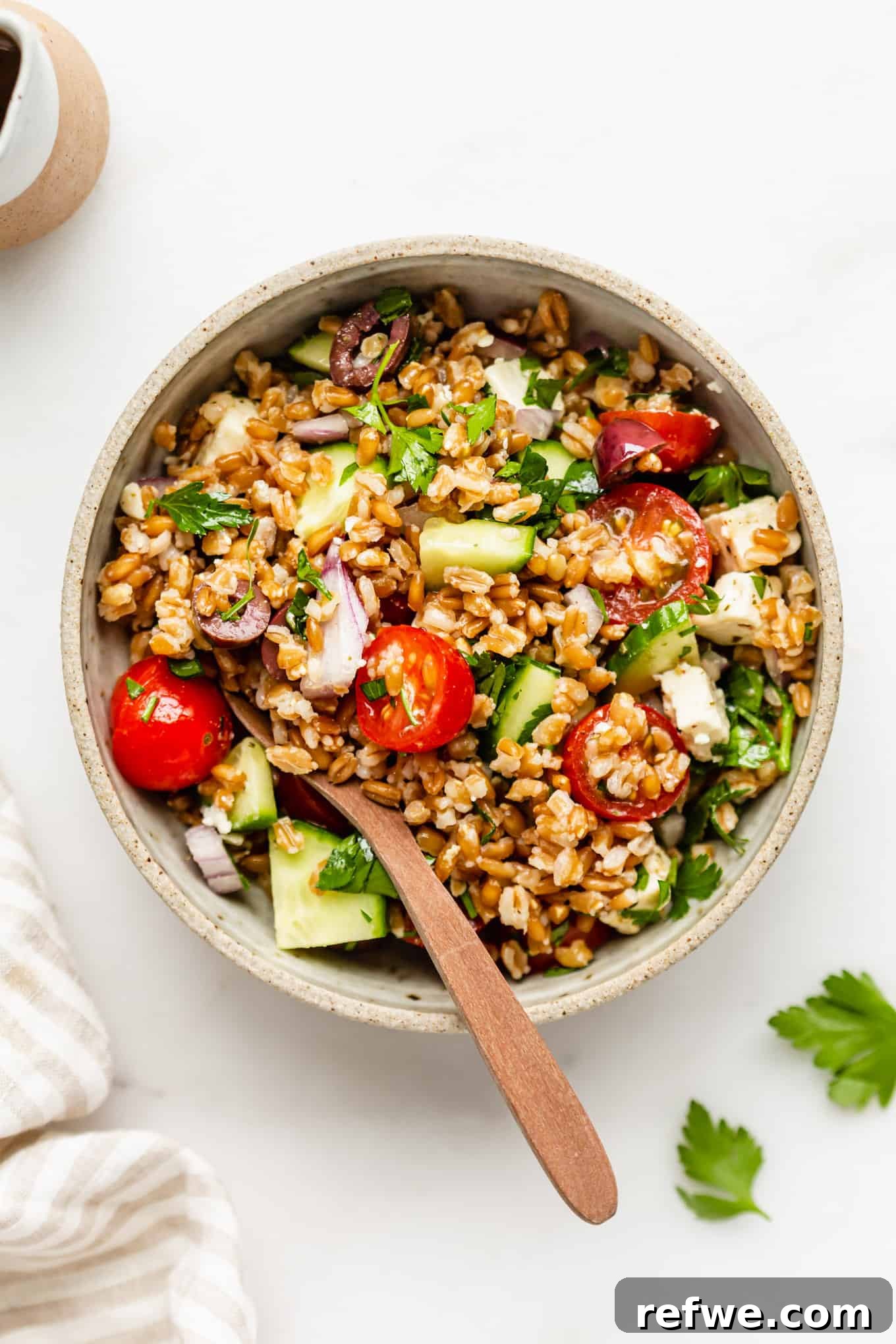
Discover the vibrant flavors of the Mediterranean with this irresistible Greek Farro Salad. Crafted with hearty grains, a medley of crisp vegetables, and savory feta cheese, this salad offers a simple yet incredibly satisfying meal. It’s designed to keep you feeling full and energized, making it an ideal choice for a nutritious lunch, a delightful appetizer, or a fresh side dish. Whether you’re planning a light meal or need a versatile option for gatherings, this Greek Farro Salad is sure to become a staple in your recipe collection.
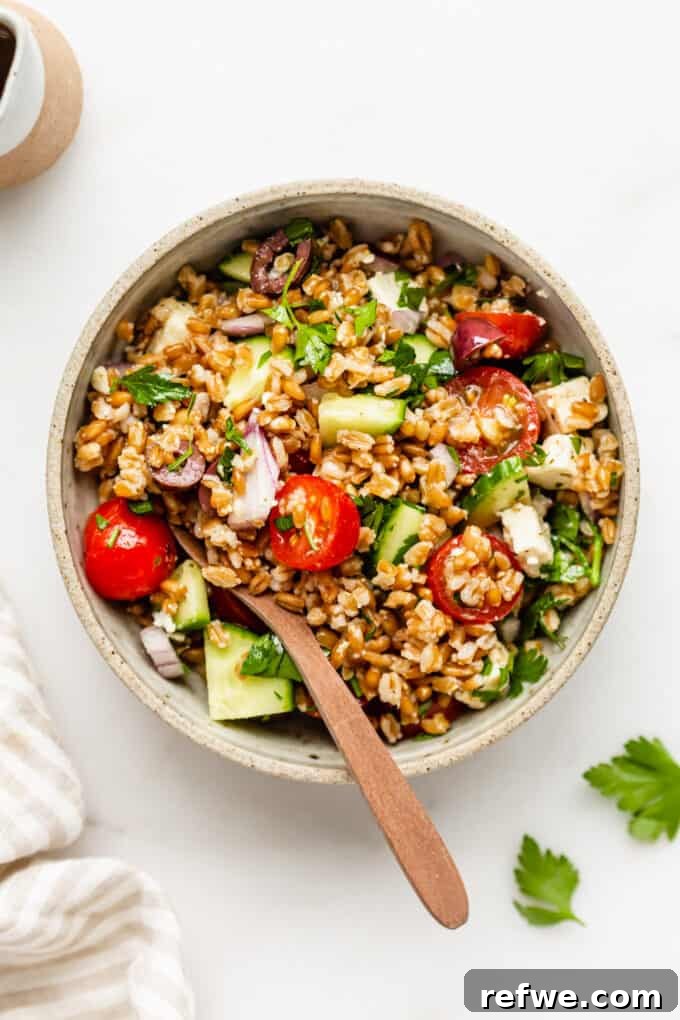
What is Farro? Unveiling This Ancient Grain’s Superpowers
Farro is an ancient grain with a rich history, tracing its origins back thousands of years to the Fertile Crescent. Revered by ancient Romans, it was a fundamental part of their diet and a key source of sustenance. Today, it’s celebrated as a nutritional powerhouse, gaining popularity in modern kitchens for its exceptional health benefits and versatile culinary applications.
This remarkable grain is notably high in both fiber and protein, making it an excellent choice for anyone seeking a satisfying and nutrient-dense meal. The high fiber content aids in digestion, promotes gut health, and contributes significantly to satiety, helping you feel fuller for longer periods. Meanwhile, its substantial protein content supports muscle growth and repair, provides sustained energy, and makes this salad a more complete vegetarian meal option.
Beyond fiber and protein, farro is also packed with essential vitamins and minerals. It’s a good source of B vitamins, crucial for energy metabolism, and offers vital minerals such as magnesium, which supports nerve and muscle function, and iron, important for oxygen transport. Its complex carbohydrates provide a slow and steady release of energy, preventing the sharp blood sugar spikes often associated with refined grains.
When perfectly cooked, farro boasts a distinctive nutty taste and a pleasantly chewy texture. These qualities make it an outstanding base for salads, as it holds its shape well, absorbs flavors beautifully, and adds a delightful textural contrast to crisp vegetables. Its robust nature ensures that it won’t become mushy, even when dressed, making it ideal for meal prepping and enjoying throughout the week.
It’s important to note that farro is a type of wheat and, as such, contains gluten. Therefore, it is not suitable for those following a gluten-free diet. However, if you wish to enjoy this delightful Greek salad while adhering to a gluten-free lifestyle, you can easily substitute farro with other equally delicious and healthy grains like quinoa or brown rice. Both alternatives will maintain the hearty and satisfying nature of the salad while accommodating dietary needs.
Why This Greek Farro Salad Will Become Your New Favorite
- Rich in Protein and Fiber for Lasting Satiety: Each generous serving of this Greek farro salad delivers an impressive 5 grams of fiber and 7.5 grams of protein. This powerful combination ensures you stay full and satisfied, making it an excellent choice for a hearty lunch or dinner that fuels your body effectively. For another high-protein, vibrant salad, be sure to explore our Mediterranean Lentil Salad.
- Effortlessly Easy and Quick to Prepare: In today’s busy world, convenience is key. This salad comes together in less than 15 minutes, especially if you use pre-cooked farro. The minimal preparation time makes it perfect for weeknight meals or for quickly whipping up a healthy dish for unexpected guests.
- Excellent for Meal Prep and Keeps Beautifully: One of the standout features of this Greek Farro Salad is its incredible durability. Even after being dressed, it maintains its delightful texture and fresh flavors for 1-2 days in the refrigerator. When stored undressed, it can last even longer, up to 3-4 days. This makes it an outstanding option for meal prepping healthy lunches for the week ahead. It’s also a fantastic, vibrant dish to bring to a summer barbecue, potluck, or any gathering, ensuring you always have a wholesome and delicious option on hand.
- Bursting with Authentic Mediterranean Flavors: Experience the true taste of Greece with every bite. This salad combines classic Greek ingredients like salty Kalamata olives, tangy feta, and fresh herbs, all brought together by a zesty homemade dressing. It’s a symphony of fresh, bold flavors that will transport your taste buds straight to the Mediterranean coast.
- Highly Versatile and Customizable: This recipe provides a fantastic foundation, but it’s incredibly adaptable to your preferences. Easily add your favorite proteins, incorporate extra vegetables, or even swap out the grain to create endless variations that suit your taste and dietary needs.
Essential Ingredients for Your Greek Farro Salad
Crafting the perfect Greek Farro Salad begins with selecting high-quality, fresh ingredients. Each component plays a vital role in creating the authentic flavors and satisfying textures that make this dish so special. Here’s a breakdown of what you’ll need and why each ingredient is essential:
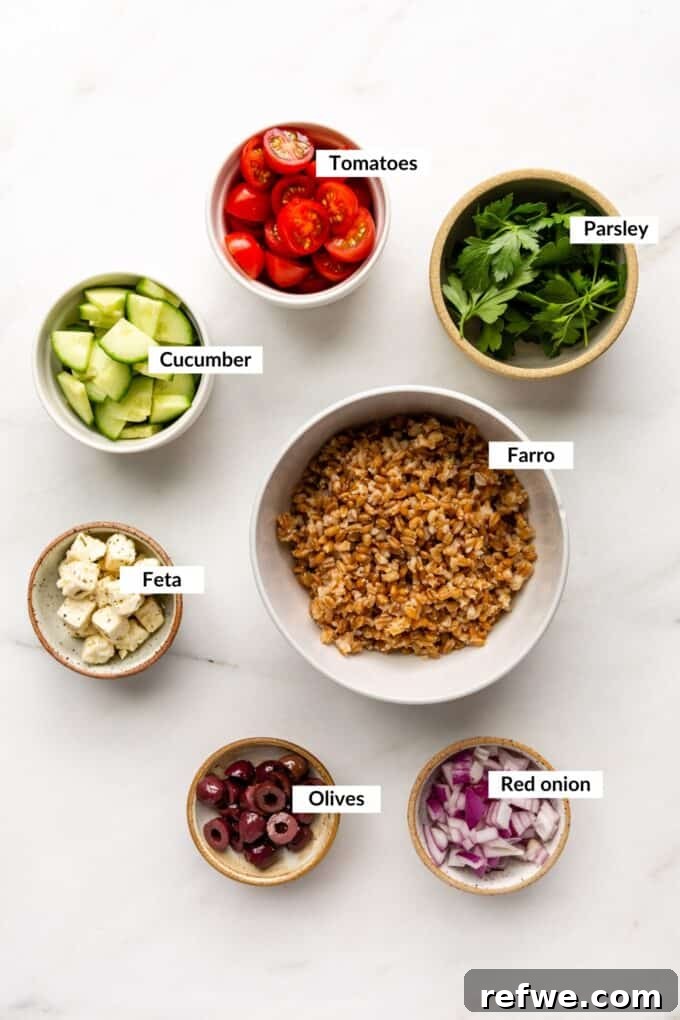
- Farro: As the cornerstone of this salad, farro provides the hearty, nutty base. You can typically find farro in most major supermarkets, often in the grain or international foods aisle. Health food stores are also a reliable source, as are online retailers. When choosing farro, you might find different types: whole farro (takes longer to cook, chewier), semi-pearled (outer bran partially removed, quicker cooking), and pearled (most of the bran removed, fastest cooking). Any type will work, but cooking times will vary.
- Cherry Tomatoes: These tiny bursts of sweetness and vibrant color are essential for a classic Greek salad. They offer a delightful juiciness and a slight tang. While cherry tomatoes are perfect, feel free to chop up larger, ripe tomatoes like Roma or vine-ripened if they are in season and readily available.
- Cucumber: Adding a refreshing crunch and cooling element, cucumber is a must. Both standard English cucumbers (which are often seedless and have thinner skins) and smaller Lebanese or Persian cucumbers (known for their crispness and mild flavor) work wonderfully here. Peel if desired, or leave the skin on for extra fiber and color.
- Fresh Parsley: Don’t underestimate the power of fresh herbs! Fresh parsley provides a bright, herbaceous note that elevates the entire salad. Opt for flat-leaf (Italian) parsley for its robust flavor. Avoid dried parsley, as it simply won’t deliver the same fresh, vibrant taste and aroma crucial for this dish.
- Red Onion: A staple in Greek salads, red onion contributes a sharp, pungent bite and beautiful purple color. If you find raw red onion too strong, you can mellow its flavor by soaking the chopped onion in cold water for about 10-15 minutes before adding it to the salad. Alternatively, for a milder onion taste, finely chop green onions (scallions) or even a very thinly sliced shallot.
- Kalamata Olives: These dark, purplish-black olives are iconic for their distinct salty, fruity, and slightly briny flavor. They are indispensable for achieving an authentic Greek taste. I prefer using pitted and halved Kalamata olives for convenience, but if you enjoy the process, olives with pits can be used and chopped carefully.
- Feta Cheese: The star of Greek cheese, feta adds a creamy texture and a wonderfully salty, tangy punch that ties all the flavors together. Both cubed or crumbled feta cheese work perfectly. Look for authentic Greek feta made from sheep’s or goat’s milk for the best flavor. For a dairy-free or vegan option, plant-based feta alternatives are widely available.
- Greek Dressing: A simple, homemade Greek dressing is key to binding all these fresh ingredients together. This zesty concoction typically includes high-quality olive oil, red wine vinegar, a touch of Dijon mustard for emulsification and flavor, garlic powder for a subtle savory note, dried oregano for aromatic depth, and salt and pepper to taste. Crafting your own dressing ensures freshness and allows you to adjust the flavors to your liking.
Crafting Your Greek Farro Salad: A Simple Step-by-Step Guide
Creating this delicious Greek Farro Salad is incredibly straightforward, requiring minimal effort for maximum flavor. Follow these easy steps to assemble your masterpiece:
Step 1: Prepare Your Farro and Chop the Vegetables
First, ensure your farro is cooked and completely cooled. If you haven’t cooked it yet, rinse 1 cup of uncooked farro thoroughly under cold water until the water runs clear. Then, combine it with 3 cups of water or vegetable broth (for extra flavor!) in a saucepan. Bring to a boil, then reduce heat, cover, and simmer for 15-20 minutes for pearled farro, or 25-30 minutes for semi-pearled, until tender but still chewy. Drain any excess liquid and spread the farro on a baking sheet to cool completely. This step is crucial for preventing a hot salad and ensuring the farro retains its texture.
While the farro cools, begin preparing your fresh vegetables. Wash and pat dry the cherry tomatoes, then cut them in half. Dice the cucumber into bite-sized pieces. Finely chop the fresh parsley. Thinly slice or finely chop the red onion. Halve the Kalamata olives. Finally, cube or crumble your feta cheese.
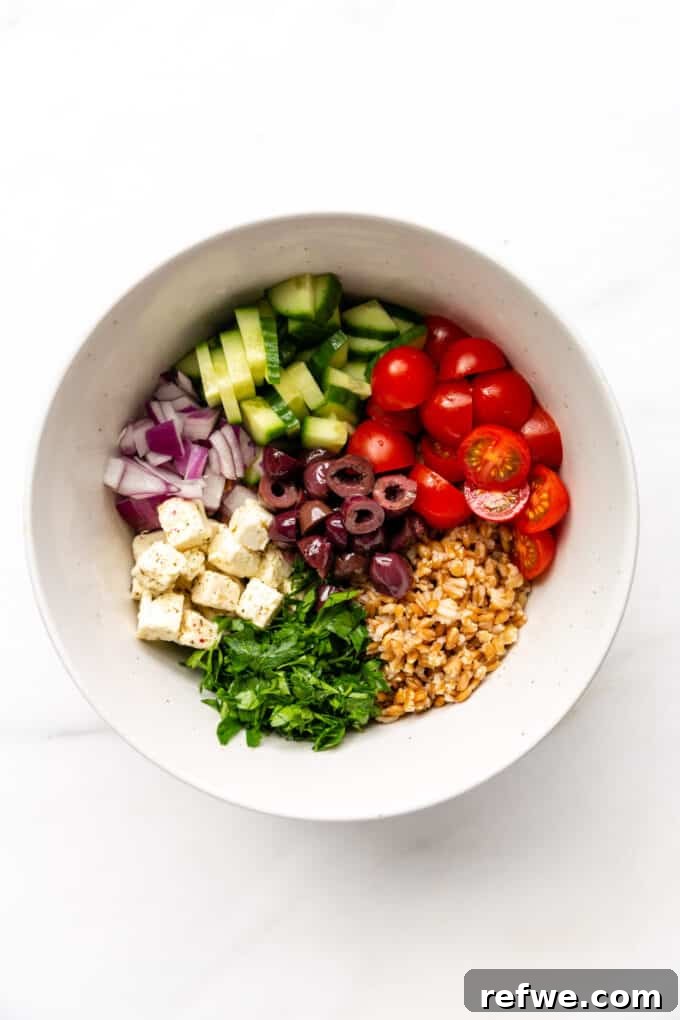
Once all your vegetables are prepped and the farro is cool, add the cooked farro, chopped parsley, halved cherry tomatoes, diced cucumber, chopped red onion, halved Kalamata olives, and feta cheese to a large salad bowl. Ensure the bowl is spacious enough to allow for easy tossing.
Step 2: Whisk Together the Zesty Greek Dressing
In a small jar with a lid, or a small bowl, combine all the ingredients for your Greek dressing: olive oil, red wine vinegar, Dijon mustard, garlic powder, dried oregano, and a generous pinch of salt and black pepper. If using a jar, secure the lid tightly and shake vigorously until the dressing is well combined and emulsified. If using a bowl, whisk continuously until all ingredients are thoroughly blended and the dressing appears slightly thickened.
Taste the dressing and adjust the seasoning as needed. You might want a little more vinegar for tang, or more salt and pepper to enhance the flavors. This homemade dressing is what brings all the fresh components of the salad to life.
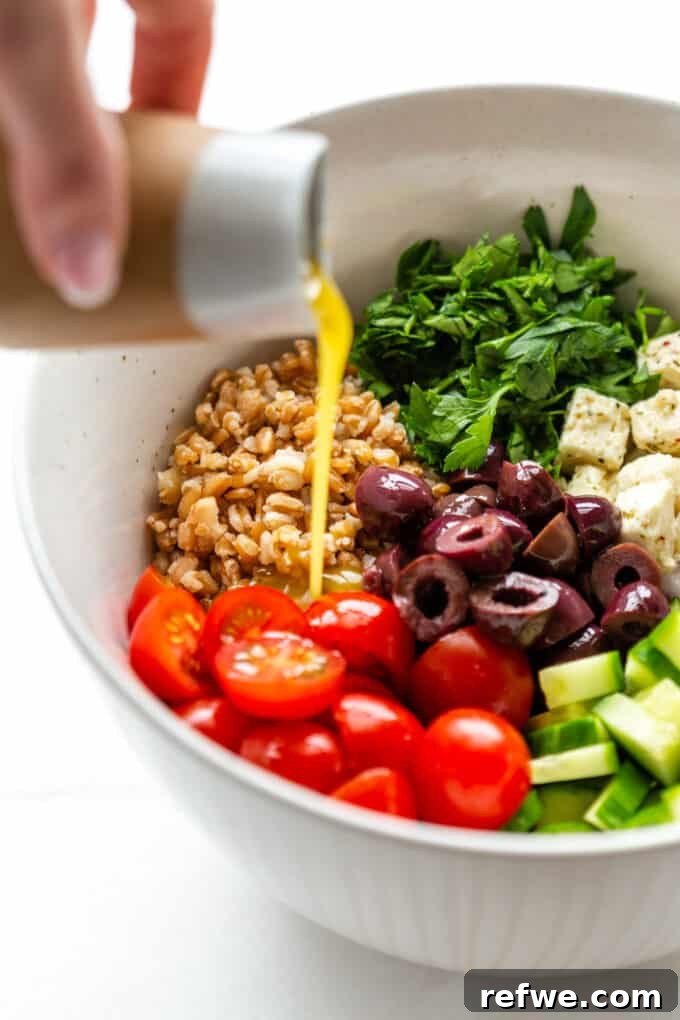
Step 3: Dress, Toss, and Serve
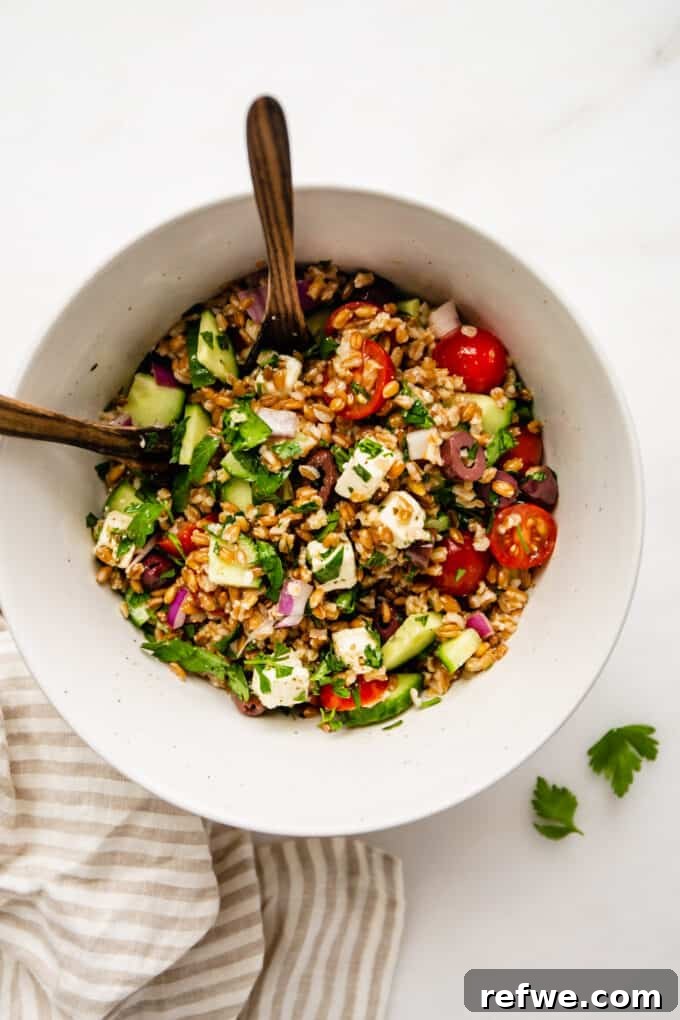
Once your dressing is ready, pour it over the prepared salad mixture in the large bowl. Use large salad tongs or serving spoons to gently toss all the ingredients together. Ensure that every piece of farro and every vegetable is evenly coated with the flavorful dressing. This thorough mixing ensures a consistent taste in every bite.
For best results, serve the salad immediately to enjoy the crispness of the vegetables. If you prefer, you can chill the dressed salad in the refrigerator for about 15-30 minutes before serving. This allows the flavors to meld beautifully. This salad is hearty enough to be a stand-alone meal, or it can be a fantastic complement to grilled meats, fish, or other Mediterranean dishes.
Endless Variations: How to Customize Your Greek Farro Salad
One of the many joys of this Greek Farro Salad is its incredible versatility. It serves as a fantastic base for creativity, allowing you to easily adapt it to your preferences, dietary needs, or whatever ingredients you have on hand. Here are some inspiring ideas to customize your salad and make it truly your own:
- Amplify the Protein Content for a Complete Meal: If you’re looking to transform this delightful side dish into a substantial main course, integrating additional protein is a superb choice. Consider grilling some chicken breast or shrimp for a lean protein boost. For plant-based options, pan-fried tofu, marinated tempeh, or even a generous scoop of cooked lentils can add significant protein and texture. Other excellent choices include flaked salmon, hard-boiled eggs, or canned tuna for a quick and easy addition.
- Introduce More Legumes with Chickpeas: Elevate this recipe into a Greek Farro and Chickpea Salad by simply stirring in one can (15 ounces) of drained and rinsed chickpeas. This not only enhances the salad’s heartiness but also significantly increases its fiber and protein content, making it even more satisfying and nutrient-dense. The creamy texture of chickpeas also provides a pleasant contrast to the chewy farro and crisp vegetables.
- Experiment with Different Grains: If farro isn’t readily available, or if you prefer a gluten-free option, this recipe is incredibly adaptable to other grains. Quinoa is an excellent gluten-free substitute, offering a similar protein and fiber profile with a slightly different texture. Brown rice provides a familiar, wholesome base, while couscous or bulgur wheat can also work beautifully (though bulgur, like farro, contains gluten). If you’re a fan of quinoa salads, you might also love our Southwest Quinoa Salad!
- Incorporate More Fresh Vegetables and Herbs: Don’t limit yourself to the essentials! Enhance the nutrient profile and flavor complexity by adding other Mediterranean-inspired vegetables. Think thinly sliced bell peppers (red, yellow, or orange for color), sun-dried tomatoes (oil-packed for extra flavor), marinated artichoke hearts, or even some fresh spinach or chopped kale for added greens. Fresh basil or dill can also be fantastic additions, complementing the parsley beautifully.
- Explore Different Cheeses or Dairy-Free Alternatives: While feta is classic, don’t hesitate to experiment. Crumbled goat cheese can offer a creamier, tangier profile, while shaved Parmesan adds a salty, umami depth. For those avoiding dairy, many excellent plant-based feta cheeses are now available that perfectly mimic the texture and briny flavor of traditional feta.
- Spice it Up with a Kick: For a subtle heat, a pinch of red pepper flakes in the dressing or mixed into the salad can add an exciting dimension.
Storing Your Greek Farro Salad for Optimal Freshness
Proper storage is key to extending the life and maintaining the deliciousness of your Greek Farro Salad. This salad is excellent for meal prep, but a few simple tips will ensure it tastes as fresh on day two or three as it did when first made.
The golden rule for storing salads, especially those with hearty grains, is to keep the dressing separate until you’re ready to eat. If you store this Greek farro salad undressed, it will comfortably last in an airtight container in the refrigerator for 3-4 days. This method keeps the vegetables crisp and the farro from becoming overly soft or soggy, preserving the vibrant textures of the salad components.
However, if you’ve already dressed the entire salad, don’t worry! This particular salad holds up remarkably well, even after being tossed with dressing. It will still maintain its great taste and enjoyable texture for 1-2 days when stored in an airtight container in the fridge. The robust nature of farro and the firm vegetables like cucumber and tomatoes help prevent it from wilting too quickly.
For the best experience, especially if you’re making a larger batch for meal prep, it’s always best practice to store the dressing separately in a small jar or container. Then, simply dress individual portions right before eating. This ensures maximum freshness, crunch, and flavor in every serving. When you’re ready to enjoy leftovers, give the salad a quick stir to redistribute any settled dressing and enjoy!
Expert Tips for the Most Delicious Greek Farro Salad
- Cook and Cool the Farro Ahead of Time: This is perhaps the most crucial tip for a perfect farro salad. It’s highly recommended to prepare the farro in advance – ideally, the day before or several hours before assembling the salad. Allowing the cooked farro to cool completely, even chilling it overnight in the fridge, ensures it isn’t warm when mixed with the fresh vegetables. This prevents the vegetables from wilting and keeps the salad crisp and refreshing.
- Infuse Flavor by Cooking Farro in Vegetable Broth: While water will cook farro, using vegetable broth will dramatically enhance its flavor. The farro will absorb the savory notes of the broth as it cooks, adding an extra layer of depth and deliciousness to your entire salad. This simple swap makes a significant difference in the overall taste profile.
- Rinse Your Farro Before Cooking to Prevent Bitterness: Sometimes, farro can have a slightly bitter taste, which is often due to residual starch or a natural compound on its surface. To avoid this, always rinse farro thoroughly in a fine-mesh strainer under cold running water until the water runs clear. This quick step helps wash away any bitterness and ensures a clean, pleasant flavor.
- Don’t Overdress the Salad: While the dressing is essential for flavor, adding too much can make the salad soggy, especially if you plan to store leftovers. Start with about two-thirds of the dressing, toss well, and then add more only if needed. Remember, you can always add more dressing, but you can’t take it away!
- Choose High-Quality Ingredients: The beauty of a simple salad lies in the quality of its components. Opt for ripe, flavorful cherry tomatoes, crisp cucumbers, fresh, fragrant parsley, and authentic Greek feta cheese. High-quality extra virgin olive oil for the dressing will also make a noticeable difference in taste.
- Taste and Adjust Seasoning: Before serving, always taste your salad and dressing. Adjust the salt, pepper, or even a splash more red wine vinegar or a pinch of oregano until the flavors are perfectly balanced to your liking.
Frequently Asked Questions About Greek Farro Salad
Absolutely! This salad is an excellent candidate for advance preparation. When stored undressed in an airtight container in the refrigerator, it will remain fresh and delicious for 3-4 days. It’s perfect for meal prepping your weekly lunches or for bringing to gatherings like barbecues and potlucks. Simply mix in the dressing right before serving to maintain optimal freshness and crispness.
Farro can sometimes develop a slightly bitter taste if it isn’t properly rinsed before cooking. To prevent this, always rinse your farro thoroughly under cold running water in a fine-mesh strainer until the water runs clear. This helps remove excess starch and any potential bitterness, ensuring a clean and pleasant flavor in your salad.
Yes, farro is indeed a very healthy grain! It’s a fantastic source of plant-based protein and dietary fiber, both of which contribute to satiety, aid digestion, and help stabilize blood sugar levels. Additionally, farro is rich in essential minerals like magnesium and iron, making it a nutritious and wholesome addition to any diet.
Yes, as written, this Greek Farro Salad recipe is vegetarian due to the inclusion of feta cheese. To make it completely vegan, simply substitute the traditional feta cheese with a high-quality plant-based feta alternative, which is widely available in most health food stores and many supermarkets.
Cooked farro, when stored properly in an airtight container, can last in the refrigerator for about 3-5 days. It’s always a good idea to cook a larger batch of farro ahead of time for use in this salad or other recipes throughout the week.
Explore More Delicious and Healthy Salad Recipes!
If you loved this Greek Farro Salad, you’re sure to enjoy these other vibrant and nourishing salad creations. Expand your culinary repertoire and discover new favorite healthy meals:
- Superfood Salad
- Kale White Bean Salad
- Mediterranean Chickpea Salad
- Farro Salad With Halloumi
If you tried this Greek Farro Salad or any other recipe on the blog, we’d love to hear from you! Please let us know how you liked it by leaving a comment and rating below. Your feedback helps us and other readers discover delicious new favorites. Be sure to follow along on Pinterest, Instagram, Tiktok, and Facebook for even more deliciousness and daily inspiration!
Print Recipe
Greek Farro Salad
- Author: Jessica Hoffman
- Prep Time: 15 minutes
- Cook Time: 0 minutes
- Total Time: 15 minutes
- Yield: 4 servings
- Category: Lunch & Dinner
- Method: Mix
- Cuisine: Greek
- Diet: Vegetarian
Description
A simple yet incredibly flavorful Greek-style salad featuring hearty farro, fresh vegetables, and tangy feta cheese.
Ingredients
Units
Salad
- 2 cups farro, cooked and cooled (about 1 cup uncooked)
- 1/2 cup chopped fresh parsley
- 1 1/2 cups cherry tomatoes, cut in half
- 1/2 cucumber, chopped
- 1/3 red onion, chopped
- 1/2 cup Kalamata olives, cut in halves
- 1/3 cup feta cheese, cut into cubes or crumbled
Greek Dressing
- 3 tbsp olive oil
- 1 1/2 tbsp red wine vinegar
- 1 tsp Dijon mustard
- 1/2 tsp garlic powder
- 1/2 tsp dried oregano
- Salt & black pepper to taste
Instructions
- In a large salad bowl, combine the cooled farro, fresh parsley, halved cherry tomatoes, diced cucumber, chopped red onion, halved Kalamata olives, and cubed or crumbled feta cheese.
- To prepare the dressing, whisk together all the dressing ingredients (olive oil, red wine vinegar, Dijon mustard, garlic powder, dried oregano, salt, and pepper) in a small cup or jar until well combined and emulsified.
- Pour the prepared dressing over the salad mixture. Toss everything together gently but thoroughly until all ingredients are evenly coated. Serve immediately and enjoy!
Notes
For the best texture and freshness, it’s highly recommended to cook the farro ahead of time and allow it to cool completely before adding it to the salad.
Feel free to customize this salad with any additional vegetables, proteins, or herbs you love, such as chickpeas, bell peppers, or fresh basil.
Store the salad undressed in an airtight container in the fridge for 3-4 days. If already dressed, it will last for 1-2 days while still tasting great.
Nutrition
- Serving Size: 1/4 of the recipe
- Calories: 336
- Sugar: 2/5g
- Fat: 15g
- Carbohydrates: 40g
- Fiber: 5g
- Protein: 7.5g