
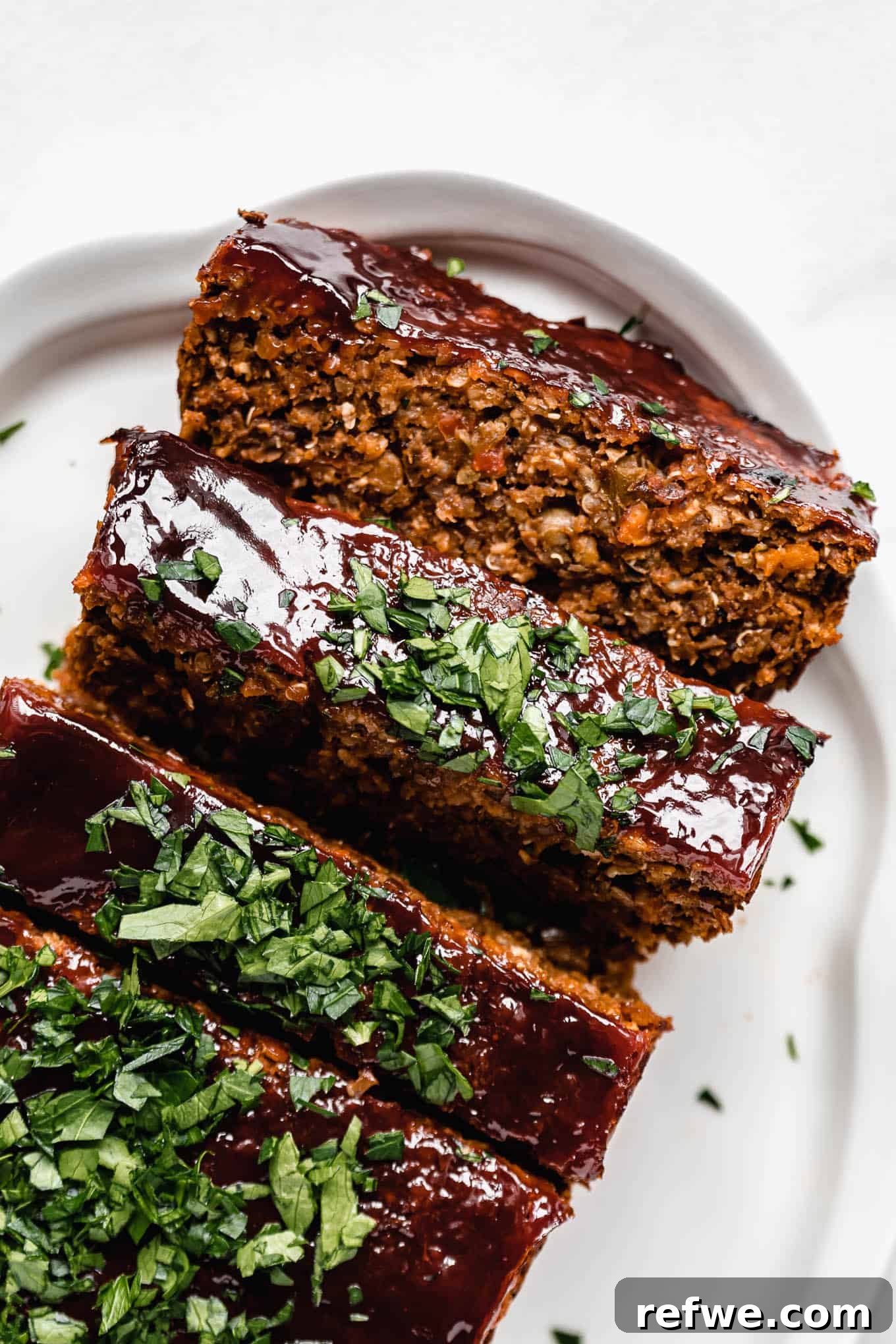
Welcome to the ultimate guide for crafting a truly exceptional Vegan Lentil Loaf! This recipe transforms humble ingredients like green lentils, portobello mushrooms, quinoa, and a medley of fresh vegetables into a hearty, savory, and incredibly satisfying plant-based alternative to traditional meatloaf. Topped with a luscious sweet and tangy balsamic ketchup glaze, this dish is not just a meal, but an experience. It’s the perfect centerpiece for your holiday table, a comforting weeknight dinner, or a fantastic option for anyone seeking a healthy, flavourful, and completely vegan and gluten-free main course.
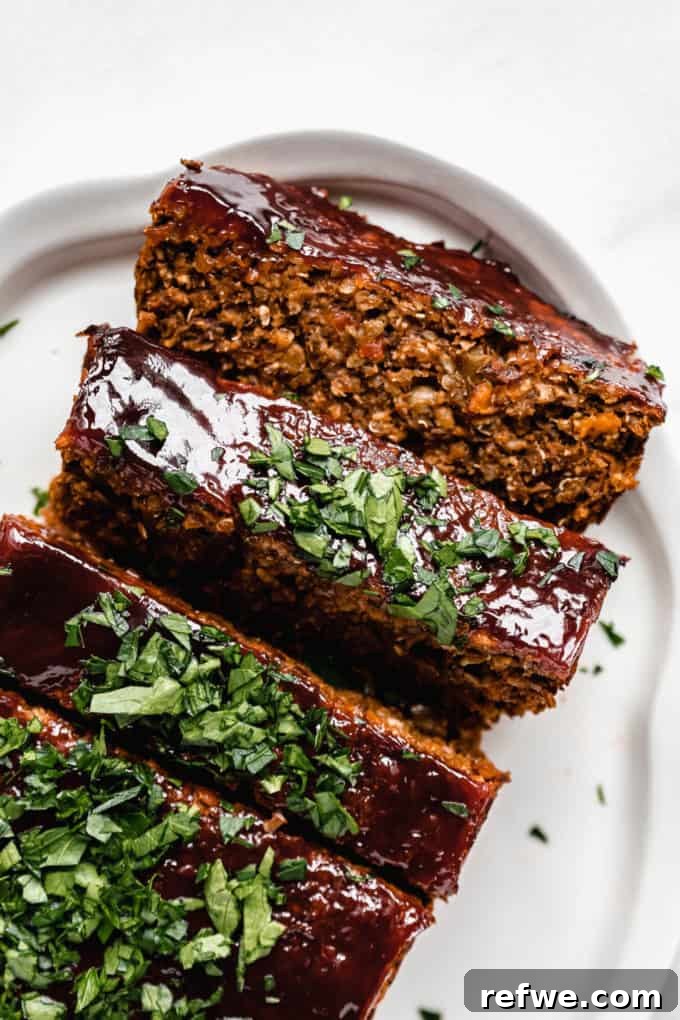
Crafting the Perfect Vegan Meatloaf: A Crowd-Pleasing Recipe
Planning for holiday feasts or simply looking to expand your plant-based repertoire? This Vegan Lentil Loaf stands out as a delicious, wholesome, and surprisingly easy-to-make dish that caters to everyone, regardless of dietary preferences. While I’ve shared other festive favorites like Creamy Butternut Squash Mac and Cheese and delightful Pumpkin Pie Bars, I felt it was crucial to offer a robust vegan main that truly shines.
This exceptional lentil loaf recipe is built upon a foundation of nutrient-rich green lentils, savory portobello mushrooms, and a vibrant assortment of fresh vegetables. It’s masterfully finished with a signature sweet and tangy glaze that elevates every bite. What truly makes this vegan meatloaf a crowd-pleaser is its remarkable ability to mimic the satisfying texture and rich flavor of its meat-based counterpart, all while being entirely plant-based.
The secret to its hearty, ‘meaty’ texture lies primarily in the generous use of portobello mushrooms. When finely chopped and sautéed, they impart a deep umami flavor and a satisfying chewiness that’s often missing in other vegetarian loaves. Complementing this, the green lentils provide a substantial, filling quality, making this dish incredibly satisfying and hearty. For those who desire an even richer texture and added protein, a half-cup of chopped walnuts can be incorporated into the mixture, though I find it perfectly fulfilling without them.
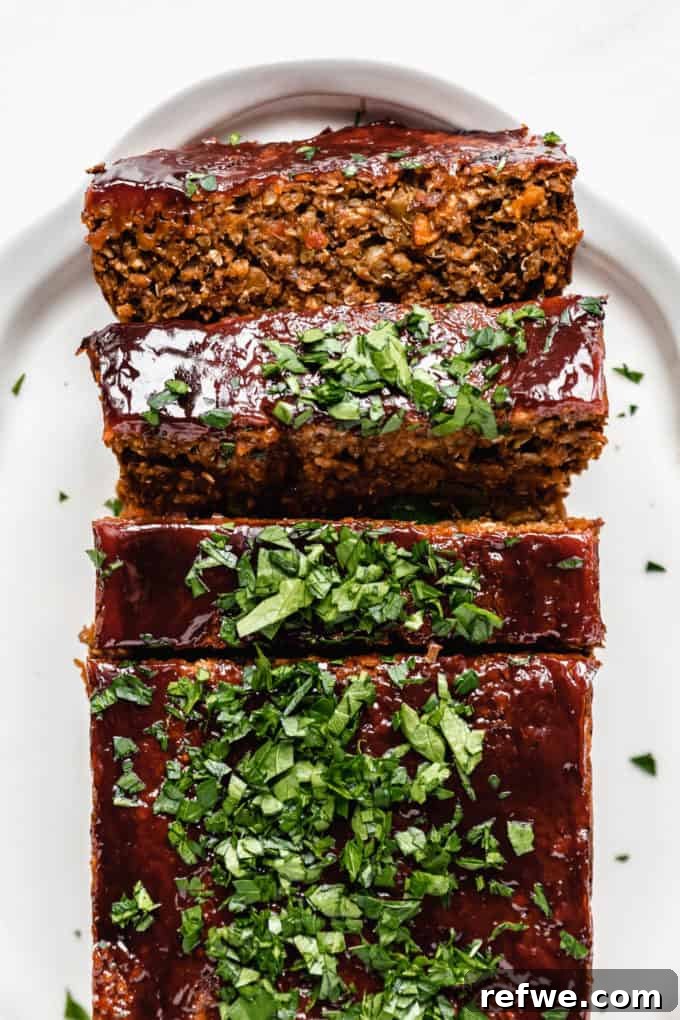
One of the standout qualities of this lentil loaf, a common challenge for many veggie loaves, is its incredible structural integrity. This recipe ensures your loaf holds its shape beautifully, slicing cleanly without crumbling or falling apart. This makes it not only appealing to the eye but also exceptionally easy to serve and enjoy, whether hot or cold.
Why This Vegan Lentil Loaf Will Become Your New Favorite
This isn’t just another vegan recipe; it’s a culinary triumph that offers multiple reasons to fall in love:
- Unbeatable Flavor & Texture Profile: The harmonious blend of portobello mushrooms, green lentils, and quinoa creates a loaf that is exceptionally rich, deeply savory, and wonderfully hearty. It provides a satisfying mouthfeel that’s robust and comforting, making it a fantastic alternative to traditional meatloaf.
- Perfect for Any Occasion: Whether you’re planning a grand Thanksgiving or Christmas dinner, a celebratory potluck, or simply craving a wholesome meal, this lentil loaf fits the bill perfectly. It can serve as an impressive main dish or a substantial, flavorful side.
- Dietary-Friendly Delight: This recipe is thoughtfully crafted to be naturally vegan and gluten-free, making it accessible and enjoyable for a wide range of dietary needs and preferences. It’s free from common allergens and animal products, ensuring everyone can indulge.
- The Irresistible Glaze: A simple yet powerfully delicious glaze tops this loaf, transforming it from great to extraordinary. Made with just three essential ingredients – tangy ketchup, rich balsamic vinegar, and sweet maple syrup – this glaze adds a bright, zesty, and slightly sweet finish that truly ties all the flavors together.
Essential Vegan Ingredients for a Flavorful Lentil Loaf
Crafting a truly memorable Vegan Lentil Loaf begins with selecting the right ingredients. Each component plays a vital role in achieving the perfect balance of flavor, texture, and nutritional value. Here’s a detailed look at what goes into this delicious plant-based masterpiece:
- Lentils: The backbone of our loaf. For optimal texture and structure, green or brown lentils are your best choice. These varieties retain a slight bite and hold their shape beautifully after cooking, which is crucial for a firm loaf. Avoid using red lentils, as they tend to become too soft and mushy, compromising the loaf’s integrity. Ensure your lentils are cooked al dente before incorporating them.
- Portobello Mushrooms: These large, meaty mushrooms are a game-changer for mimicking the savory, umami richness of meat. When chopped and sautéed, they contribute a robust flavor and a substantial, ‘meaty’ texture. While other mushrooms can be substituted, portobello varieties offer the most authentic meatloaf-like experience.
- Aromatic Vegetables: A foundation of finely chopped onions, garlic, carrots, celery, and red bell pepper provides essential flavor depth and nutritional value. These vegetables, when properly sautéed, create a sweet and savory base that permeates the entire loaf.
- Dried Herbs: A blend of dried oregano, thyme, and parsley adds classic, earthy notes that are reminiscent of traditional meatloaf. Feel free to experiment with your favorite herb combinations to customize the flavor profile.
- Red Wine: Used to deglaze the pan after sautéing the vegetables, red wine adds a sophisticated layer of deep, complex flavor. It helps to scrape up all the flavorful browned bits from the pan, enriching the sauce. For an alcohol-free alternative, vegetable broth works well.
- Tomato Paste: This concentrated ingredient provides a rich, umami depth and a hint of acidity that balances the savory flavors beautifully, enhancing the overall taste.
- Ketchup: Beyond its role in the glaze, a touch of ketchup in the loaf mixture itself contributes a subtle sweetness and a tangy vinegar note, mirroring classic meatloaf seasoning.
- Tamari or Soy Sauce: A key ingredient for savory depth. Use tamari for a certified gluten-free option, or traditional soy sauce if gluten is not a concern. Both add a rich, salty, umami kick.
- Vegan Worcestershire Sauce: This “secret ingredient” is vital for achieving that quintessential savory, complex flavor often associated with meatloaf. Ensure you use a vegan variety, as traditional Worcestershire sauce contains anchovies. It truly ties all the flavors together.
- Quinoa: Cooked quinoa adds a fantastic texture, subtle nutty flavor, and an extra boost of protein and fiber. It helps bind the loaf while contributing to its hearty consistency. You can substitute with other cooked grains like brown rice if preferred.
- Oats: Rolled oats act as a primary binding agent, helping to absorb moisture and ensure the loaf holds its shape perfectly. If you don’t have oats, breadcrumbs are a suitable alternative.
- Flax Eggs: A combination of ground flax seeds mixed with water creates a gelatinous “egg” that functions as an excellent vegan binder. For a vegetarian version, a regular egg can be used instead.
Flexible Substitutions for Your Vegan Lentil Loaf
Don’t have every ingredient on hand? No problem! This Vegan Lentil Loaf recipe is wonderfully forgiving and adaptable. Here are a few common substitutions you can make without compromising flavor or texture:
- Quinoa Alternative: If quinoa isn’t available, you can easily substitute it with an equal amount of cooked brown rice or white rice. These grains will still provide a great texture and help bind the loaf.
- Oats Substitute: For binding the mixture, breadcrumbs (gluten-free if needed) can be used as a direct replacement for rolled oats. They will absorb moisture and help maintain the loaf’s structure.
- Ground Flax Seeds Alternative: If you’re out of ground flax seeds, ground chia seeds mixed with water will create a similar gel-like consistency, effectively acting as a flax egg substitute.
- Red Wine Substitute: If you prefer to avoid alcohol or don’t have red wine, an equal amount of rich vegetable stock or broth can be used for deglazing the pan. It will still contribute savory depth to the vegetable base.
- Mushroom Alternatives: While portobello mushrooms offer the best “meaty” texture, cremini or button mushrooms can be used in a pinch. Chop them finely for the best result.
Step-by-Step Guide: How to Prepare Your Delicious Lentil Loaf
Making this Vegan Lentil Loaf is a straightforward process that yields incredibly delicious results. Follow these steps carefully for a perfect loaf every time:
- Prepare the Flax Eggs: In a small bowl, combine the ground flax seeds with water and let it sit for at least 5 minutes. This allows the mixture to gel and create the essential binding agent.
- Sauté the Vegetables: Heat a bit of olive oil in a large pan over medium-high heat. Add your chopped onions, garlic, carrots, celery, red bell pepper, and portobello mushrooms. It’s crucial to let these vegetables cook down and brown for 10-15 minutes, stirring frequently to prevent burning. This step is where the foundational flavors of your loaf truly develop, as the vegetables caramelize and become incredibly aromatic. Season generously with salt, pepper, paprika, and your chosen dried herbs.
- Deglaze and Flavor Build: Reduce the heat to medium. Carefully deglaze the pan with red wine, scraping up any browned bits from the bottom. These bits are packed with flavor! Stir in the tomato paste, ketchup, tamari, and vegan Worcestershire sauce, ensuring everything is well combined and fragrant.
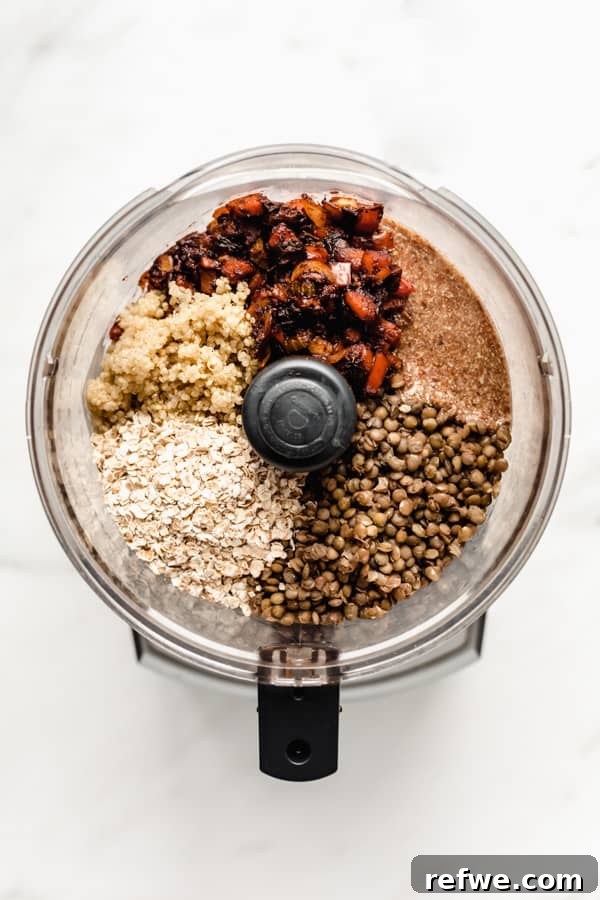
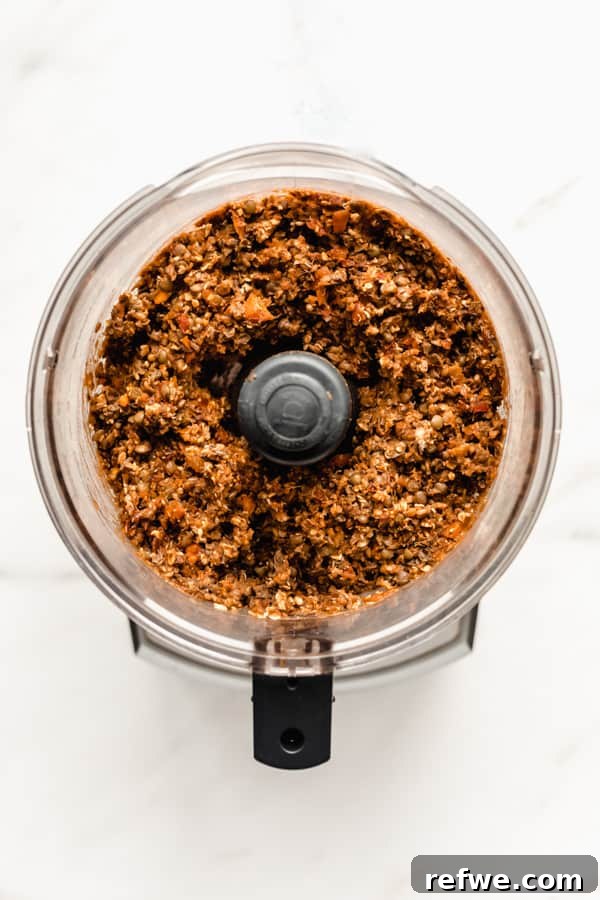
- Combine and Pulse: Transfer the cooked vegetable mixture to a food processor. Add the pre-cooked green lentils, cooked quinoa, and rolled oats, along with the prepared flax eggs. Pulse the mixture just enough to combine the ingredients, being careful not to over-process it into a smooth puree. You want to leave some chunks of lentils and vegetables for a desirable, hearty texture.
- Prepare the Loaf Pan: Line an 8×4 inch loaf pan with parchment paper, leaving an overhang on the sides for easy removal. Lightly spray the parchment paper with cooking spray to prevent sticking.
- Form the Loaf: Pour the lentil mixture into the prepared loaf pan. Press down firmly and evenly with a spatula to ensure a compact, well-formed loaf.
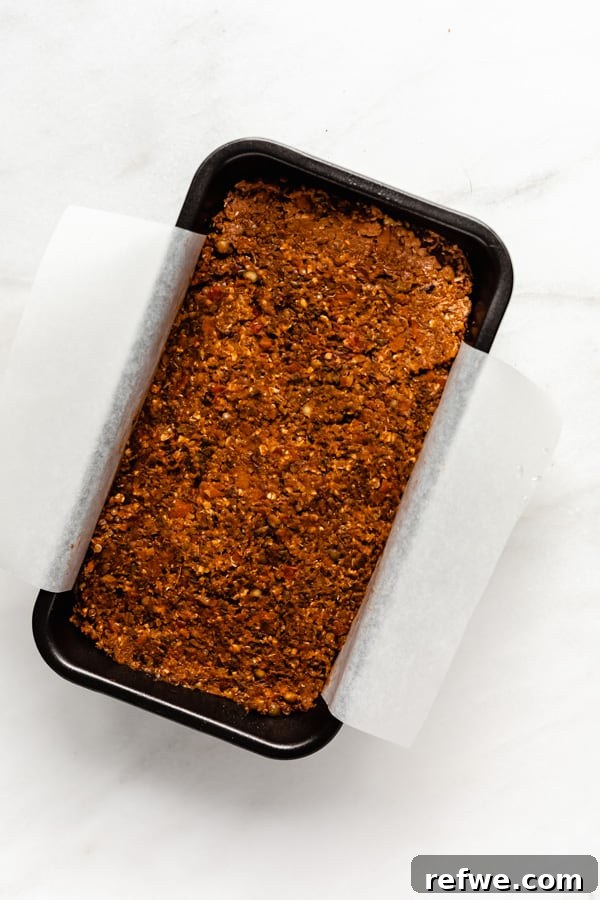
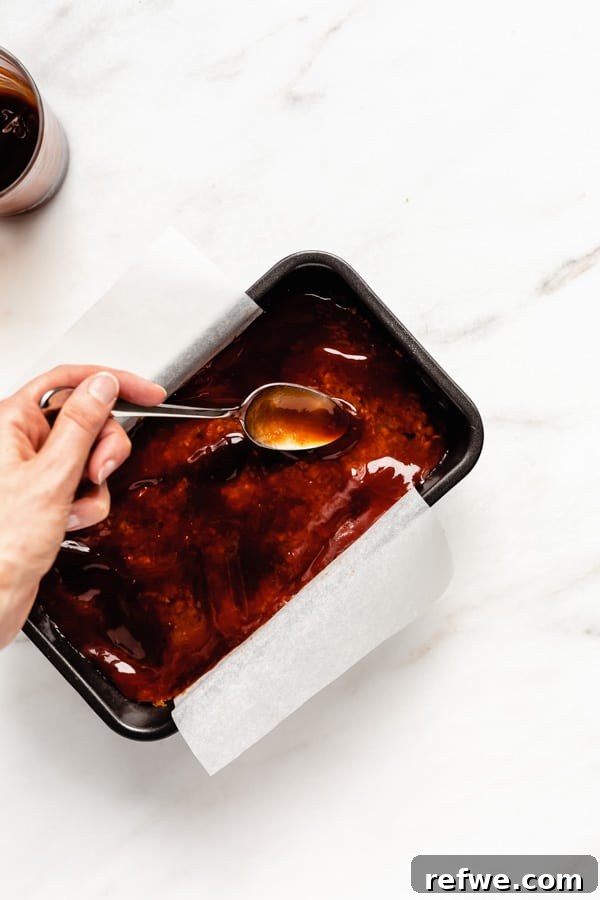
- Apply the Glaze: In a small bowl, whisk together the ingredients for the vegan meatloaf glaze (see details below). Spread this savory-sweet glaze evenly over the top of the loaf, ensuring it completely covers the surface.
- Bake to Perfection: Bake the lentil loaf in a preheated oven at 350 degrees F (175 degrees C) for 45-50 minutes, or until the glaze is slightly caramelized and the loaf is firm to the touch.
- Cool Before Serving: This step is critical! Once baked, remove the loaf from the oven and let it cool on the counter in the pan for at least 30 minutes. This allows the loaf to set completely, ensuring it holds its shape beautifully when sliced. Attempting to remove or slice it too early will result in crumbling.
Crafting the Irresistible Vegan Meatloaf Glaze
The glaze is more than just a topping; it’s an integral part of what makes this vegan lentil loaf truly spectacular. It provides a burst of sweet, salty, and tangy flavors that perfectly complement the earthy richness of the loaf, creating a harmonious culinary experience. This simple glaze is incredibly easy to prepare and absolutely essential for tying the entire dish together.
To create this delightful glaze, you’ll simply need three common ingredients: tangy ketchup, rich balsamic vinegar, and a touch of sweet maple syrup. In a small bowl, combine these three components and whisk them together until smooth. Once your lentil loaf is ready for glazing, use a spoon or a silicone brush to spread this luscious mixture evenly over the entire top surface of the loaf, ensuring a complete and appetizing coating.
The magic happens in the oven, where the glaze caramelizes slightly, creating a beautiful sheen and a concentrated flavor burst that will impress even the most discerning palates.
Meal Prep Made Easy: Storing, Freezing, and Reheating Your Vegan Meatloaf
This Vegan Lentil Loaf is not only delicious but also incredibly convenient for meal prepping and future enjoyment. Here’s how to properly make ahead, store, freeze, and reheat your loaf to maintain its deliciousness:
- Refrigeration (Make Ahead & Storage): The cooked lentil loaf can be prepared entirely in advance. Once cooled, store any leftovers in an airtight container in the refrigerator for up to a week. This makes it a fantastic option for packed lunches or quick weeknight dinners.
- Freezing for Long-Term Storage: For longer storage, this lentil loaf freezes beautifully. You can freeze the entire loaf, half a loaf, or individual slices. Wrap it tightly in plastic wrap, then place it in a freezer-safe container, freezer bags, or food saver bags. It will maintain its quality for up to 3 months.
- Reheating Instructions:
- From the Fridge: To reheat, place slices in the oven at 350 degrees F (175 degrees C) until warmed through, typically about 15-20 minutes. You can also warm individual servings in the microwave for 1-2 minutes.
- From the Freezer: Allow the frozen loaf to defrost on the counter for a few hours or overnight in the refrigerator. Once defrosted, reheat in the oven at 350 degrees F (175 degrees C) until thoroughly warmed. Covering it loosely with foil can prevent the top from drying out.
Expert Tips for the Best Vegan Lentil Loaf
Achieving a perfectly textured and flavored Vegan Lentil Loaf is simple with these expert tips:
- Prioritize Browning Your Vegetables: Do not rush the sautéing step! Taking your time to brown the vegetables in the pan for at least 10-15 minutes is crucial. This caramelization builds a deep, complex flavor base that will infuse the entire loaf. If they start to brown too quickly, slightly reduce the heat.
- Cook Lentils in Broth for Maximum Flavor: While water works, cooking your green or brown lentils in vegetable broth instead of plain water will significantly enhance their flavor. This subtle change adds another layer of savoriness to your loaf.
- Master the Food Processor Pulse: When blending the loaf mixture in the food processor, remember the goal is to combine, not to puree. Pulse just a few times until the ingredients are integrated, but still maintain some texture. You want distinct pieces of lentils and vegetables, not a smooth paste. Over-processing will result in a mushy lentil loaf that lacks the desired “meaty” consistency.
- Always Line Your Loaf Pan: This simple step makes a huge difference. Lining your loaf pan with parchment paper, with a slight overhang on the sides, will prevent the loaf from sticking. It also makes it incredibly easy to lift the baked and cooled loaf right out of the pan, ensuring a clean presentation.
- Patience is Key for Cooling: Resist the urge to slice into your lentil loaf immediately after baking. Allow it to cool in the pan on the counter for a full 30 minutes. This crucial cooling period allows the loaf to set and firm up, preventing it from crumbling when you remove it from the pan and slice it.
Perfect Pairings: What to Serve with Your Lentil Loaf
The versatility of this Vegan Lentil Loaf means it pairs wonderfully with a wide array of side dishes. Whether you’re aiming for a light accompaniment or a hearty feast, here are some of my favorite suggestions to complete your meal:
- Roasted Pumpkin Salad: A vibrant, seasonal salad that adds freshness and a touch of sweetness.
- Farro Salad: A nutty and chewy grain salad that offers a delightful textural contrast.
- Sweet Potato Casserole: Creamy, sweet, and comforting, a classic pairing for any savory loaf.
- Butternut Squash Soup: A smooth and warming soup that complements the hearty loaf beautifully.
- Steamed Green Beans: Simple, crisp, and fresh, providing a healthy green element.
- Roasted Broccoli: Earthy and slightly charred, a fantastic vegetable side.
- Roasted Squash: Sweet and tender, like acorn or butternut squash, for a comforting autumn touch.
- Creamy Mashed Potatoes: A timeless classic that pairs perfectly with any savory loaf and glaze.
Explore More Delicious Lentil Recipes
Lentils are incredibly versatile and nutritious! If you’ve enjoyed this Vegan Lentil Loaf, you’re sure to love these other plant-based lentil creations:
- Vegan Lentil Shepherd’s Pie: A comforting and hearty classic, reimagined with a savory lentil base.
- Comforting Lentil Bolognese: A rich and satisfying pasta sauce that’s bursting with flavor.
- Vegan Lentil Moussaka: A flavorful Mediterranean delight with layers of lentils and vegetables.
If you tried this Vegan Lentil Loaf or any other recipe on the blog, I’d love to hear from you! Please let me know how you liked it by leaving a comment and rating below. Don’t forget to follow along on Pinterest, Instagram, and Facebook for even more delicious and healthy plant-based inspiration!
Vegan Lentil Loaf Recipe
Author: Jess
Prep Time: 30 minutes
Cook Time: 35 minutes
Total Time: 65 minutes
Yield: 10 servings
Category: Main
Method: Bake
Cuisine: American
Description
A wholesome and flavorful plant-based loaf recipe crafted with nutritious green lentils, savory portobello mushrooms, and hearty quinoa, creating a delicious and satisfying alternative to traditional meatloaf.
Ingredients
Units
- 3 cups cooked green lentils (about 1 cup dried, or can use canned)
- 2 tbsp ground flax seeds+6 tbsp water
- 2 tbsp olive oil
- 1 large onion, chopped
- 4 garlic cloves, chopped
- 1 large carrot, chopped
- 1 celery stalk, chopped
- 1 red bell pepper, chopped
- 2 portobello mushrooms, chopped
- 1/2 tsp salt
- 1 tsp pepper
- 2 tsp paprika
- 1 tsp dried oregano
- 1 tsp dried parsley
- 1/4 cup red wine
- 2 tbsp tomato paste
- 2 tbsp ketchup
- 1 tbsp tamari
- 1/2 tbsp vegan Worcestershire sauce
- 1/2 cup quinoa, (already cooked)
- 1/2 cup oats
Glaze Ingredients
- 1/4 cup ketchup
- 2 tbsp balsamic vinegar
- 1 tbsp maple syrup
Instructions
- Mix the ground flax seeds with the water in a small bowl and let sit for 5 minutes to gel, forming your flax eggs.
- Heat the olive oil in a large pan over medium-high heat. Add the chopped onions, garlic, carrots, celery, red bell pepper, and portobello mushrooms. Sauté for 10-15 minutes, stirring constantly until the vegetables are softened and nicely browned, which develops deep flavor. Season with salt, pepper, paprika, and dried herbs.
- Reduce the heat to medium. Deglaze the pan with red wine, scraping up any browned bits. Stir in the ketchup, tomato paste, tamari, and vegan Worcestershire sauce, mixing everything together until well combined.
- Transfer the sautéed veggie mixture to a food processor. Add the cooked lentils, cooked quinoa, rolled oats, and the prepared flax eggs. Pulse gently just until combined, ensuring you leave some texture; do not over-process into a smooth puree.
- Line an 8×4 inch loaf pan with parchment paper, leaving an overhang on the long sides, and lightly spray with cooking spray. Pour the lentil mixture into the pan, pressing down firmly and evenly to compact it.
- Prepare the glaze by mixing the ketchup, balsamic vinegar, and maple syrup together in a small bowl. Spread this glaze evenly over the top of the formed loaf in the pan.
- Bake in a preheated oven at 350 degrees F (175 degrees C) for 35-45 minutes, until the glaze is bubbling and the loaf is firm.
- Crucially, let the loaf cool completely in the pan for at least 30 minutes on a wire rack before attempting to remove it. This ensures it sets properly and holds its shape when sliced.
Notes
Flavor Development is Key: Don’t rush the process of cooking and browning the vegetables in the pan. This step is essential for building the deep, savory foundation of your loaf. Ensure they get a good sear and caramelization. If they start to brown too much too quickly, simply reduce your heat a bit.
Boost Lentil Flavor: For an even more flavorful loaf, I highly recommend cooking your green or brown lentils in vegetable broth rather than plain water. This infuses the lentils with additional savory notes from the start.
Texture Control: When processing the mixture in the food processor, be mindful not to over-pulse. The goal is to combine the ingredients while leaving some discernible chunks of lentils and vegetables. This creates a satisfying, hearty texture rather than a mushy consistency.
Patience for Perfect Slices: It’s tempting to cut into a freshly baked loaf, but resist! Do not try to remove or slice the loaf from the pan while it’s still hot. Allowing it to cool for at least 30 minutes is crucial for the loaf to set and firm up, ensuring clean, intact slices.
Nutrition
(Nutritional information is an estimate and may vary based on ingredients and preparation methods.)
- Serving Size: 1/10th recipe
- Calories: 177
- Sugar: 5.5g
- Sodium: 328mg
- Fat: 4g
- Carbohydrates: 27g
- Fiber: 8g
- Protein: 8g