
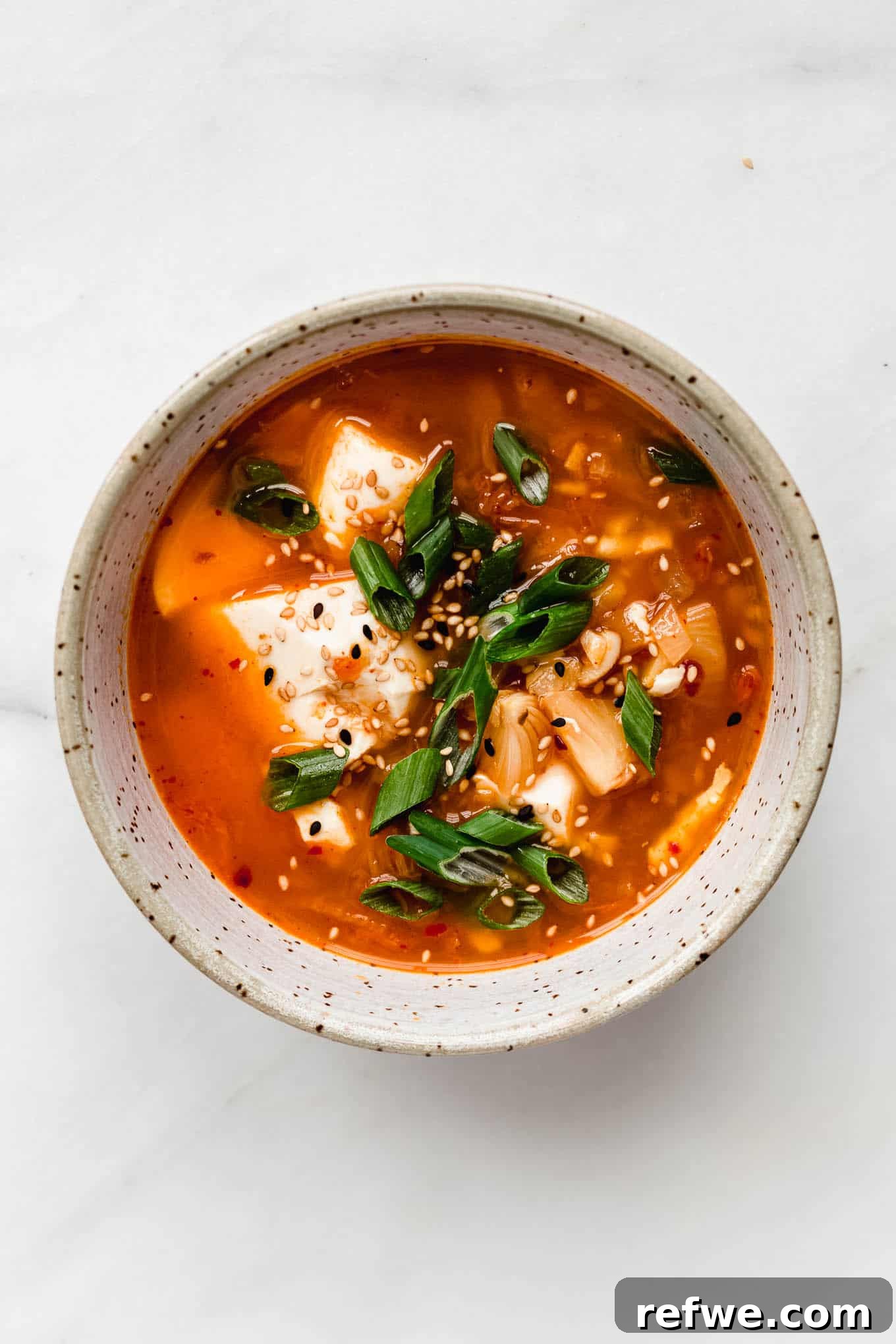
Authentic Vegan Korean Tofu Soup (Sundubu Jjigae) – Quick, Healthy & Flavorful
Dive into a bowl of pure comfort with this incredible Vegan Korean Tofu Soup, a plant-based take on the beloved Sundubu Jjigae. This hearty stew is brimming with an explosion of bold flavors, including the tangy spice of kimchi, the pungent warmth of garlic and ginger, all harmoniously brought together with incredibly silky soft tofu. Designed for modern living, this recipe is ready in just 30 minutes, making it an ideal choice for a quick yet deeply satisfying meal. Completely vegan and gluten-free, it offers a nourishing option that’s as wholesome as it is undeniably delicious.
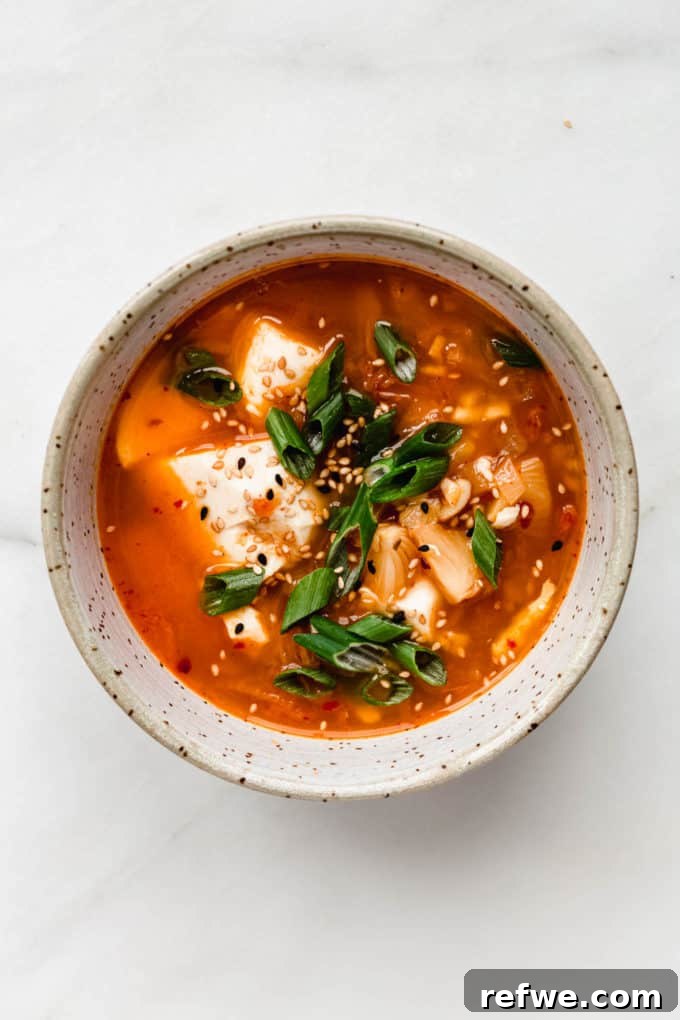
Sundubu Jjigae: A Plant-Based Twist on Korean Soft Tofu Soup
Sundubu Jjigae, known affectionately as Korean Soft Tofu Soup, is a culinary masterpiece cherished in Korean cuisine for its comforting warmth and rich flavors. Traditionally, this nourishing stew often features ground meat, fermented kimchi, and delicate silken tofu, sometimes crowned with a raw egg for an extra layer of richness. Our rendition offers a thoughtful, plant-based twist, meticulously crafted to capture the authentic essence of Sundubu Jjigae while adhering to vegan and gluten-free dietary preferences. We thoughtfully omit the meat and ensure that the kimchi used is entirely vegan-friendly, creating a genuinely delicious and guilt-free vegan Korean tofu soup.
The flavor profile of this soup is a captivating dance of contrasting notes. It boasts a delightful balance of tanginess and a gentle heat, derived from the fermented kimchi, which is the soul of the dish. A hint of aromatic sesame oil threads through the broth, imparting a subtle nuttiness and depth that elevates the entire experience. The star, however, remains the exquisitely soft tofu, which melts effortlessly in your mouth, creating a luxurious texture that is both light and profoundly satisfying. This makes it an unparalleled cozy soup experience, perfect for warming you from the inside out. While inherently flavorful, our Korean Tofu Soup is not excessively spicy, allowing the nuanced flavors to shine. However, be mindful that the intensity of the spice can vary depending on the brand and type of kimchi you select.
The Cultural Significance of Korean Stews
Jjigae, a category of Korean stews, holds a special place in the hearts of Koreans, symbolizing comfort, community, and home. These vibrant stews are a staple at nearly every Korean meal, revered for their ability to bring people together and provide deep, soul-satisfying nourishment. Sundubu Jjigae, in particular, with its distinctive soft tofu, is celebrated for its soothing qualities and robust taste. By crafting a plant-based version, we aim to share this cherished culinary tradition, making it accessible to a wider audience without compromising on the authentic taste and comforting experience that defines this classic Korean dish. If you’re new to cooking with kimchi, you’ll find it’s a wonderfully versatile ingredient that adds a significant pop of flavor to many dishes, from Vegetarian Kimchi Fried Rice to Vegetarian Kimchi Ramen.
Why You’ll Fall in Love with This Vegan Sundubu Jjigae
- Effortlessly Quick and Simple: In a world that constantly demands our time, this recipe stands out as a beacon of culinary efficiency. It miraculously comes together in just 30 minutes, transforming a busy weeknight into an opportunity for a gourmet, homemade meal. Forget extensive prep or complicated steps; this soup is designed for maximum flavor with minimal fuss.
- An Explosion of Bold, Umami Flavors: Prepare your palate for an adventure! This soup is a symphony of robust tastes, where the fermented tang and spice of kimchi mingle with the pungent notes of fresh garlic and ginger, and the nutty richness of sesame oil. Each spoonful delivers a complex, umami-packed experience that is deeply satisfying and truly unforgettable.
- Wholesome, Healthy, and Vegan: Beyond its incredible taste, this Sundubu Jjigae is a powerhouse of nutrition. It’s packed with plant-based protein from the tofu, gut-benefiting probiotics from the fermented kimchi, and a vibrant array of nutrients from the fresh aromatics and vegetables. As a vegan and gluten-free dish, it caters to various dietary needs without sacrificing health or flavor.
- Incredibly Customizable to Your Liking: The beauty of this soup lies in its adaptability. While delicious on its own, it serves as a perfect canvas for your culinary creativity. Feel free to add your favorite seasonal vegetables like shiitake mushrooms, zucchini, spinach, or bok choy. For a heartier meal, toss in some udon or ramen noodles, or even Korean rice cakes (tteokbokki) to make it truly your own unique creation.
- The Ultimate Meal Prep Companion: This soup isn’t just good the day it’s made; it’s arguably even better on subsequent days! As the flavors meld and deepen over time, each reheating unlocks an even richer and more complex taste. Prepare a larger batch at the start of your week, and enjoy delicious, comforting meals that are ready in minutes whenever hunger strikes.
Essential Ingredients for Your Perfect Vegan Korean Tofu Soup
Crafting an authentic-tasting Sundubu Jjigae relies on a few key ingredients that deliver its signature flavor and texture. Here’s a closer look at what you’ll need and why each component is essential:
- Onion: A foundational aromatic, chopped onion provides a delicate sweetness and a crucial depth of flavor to the soup’s base as it caramelizes gently.
- Garlic: No Korean dish is complete without a generous amount of garlic. It infuses the broth with a robust, aromatic punch that is both savory and incredibly fragrant.
- Ginger: Adding a warm, slightly spicy, and wonderfully zesty note, fresh ginger complements the garlic beautifully, enhancing the soup’s overall complexity and providing a refreshing undertone.
- Kimchi: This is the absolute star of the show and irreplaceable! Fermented Korean cabbage, kimchi, brings a distinctive tangy, spicy, and profoundly umami-packed flavor that defines Sundubu Jjigae. Ensure your kimchi is vegan-friendly by checking the label for ingredients like shrimp paste or fish sauce.
- Sesame Oil: Used as a finishing touch, toasted sesame oil adds a rich, nutty aroma and a layer of depth that rounds out the soup’s flavors perfectly. Its distinct fragrance is key to an authentic taste.
- Tamari: For that essential salty umami flavor, tamari is an excellent choice, ensuring the recipe remains gluten-free. If gluten is not a concern, regular soy sauce can be used as a substitute.
- Vegetable Broth: Opt for a good quality, low-sodium vegetable broth to create the flavorful and robust liquid base of your soup, allowing you to control the overall saltiness.
- Soft Tofu (or Silken Tofu): This is crucial for the soup’s characteristic texture. Soft or silken tofu breaks apart beautifully into creamy, melt-in-your-mouth curds, absorbing the rich broth and providing a luxurious feel that firm tofu cannot replicate.
- Green Onions: Sliced green onions serve as a fresh and vibrant garnish, offering a mild, crisp onion flavor and a pop of color that beautifully balances the rich, hearty soup.
*This is just a recipe overview. The full recipe measurements and detailed instructions can be found below in the recipe card for your convenience.
Crafting Your Korean Soft Tofu Soup: A Step-by-Step Guide
Creating this flavorful vegan Sundubu Jjigae is straightforward and enjoyable. Follow these simple steps to bring a taste of Korea into your kitchen:
Step 1: Building the Aromatic Foundation
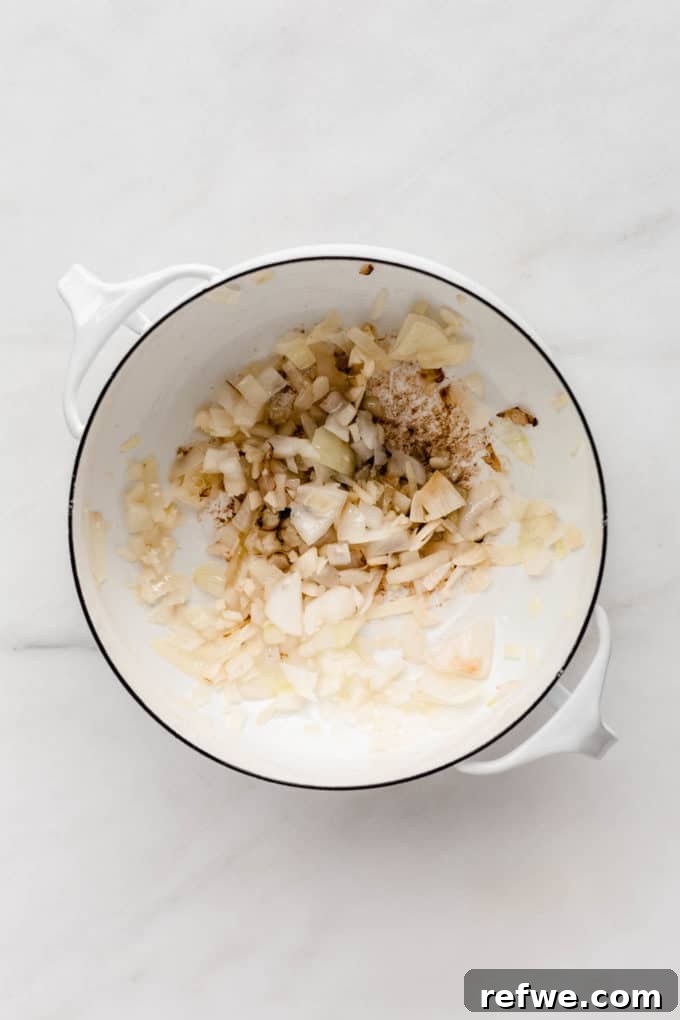
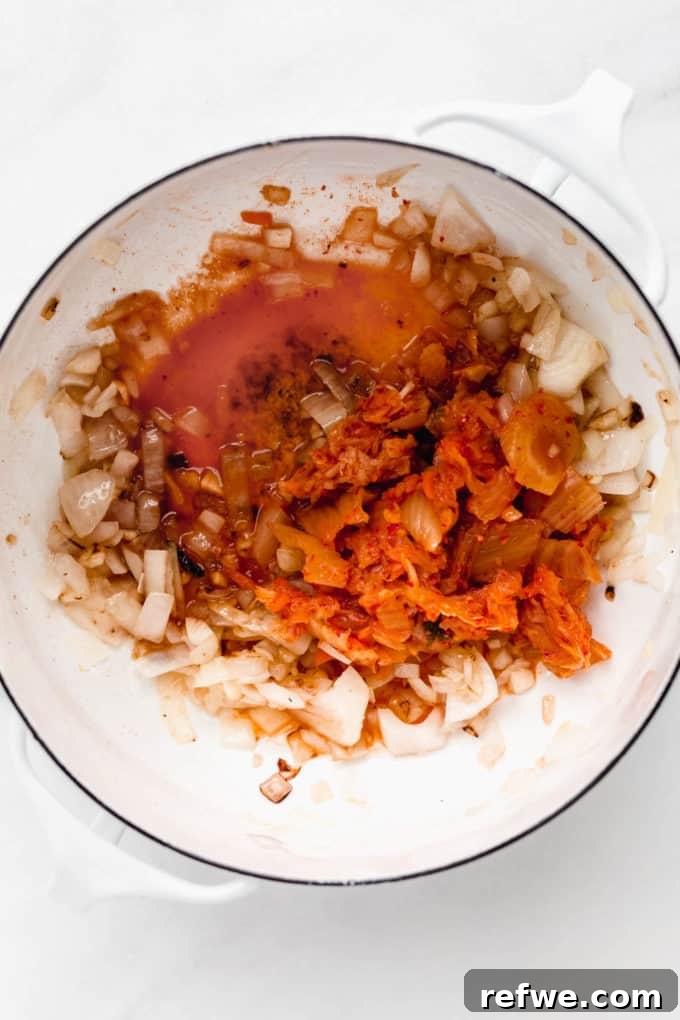
Begin by heating a tablespoon of olive oil in a sturdy pot over medium-high heat. Once shimmering, add the finely chopped onion, minced garlic, and grated ginger. Sauté these aromatic ingredients for about 2 minutes, allowing them to release their fragrant oils and soften slightly. This creates the essential base for our soup’s complex flavor. Next, introduce the vibrant kimchi to the pot, stirring everything together to combine thoroughly. Continue to cook for another minute, letting the kimchi’s flavors begin to meld with the aromatics.
Step 2: Simmering for Flavor Depth
Now, it’s time to infuse the broth with rich Korean flavors. Add the red chili flakes (adjusting to your preferred spice level), sesame oil, tamari, and a crucial half cup of kimchi juice – this liquid gold from the kimchi adds an extra layer of fermented tang and depth. Pour in the vegetable broth and bring the mixture to a vigorous boil. Once boiling, reduce the heat to low, cover the pot, and allow the soup to gently simmer for 10-15 minutes. This simmering period is essential for all the flavors to deepen and harmonize, creating a truly rich and aromatic broth.

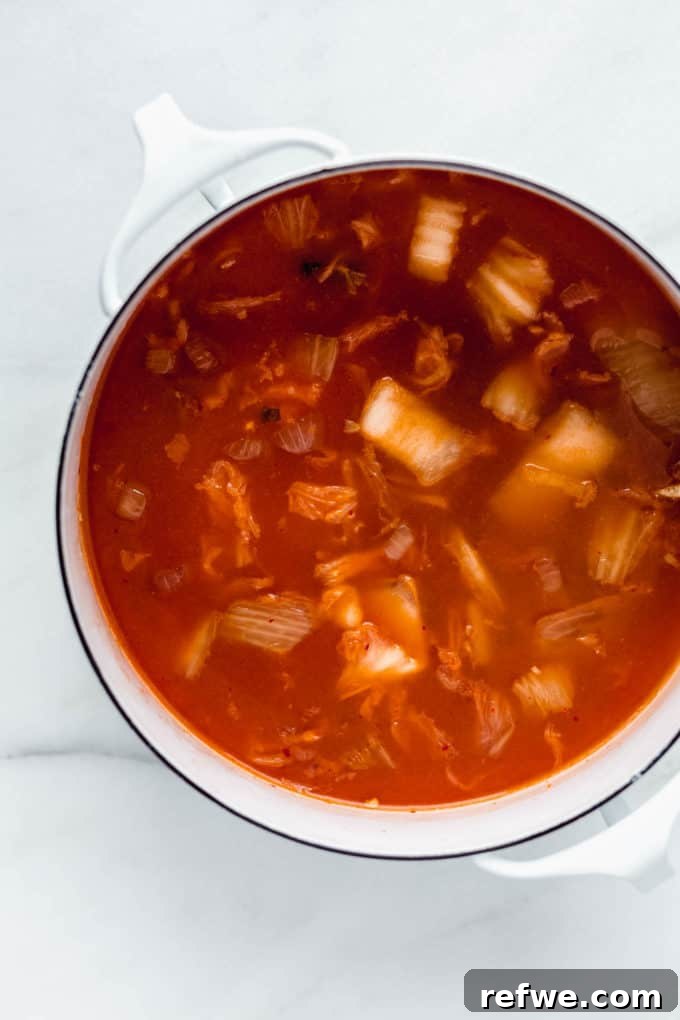
Step 3: The Silky Tofu Finish and Serving
Once the broth has simmered beautifully, carefully remove the lid. Gently add the soft tofu, which you’ve drained and cut into large, irregular cubes, into the soup. The key is to add it gently to preserve its delicate texture. Stir lightly, just enough to combine without breaking up the tofu too much. Let it cook on low heat for just a couple of minutes – simply enough to warm the tofu through, as it doesn’t require extensive cooking. Ladle the hot soup into bowls. For an appealing presentation and an extra burst of fresh flavor, generously top each serving with freshly sliced green onions. This soup is wonderfully satisfying served on its own, perhaps with a side of steamed rice and a few traditional Korean banchan (side dishes) for a complete meal.
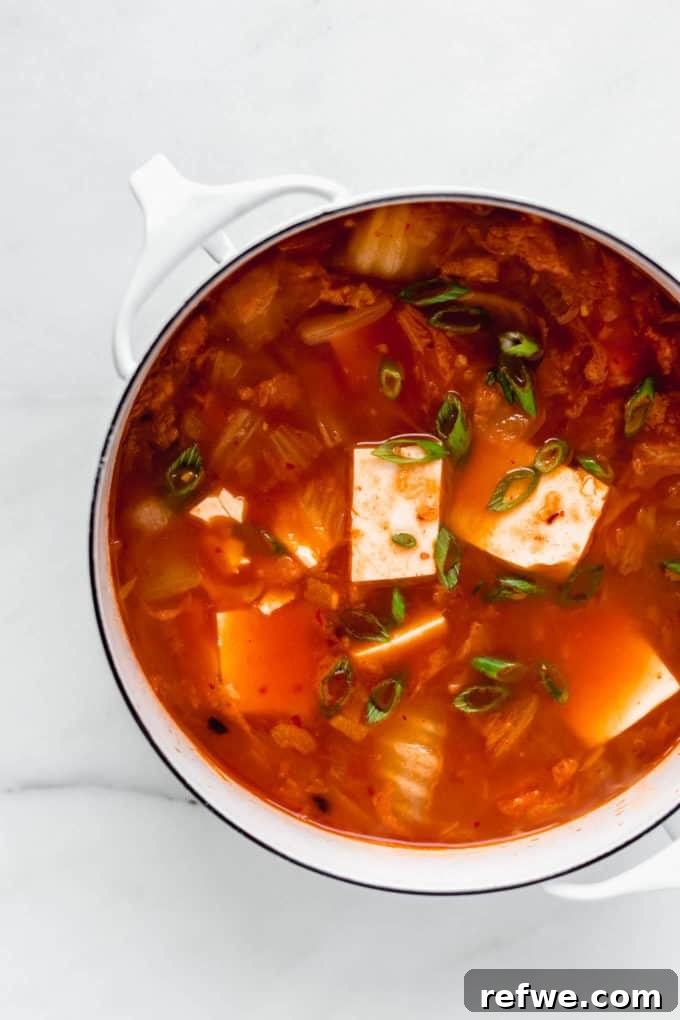
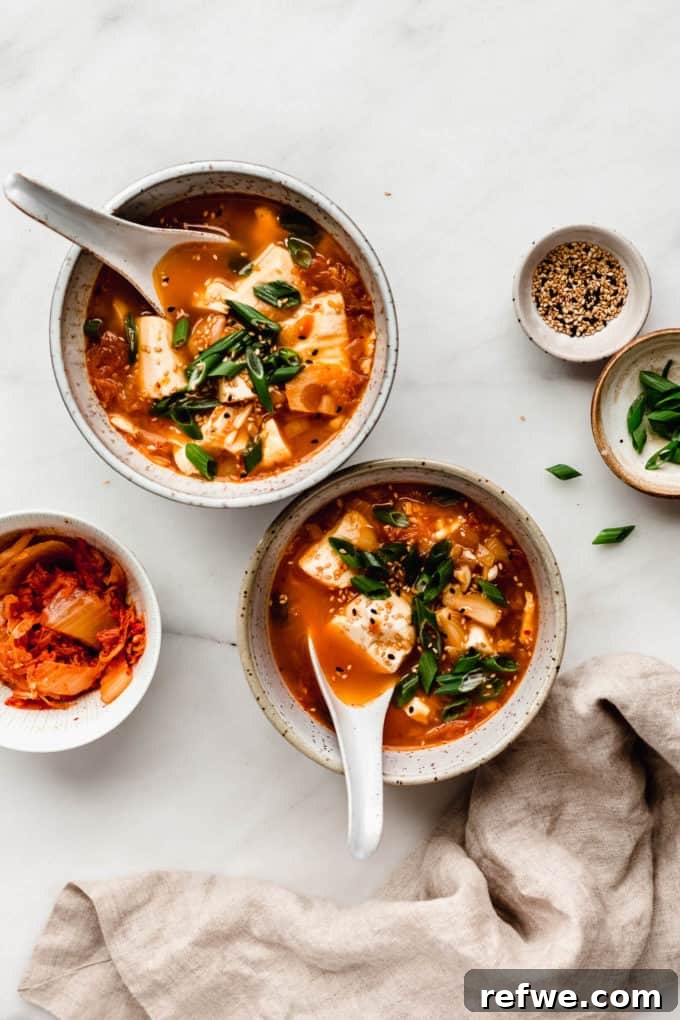
Storage and Reheating Tips for Peak Freshness
This Korean Tofu Soup is not only delicious fresh but also makes for fantastic leftovers. Proper storage ensures you can enjoy its rich flavors for days:
- Storing: Allow the soup to cool completely to room temperature before transferring it into an airtight container. Store the sealed container in the refrigerator, where it will remain fresh and flavorful for up to 4 days. The flavors tend to deepen and become even more harmonious after a day or two!
- Reheating: For best results, gently warm the soup on the stovetop over medium heat. Stir occasionally to ensure even heating and prevent sticking. If the soup has thickened considerably in the fridge, add a small splash of vegetable broth or water to achieve your desired consistency. Alternatively, you can microwave individual servings in a microwave-safe bowl. Heat in 1-minute intervals, stirring in between, until the soup is thoroughly warmed through. Be careful not to over-boil the tofu, as it can become rubbery.
Expert Tips for Crafting a Restaurant-Quality Vegan Sundubu Jjigae
To ensure your homemade Vegan Korean Tofu Soup reaches its full potential, consider these expert tips that will elevate your cooking experience and the final dish:
- The Right Tofu Makes All the Difference: For the iconic, melt-in-your-mouth texture of Sundubu Jjigae, always opt for soft or silken tofu. These varieties are incredibly delicate and absorb flavors beautifully. Firm or extra-firm tofu will not achieve the desired creamy consistency and will result in a significantly different, tougher texture.
- Embrace the Power of Vegan Kimchi: Kimchi is undeniably the heart and soul of this recipe; its tangy, spicy, and deeply fermented character cannot be replicated. When purchasing, always check the label carefully to ensure it’s truly vegan – some brands use shrimp paste or fish sauce as a fermenting agent. Most Asian grocery stores and health food stores now offer excellent vegan kimchi options.
- Master Your Spice Preference: The beauty of homemade soup is the ability to tailor it to your taste. Adjust the spice level by selecting a mild or spicy kimchi. For an extra kick, you can increase the amount of red chili flakes, or even add a teaspoon of Korean gochugaru (chili powder) or a dollop of gochujang (chili paste) for deeper heat and flavor.
- The Art of the Finishing Touch – Sesame Oil: While some recipes might incorporate sesame oil earlier, drizzling it just before serving is key. This preserves its delicate aroma and nutty flavor, allowing it to shine as a vibrant top note rather than being cooked out.
- Unleash Your Creativity with Add-Ins: This soup is wonderfully versatile. Consider incorporating thinly sliced shiitake mushrooms, enoki mushrooms, zucchini rounds, spinach, or bok choy during the last few minutes of simmering for added nutrients and texture. For a more substantial meal, add cooked ramen or udon noodles, or even Korean rice cakes (tteokbokki) to the simmering broth.
- Patience Rewards: The “Next Day” Advantage: Like many stews and curries, this Korean Tofu Soup often tastes even better on the second day. The resting period allows the various flavors to meld, deepen, and fully develop, resulting in an even more harmonious and complex broth. If you have the luxury of time, prepare it a day in advance for an intensified culinary experience.
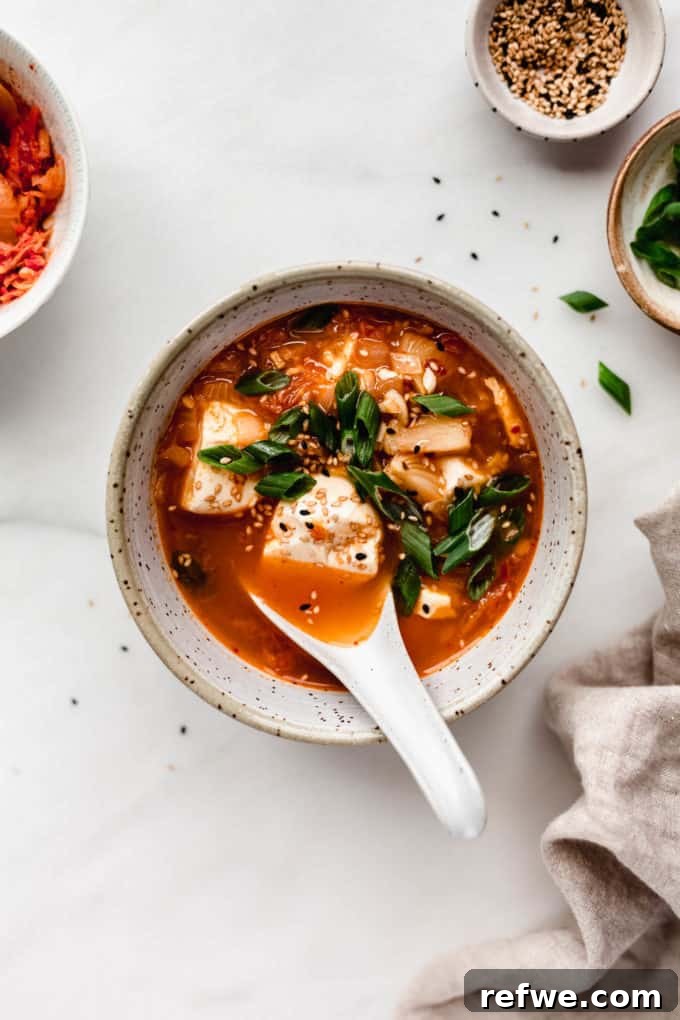
- Serving Suggestions: Traditionally, Sundubu Jjigae is served bubbling hot in a stone bowl (ttukbaegi) alongside a bowl of freshly steamed white rice and an array of banchan (small side dishes) such as pickled radishes or seasoned spinach.
Frequently Asked Questions (FAQ) About Korean Tofu Soup
Absolutely! While traditional Sundubu Jjigae can sometimes be heavier due to ground meat and oil, this plant-based version of Korean Tofu Soup is exceptionally healthy. It’s prepared with minimal olive oil, features nutrient-rich low-sodium vegetable broth, and is packed with the goodness of kimchi (a fermented food renowned for its gut health benefits) and high-protein tofu. One bowl of this satisfying soup is surprisingly light, often containing around 125 calories, making it an excellent choice for a balanced meal.
The spice level of this soup is wonderfully customizable! It primarily depends on the brand and type of kimchi you choose, as some kimchis are naturally spicier than others. Additionally, the amount of red chili flakes you add will dictate the heat. If you prefer a milder soup, opt for a mild kimchi and use fewer chili flakes. For those who love heat, a spicier kimchi and extra chili flakes, or even a dash of Korean gochugaru (chili powder), will create a fiery experience.
You can certainly freeze the broth and kimchi component of this soup with excellent results. However, soft tofu has a tendency to change its texture when frozen and thawed, becoming firmer and more porous. If you plan to freeze the soup, it’s best to freeze the broth mixture without the tofu. When you’re ready to enjoy it, simply thaw the broth, bring it to a simmer, and then add fresh soft tofu and green onions for the best texture.
While you technically can use firm tofu, it will significantly alter the soup’s characteristic texture. Soft or silken tofu is specifically chosen for Sundubu Jjigae because it breaks down into creamy, delicate curds that melt into the broth, creating a luxurious and comforting mouthfeel. Firm tofu, being much denser, will retain its shape and chewiness, resulting in a less authentic and less satisfying experience. For the true Sundubu Jjigae experience, we highly recommend sticking with soft or silken tofu.
This vegan Korean Tofu Soup is traditionally served piping hot, often in a stone bowl to retain its warmth. It pairs perfectly with a bowl of steamed short-grain rice, which can be enjoyed alongside or stirred directly into the soup. Many also enjoy it with various banchan (small Korean side dishes) like kimchi (of course!), pickled radishes, or seasoned seaweed, creating a well-rounded and authentic Korean meal.
Vegan kimchi is becoming increasingly popular and is typically available at most Asian grocery stores, health food stores, and even many larger conventional supermarkets in the refrigerated section. Always remember to check the ingredient list for common non-vegan ingredients like shrimp paste (saeujeot), fish sauce (aekjeot), or other seafood derivatives.
Explore More Delicious Plant-Based Asian-Inspired Recipes!
If you loved this comforting Vegan Korean Tofu Soup, you’re sure to enjoy these other vibrant and flavorful plant-based dishes:
- Vegetarian Mapo Tofu
- Vegetarian Kimchi Ramen
- Crispy Orange Cauliflower
We love hearing from you! If you tried this Vegan Korean Tofu Soup or any other recipe on the blog, please let us know how you liked it by leaving a comment and rating below! Don’t forget to connect with us on Pinterest, Instagram, and Facebook for even more delicious plant-based inspiration and healthy recipes!
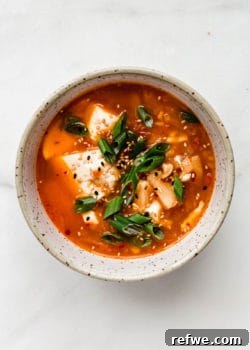
Korean Tofu Soup
- Author: Jessica Hoffman
- Prep Time: 10 minutes
- Cook Time: 20 minutes
- Total Time: 30 minutes
- Yield: 4 servings
- Category: Main
- Method: Cook
- Cuisine: Korean
- Diet: Vegetarian
Description
This heartwarming Vegan Korean Tofu Soup (Sundubu Jjigae) comes together effortlessly in just 30 minutes, offering a truly delicious, healthy, and comforting meal that’s perfect for any occasion!
Ingredients
- 1 tbsp olive oil
- 1 small onion, chopped
- 3 garlic cloves, chopped
- 1 2-inch cube ginger, chopped
- 1/2 cup kimchi [make sure your kimchi is vegan!]
- 1 tsp red chilli flakes
- 1 tbsp sesame oil
- 1 tbsp tamari
- 1/2 cup kimchi juice
- 2 cups vegetable broth
- 1 pack soft tofu, drained and cut into large cubes
- 2 green onions, sliced
Instructions
- Heat the olive oil in a pot on medium-high heat. Add the chopped onion, minced garlic, and grated ginger, then sauté for 2 minutes until fragrant and slightly softened.
- Stir in the kimchi, red chilli flakes, sesame oil, tamari, and kimchi juice. Mix all the ingredients together and cook on medium heat for 1-2 minutes, allowing the flavors to begin to meld.
- Pour in the vegetable broth. Bring the soup to a boil, then reduce the heat to low. Cover the pot and let it simmer gently for 10-15 minutes to allow the flavors to deepen and combine.
- Remove the lid. Gently add the soft tofu, broken into large, irregular pieces, and the sliced green onions into the soup. Stir very lightly to combine. Let it cook on low heat for just a couple of minutes to warm the tofu through. Serve immediately in bowls, topped with additional fresh green onions if desired.
Notes
This soup absolutely relies on kimchi for its distinctive, complex flavor, so do not skip this essential ingredient! You can typically find vegan kimchi in most Asian grocery stores, health food stores, and even some larger conventional supermarkets.
For the authentic melt-in-your-mouth texture of Sundubu Jjigae, it is crucial to use soft or silken tofu. Firm tofu will be too dense and will not yield the desired creamy, delicate consistency that defines this soup.
Always double-check the label of your kimchi to ensure it is vegan-friendly. Some traditional kimchis are fermented with seafood products like shrimp paste or fish sauce. Look for labels that explicitly state “vegan kimchi” or verify the ingredient list.
For an even richer and more harmonious flavor, consider making this soup a day in advance. Allowing the flavors to sit and meld overnight will intensify their depth, making the soup taste even better on the second day!
Nutrition
- Serving Size: 1 bowl
- Calories: 125
- Sugar: 2g
- Sodium: 500mg
- Fat: 7.5g
- Saturated Fat: 1g
- Carbohydrates: 6g
- Fiber: 2g
- Protein: 5g